
Chef Juliette
Various Almond Preparations
Five almond preparations, one discipline: remove the skins cleanly, dry every kernel through, then cut, toast, or cloak it in pale caramel without letting its fragrant oils escape.
A cooking platform built around craft, culture, and the stories behind what we eat.

Created by Chef Juliette
Based on No. 2883, Bombe Moscovite, from Le Guide Culinaire (1907) by Auguste Escoffier
A shell of Kümmel-scented ice encloses bitter-almond pâte à bombe and bright candied fruit, a formal frozen entremets translated faithfully for one mould, one freezer, and one patient home cook.
Bombe Moscovite (Kümmel ice filled with bitter-almond bombe cream) teaches one governing principle: a bombe is architecture in the cold. Its outer ice must be firm, even, and thick enough to hold the softer pâte à bombe within. Freeze that shell completely before filling it, and the clean white dome will cut open to a pale-gold centre jewelled with candied fruit.
The original entry assumed a pastry station where Kümmel ice and Bombe-preparation already waited, along with moulds that could be frozen hard on command. Here they are made in sequence: a small batch of churned Kümmel ice, a cooked yolk foam folded with real cream, and an ordinary home freezer given time to do its work. The brigade's ready-made components were scaffolding and can go. The Kümmel shell, bitter-almond centre, candied fruit, and clothed mould are the dish and must stay. One cook, one stove, one evening of work, then the freezer keeps watch.
The cross-reference to a sole aspic contributes only the method of clothing the mould, never its fish, jelly, or garnish. Build the frozen lining in thin, patient layers and inspect it for bare patches before adding the centre. That shell is the one step that decides the Bombe Moscovite.
The bombe glacée belongs to the Parisian grand-kitchen repertoire of moulded entremets, where one frozen preparation clothed a domed mould before a contrasting centre was packed inside. Moscovite is a French menu name pointing to kümmel, the caraway-led liqueur associated with northern and eastern Europe, not proof that the dessert originated in Moscow. Its cross-reference to a sole aspic reveals the canon's working grammar: cooks used the same mould-clothing principle for savoury jelly and sweet ice while keeping their ingredients entirely separate.
Quantity
1½ cups (360 ml / 370 g)
Quantity
1 cup (240 ml / 240 g)
Quantity
½ cup plus 2 tablespoons (150 ml / 125 g)
Quantity
5 (about 90 g)
Quantity
¼ teaspoon (1.25 ml / 1.5 g)
divided equally
Quantity
3 tablespoons (45 ml / 43 g)
Quantity
½ cup (120 ml / 100 g)
finely diced
Quantity
3 tablespoons (45 ml / 45 g)
Quantity
½ cup plus 2 tablespoons (150 ml / 125 g)
Quantity
4 (about 72 g)
preferably pasteurized
Quantity
1¼ cups (300 ml / 300 g)
Quantity
2 drops (about 0.1 ml / 0.1 g)
Quantity
1 application of Another Method of Preparing Aspics de Filets de Soles (No. 916), using the Kümmel ice above; technique reference only
| Ingredient | Quantity |
|---|---|
| whole milk | 1½ cups (360 ml / 370 g) |
| heavy cream for the Kümmel ice | 1 cup (240 ml / 240 g) |
| granulated sugar for the Kümmel ice | ½ cup plus 2 tablespoons (150 ml / 125 g) |
| large egg yolks for the Kümmel ice | 5 (about 90 g) |
| fine sea saltdivided equally | ¼ teaspoon (1.25 ml / 1.5 g) |
| Kümmel liqueur | 3 tablespoons (45 ml / 43 g) |
| mixed candied fruitfinely diced | ½ cup (120 ml / 100 g) |
| water | 3 tablespoons (45 ml / 45 g) |
| granulated sugar for the pâte à bombe | ½ cup plus 2 tablespoons (150 ml / 125 g) |
| large egg yolks for the pâte à bombepreferably pasteurized | 4 (about 72 g) |
| cold heavy cream for the filling | 1¼ cups (300 ml / 300 g) |
| commercial food-safe bitter-almond extract | 2 drops (about 0.1 ml / 0.1 g) |
| mould-clothing technique | 1 application of Another Method of Preparing Aspics de Filets de Soles (No. 916), using the Kümmel ice above; technique reference only |
Set a 1½-quart (1.5-liter) metal bombe mould or freezer-safe bowl in the freezer. Dice the candied fruit into pieces no larger than ¼ inch (5 mm), blot away loose syrup, and spread the pieces on a plate in the refrigerator. Large or wet pieces tear through the filling and leave sticky pockets; small, dry, cold pieces remain suspended.
Bring the milk, the cream for the Kümmel ice, and half the salt just below a simmer. Whisk the five yolks with the first measure of sugar until smooth, then pour in the hot dairy gradually while whisking. Return everything to the saucepan and cook over gentle heat, stirring constantly, until the crème anglaise, a stirred custard, coats the spoon and reaches 180 to 183°F (82 to 84°C). Do not let it boil. If fine grains appear, remove it immediately, blend briefly, and strain it over ice. Ça se rattrape while the curdling is slight; solid scrambled curds require a fresh custard.
Strain the crème anglaise into a bowl set over ice and stir until thoroughly cold. Cover and refrigerate for at least 3 hours, then stir in the Kümmel liqueur. Churn until dense and softly mounded, usually 20 to 30 minutes. Alcohol keeps ice supple, so if it remains too loose to cling to a spoon, spread it in a shallow metal pan and freeze for 15 to 25 minutes before lining the mould.
Chemiser, meaning to clothe the mould, with the Kümmel ice. Another Method of Preparing Aspics de Filets de Soles (No. 916) supplies this mould-clothing principle only: no fish preparation or jelly enters the dessert. Press a ½-inch (1.5-cm) layer of ice over the bottom and sides with the back of a cold spoon, freeze it for 20 minutes, then patch every thin or bare place with a second layer. Reserve about 1½ cups (360 ml) of ice for the final cap and freeze the clothed mould until hard, at least 45 minutes.
Put the four yolks in a mixer bowl. Bring the water and second measure of sugar to 244°F (118°C), without stirring once it boils. Begin beating the yolks when the syrup reaches about 230°F (110°C), then pour the finished syrup in a thin stream down the inside of the bowl, clear of the moving whisk. Beat until the pâte à bombe, a cooked yolk foam, is thick, pale, and cooler than 77°F (25°C). If hardened sugar collects on the bowl, leave it there rather than scraping it into the foam. If a few lumps enter, pass the warm mixture through a fine sieve and continue whipping. Ça se rattrape.
Whip the cold cream with the remaining salt to soft peaks. Put exactly two drops of bitter-almond extract into the cooled pâte à bombe and mix well. The aroma should be clear but restrained; bitter almond is powerful, and more ruins the centre. Fold in one-third of the cream to loosen the foam, then fold in the remainder and the chilled candied fruit with broad, gentle strokes. If the filling softens, refrigerate it for 10 minutes. Do not beat the finished mixture, or its air will be lost.
Spoon the filling into the frozen shell, pressing it gently against the sides to remove air pockets, and stop about ¾ inch (2 cm) below the rim. Soften the reserved Kümmel ice just until spreadable, then cover the filling completely and level it flush with the rim. This cap completes the shell. Cover the surface directly with parchment, wrap the mould well, and return it to the freezer.
Freeze the bombe for at least 8 hours, preferably overnight. It must be hard through the centre before unmoulding. A bombe that has frozen for only a few hours may appear firm outside while the pâte à bombe remains soft enough to slump when released.
Chill the serving platter. Dip the mould up to its rim in warm water for 5 to 8 seconds, dry it, and invert it onto the platter. If the bombe does not release, wrap the mould in a warm towel for 10 seconds and try again; never pry at the edge. If the surface softens, freeze the unmoulded bombe for 15 minutes. Cut it with a knife dipped in hot water and wiped dry between slices, revealing the candied fruit within. À table!
1 serving (about 185g)
Culinary guides, cultural storytelling, and the editorial depth that makes cooking meaningful.
Discover Culinary ExplorerChef Juliette
Five almond preparations, one discipline: remove the skins cleanly, dry every kernel through, then cut, toast, or cloak it in pale caramel without letting its fragrant oils escape.

Chef Juliette
A pastry pantry lesson in one tray: filberts warmed only until their red skins release, rubbed clean, cooled, and chopped into a fragrant mise-en-place for cakes, creams, pralines, and petits fours.

Chef Juliette
The smallest pâtisserie discipline decides whether a cake leaves its mould intact: clarified butter in every corner, followed by the lightest veil of dry flour or fécule.
Chef Juliette
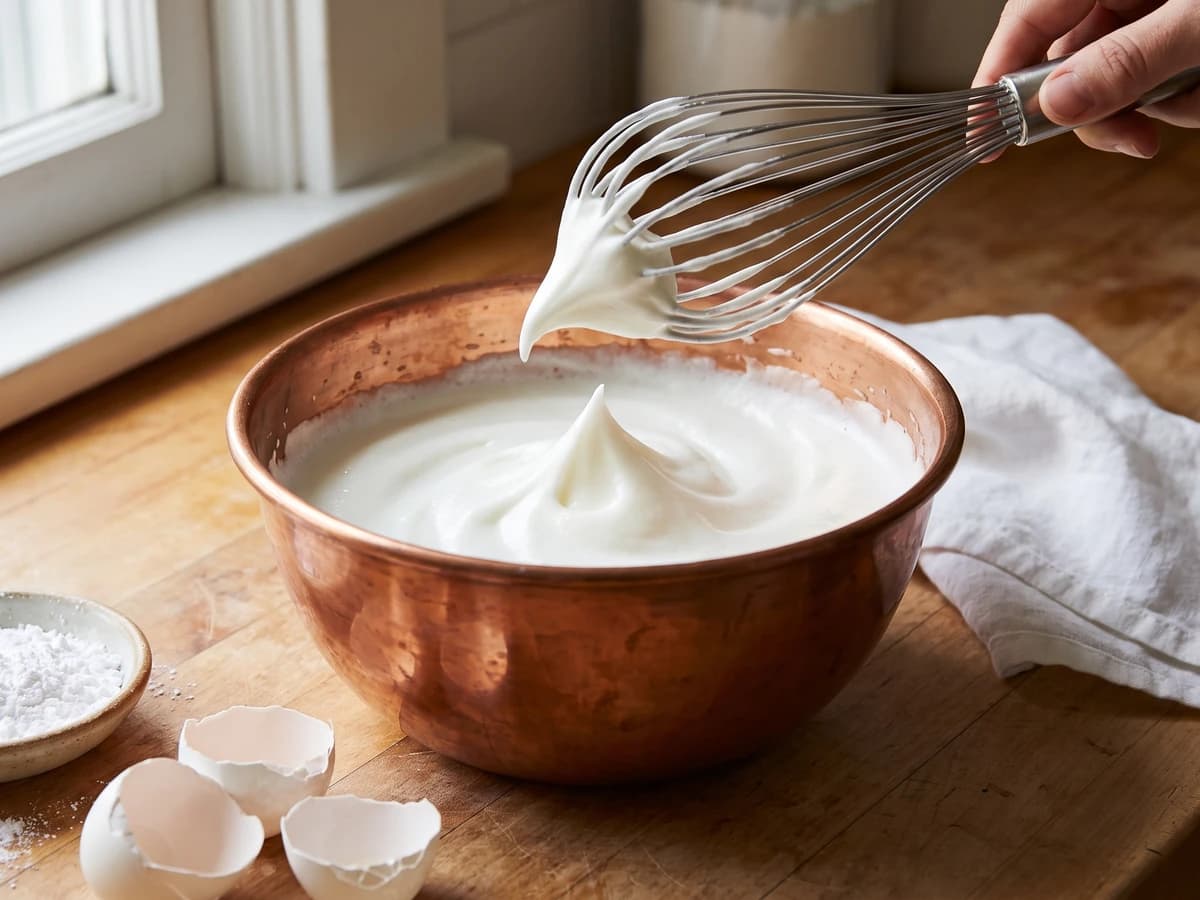
Four whites, one spotless bowl, and a patient change of speed: whisk gently until loosened, then briskly to glossy stiffness, with powdered sugar waiting if the foam begins to granulate.