
Chef Juliette
Various Almond Preparations
Five almond preparations, one discipline: remove the skins cleanly, dry every kernel through, then cut, toast, or cloak it in pale caramel without letting its fragrant oils escape.
A cooking platform built around craft, culture, and the stories behind what we eat.

Created by Chef Juliette
Based on No. 2881, Bombe Moldave, from Le Guide Culinaire (1907) by Auguste Escoffier
Pineapple ice forms a bright frozen shell around silky Curaçao pâte à bombe, teaching the essential bombe architecture: two textures, one clean unmoulding, and patience enough for a complete freeze.
Bombe Moldave (pineapple ice mould with Curaçao pâte à bombe) teaches the architecture of a bombe glacée: a bright, firm shell around an aerated center that remains creamy enough to slice. One truth governs the whole dessert. Cook the pineapple purée before it comes near the cream, because raw pineapple contains an enzyme that weakens dairy proteins, making the filling thin and unpleasantly bitter as it stands. Heat quiets the enzyme while preserving the fruit's sharp perfume.
The classical kitchen assumed prepared Pine-apple Ice, a waiting Curaçao Bombe-preparation, a metal bombe mould packed in salted ice, and enough hands to tend all three. Here one home ice cream maker, a 1.5-liter metal bowl, and an ordinary freezer do the work for eight guests. The tub of broken ice and the relay of pastry cooks were scaffolding, so they can go. The cooked fruit, the evenly clothed mould, and the light pâte à bombe are the dish, so they stay.
The source borrows its mould-clothing principle from an aspic recipe, an example of one technique crossing from savory work into pâtisserie without carrying the fish with it. The step that decides the Bombe Moldave is chemiser, to clothe the mould, with an even layer of pineapple ice. Thin patches leak the filling into the shell; thick patches leave no room for its soft Curaçao heart.
The bombe glacée belongs to the Parisian pâtisserie and grand-kitchen repertory, where contrasting frozen preparations are packed into metal moulds and turned out whole for celebration tables. Moldave is one of the canon's ornamental menu names, not evidence that pineapple and Curaçao formed a Moldavian household dessert. The cross-reference to Another Method of Preparing Aspics de Filets de Soles (No. 916) appears because both preparations use the same mould-clothing motion; only the technique travels from aspic to ice, never the fish preparation itself.
Quantity
2 cups (475 ml / 450 g)
strained, for the Pine-apple Ice
Quantity
¾ cup (180 ml / 150 g)
for the Pine-apple Ice
Quantity
½ cup (120 ml / 120 g)
for the Pine-apple Ice
Quantity
1 tablespoon (15 ml / 15 g)
for the Pine-apple Ice
Quantity
1 small pinch
for the Pine-apple Ice
Quantity
5 (about 90 g)
for the Curaçao Bombe-preparation
Quantity
½ cup (120 ml / 100 g)
for the Curaçao Bombe-preparation
Quantity
¼ cup (60 ml / 60 g)
for the Curaçao Bombe-preparation
Quantity
3 tablespoons (45 ml / 42 g)
for the Curaçao Bombe-preparation
Quantity
1¼ cups (300 ml / 300 g)
for the Curaçao Bombe-preparation
Quantity
1 1.5-liter mould (No. 916)
procedural reference only; no fish preparation is incorporated
| Ingredient | Quantity |
|---|---|
| ripe pineapple puréestrained, for the Pine-apple Ice | 2 cups (475 ml / 450 g) |
| granulated sugarfor the Pine-apple Ice | ¾ cup (180 ml / 150 g) |
| waterfor the Pine-apple Ice | ½ cup (120 ml / 120 g) |
| fresh lemon juicefor the Pine-apple Ice | 1 tablespoon (15 ml / 15 g) |
| fine sea saltfor the Pine-apple Ice | 1 small pinch |
| pasteurized large egg yolksfor the Curaçao Bombe-preparation | 5 (about 90 g) |
| granulated sugarfor the Curaçao Bombe-preparation | ½ cup (120 ml / 100 g) |
| waterfor the Curaçao Bombe-preparation | ¼ cup (60 ml / 60 g) |
| dry orange Curaçaofor the Curaçao Bombe-preparation | 3 tablespoons (45 ml / 42 g) |
| cold heavy creamfor the Curaçao Bombe-preparation | 1¼ cups (300 ml / 300 g) |
| chilled metal mould using the coating procedure in Another Method of Preparing Aspics de Filets de Solesprocedural reference only; no fish preparation is incorporated | 1 1.5-liter mould (No. 916) |
Set a clean 1.5-liter metal bombe mould or deep metal bowl in the freezer for at least 30 minutes. Chill the mixer bowl and beaters as well. If your ice cream maker uses a frozen canister, it must be frozen solid before you begin; a canister that sloshes will give you pineapple slush, not ice.
Combine the strained pineapple purée, ¾ cup sugar, and ½ cup water in a saucepan. Heat gently, stirring until the sugar dissolves, then bring the purée to at least 85°C or 185°F and hold it there for 1 minute. This cooking is the foundation of the dessert: it disables the fresh pineapple enzyme before the fruit shell meets the cream filling. Remove from the heat, stir in the lemon juice and salt, then chill the mixture rapidly over an ice bath until thoroughly cold.
Churn the cold pineapple mixture until it holds the soft, dense texture of freshly made sorbet. Reserve about one-quarter in a covered freezer container for sealing the bombe. Working quickly, press the remainder over the bottom and sides of the frozen mould in an even layer about 1.5 cm thick. This chemiser follows the coating principle in Another Method of Preparing Aspics de Filets de Soles (No. 916), translated from liquid jelly rocked over broken ice to pliable Pine-apple Ice pressed against frozen metal. Freeze the clothed mould for 45 minutes.
Put the ½ cup sugar and ¼ cup water in a small heavy saucepan. Warm gently until the sugar dissolves, then stop stirring and cook the syrup to 118°C or 244°F. Meanwhile, beat the pasteurized yolks until thick and pale. With the mixer running at medium-low speed, pour the syrup in a very thin thread down the inside of the bowl, keeping it away from the moving beaters and your hands. Increase the speed and whip until the pâte à bombe is voluminous, glossy, and no warmer than room temperature, about 7 minutes.
Set aside 2 tablespoons of the cold cream, then whip the remainder to soft peaks that bend at the tip. Stir the Curaçao and reserved unwhipped cream into the cooled pâte à bombe. Fold in one-third of the whipped cream to loosen the base, then fold in the rest with broad strokes until no white streaks remain. The filling should be light but flowing, not stiff.
Pour the Curaçao Bombe-preparation into the frozen pineapple shell, stopping about 1.5 cm below the rim. Tap the mould once against a folded towel to settle the filling without knocking out its air. Soften the reserved Pine-apple Ice for a few minutes, then spread it over the filling to make a complete base. Level it, cover the mould tightly, and freeze for at least 6 hours, preferably overnight.
Chill the serving platter. Wrap the frozen mould in a warm, well-wrung towel for 8 to 10 seconds, place the platter over it, and invert decisively. If the bombe doesn't release, repeat with the towel for 3 seconds at a time; don't leave it warming continuously. If the surface softens before release, return the whole mould to the freezer for 20 minutes. Rest the unmoulded bombe for 5 minutes, then slice with a knife dipped in hot water and wiped dry between cuts. À table!
1 serving (about 165g)
Culinary guides, cultural storytelling, and the editorial depth that makes cooking meaningful.
Discover Culinary ExplorerChef Juliette
Five almond preparations, one discipline: remove the skins cleanly, dry every kernel through, then cut, toast, or cloak it in pale caramel without letting its fragrant oils escape.

Chef Juliette
A pastry pantry lesson in one tray: filberts warmed only until their red skins release, rubbed clean, cooled, and chopped into a fragrant mise-en-place for cakes, creams, pralines, and petits fours.

Chef Juliette
The smallest pâtisserie discipline decides whether a cake leaves its mould intact: clarified butter in every corner, followed by the lightest veil of dry flour or fécule.
Chef Juliette
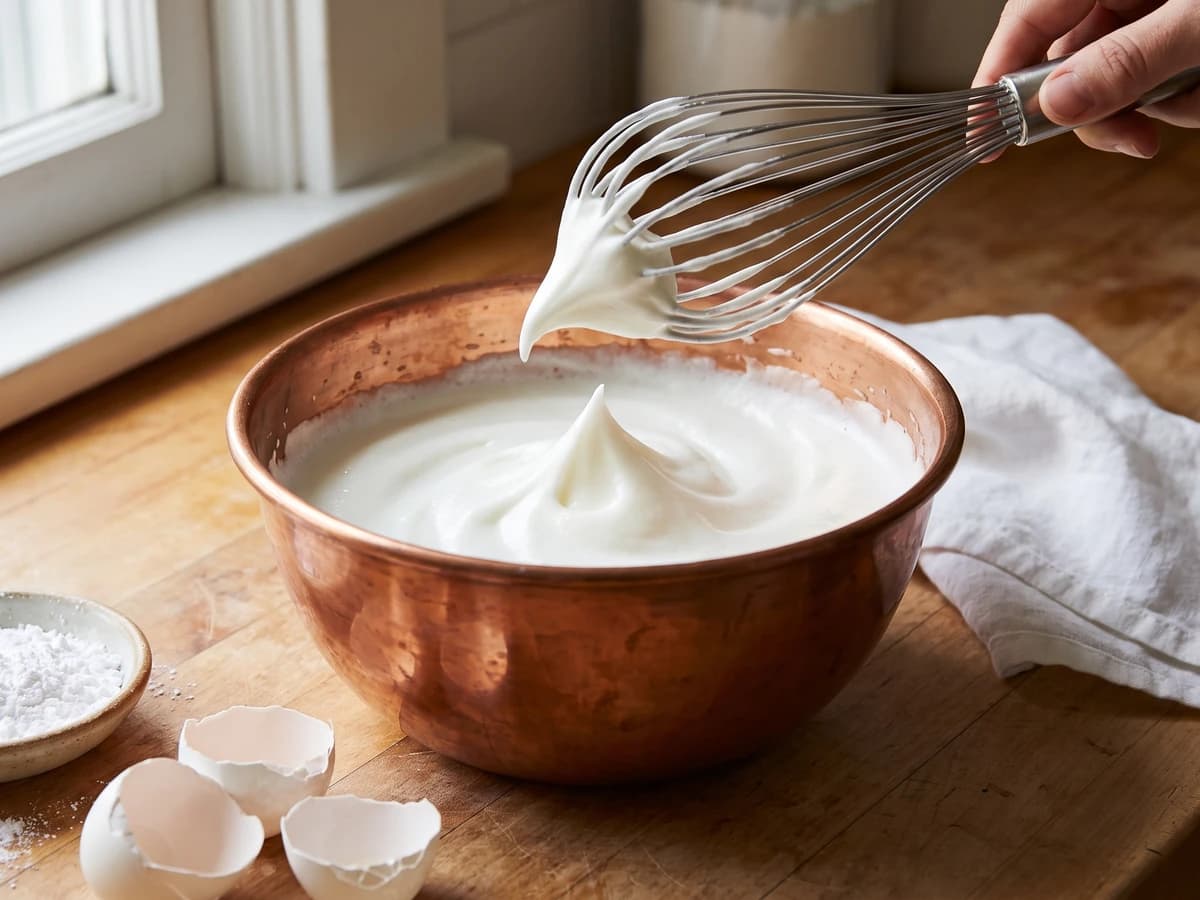
Four whites, one spotless bowl, and a patient change of speed: whisk gently until loosened, then briskly to glossy stiffness, with powdered sugar waiting if the foam begins to granulate.