
Chef Juliette
Various Almond Preparations
Five almond preparations, one discipline: remove the skins cleanly, dry every kernel through, then cut, toast, or cloak it in pale caramel without letting its fragrant oils escape.
A cooking platform built around craft, culture, and the stories behind what we eat.
Created by Chef Juliette
Based on No. 2877, Bombe Mercédès, from Le Guide Culinaire (1907) by Auguste Escoffier
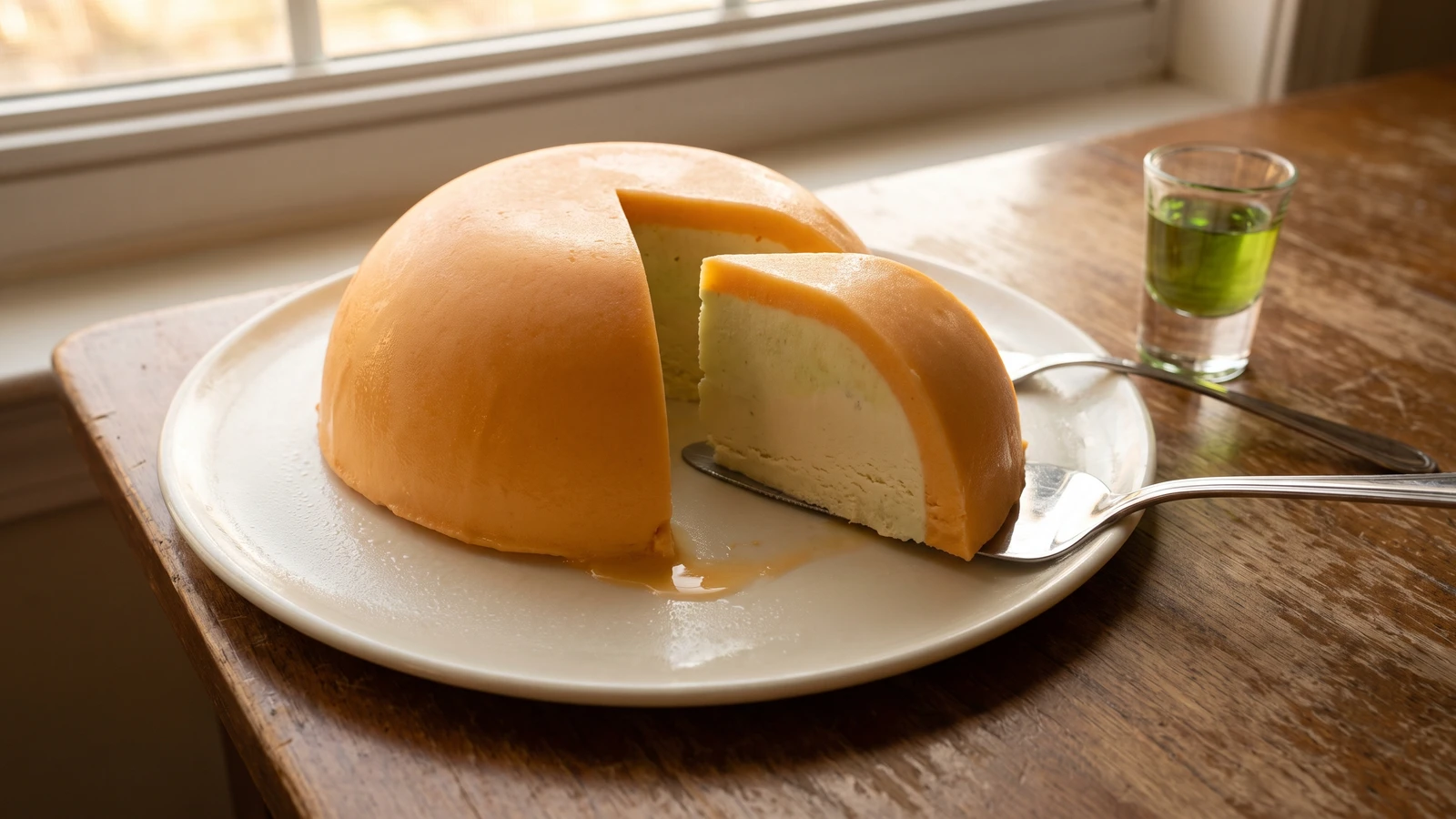
A pale apricot shell cuts cleanly to reveal Chartreuse-scented pâte à bombe: fruit-bright outside, softly creamy within, and proof that a grand frozen dessert depends on temperature and timing, not a brigade.
Bombe Mercédès (apricot ice enclosing a Chartreuse yolk-and-cream parfait) teaches the architecture of a bombe: a bright frozen shell around a rich, softly melting heart. At its center is pâte à bombe, a cooked yolk foam enriched with cream. The one true thing to know before touching the pan is simple: warm pâte à bombe melts whipped cream, so the yolk base must be thoroughly cool before the two meet.
The book entry is brief because it assumes apricot ice and Chartreuse bombe preparation are already waiting, with a glacier tending packed ice and proper metal moulds. A countertop churn, an ordinary freezer, and a 1.5-liter stainless-steel bowl do the same work at home. The brigade's separate hands and ice chest are scaffolding, so they go; the apricot clothing, the Chartreuse center, and the cooked-yolk emulsion are the dish, so they stay. Only the quantity and equipment have changed.
Cut it and the apricot shell should stand clean and orange-gold around a pale, herbal center that yields under the spoon. This is one cook, one stove, one evening of work, with the freezer taking the night watch when needed. Cool the pâte à bombe below 24°C before folding in the cream, because that single step decides the texture.
Bombe Mercédès belongs to the named frozen-dessert repertoire of Parisian grand kitchens rather than to a regional household table. Bombe describes both the rounded mould and the practice of layering contrasting frozen mixtures, while Mercédès identifies this particular marriage of apricot ice and Chartreuse cream; the formula does not securely identify a person behind the title. Its drama comes entirely from the cut, which reveals the shell and center without requiring elaborate decoration.
Quantity
2 cups (480 ml / 500 g)
made from ripe fresh or thawed frozen apricots
Quantity
2/3 cup (160 ml / 135 g)
Quantity
1/4 cup (60 ml / 60 g)
Quantity
6 large (about 1/2 cup / 120 ml / 105 g)
Quantity
1/2 cup (120 ml / 100 g)
Quantity
3 tablespoons (45 ml / 45 g)
Quantity
1/4 cup (60 ml / 55 g)
Quantity
1 1/2 cups (360 ml / 340 g)
Quantity
1 reference: Another Method of Preparing Aspics de Filets de Soles (No. 916)
technique only; no fish preparation enters the dessert
| Ingredient | Quantity |
|---|---|
| unsweetened apricot puréemade from ripe fresh or thawed frozen apricots | 2 cups (480 ml / 500 g) |
| granulated sugar, for the apricot ice | 2/3 cup (160 ml / 135 g) |
| water, for the apricot ice | 1/4 cup (60 ml / 60 g) |
| large egg yolks | 6 large (about 1/2 cup / 120 ml / 105 g) |
| granulated sugar, for the pâte à bombe | 1/2 cup (120 ml / 100 g) |
| water, for the pâte à bombe | 3 tablespoons (45 ml / 45 g) |
| Green Chartreuse | 1/4 cup (60 ml / 55 g) |
| cold heavy cream, at least 35 percent fat | 1 1/2 cups (360 ml / 340 g) |
| procedural reference for clothing the mouldtechnique only; no fish preparation enters the dessert | 1 reference: Another Method of Preparing Aspics de Filets de Soles (No. 916) |
Put the 2/3 cup sugar and 1/4 cup water in a small saucepan. Warm gently, stirring only until the sugar dissolves, then bring it to a brief simmer and remove it from the heat. Cool the syrup completely, whisk it into the apricot purée, and pass the mixture through a fine sieve. Chill it until very cold, at least 1 hour. A warm base churns slowly and grows coarse ice crystals, so don't hurry this cooling.
Chill the 1.5-liter mould while the apricot base rests. Churn the cold mixture according to the machine's directions until it holds the texture of firm soft ice, usually 20 to 25 minutes. It must be spreadable but no longer fluid. If it slumps from a spoon, give it 10 minutes in the freezer before clothing the mould.
Use the mould-coating motion preserved in Another Method of Preparing Aspics de Filets de Soles (No. 916), borrowing only the technique, never the savory preparation. Chemiser, to clothe the mould, by turning the chilled bowl as you press about three-quarters of the apricot ice over its base and sides in an even layer 1.5 cm thick. Reserve the remaining ice in a covered container. Hold the lined mould against the light, patch any thin places, then freeze it for 45 minutes, until hard.
Bring 2 cm of water to the barest simmer in a saucepan. Whisk the yolks with the 1/2 cup sugar and 3 tablespoons water in a heatproof bowl, then set it over the pan without letting the bowl touch the water. Whisk constantly over this gentle bain-marie until the mixture reaches 71°C, turns pale and thick, and falls from the whisk in a ribbon that remains visible for several seconds, about 7 to 10 minutes. If egg begins to catch around the rim, lift the bowl off at once and whisk in 1 tablespoon of the measured cold cream, then strain it into a clean bowl. Ça se rattrape. Fully scrambled yolks cannot be smoothed, so keep the heat modest and the whisk moving.
Set the bowl over ice water and continue whisking until the pâte à bombe is cool, thick, and no warmer than 24°C. Whisk in the Green Chartreuse only after cooling so its herbal perfume remains clear. If the base becomes too stiff to fold, let it stand for 2 minutes and whisk in a spoonful of the measured cream. It should hold a ribbon but still move willingly.
Reserve 2 tablespoons of the cold cream, then whip the remainder to soft peaks. The cream should mound gently and curl at the whisk, not stand in stiff clumps. If it becomes grainy, fold in the reserved unwhipped cream until smooth. Stir one-third into the cool pâte à bombe to lighten it, then fold in the rest with broad turns of the spatula. If the mixture loosens because the yolk base was still warm, set the bowl over ice and fold gently until it regains body.
Spoon the Chartreuse pâte à bombe into the frozen apricot shell, working it into the curve without leaving air pockets, and stop about 1 cm below the rim. Soften the reserved apricot ice just until spreadable, then cover the center completely and level it flush with the rim. This final layer closes the apricot shell around the filling, which is the construction the dish depends upon. Cover tightly and freeze for at least 6 hours, preferably overnight.
Chill the serving platter. Dip the outside of the mould in warm water for 5 to 8 seconds, dry it, and invert it onto the platter. If the bombe doesn't release, repeat the dip for only 2 seconds; too much warmth blurs the apricot surface. Let it stand for 5 minutes, then cut with a long knife warmed in hot water and wiped dry between slices. Serve without unnecessary decoration. The orange shell and pale Chartreuse heart have already done the work. À table!
1 serving (about 165g)
Culinary guides, cultural storytelling, and the editorial depth that makes cooking meaningful.
Discover Culinary ExplorerChef Juliette
Five almond preparations, one discipline: remove the skins cleanly, dry every kernel through, then cut, toast, or cloak it in pale caramel without letting its fragrant oils escape.

Chef Juliette
A pastry pantry lesson in one tray: filberts warmed only until their red skins release, rubbed clean, cooled, and chopped into a fragrant mise-en-place for cakes, creams, pralines, and petits fours.

Chef Juliette
The smallest pâtisserie discipline decides whether a cake leaves its mould intact: clarified butter in every corner, followed by the lightest veil of dry flour or fécule.
Chef Juliette
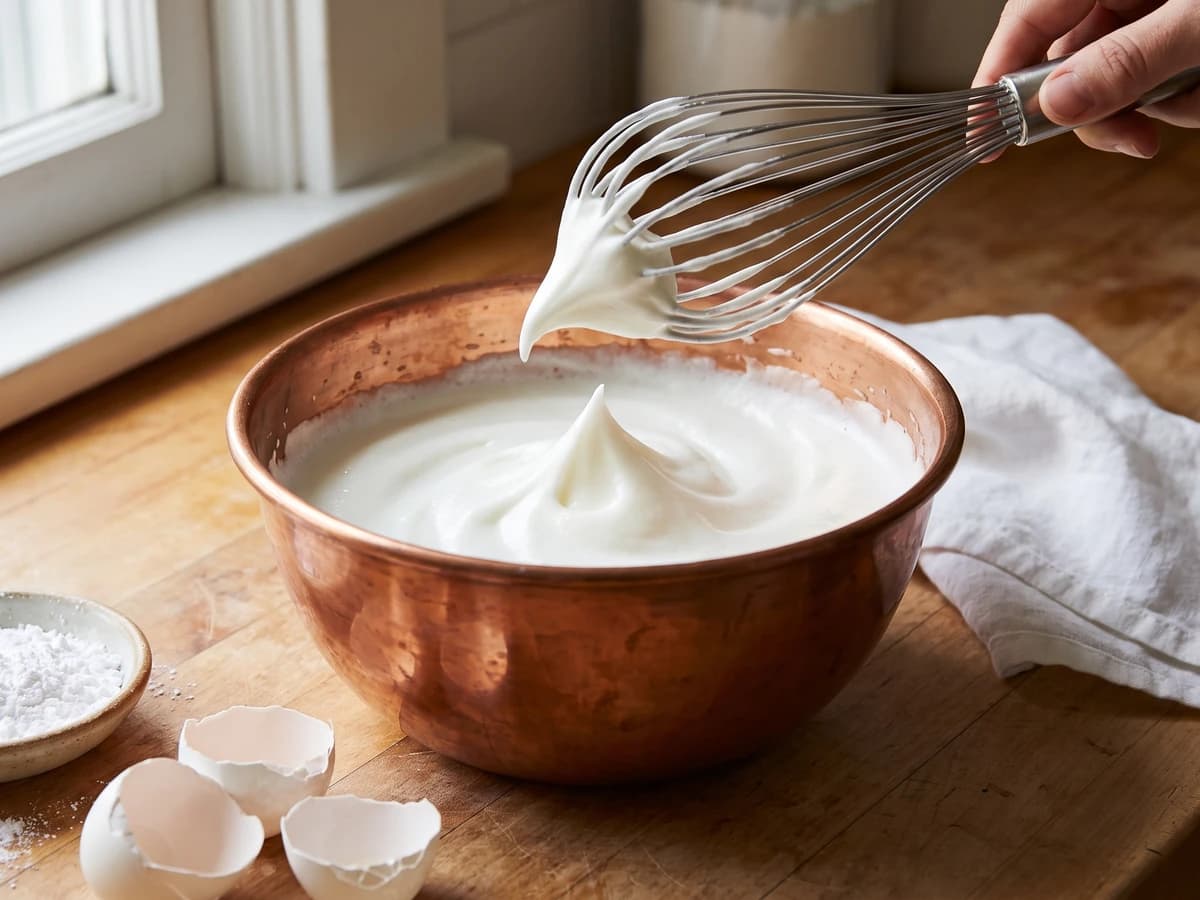
Four whites, one spotless bowl, and a patient change of speed: whisk gently until loosened, then briskly to glossy stiffness, with powdered sugar waiting if the foam begins to granulate.