
Chef Juliette
Various Almond Preparations
Five almond preparations, one discipline: remove the skins cleanly, dry every kernel through, then cut, toast, or cloak it in pale caramel without letting its fragrant oils escape.
A cooking platform built around craft, culture, and the stories behind what we eat.
Created by Chef Juliette
Based on No. 2861, Bombe Havanaise, from Le Guide Culinaire (1907) by Auguste Escoffier
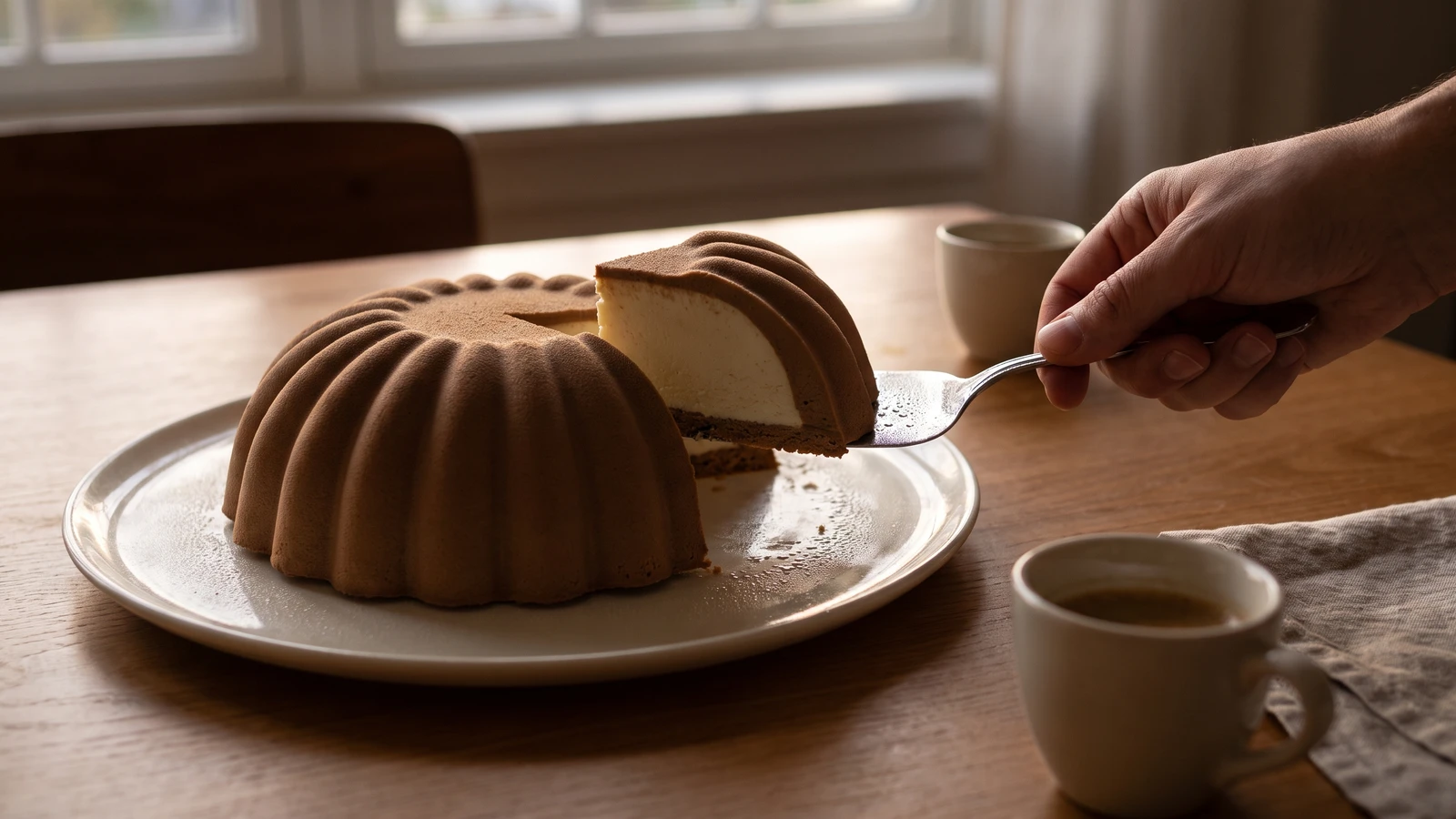
Coffee ice holds a pale vanilla-rum pâte à bombe in a clean frozen shell, a lesson in controlling water, temperature, and texture so every slice cuts creamy rather than grainy.
Bombe Havanaise (a moulded coffee ice with a vanilla-rum cream centre) teaches control of water, the quiet law behind every fine frozen dessert. Before you touch a pan, know this: coffee belongs in the measured sugar syrup, not in a cup of brewed coffee tipped into the base. Extra water freezes coarse; concentrated infusion leaves deep coffee perfume and a close, creamy cut.
The original entry assumed a pastry brigade with coffee ice and vanilla-rum Bombe-preparation already waiting, a proper metal bombe mould, and cold maintained with ice and salt while another pair of hands built the layers. The home translation is smaller and calmer: a domestic ice-cream machine, a 1.2-liter metal mould or mixing bowl, and short rests in an ordinary freezer. Ready tubs and brigade quantities were scaffolding, so they go. The even coffee lining and aerated pâte à bombe are the dish, so they stay. One cook, one stove, one evening of work, then the freezer keeps watch.
Cut open, the bombe should show a dark coffee shell around an ivory centre scented first with vanilla, then rum. That centre is pâte à bombe, a hot-syrup yolk foam lightened with softly whipped cream, and it must remain airy enough to slice without turning icy. The step that decides everything is chemiser le moule (clothing the mould): spread the coffee ice evenly and freeze it hard before the filling goes in.
Bombes glacées belong to the Parisian pâtisserie and grand dining-room repertoire, where metal moulds allowed contrasting frozen preparations to be assembled into one clean form. The title Havanaise signals the pairing of coffee and rum associated with Havana in French menu language, not a claim that the dessert came from a Cuban household table. One revealing piece of kitchen grammar is the source's cross-reference to Another Method of Preparing Aspics de Filets de Soles (No. 916): the act of clothing a cold mould passed from savory aspic work to frozen pastry, though the fillings could scarcely be more different.
Quantity
¼ cup (60 ml / 22 g)
coarsely crushed
Quantity
½ cup (120 ml / 100 g)
for the coffee ice
Quantity
⅓ cup (80 ml / 80 g)
for the coffee syrup
Quantity
1 cup (240 ml / 245 g)
Quantity
¾ cup (180 ml / 180 g)
for the coffee ice
Quantity
3
for the coffee ice
Quantity
¼ teaspoon (1.25 ml / 1.5 g)
divided
Quantity
4
for the pâte à bombe
Quantity
½ cup (120 ml / 100 g)
for the pâte à bombe
Quantity
3 tablespoons (45 ml / 45 g)
for the pâte à bombe syrup
Quantity
1
split lengthwise and seeds scraped
Quantity
3 tablespoons (45 ml / 42 g)
Quantity
1 cup (240 ml / 240 g)
for the filling
Quantity
Up to 1 tablespoon (15 ml / 15 g)
only if a syrup crystallizes
Quantity
1 method reference (No. 916)
for clothing the mould
| Ingredient | Quantity |
|---|---|
| whole coffee beanscoarsely crushed | ¼ cup (60 ml / 22 g) |
| granulated sugarfor the coffee ice | ½ cup (120 ml / 100 g) |
| waterfor the coffee syrup | ⅓ cup (80 ml / 80 g) |
| whole milk | 1 cup (240 ml / 245 g) |
| heavy creamfor the coffee ice | ¾ cup (180 ml / 180 g) |
| large egg yolksfor the coffee ice | 3 |
| fine sea saltdivided | ¼ teaspoon (1.25 ml / 1.5 g) |
| large pasteurized egg yolksfor the pâte à bombe | 4 |
| granulated sugarfor the pâte à bombe | ½ cup (120 ml / 100 g) |
| waterfor the pâte à bombe syrup | 3 tablespoons (45 ml / 45 g) |
| vanilla beansplit lengthwise and seeds scraped | 1 |
| aged dark rum | 3 tablespoons (45 ml / 42 g) |
| cold heavy creamfor the filling | 1 cup (240 ml / 240 g) |
| water (optional)only if a syrup crystallizes | Up to 1 tablespoon (15 ml / 15 g) |
| Another Method of Preparing Aspics de Filets de Solesfor clothing the mould | 1 method reference (No. 916) |
Place the bombe mould and a small offset spatula in the freezer. Combine the coffee-ice sugar and water in a small saucepan, stirring over medium heat only until the sugar dissolves. Let it boil for one minute, remove it from the heat, add the crushed coffee beans, and cover for 10 minutes. Strain through a fine sieve lined with a coffee filter, letting the syrup drip without pressing the bitter sediment through. This measured infusion gives the shell its coffee strength without the uncontrolled water of brewed coffee. If crystals form around the pan, add a teaspoon of the optional water and warm gently until the syrup is clear again. Ça se rattrape.
Warm the milk, the ¾ cup cream, the strained coffee syrup, and half the salt until small bubbles appear at the edge. Whisk the 3 yolks in a bowl, pour in a third of the hot dairy while whisking, then return everything to the saucepan. Stir constantly over low heat until it reaches crème anglaise consistency, coating the back of a spoon while a finger drawn through it leaves a clean path, about 82 to 84°C. Never let it boil. At the first sign of fine curds, lift the pan from the heat, blend briefly, and strain at once; a lightly grainy custard can be rescued, but firmly scrambled yolks cannot. Set the bowl over ice, stir until cold, cover, and chill for at least 3 hours.
Churn the thoroughly cold base in the ice-cream machine until it stands in soft folds and holds the track of the dasher, usually 20 to 25 minutes. It should be spreadable but no longer fluid. Reserve about ¾ cup in a covered freezer container for sealing the base of the bombe, then work promptly with the remainder. A half-frozen mixture slides down the mould and makes a thick bottom with bare sides; if yours is too loose, give it 10 minutes in the freezer before continuing.
Chemiser le moule using the thin, even coating principle named in Another Method of Preparing Aspics de Filets de Soles (No. 916). For coffee ice, which is semisolid rather than liquid jelly, press half of it over the bottom and sides of the frozen mould with the chilled spatula, freeze for 15 minutes, then add the remainder until the shell is about 1 cm thick throughout. Freeze for at least 30 minutes. Inspect the rim and inner surface carefully; if a patch looks thin, soften a spoonful of coffee ice, press it over the weakness, and freeze again. The outline needn't be dainty, but it must be complete.
Begin whipping the 4 pasteurized yolks with the vanilla seeds and remaining salt at medium speed. Meanwhile, combine the pâte à bombe sugar and water in a clean saucepan and cook without stirring to 118°C. With the mixer running, pour the hot syrup in a narrow stream down the inside of the bowl, clear of the moving whisk. Increase the speed and whip until the mixture is pale, thick, tripled in volume, and cooler than 30°C, about 8 minutes. If the syrup crystallizes before pouring, add a teaspoon of the optional water, dissolve it completely over gentle heat, and bring it back to 118°C. Once the yolk foam is cool, beat in the rum. Do not add more rum for courage; alcohol softens the freeze, and this measure is generous enough.
Whip the cold cream to soft peaks, stopping while the tip still bends. Fold one quarter into the pâte à bombe to loosen it, then fold in the rest with broad strokes until no white streaks remain. If the yolk mixture is still warm, set its bowl over ice and keep folding gently until cool; warm filling melts the coffee shell and muddles the clean division that defines the dish. Spoon the filling into the frozen shell, leaving about 1 cm at the rim, and smooth it level. If the surface feels very soft, freeze it for 20 minutes. Soften the reserved coffee ice just until spreadable, press it over the filling as a complete cap, and smooth it flush with the mould.
Cover the mould tightly and freeze for at least 6 hours, preferably overnight. Chill the serving platter before unmoulding. Press a cloth dipped in warm water against the outside of the mould for 5 seconds, invert it onto the platter, and lift straight upward. If it refuses, repeat for 3 seconds rather than flooding it with heat. If the surface softens or streaks, return the unmoulded bombe to the freezer for 15 minutes; it will set cleanly again. Let it stand for 5 minutes before cutting, then slice with a knife dipped in hot water and wiped completely dry between cuts. À table!
1 serving (about 135g)
Culinary guides, cultural storytelling, and the editorial depth that makes cooking meaningful.
Discover Culinary ExplorerChef Juliette
Five almond preparations, one discipline: remove the skins cleanly, dry every kernel through, then cut, toast, or cloak it in pale caramel without letting its fragrant oils escape.

Chef Juliette
A pastry pantry lesson in one tray: filberts warmed only until their red skins release, rubbed clean, cooled, and chopped into a fragrant mise-en-place for cakes, creams, pralines, and petits fours.

Chef Juliette
The smallest pâtisserie discipline decides whether a cake leaves its mould intact: clarified butter in every corner, followed by the lightest veil of dry flour or fécule.
Chef Juliette
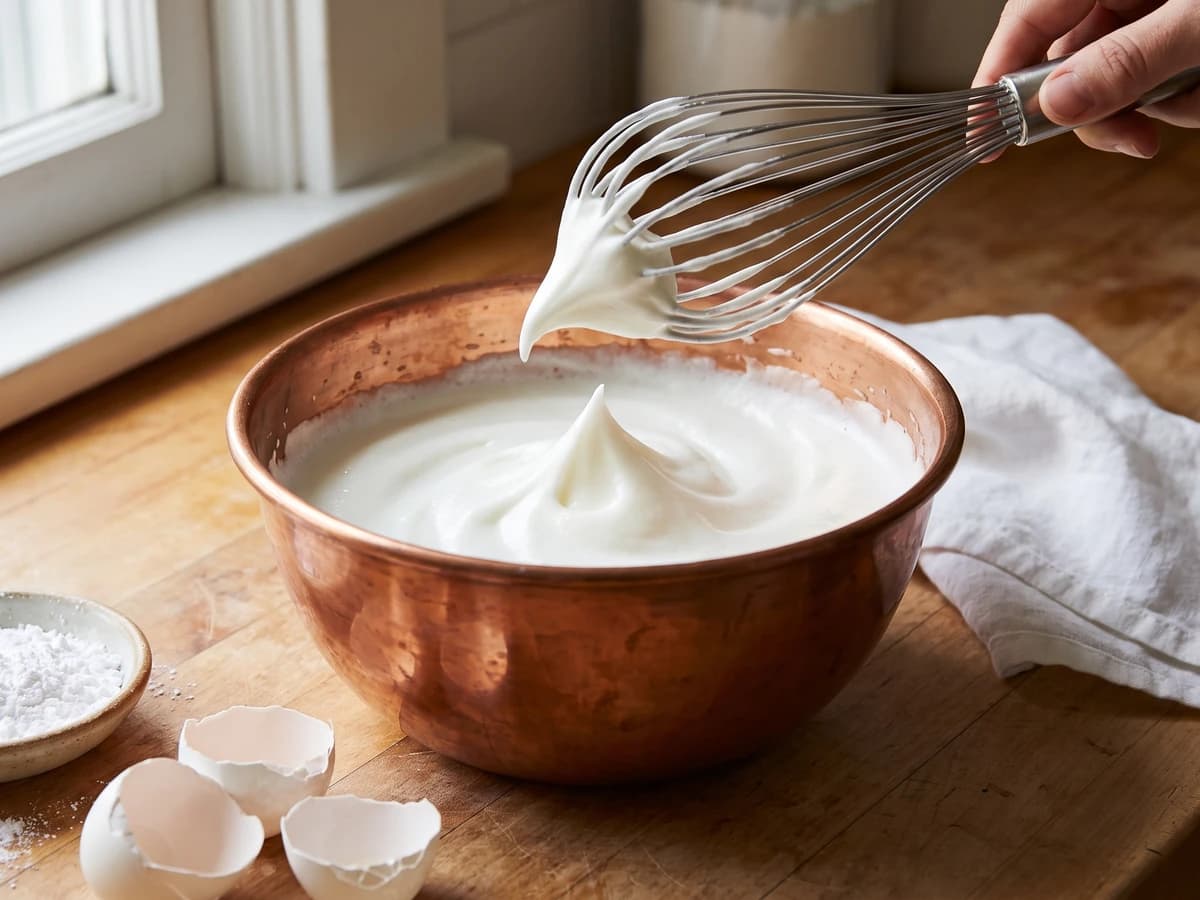
Four whites, one spotless bowl, and a patient change of speed: whisk gently until loosened, then briskly to glossy stiffness, with powdered sugar waiting if the foam begins to granulate.