
Chef Juliette
Various Almond Preparations
Five almond preparations, one discipline: remove the skins cleanly, dry every kernel through, then cut, toast, or cloak it in pale caramel without letting its fragrant oils escape.
A cooking platform built around craft, culture, and the stories behind what we eat.
Created by Chef Juliette
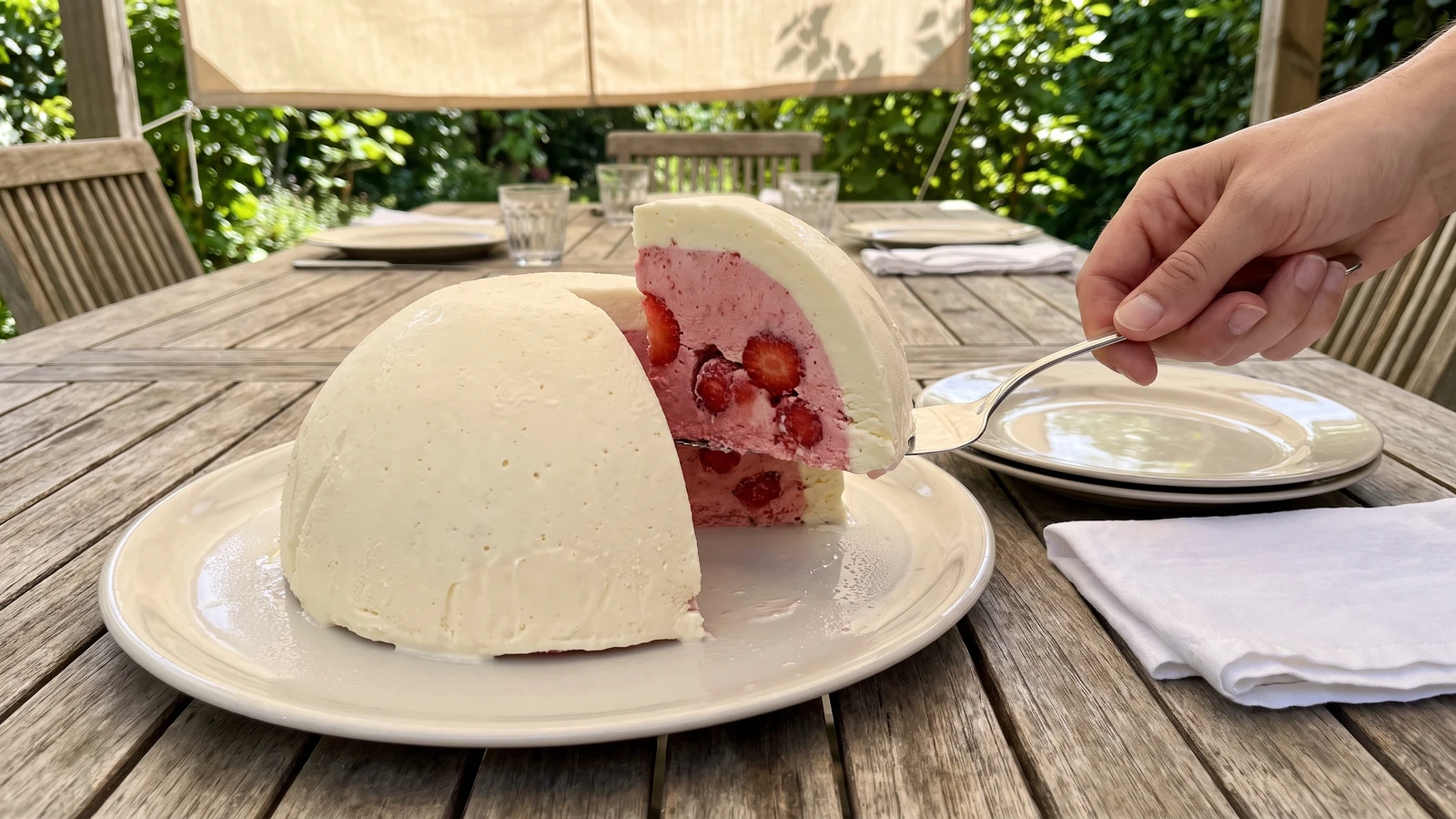
Based on No. 2856, Bombe Formosa, from Le Guide Culinaire (1907) by Auguste Escoffier
A vanilla ice-cream shell around strawberry pâte à bombe and whole ripe berries, turned out in one generous dome: the frozen dessert that teaches temperature, timing, and a clean unmoulding.
Bombe Formosa (a vanilla-lined strawberry ice-cream dome) teaches temperature before anything else. The vanilla shell must be firm before the filling arrives, the pâte à bombe (a yolk foam cooked with hot sugar syrup) must be cool before it meets whipped cream, and the finished bombe must freeze through before you ask it to stand. Get those temperatures right and the slice is a small triumph: ivory outside, strawberry pink within, whole berries declaring themselves at every cut.
The book assumed a pâtissier with churned ices ready, deep metal bombe moulds packed in salt and ice, and enough hands to coat them in repeated rounds. At home, good vanilla ice cream is the finished component the entry itself calls for, a 1.5-litre metal bowl replaces the specialist mould, and the freezer replaces the ice chest. The repeated re-icing was brigade scaffolding, so it goes. Clothing the mould with vanilla, filling it with strawberry bombe preparation and the large whole berries the entry specifies, then sealing and freezing it solid, those steps are the dish and they stay. One cook, one stove, one evening; the freezer keeps watch after that.
Cool the pâte à bombe completely before folding in the cream. That is the one step that decides the texture, because warm yolk foam melts the air you worked to build and gives you a heavy, icy centre.
The bombe glacée belongs to the Parisian pâtisserie and grand dining-room repertoire, where contrasting frozen preparations were layered in rounded metal moulds and turned out whole for the table. Its name comes from that domed, shell-like mould, while Formosa is one of the repertory's fanciful catalogue titles. Although Formosa was a European geographical name for Taiwan, this is not a Taiwanese dessert: the entry defines it entirely through vanilla ice cream, strawberry bombe preparation, and whole strawberries.
Quantity
2½ cups (590 ml / 500 g)
softened until spreadable but still cold
Quantity
¾ cup (180 ml / 190 g)
made from about 1⅔ cups (395 ml / 250 g) fresh hulled strawberries
Quantity
8 berries (about 1 cup / 240 ml / 160 g)
hulled and left whole
Quantity
3 large yolks (about ¼ cup / 60 ml / 54 g)
Quantity
⅓ cup plus 2 tablespoons (110 ml / 90 g)
Quantity
2 tablespoons (30 ml / 30 g)
Quantity
1 cup (240 ml / 240 g)
Quantity
Technique reference only (No. 916), for clothing the mould; not added to the dessert
| Ingredient | Quantity |
|---|---|
| good vanilla ice creamsoftened until spreadable but still cold | 2½ cups (590 ml / 500 g) |
| smooth strawberry puréemade from about 1⅔ cups (395 ml / 250 g) fresh hulled strawberries | ¾ cup (180 ml / 190 g) |
| large, firm strawberrieshulled and left whole | 8 berries (about 1 cup / 240 ml / 160 g) |
| pasteurized egg yolks | 3 large yolks (about ¼ cup / 60 ml / 54 g) |
| granulated sugar | ⅓ cup plus 2 tablespoons (110 ml / 90 g) |
| water | 2 tablespoons (30 ml / 30 g) |
| cold heavy cream | 1 cup (240 ml / 240 g) |
| Another Method of Preparing Aspics de Filets de Soles | Technique reference only (No. 916), for clothing the mould; not added to the dessert |
Put a 1.5-litre metal bombe mould or deep round mixing bowl in the freezer for 20 minutes. Chill the serving platter as well. If making the purée now, blend the hulled strawberries until smooth, press them through a fine sieve, and measure ¾ cup (180 ml / 190 g); keep it cold. The sieve is useful scaffolding here, removing seeds that would interrupt the silk of the filling.
Reserve about ½ cup (120 ml / 100 g) of the softened vanilla ice cream for the final seal. Press the rest over the bottom and sides of the frozen mould in an even layer about 1 cm thick, using the back of a cold spoon or a small offset spatula. The book points to Another Method of Preparing Aspics de Filets de Soles (No. 916) for the operation called clothing the mould; the motion is the same, but softened ice cream replaces jelly in this frozen application. Freeze for 45 minutes, until the lining is hard. If the ice cream slides down the sides, stop and freeze the mould for 10 minutes, then patch it. Ça se rattrape.
Put the sugar and water in a small heavy saucepan. Warm gently, stirring only until the sugar dissolves, then raise the heat and boil without stirring until the syrup reaches 118°C (244°F), the soft-ball stage. If crystals spread across the syrup, take the pan off the heat, add 1 tablespoon (15 ml / 15 g) water, and warm gently until clear before continuing. Ça se rattrape; forcing a grainy syrup onward does not.
Begin whisking the pasteurized yolks at medium speed as the syrup reaches temperature. With the mixer running, pour the hot syrup down the inside of the bowl in a thin, steady ribbon, keeping it away from the moving beaters. Raise the speed and whisk for 7 to 10 minutes, until the pâte à bombe is pale, very thick, and cool enough that the bowl no longer feels warm. If it remains warm, set the bowl over cold water and keep whisking. Do not fold cream into a warm base; the cream will melt and the centre will freeze dense.
Whip the cold cream to soft peaks, reserving 1 tablespoon (15 ml / 15 g) unwhipped. Fold the cold strawberry purée into the pâte à bombe, then fold in the whipped cream in three additions, turning the bowl and lifting from underneath so the air stays in the mixture. If the cream goes grainy from overwhipping, work in the reserved liquid cream a teaspoon at a time until it becomes supple again. The finished strawberry preparation should be light, smooth, and thick enough to fall from the spatula in a broad ribbon.
Spoon one-third of the strawberry preparation into the frozen vanilla shell. Arrange the whole strawberries through the centre with a little space between them, keeping them away from the mould wall so every slice retains its white border. Cover with the remaining filling and tap the mould gently against a folded towel to release hidden air pockets. Leave about 1 cm at the rim, spread the reserved vanilla ice cream over the top as a seal, and smooth it level.
Press reusable wrap or baking parchment directly against the surface, cover the mould, and freeze on a level shelf for at least 6 hours, preferably overnight. This waiting is part of the dish. A bombe that is firm only around the edges will slump when unmoulded, so test the centre through the covering; it must feel hard and unyielding.
Remove the covering and pass a warm, damp towel around the outside of the mould for 5 to 8 seconds. Invert the chilled platter over it, turn both together, and lift the mould straight up. If it refuses, repeat the towel briefly; do not soak the mould, or the vanilla shell will melt before the centre releases. If the bombe softens too far, return it to the mould and freeze for 30 minutes. Let the turned-out bombe temper for 10 to 15 minutes, then cut it with a warm, dry knife, wiping between slices. À table!
1 serving (about 155g)
Culinary guides, cultural storytelling, and the editorial depth that makes cooking meaningful.
Discover Culinary ExplorerChef Juliette
Five almond preparations, one discipline: remove the skins cleanly, dry every kernel through, then cut, toast, or cloak it in pale caramel without letting its fragrant oils escape.

Chef Juliette
A pastry pantry lesson in one tray: filberts warmed only until their red skins release, rubbed clean, cooled, and chopped into a fragrant mise-en-place for cakes, creams, pralines, and petits fours.

Chef Juliette
The smallest pâtisserie discipline decides whether a cake leaves its mould intact: clarified butter in every corner, followed by the lightest veil of dry flour or fécule.
Chef Juliette
Four whites, one spotless bowl, and a patient change of speed: whisk gently until loosened, then briskly to glossy stiffness, with powdered sugar waiting if the foam begins to granulate.