
Chef Juliette
Various Almond Preparations
Five almond preparations, one discipline: remove the skins cleanly, dry every kernel through, then cut, toast, or cloak it in pale caramel without letting its fragrant oils escape.
A cooking platform built around craft, culture, and the stories behind what we eat.
Created by Chef Juliette
Based on No. 2840, Bombe Camargo, from Le Guide Culinaire (1907) by Auguste Escoffier
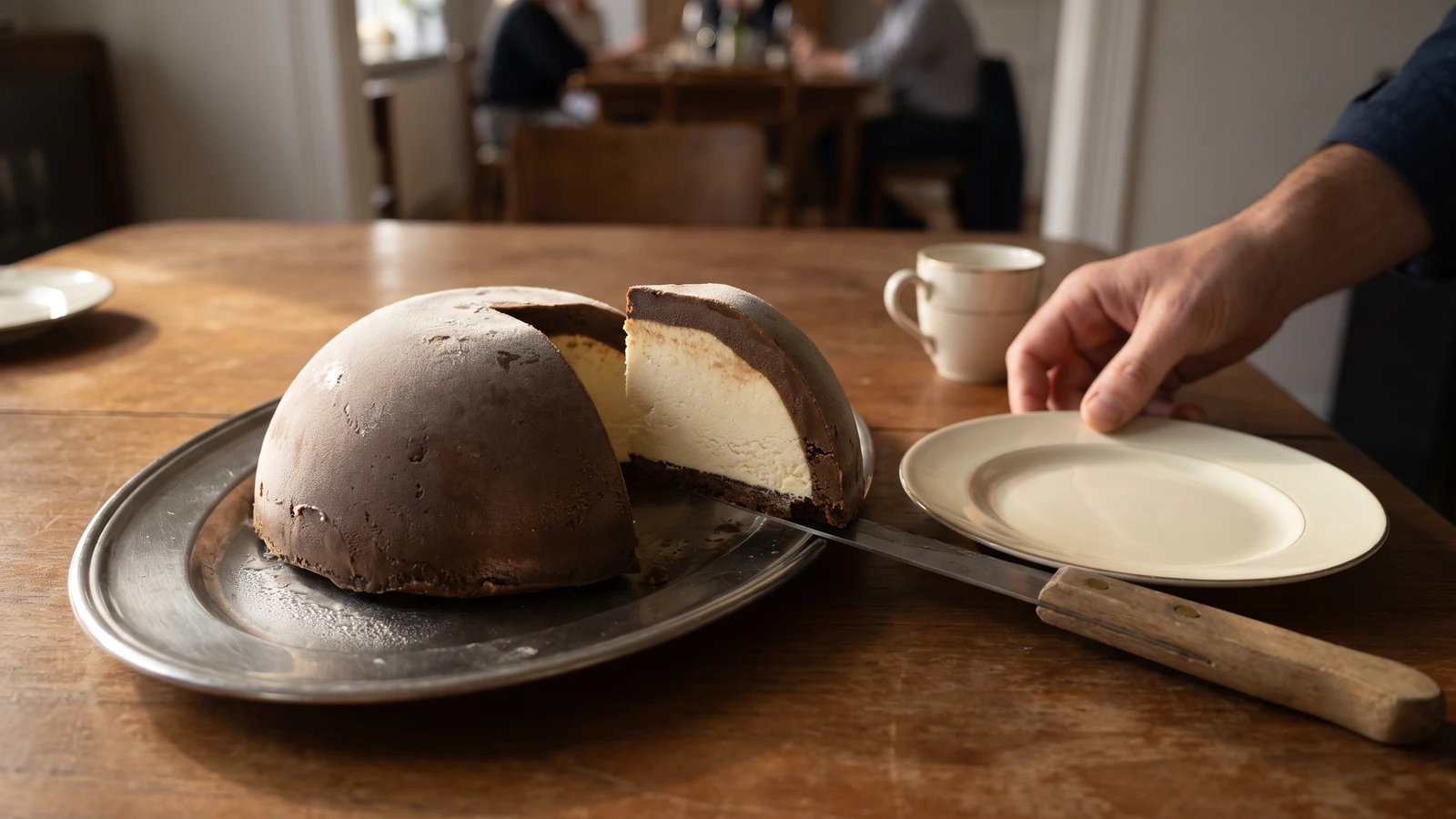
A dark, fragrant coffee ice shell around a pale vanilla pâte à bombe, smooth enough to slice and generous enough for a dinner table, with the mould-clothing technique made practical at home.
Bombe Camargo (a coffee ice shell filled with vanilla pâte à bombe) teaches the discipline of controlling water in a frozen dessert. The coffee belongs in the syrup while the syrup is hot; pour cold brewed coffee into a finished base and you add loose water, which freezes into coarse crystals. Inside, pâte à bombe, a hot-syrup yolk foam, gives vanilla cream enough body to cut in pale, clean slices.
The original entry assumed a glacier at the frozen-dessert station, a sorbetière turning in salted ice, and moulds passed between ice chests while another pair of hands made the filling. At home, a small ice cream machine, a chilled metal mould, and an ordinary freezer do the same work in sequence. The brigade's repeated transfers can go; the coffee shell around the vanilla centre is the dish and must stay. One cook, one stove, one evening of work, then the freezer keeps watch.
When it is right, the first slice reveals a dark coffee crescent around an ivory centre, firm at the edge and creamy within. Clothe the mould evenly before you make the filling. Thin places crack during unmoulding, while a shell patched to an even thickness holds beautifully.
Bombes belong to the Parisian repertoire of entremets glacés, where a domed metal mould gave the family its name and allowed contrasting frozen preparations to be packed in layers. Camargo follows the Parisian habit of naming showpiece desserts for admired figures of the stage, here the dancer remembered as La Camargo, and its coffee-and-vanilla pairing carried the form from grand service into pâtisserie practice. Despite the name, a bombe is not a cake: the shell and core are its defining construction, with each texture controlled separately.
Quantity
2 cups (480 ml / 480 g)
for the coffee ice
Quantity
⅞ cup (210 ml / 175 g)
for the coffee ice
Quantity
½ cup (120 ml / 45 g)
coarsely crushed
Quantity
6 (about 105 g)
Quantity
⅔ cup (160 ml / 135 g)
for the vanilla pâte à bombe
Quantity
¼ cup (60 ml / 60 g)
for the vanilla pâte à bombe
Quantity
1
Quantity
1½ cups (360 ml / 350 g)
Quantity
1 technique reference: Another Method of Preparing Aspics de Filets de Soles (No. 916)
consulted only for clothing the mould; no fish or jelly enters the dessert
| Ingredient | Quantity |
|---|---|
| waterfor the coffee ice | 2 cups (480 ml / 480 g) |
| granulated sugarfor the coffee ice | ⅞ cup (210 ml / 175 g) |
| fresh whole coffee beanscoarsely crushed | ½ cup (120 ml / 45 g) |
| large egg yolks | 6 (about 105 g) |
| granulated sugarfor the vanilla pâte à bombe | ⅔ cup (160 ml / 135 g) |
| waterfor the vanilla pâte à bombe | ¼ cup (60 ml / 60 g) |
| vanilla bean | 1 |
| cold heavy cream, at least 35% fat | 1½ cups (360 ml / 350 g) |
| book cross-referenceconsulted only for clothing the mould; no fish or jelly enters the dessert | 1 technique reference: Another Method of Preparing Aspics de Filets de Soles (No. 916) |
Set a 1.5-liter metal bombe mould or deep round metal bowl in the freezer for at least 30 minutes. Chill the platter for unmoulding as well. A metal mould takes the cold quickly and releases cleanly; glass holds on stubbornly and asks for more warming than this dessert can afford.
Combine the 2 cups water and ⅞ cup sugar in a saucepan. Bring just to a boil, stirring only until the sugar dissolves, then remove from the heat and immediately add the crushed coffee beans. Cover and infuse for 15 minutes. Strain through a fine mesh sieve without pressing the grounds, then cool the syrup over an ice bath and refrigerate until thoroughly cold. Infuse the coffee into the syrup hot, never by adding cold brewed coffee afterward; loose water is what turns a fine ice grainy.
Churn the cold coffee syrup until it is dense, smooth, and firm enough to mound on a spoon, usually 20 to 30 minutes. If it remains soupy because the machine bowl has warmed, scrape it into a shallow metal pan, freeze for 20 minutes, then churn again. Ça se rattrape. Transfer about 1 cup of the coffee ice to a covered container for sealing the bombe and keep it frozen.
Using the book's cross-reference, Another Method of Preparing Aspics de Filets de Soles (No. 916), for the action rather than its savoury contents, clothe the mould with the remaining coffee ice. Press it over the bottom and sides with a cold spoon or small offset spatula, making an even layer about ½ inch (1.25 cm) thick and leaving the centre hollow. Hold the mould toward the light to find thin patches, repair them with more coffee ice, then freeze for at least 30 minutes. This even shell is the step that must stay.
Put the yolks and the scraped vanilla seeds in the bowl of a stand mixer and begin beating at medium speed. Combine the ⅔ cup sugar and ¼ cup water in a small saucepan, add the scraped vanilla pod, and boil without stirring until the syrup reaches 245°F (118°C). Remove the pod. With the mixer running, pour the syrup in a thin stream between the whisk and the side of the bowl, never directly onto either, then beat at high speed until the pâte à bombe is thick, pale, and no warmer than room temperature. If a little syrup hardens into threads on the bowl wall, leave it there rather than scraping crystals into the smooth base; the pâte à bombe itself is still sound.
Whip the cold cream to soft peaks that curl at their tips. Fold one-third into the pâte à bombe to loosen it, then fold in the remainder with broad strokes until no white streaks remain. The yolk base must be cool before the cream enters. If the mixture loosens because the base was still warm, refrigerate it for 10 minutes, then fold gently once more. Do not beat it harder, which only knocks out the air you need.
Spoon the vanilla pâte à bombe into the frozen coffee shell, pressing gently enough to close large air pockets without crushing its volume. Stop about ½ inch (1.25 cm) below the rim and level the surface. Spread the reserved coffee ice over the filling to seal it completely, patching the join where the cap meets the shell. Cover closely and freeze for at least 6 hours, preferably overnight.
Dip the mould in warm water, about 95°F to 104°F (35°C to 40°C), for 5 seconds, dry it, and invert it onto the chilled platter. If it does not release, wrap the mould briefly in a warm towel; repeated dipping melts the coffee shell before the centre lets go. Return a softened bombe to the freezer for 10 minutes. Cut with a warm, dry knife and serve at once. À table!
1 serving (about 160g)
Culinary guides, cultural storytelling, and the editorial depth that makes cooking meaningful.
Discover Culinary ExplorerChef Juliette
Five almond preparations, one discipline: remove the skins cleanly, dry every kernel through, then cut, toast, or cloak it in pale caramel without letting its fragrant oils escape.

Chef Juliette
A pastry pantry lesson in one tray: filberts warmed only until their red skins release, rubbed clean, cooled, and chopped into a fragrant mise-en-place for cakes, creams, pralines, and petits fours.

Chef Juliette
The smallest pâtisserie discipline decides whether a cake leaves its mould intact: clarified butter in every corner, followed by the lightest veil of dry flour or fécule.
Chef Juliette
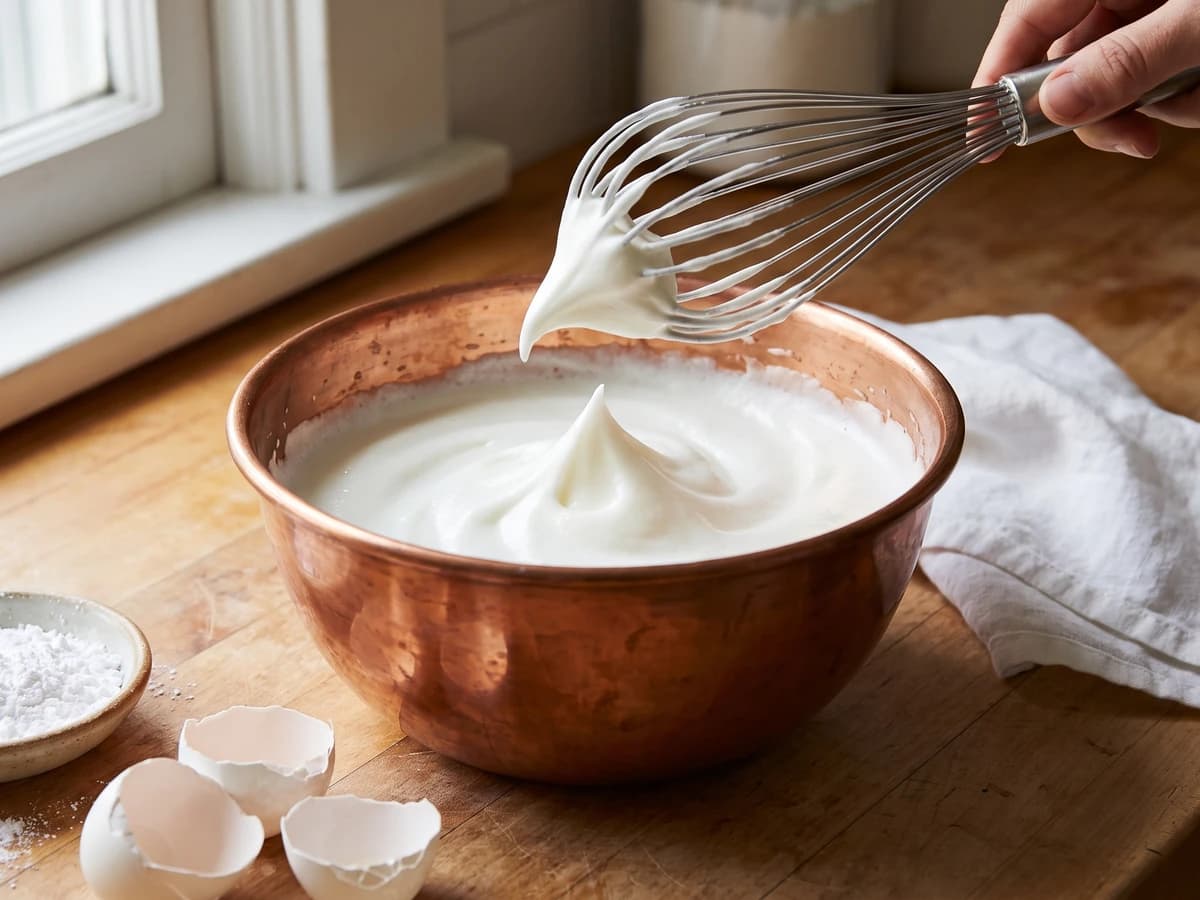
Four whites, one spotless bowl, and a patient change of speed: whisk gently until loosened, then briskly to glossy stiffness, with powdered sugar waiting if the foam begins to granulate.