
Chef Juliette
Various Almond Preparations
Five almond preparations, one discipline: remove the skins cleanly, dry every kernel through, then cut, toast, or cloak it in pale caramel without letting its fragrant oils escape.
A cooking platform built around craft, culture, and the stories behind what we eat.
Created by Chef Juliette
Based on No. 2836, Bombe Andalouse, from Le Guide Culinaire (1907) by Auguste Escoffier
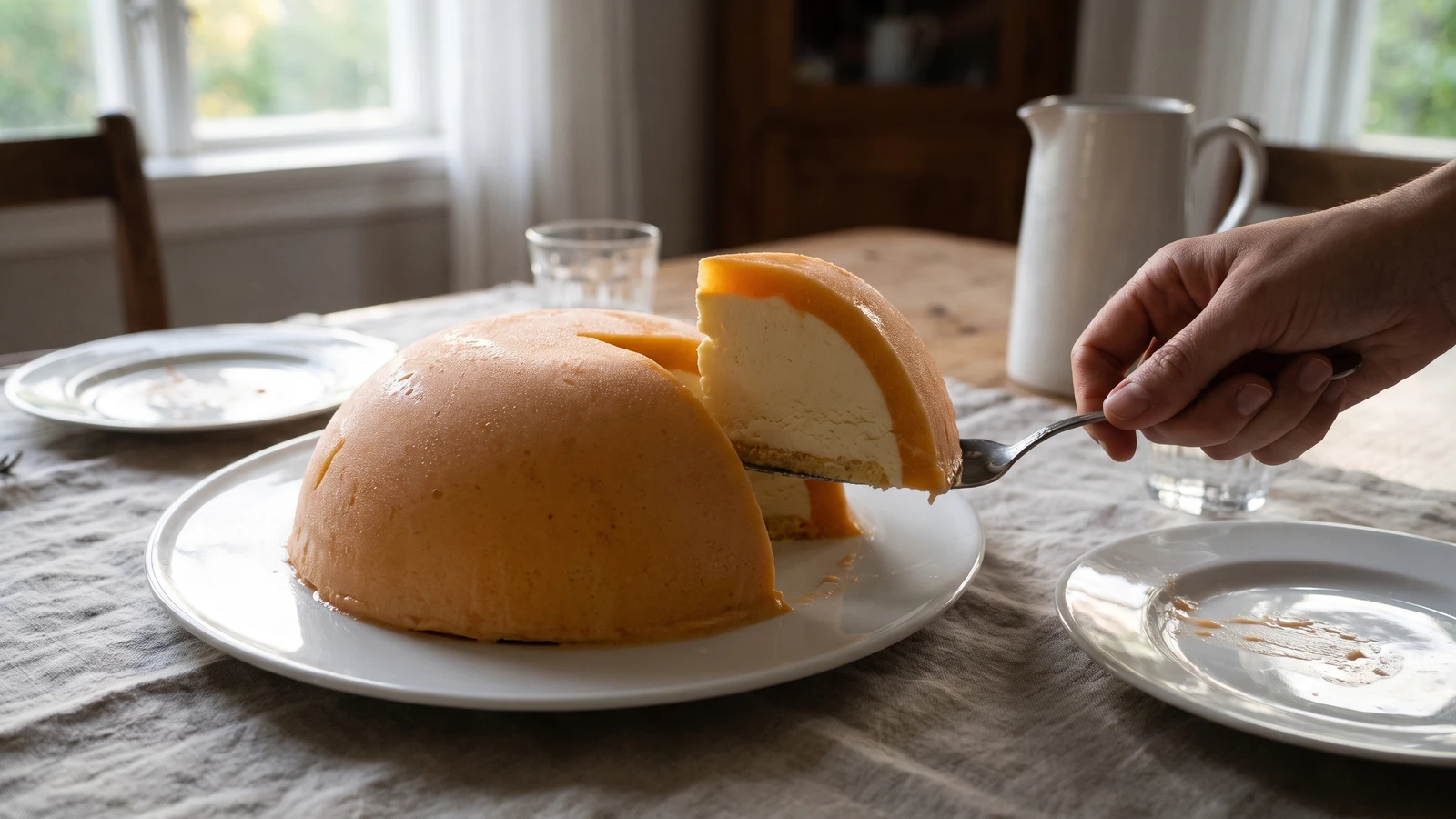
Apricot ice forms a bright, tart shell around vanilla pâte à bombe, its centre creamy from yolks, hot syrup, and whipped cream, all unmoulded as one generous frozen dome.
Bombe Andalouse (an apricot ice shell around vanilla pâte à bombe) teaches the architecture of a layered frozen dessert. The pâte à bombe is a cooked-yolk foam, and the one true thing to know before touching a pan is this: it must be fully cold before the whipped cream goes in. Fold cream into warmth and you lose the air that makes the centre slice softly.
The original formula assumes a pâtissier with apricot ice and vanilla bombe preparation already waiting, a deep metal mould packed in salted ice, and enough hands to clothe it evenly while the syrup cooks. A smooth stainless-steel bowl, a household freezer, and an electric mixer are the honest home equivalents. The decorative mould and salted-ice station are brigade scaffolding; the even apricot shell, hot syrup beaten into yolks, and full cooling before cream are the dish and must stay.
Done well, the Bombe Andalouse cuts into two clean colours: apricot orange outside, vanilla ivory within, the first tart and dense, the second creamy and light. One cook, one stove, one evening of work, then the freezer takes the watch. Cool the yolk ribbon completely. Everything depends on that.
Bombe glacée belongs to the Parisian grand-kitchen repertoire, where layered frozen entremets took their name from the rounded metal mould and arrived at the table as a single dramatic dome. Andalouse in this formula identifies its apricot shell and vanilla centre, not an Andalusian household dessert. Its citation of Another Method of Preparing Aspics de Filets de Soles (No. 916) is purely technical: both preparations depend on clothing a mould evenly before its centre is filled.
Quantity
4 cups (960 ml / 600 g), for the apricot ice used to clothe the mould following Another Method of Preparing Aspics de Filets de Soles (No. 916)
thawed if frozen
Quantity
¾ cup (180 ml / 150 g)
Quantity
½ cup (120 ml / 120 g)
Quantity
5 large (⅓ cup / 80 ml / 90 g)
Quantity
¾ cup (180 ml / 150 g)
Quantity
¼ cup (60 ml / 60 g)
Quantity
1
split and scraped
Quantity
1½ cups (360 ml / 355 g)
| Ingredient | Quantity |
|---|---|
| ripe pitted apricots or unsweetened frozen apricotsthawed if frozen | 4 cups (960 ml / 600 g), for the apricot ice used to clothe the mould following Another Method of Preparing Aspics de Filets de Soles (No. 916) |
| granulated sugar, for the apricot ice | ¾ cup (180 ml / 150 g) |
| water, for the apricot ice | ½ cup (120 ml / 120 g) |
| pasteurized egg yolks | 5 large (⅓ cup / 80 ml / 90 g) |
| granulated sugar, for the pâte à bombe | ¾ cup (180 ml / 150 g) |
| water, for the pâte à bombe | ¼ cup (60 ml / 60 g) |
| vanilla beansplit and scraped | 1 |
| cold heavy cream | 1½ cups (360 ml / 355 g) |
Combine the sugar and water for the apricot ice in a small saucepan. Bring to a gentle boil without stirring, simmer for one minute, then remove it from the heat and cool for ten minutes. Blend the apricots with the syrup until completely smooth, then press the purée through a fine sieve. It should taste slightly sweeter and more vivid than you want at the table because freezing mutes fruit. Cover and chill for at least one hour.
Churn the cold apricot base until it is dense, smooth, and firm enough to hold a furrow from the paddle. Without an ice cream maker, freeze it in a shallow metal pan for 60 to 90 minutes, until the edges are solid and the centre is slushy, then process it until smooth. Freeze for another 45 minutes and process once more. If the ice feels granular, process it again while still pliable; the crystals will become fine enough to spread against the mould.
Freeze a smooth 1½-quart metal bowl for 30 minutes. Chemiser le moule (clothe the mould) using the even-coating principle in Another Method of Preparing Aspics de Filets de Soles (No. 916): press about three quarters of the apricot ice over the bottom and sides in an even layer ½ to ⅝ inch thick, taking it cleanly to the rim. Reserve the remainder in the freezer. If the ice slides down, both bowl and ice are too warm; chill them for ten minutes and begin again. Patch thin spots with more apricot ice, then freeze the shell for 45 minutes.
Put the sugar and water for the pâte à bombe in a small heavy saucepan and heat without stirring to 244°F (118°C). As the syrup approaches temperature, beat the yolks with the vanilla seeds until pale. With the mixer running on low, pour the hot syrup in a thin stream down the inside of the bowl, never directly onto the beaters. Increase the speed and whisk for 7 to 10 minutes, until the mixture has tripled in volume, falls in a thick ribbon, and the bowl feels completely cool. If it remains warm, do not add the cream. Set the bowl over cold water and keep whisking until it reaches 75°F (24°C) or cooler. Ça se rattrape. A few cooked threads can be strained out while the mixture is still fluid, but a fully scrambled base must be remade.
Reserve 2 tablespoons of the cold cream, then whip the remainder to soft peaks that bend when the whisk is lifted. Fold one quarter into the cold pâte à bombe to loosen it, then fold in the rest in two additions with broad strokes from the bottom of the bowl. Stop as soon as no white streaks remain. If the cream was taken too far and looks grainy, fold in the reserved liquid cream a teaspoon at a time until it becomes supple again.
Spoon the vanilla pâte à bombe into the frozen apricot shell, pressing it gently toward the sides so no large air pockets remain, but taking care not to flatten the foam. Leave ½ inch at the rim and freeze for 30 minutes, until the surface has begun to set. Soften the reserved apricot ice briefly in the refrigerator if necessary, then spread it over the vanilla centre to close the bombe. Cover the surface and wrap the bowl well. Freeze for at least six hours, preferably overnight.
Chill the serving platter for 20 minutes. Unwrap the bombe, dip the metal bowl to just below its rim in warm water for five to eight seconds, dry it, and invert it onto the platter. If it refuses to release, repeat for another five seconds rather than pulling at the dessert. Should the shell soften during unmoulding, return the bombe to the freezer for 15 minutes. Let it stand for 8 to 10 minutes before slicing with a knife warmed in hot water and wiped dry. Apricot outside, vanilla within. À table!
1 serving (about 185g)
Culinary guides, cultural storytelling, and the editorial depth that makes cooking meaningful.
Discover Culinary ExplorerChef Juliette
Five almond preparations, one discipline: remove the skins cleanly, dry every kernel through, then cut, toast, or cloak it in pale caramel without letting its fragrant oils escape.

Chef Juliette
A pastry pantry lesson in one tray: filberts warmed only until their red skins release, rubbed clean, cooled, and chopped into a fragrant mise-en-place for cakes, creams, pralines, and petits fours.

Chef Juliette
The smallest pâtisserie discipline decides whether a cake leaves its mould intact: clarified butter in every corner, followed by the lightest veil of dry flour or fécule.
Chef Juliette
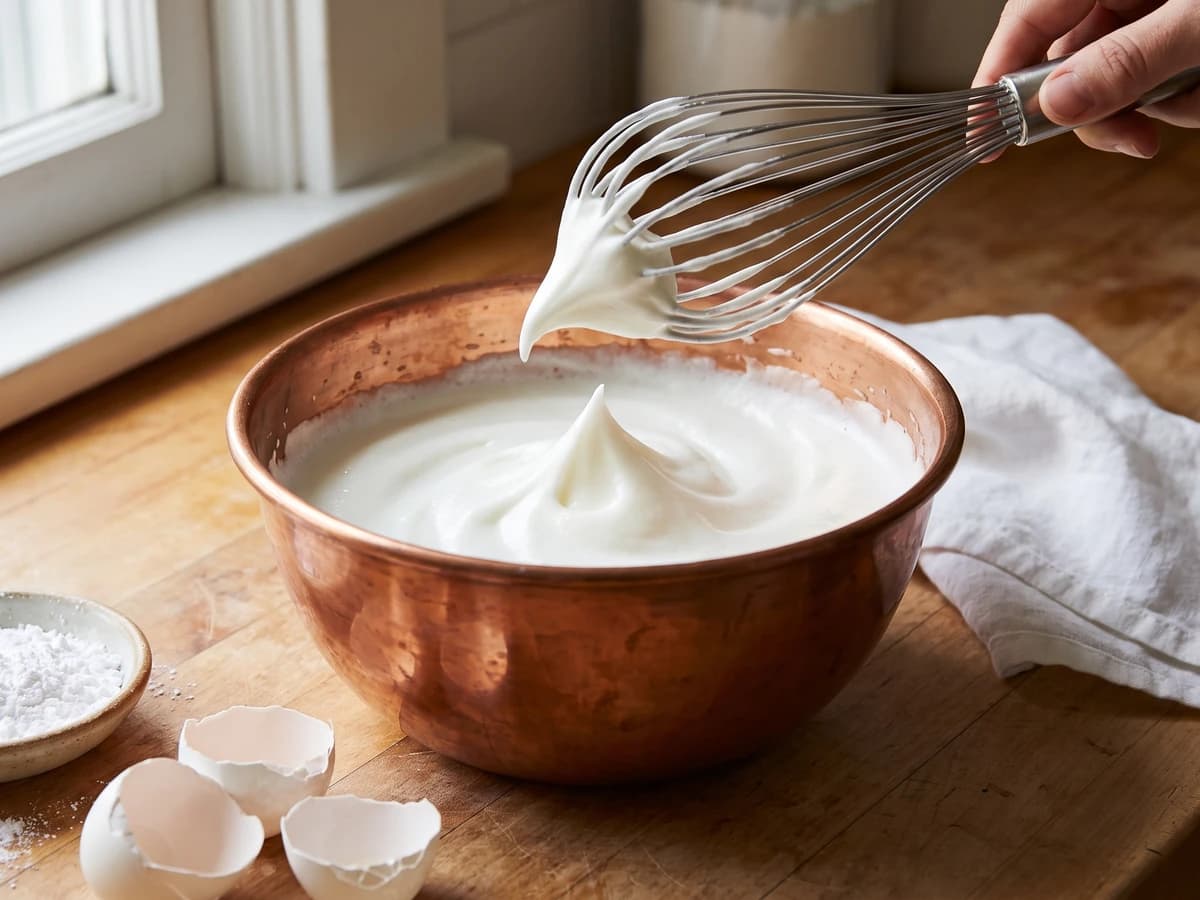
Four whites, one spotless bowl, and a patient change of speed: whisk gently until loosened, then briskly to glossy stiffness, with powdered sugar waiting if the foam begins to granulate.