
Chef Juliette
Various Almond Preparations
Five almond preparations, one discipline: remove the skins cleanly, dry every kernel through, then cut, toast, or cloak it in pale caramel without letting its fragrant oils escape.
A cooking platform built around craft, culture, and the stories behind what we eat.

Created by Chef Juliette
Based on No. 2831, Bombe Abricotine, from Le Guide Culinaire (1907) by Auguste Escoffier
Apricot ice holds a Kirsch-scented pâte à bombe and ribbons of stewed fruit, frozen into a gleaming dome whose clean layers depend on cold components and thoroughly drained apricots.
Bombe Abricotine (apricot-and-Kirsch frozen bombe) teaches the architecture of a moulded ice: a firm fruit-ice shell, a creamy centre, and pieces of fruit suspended between them without a drop of loose syrup. The one true thing to know before touching a pan is this: water management decides the texture. Drain the stewed apricots thoroughly, or their syrup will freeze into grit rather than cream.
The original assumed a glacier, the brigade's frozen-dessert specialist, with apricot ice already churned, a dedicated lidded bombe mould buried in salt and ice, and spare hands to keep turning it. A home freezer, a small metal mould, and an ice cream machine or shallow freezing tray do the same work honestly. Here the brigade quantity becomes one 1.2-litre dome. Repeated packing in broken ice is scaffolding and goes; the apricot shell, Kirsch pâte à bombe, and alternating layers of stewed fruit are the dish, and all three stay.
Turned out, the bombe should be a deep apricot orange outside, ivory and gold within, with the Kirsch arriving as fragrance rather than fire. One cook assembles it in one evening, then the freezer finishes the work. Drain the fruit until the sieve leaves no puddle beneath it. That is the step that matters most.
The frozen bombe belongs to the Parisian grand-kitchen and pâtisserie repertoire, where flavoured ices were packed into rounded metal moulds and frozen in tubs of salted ice. Abricotine follows the classical naming plainly: apricot ice forms the shell, while a Kirsch-scented bombe mixture and stewed apricots fill its centre. Despite the name, a bombe is neither a baked cake nor a piece of plating theatre; the word refers to the domed mould and the layered frozen construction.
Quantity
2 cups (480 ml / 500 g)
chilled
Quantity
½ cup plus 1 tablespoon (135 ml / 120 g)
Quantity
½ cup (120 ml / 120 g)
Quantity
1 tablespoon (15 ml / 15 g)
Quantity
3 cups (720 ml / 400 g)
pitted and quartered
Quantity
5 tablespoons (75 ml / 60 g)
Quantity
2 tablespoons (30 ml / 30 g)
Quantity
1 teaspoon (5 ml / 5 g)
Quantity
4
preferably pasteurized
Quantity
½ cup plus 1 tablespoon (135 ml / 120 g)
Quantity
3 tablespoons (45 ml / 45 g)
Quantity
2 tablespoons (30 ml / 28 g)
Quantity
1½ cups (360 ml / 350 g)
thoroughly chilled
Quantity
1 technique reference, Another Method of Preparing Aspics de Filets de Soles (No. 916)
| Ingredient | Quantity |
|---|---|
| unsweetened apricot puréechilled | 2 cups (480 ml / 500 g) |
| granulated sugar, for the apricot ice | ½ cup plus 1 tablespoon (135 ml / 120 g) |
| water, for the apricot ice | ½ cup (120 ml / 120 g) |
| fresh lemon juice, for the apricot ice | 1 tablespoon (15 ml / 15 g) |
| ripe apricots, for stewingpitted and quartered | 3 cups (720 ml / 400 g) |
| granulated sugar, for the stewed apricots | 5 tablespoons (75 ml / 60 g) |
| water, for the stewed apricots | 2 tablespoons (30 ml / 30 g) |
| fresh lemon juice, for the stewed apricots | 1 teaspoon (5 ml / 5 g) |
| large egg yolkspreferably pasteurized | 4 |
| granulated sugar, for the pâte à bombe | ½ cup plus 1 tablespoon (135 ml / 120 g) |
| water, for the pâte à bombe | 3 tablespoons (45 ml / 45 g) |
| Kirsch | 2 tablespoons (30 ml / 28 g) |
| heavy cream, at least 35 percent fatthoroughly chilled | 1½ cups (360 ml / 350 g) |
| technique reference for clothing the mould | 1 technique reference, Another Method of Preparing Aspics de Filets de Soles (No. 916) |
Set the freezer to its coldest practical setting. Chill a 5-cup (1.2-litre) metal bombe mould or deep round bowl, along with the bowl and whisk for the cream, for at least 30 minutes. Metal conducts cold quickly and helps the apricot ice seize against the wall before it can slide to the bottom.
Heat the sugar and water for the apricot ice just until the sugar dissolves, then cool the syrup completely. Stir in the chilled apricot purée and lemon juice, refrigerate until very cold, and churn until firm but still spreadable. Without an ice cream machine, freeze the mixture in a shallow metal tray until firm at the edges and soft in the centre, then beat it smooth in a food processor. Chemiser, meaning to clothe the mould, using the rocking principle from Another Method of Preparing Aspics de Filets de Soles (No. 916): spoon the soft apricot ice into the chilled mould in batches, turning and pressing it into an even layer about ⅜ inch (1 cm) thick. Reserve about 1 cup (240 ml / 250 g) for the closing layer. Freeze the clothed mould for 45 minutes. If the ice slides, freeze it for 10 minutes and press it back into place; if it has hardened and cracks, let it stand for 3 minutes before smoothing. Ça se rattrape.
Combine the sugar, water, and lemon juice for the stewed apricots in a wide saucepan and heat until clear. Add the apricot quarters and hold them at the gentlest simmer for 3 to 5 minutes, turning once, until tender but still holding their shape. Lift them into a sieve and leave them to drain over a bowl for at least 30 minutes, then spread them on a clean towel, blot gently, and chill completely. Loose syrup freezes into hard crystals, so don't hurry this. If the fruit collapses, drain it well and use it as a thin ribbon between the creamy layers rather than throwing it away.
Begin the pâte à bombe, the hot-syrup yolk base, by whisking the yolks until pale and thick. Heat its sugar and water without stirring until the syrup reaches 244°F (118°C). With the mixer running, pour the syrup in a fine stream down the inside of the bowl, clear of the whisk, then beat until the mixture forms a thick ribbon and the bowl no longer feels warm, about 6 to 8 minutes. If the syrup crystallizes before pouring, add 1 tablespoon of water and warm it gently until clear again. Beat in the Kirsch. Whip the cold cream to soft peaks, fold one-third into the yolk base to loosen it, then fold in the remainder without knocking out its volume. If the yolk base is still warm or turns loose after the Kirsch, set the bowl over ice and whisk until cool and thick before adding the cream. Warm pâte à bombe melts the whipped cream, but caught at this stage it can still be rescued.
Spoon one-third of the Kirsch pâte à bombe into the firm apricot shell and level it gently. Scatter over half the cold, thoroughly drained apricots, keeping them just clear of the outer shell. Repeat with another third of pâte à bombe and the remaining fruit, then cover with the final third of pâte à bombe. Tap the mould once against a folded towel to settle any large air pockets, leaving about ⅜ inch (1 cm) below the rim. Let the reserved apricot ice soften just enough to spread, then close the bombe with an even layer from edge to edge. If the filling has softened the shell or risen above it, freeze the open mould for 15 minutes before adding this cap. Cover tightly and freeze for at least 6 hours, preferably overnight.
Chill the serving platter. Dip only the outside of the mould in warm water for 4 to 5 seconds, wipe it dry, invert it onto the platter, and lift gently. If it holds fast, repeat the warm dip for 2 seconds rather than pulling at the bombe. Return the unmoulded dessert to the freezer for 15 minutes if its surface has softened. Let the bombe stand at cool room temperature for 8 to 10 minutes before cutting. Dip a long knife in hot water and wipe it dry between slices so the apricot shell and ivory centre remain distinct. Serve at once. À table!
1 serving (about 220g)
Culinary guides, cultural storytelling, and the editorial depth that makes cooking meaningful.
Discover Culinary ExplorerChef Juliette
Five almond preparations, one discipline: remove the skins cleanly, dry every kernel through, then cut, toast, or cloak it in pale caramel without letting its fragrant oils escape.

Chef Juliette
A pastry pantry lesson in one tray: filberts warmed only until their red skins release, rubbed clean, cooled, and chopped into a fragrant mise-en-place for cakes, creams, pralines, and petits fours.

Chef Juliette
The smallest pâtisserie discipline decides whether a cake leaves its mould intact: clarified butter in every corner, followed by the lightest veil of dry flour or fécule.
Chef Juliette
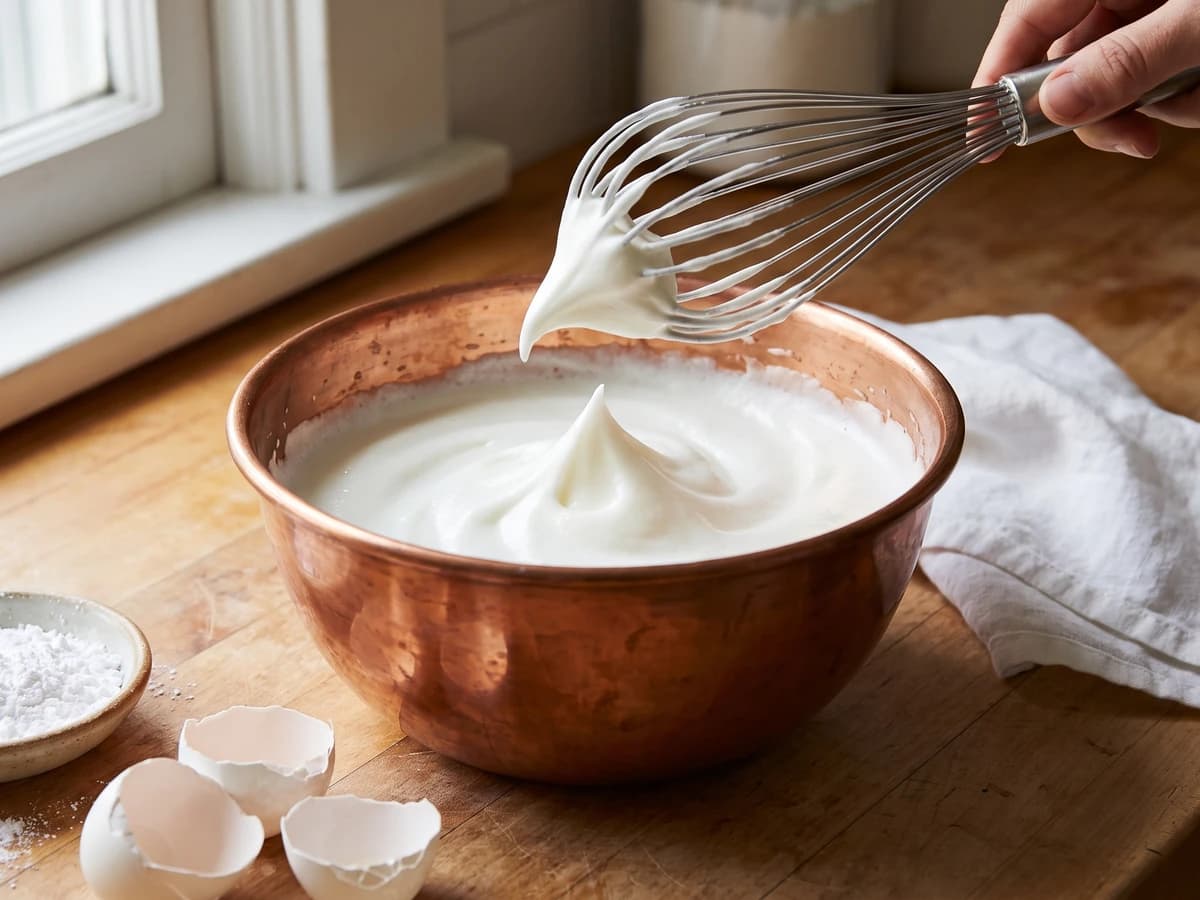
Four whites, one spotless bowl, and a patient change of speed: whisk gently until loosened, then briskly to glossy stiffness, with powdered sugar waiting if the foam begins to granulate.