
Chef Juliette
Various Almond Preparations
Five almond preparations, one discipline: remove the skins cleanly, dry every kernel through, then cut, toast, or cloak it in pale caramel without letting its fragrant oils escape.
A cooking platform built around craft, culture, and the stories behind what we eat.

Created by Chef Juliette
Based on No. 2814, Coupes Tutti-Frutti, from Le Guide Culinaire (1907) by Auguste Escoffier
Three vivid fruit ices, strawberry, pineapple, and lemon, layered with cool dice of fresh fruit in chilled coupes: a celebration dessert whose only real demand is swift, cold assembly.
Coupes Tutti-Frutti (layered fruit ice cups) teach the discipline of cold service. Three beautiful ices are wasted if the glasses are warm and the cook lingers. Done properly, the coupe arrives striped ruby, gold, and pale citron, with cold fruit giving way beneath the spoon. The one true thing is simple: everything must be ready before the first layer leaves the freezer.
The original formula assumed a glacier, the cook tending frozen desserts, with three finished ices in separate service tubs and coupes waiting over chipped ice. A home freezer, three shallow metal pans, and one shared sirop de sucre (sugar syrup) are the honest equivalents. The old salt-and-ice sorbetière and its attendant are brigade scaffolding, so they can go; the separate strawberry, pineapple, and lemon flavors, alternated with the same mixture of fresh fruit, must stay. That contrast is the dish. One cook, one stove, one evening.
The sirop gives all three ices their texture, while shallow freezing and regular raking keep their crystals fine without demanding three separate churning machines. Before the saucepan comes out, clear freezer space, chill the coupes, and set the three pans side by side. Cold organization is the step that decides the dish.
Coupes Tutti-Frutti belong to the cosmopolitan repertory of Parisian cafés and grand-hotel pâtisseries, where coupe named both the stemmed glass and the composed frozen dessert built inside it. The Italian phrase tutti-frutti traveled easily through European confectionery and signaled an assortment of fruits, but the French classical entry is more precise than the familiar blended ice cream: strawberry, pineapple, and lemon ices remain distinct, separated by fresh fruit dice. Its character lies in service and contrast, not in any single French regional larder.
Quantity
3/4 cup plus 2 tablespoons (210 ml / 175 g)
Quantity
3/4 cup (180 ml / 180 g)
Quantity
1 1/4 cups (300 ml / 190 g)
hulled
Quantity
1 1/4 cups (300 ml / 205 g)
diced
Quantity
1/3 cup (80 ml / 82 g), from 2 to 3 lemons
strained
Quantity
1/3 cup (80 ml / 80 g)
Quantity
3/4 cup (180 ml / 115 g)
hulled and cut into small dice
Quantity
3/4 cup (180 ml / 125 g)
cut into small dice
Quantity
1/2 cup (120 ml / 80 g)
quartered
| Ingredient | Quantity |
|---|---|
| granulated sugar | 3/4 cup plus 2 tablespoons (210 ml / 175 g) |
| water for the sirop de sucre | 3/4 cup (180 ml / 180 g) |
| strawberries for the strawberry icehulled | 1 1/4 cups (300 ml / 190 g) |
| ripe pineapple for the pineapple icediced | 1 1/4 cups (300 ml / 205 g) |
| fresh lemon juicestrained | 1/3 cup (80 ml / 82 g), from 2 to 3 lemons |
| cold water for the lemon ice | 1/3 cup (80 ml / 80 g) |
| strawberries for layeringhulled and cut into small dice | 3/4 cup (180 ml / 115 g) |
| ripe pineapple for layeringcut into small dice | 3/4 cup (180 ml / 125 g) |
| seedless grapesquartered | 1/2 cup (120 ml / 80 g) |
Clear a level shelf in the freezer and set four 10-to-12-ounce (300 to 350 ml) coupe glasses in the refrigerator for at least 30 minutes. Place three shallow metal pans nearby, ready to receive the ice bases. The glasses should be thoroughly cold but dry; water droplets dilute the first fruit layer and make it slide.
Combine the granulated sugar and 3/4 cup (180 ml) water in a small saucepan. Warm gently, stirring only until the sugar dissolves, then bring to a quiet simmer for 1 minute. Remove from the heat and cool completely, preferably by setting the saucepan in a bowl of ice water. You should have about 1 1/6 cups (280 ml) sirop. If crystals form around the pan, add 1 tablespoon of water and warm gently until the sirop turns clear again; don't carry a grainy syrup into the freezer.
Blend the strawberries for the ice with 1/3 cup (80 ml) cooled sirop until perfectly smooth, then pass the purée through a fine sieve into the first pan. Rinse the blender, process the pineapple with another 1/3 cup (80 ml) sirop, and pour it into the second pan. In the third pan, whisk together the lemon juice, cold water, and the remaining sirop, about 1/2 cup (120 ml). Each base should taste slightly sweeter and more vivid than you want at the table because freezing quiets both sweetness and perfume.
Set all three pans level in the freezer. After 40 minutes, when ice has formed around the edges, rake the frozen portion into the softer center with a fork. Repeat every 30 minutes for 2 1/2 to 3 hours, breaking up every firm patch, until each ice is finely crystalline and holds a loose spoonful. This repeated raking replaces the sorbetière and keeps the crystals small. If one base becomes a hard slab, let it stand for 5 minutes, break it into pieces, and pulse it briefly in a food processor before returning it to the freezer for 20 minutes. It hasn't failed.
While the ices firm, combine the diced strawberries, diced pineapple, and quartered grapes. Keep the pieces no larger than 1/4 inch (6 mm), since large frozen fruit becomes hard under the spoon. Pat away excess surface juice and refrigerate the mixture without sugar. Sugar would draw out liquid, soften the fruit, and muddy the clear layers.
Set the chilled coupes in a row and place a spoonful of the same fruit mixture in the bottom of each. Bring out only the strawberry ice, divide a loose layer among the glasses, and return its pan to the freezer. Add another scattering of fruit, then repeat with the pineapple ice, more fruit, and finally the lemon ice. Finish with the remaining diced fruit. Work with cold spoons and a light hand; three ices soften faster than one. If the layers begin to slump, stop and freeze the partly assembled coupes for 5 to 8 minutes. Ça se rattrape.
Serve the coupes immediately with long dessert spoons, while the fruit is cold but still tender and the three ices remain distinct. For an outdoor table, keep them inside until everyone is seated and carry them out together on a chilled tray. Sun is not invited to this dessert. À table!
1 serving (about 305g)
Culinary guides, cultural storytelling, and the editorial depth that makes cooking meaningful.
Discover Culinary ExplorerChef Juliette
Five almond preparations, one discipline: remove the skins cleanly, dry every kernel through, then cut, toast, or cloak it in pale caramel without letting its fragrant oils escape.

Chef Juliette
A pastry pantry lesson in one tray: filberts warmed only until their red skins release, rubbed clean, cooled, and chopped into a fragrant mise-en-place for cakes, creams, pralines, and petits fours.

Chef Juliette
The smallest pâtisserie discipline decides whether a cake leaves its mould intact: clarified butter in every corner, followed by the lightest veil of dry flour or fécule.
Chef Juliette
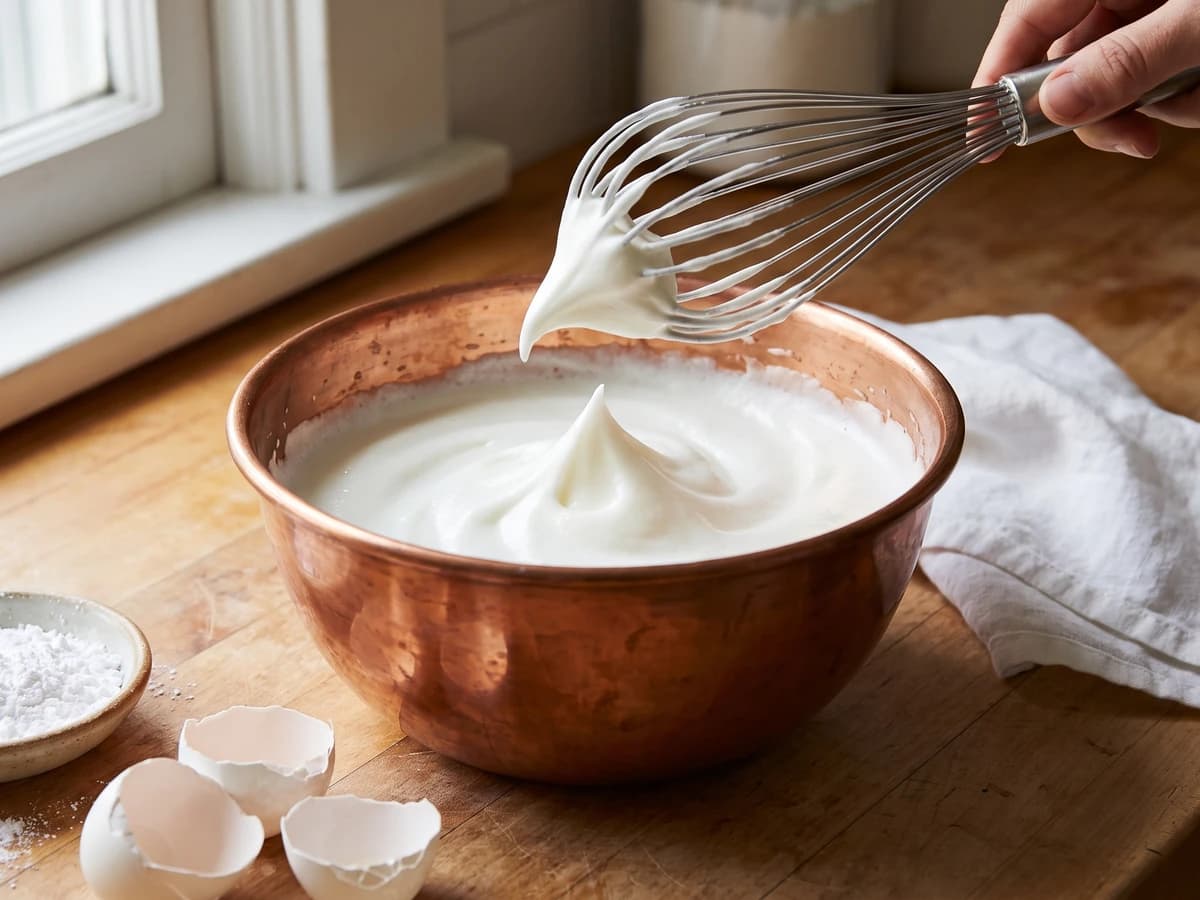
Four whites, one spotless bowl, and a patient change of speed: whisk gently until loosened, then briskly to glossy stiffness, with powdered sugar waiting if the foam begins to granulate.