
Chef Juliette
Various Almond Preparations
Five almond preparations, one discipline: remove the skins cleanly, dry every kernel through, then cut, toast, or cloak it in pale caramel without letting its fragrant oils escape.
A cooking platform built around craft, culture, and the stories behind what we eat.
Created by Chef Juliette
Based on No. 2809, Coupes à la Mexicaine, from Le Guide Culinaire (1907) by Auguste Escoffier
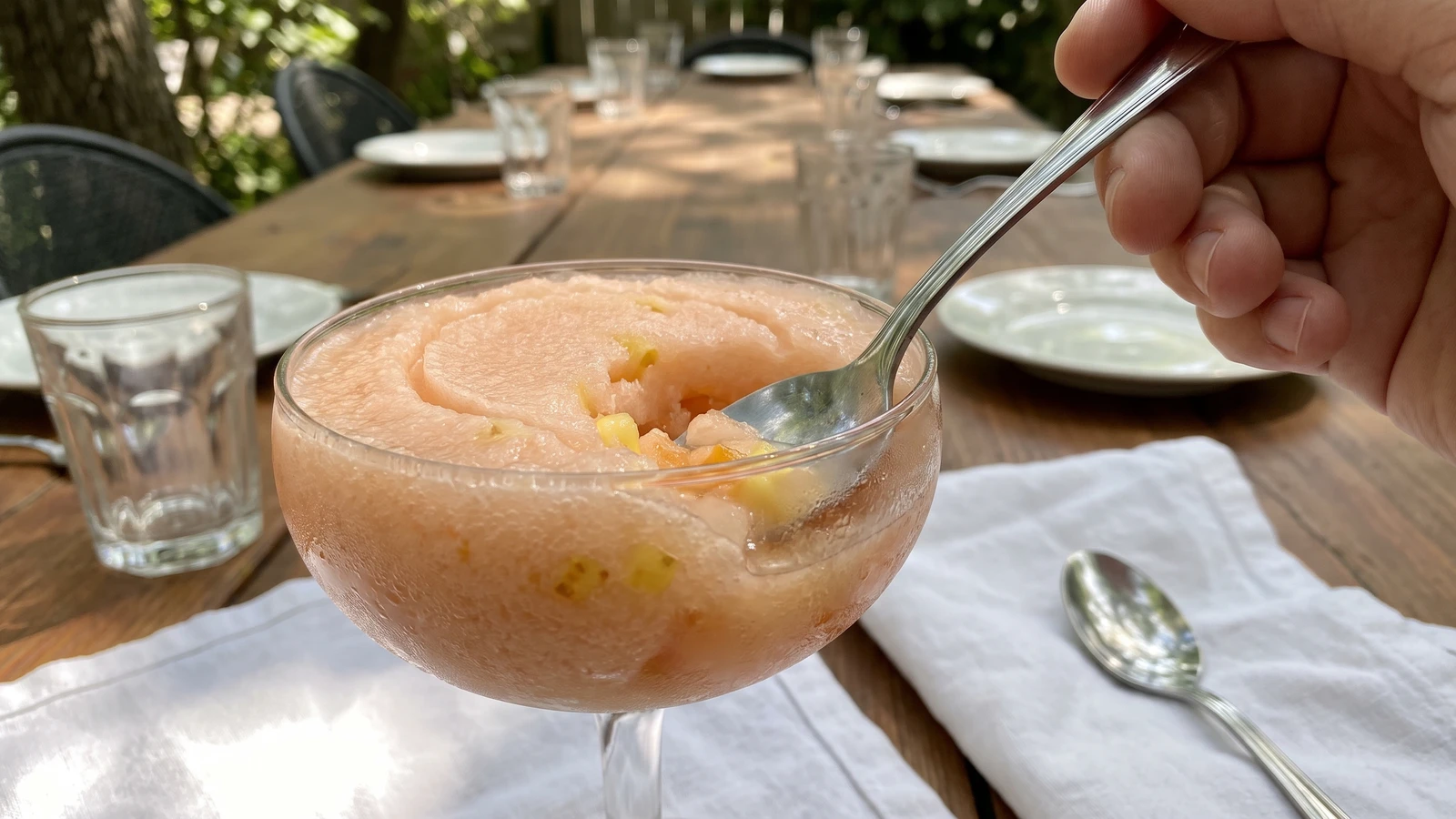
Pale coral tangerine ice folded with pineapple diced small enough to ride every spoon: a spare French coupe whose precision lies entirely in ripe fruit and a clean freeze.
Coupes à la Mexicaine (tangerine ice folded with finely diced pineapple) teaches the discipline of a simple composition: when only two fruits reach the glass, their texture must agree. The pineapple must be diced so finely that every spoonful catches fruit and ice together. Large pieces may look generous, but they sit apart from the dessert instead of becoming part of it.
The original entry is an assembly instruction. It assumes a glacier, the brigade cook tending frozen sweets, with tangerine ice already prepared and enough hands to cut pineapple for each service. The large batch and its frozen holding are brigade scaffolding, so they go; a small ice-cream machine or shallow metal pan gives one cook the same fine crystals. What stays is the dish itself: tangerine ice, pineapple, nothing else in the coupe. One cook, one stove, one evening.
Make the ice fragrant and softly scoopable, then cut the pineapple into neat ⅛-inch dice and fold it through only when you serve. That knife work is the step that matters most.
Coupes à la Mexicaine belongs to the Parisian grand-hotel dessert table, where a coupe meant a composed frozen sweet served in its own small glass and named as a finished arrangement. The form traveled readily from grand-hotel service to home tables because, once the prepared ice existed, the final composition required only exact knife work. The geographic title is French menu nomenclature, not a claim that tangerine ice with pineapple is a traditional Mexican dessert; those two fruits alone define the dish.
Quantity
½ cup (120 ml / 120 g)
Quantity
½ cup (120 ml / 100 g)
Quantity
12 to 14, yielding 2 cups (480 ml / 490 g) juice
juiced and strained
Quantity
1 cup (240 ml / 165 g)
peeled, cored, and cut into ⅛-inch (3 mm) dice
| Ingredient | Quantity |
|---|---|
| water | ½ cup (120 ml / 120 g) |
| granulated sugar | ½ cup (120 ml / 100 g) |
| medium tangerinesjuiced and strained | 12 to 14, yielding 2 cups (480 ml / 490 g) juice |
| ripe pineapple fleshpeeled, cored, and cut into ⅛-inch (3 mm) dice | 1 cup (240 ml / 165 g) |
Freeze the bowl of your ice-cream machine according to its instructions. If you're working without one, place a shallow 8-inch metal pan in the freezer instead. Chill a lidded storage container and four coupe glasses as well; cold equipment gives you time to combine the fruit without melting the ice.
Combine the water and sugar in a small saucepan. Bring them just to a simmer, stirring until every crystal dissolves, then cook for 2 minutes and remove the pan from the heat. Don't reduce the syrup further: boiling away water changes the balance and can leave the finished ice sticky rather than clean and scoopable. Let it cool completely.
Stir the cold syrup into the strained tangerine juice, then pass the mixture through a fine sieve once more. It should taste vivid and slightly sweeter than you want at the table, because freezing quiets both sweetness and perfume. Cover and refrigerate for at least 2 hours, until thoroughly cold; a warm base forms coarse crystals.
Churn the cold base until thick, softly mounded, and no longer liquid, about 20 to 25 minutes. Pack it into the chilled container, cover, and freeze for 1½ to 2 hours, just until scoopable. Without a machine, pour the base into the chilled metal pan, freeze for 45 minutes, then rake it thoroughly with a fork every 30 minutes for about 3 hours. If you miss a scraping and it freezes solid, leave it in the refrigerator for 15 minutes, break up the softened surface with a sturdy fork, and freeze it again for 20 minutes. Ça se rattrape.
Cut the pineapple into even ⅛-inch dice with a sharp knife, then spread it on a clean towel for 5 minutes to remove loose juice. Don't crush or pulse it in a machine. Crushed pineapple leaks into the tangerine ice and makes the surface icy; neat little cubes remain distinct but are still small enough to travel on the spoon.
If the tangerine ice is firm, temper it in the refrigerator for 10 to 15 minutes, until a spoon passes through with gentle pressure. Transfer it to a chilled bowl, scatter over the pineapple, and fold only four or five times, just until the dice are distributed. If the edges begin to look liquid and glossy, return the mixture to the freezer for 10 minutes. Spoon it generously into the chilled coupes, leaving the surface naturally raked. No mint, biscuit, or decorative curl belongs here. À table!
1 serving (about 215g)
Culinary guides, cultural storytelling, and the editorial depth that makes cooking meaningful.
Discover Culinary ExplorerChef Juliette
Five almond preparations, one discipline: remove the skins cleanly, dry every kernel through, then cut, toast, or cloak it in pale caramel without letting its fragrant oils escape.

Chef Juliette
A pastry pantry lesson in one tray: filberts warmed only until their red skins release, rubbed clean, cooled, and chopped into a fragrant mise-en-place for cakes, creams, pralines, and petits fours.

Chef Juliette
The smallest pâtisserie discipline decides whether a cake leaves its mould intact: clarified butter in every corner, followed by the lightest veil of dry flour or fécule.
Chef Juliette
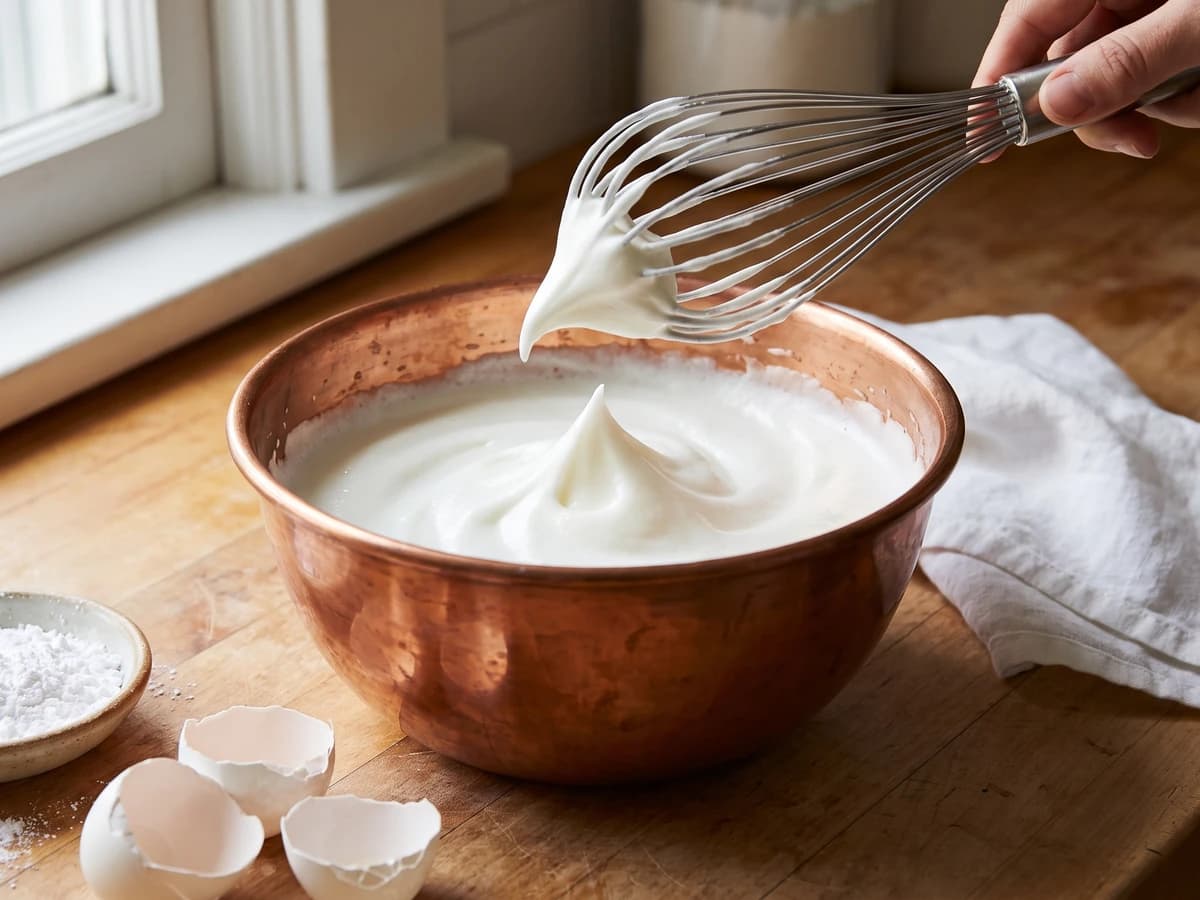
Four whites, one spotless bowl, and a patient change of speed: whisk gently until loosened, then briskly to glossy stiffness, with powdered sugar waiting if the foam begins to granulate.