
Chef Juliette
Various Almond Preparations
Five almond preparations, one discipline: remove the skins cleanly, dry every kernel through, then cut, toast, or cloak it in pale caramel without letting its fragrant oils escape.
A cooking platform built around craft, culture, and the stories behind what we eat.

Created by Chef Juliette
Based on No. 2803, Coupes Eugenie, from Le Guide Culinaire (1907) by Auguste Escoffier
Vanilla ice cream folded with broken candied chestnuts, covered in soft Chantilly, then finished at the table with crystallised Toulouse violets while their sugar remains bright and crisp.
Coupes Eugénie (vanilla ice cream coupes with candied chestnuts, Chantilly, and crystallised violets) teaches one true thing: in a frozen dessert, cold is structure. The ice cream must soften enough to accept the chestnuts without melting into a puddle, and the Chantilly must remain supple enough to cover it in generous folds.
The original entry assumed a pâtissier with vanilla ice held ready for service, broken marrons glacés in the pantry, and Chantilly whipped on command. For four coupes at home, one pint of good vanilla ice cream, a chilled metal bowl, and an ordinary freezer replace that brigade arrangement honestly. Making a large batch of vanilla ice from scratch is service scaffolding and can go; the candied chestnut pieces, fresh Chantilly, and dry violets added at the last moment are the dish and must stay.
Work cold and stop folding early. If the ice cream becomes glossy and loose, don't keep stirring. Ça se rattrape: return the whole bowl to the freezer until its edges firm, then continue with one or two deliberate folds.
Coupes Eugénie belongs to the Parisian repertoire of named dessert coupes and honors Eugénie de Montijo, empress of the French, through a composition of luxurious preserved ingredients rather than an elaborate cooked preparation. The crystallised violets are not a general southern decoration: they point specifically to Toulouse, where confectioners preserve violets beneath a crisp coat of sugar. Their late addition is practical as well as beautiful, since moisture quickly dulls both their sparkle and their crunch.
Quantity
2 cups (473 ml / about 425 g)
softened only until foldable
Quantity
¾ cup loosely packed (180 ml / 120 g)
broken into 1 cm pieces
Quantity
1 cup (240 ml / 240 g)
Quantity
2 tablespoons (30 ml / 15 g)
sifted
Quantity
½ teaspoon (2.5 ml / 2.5 g)
Quantity
2 tablespoons loosely filled (30 ml / 12 g)
kept dry until serving
| Ingredient | Quantity |
|---|---|
| dense vanilla ice creamsoftened only until foldable | 2 cups (473 ml / about 425 g) |
| marrons glacés (candied chestnuts)broken into 1 cm pieces | ¾ cup loosely packed (180 ml / 120 g) |
| cold heavy whipping cream | 1 cup (240 ml / 240 g) |
| confectioners' sugarsifted | 2 tablespoons (30 ml / 15 g) |
| pure vanilla extract | ½ teaspoon (2.5 ml / 2.5 g) |
| crystallised Toulouse violetskept dry until serving | 2 tablespoons loosely filled (30 ml / 12 g) |
Put four shallow dessert coupes, a medium metal mixing bowl, and the beaters or whisk in the freezer for 10 minutes. Meanwhile, break the marrons glacés into irregular pieces about 1 cm across. Keep some smaller crumbs among them, since they carry chestnut through every spoonful, but don't mash the chestnuts into a paste.
Transfer the vanilla ice cream to the chilled bowl and leave it for 3 to 5 minutes, just until a flexible spatula can cut through it. Scatter over the marrons glacés and fold with six or eight broad turns, stopping while distinct chestnut pieces and pale vanilla folds remain visible. If the ice cream turns glossy or begins pooling at the edge, stop. Ça se rattrape: freeze the bowl for 10 to 15 minutes, then finish with one gentle fold. Continued stirring would only melt it further.
Divide the chestnut ice cream among the chilled coupes, mounding it generously rather than pressing it flat. Return the filled coupes to the freezer for 15 minutes while you make the Chantilly. This short firming restores the structure disturbed by folding without freezing the marrons glacés into hard pebbles.
Reserve 1 tablespoon of the measured cold cream. Combine the remaining cream with the confectioners' sugar and vanilla in the chilled bowl, then whisk until the cream forms soft, full peaks that bend at their tips. Chantilly is whipped cream sweetened and scented with vanilla, and it should fall from the whisk in a supple fold, not stand like plaster. If it becomes grainy, add the reserved cream and whisk gently by hand until smooth. Ça se rattrape. If it is already smooth, whisk in the reserved cream just until the soft peak returns.
Take the coupes from the freezer and cover each mound of ice cream completely with a generous spoonful of Chantilly. Let the cream settle into natural folds; piping adds ceremony but no pleasure, and cooking well is not cooking fancy. Carry the coupes to the table at once.
Open the violets only when everyone is seated, then scatter them over the Chantilly at the table. This timing is part of the dish: cream dampens crystallised violets quickly, turning their crisp sugar coat dull and sticky. Serve immediately, while the violets still sparkle and crack lightly under the spoon. À table!
1 serving (about 204g)
Culinary guides, cultural storytelling, and the editorial depth that makes cooking meaningful.
Discover Culinary ExplorerChef Juliette
Five almond preparations, one discipline: remove the skins cleanly, dry every kernel through, then cut, toast, or cloak it in pale caramel without letting its fragrant oils escape.

Chef Juliette
A pastry pantry lesson in one tray: filberts warmed only until their red skins release, rubbed clean, cooled, and chopped into a fragrant mise-en-place for cakes, creams, pralines, and petits fours.

Chef Juliette
The smallest pâtisserie discipline decides whether a cake leaves its mould intact: clarified butter in every corner, followed by the lightest veil of dry flour or fécule.
Chef Juliette
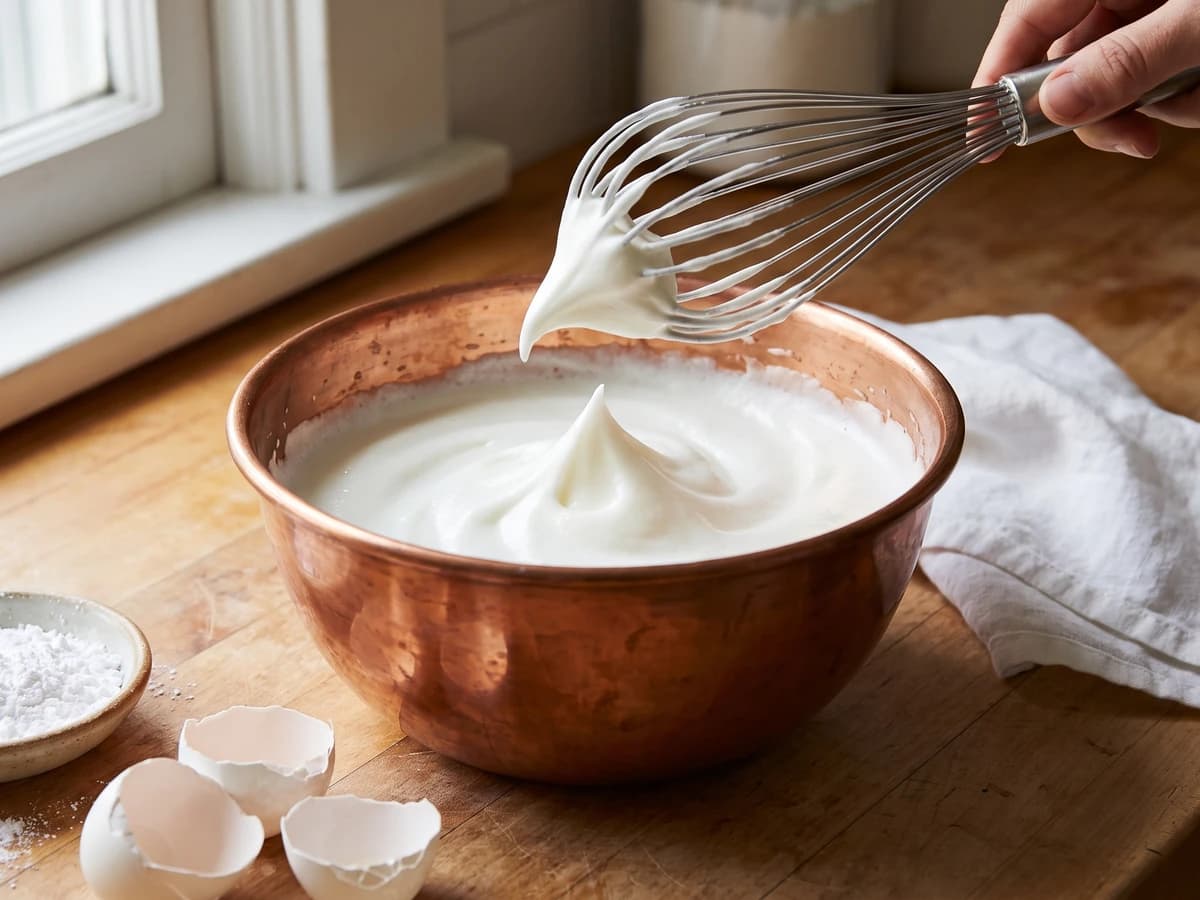
Four whites, one spotless bowl, and a patient change of speed: whisk gently until loosened, then briskly to glossy stiffness, with powdered sugar waiting if the foam begins to granulate.