
Chef Juliette
Various Almond Preparations
Five almond preparations, one discipline: remove the skins cleanly, dry every kernel through, then cut, toast, or cloak it in pale caramel without letting its fragrant oils escape.
A cooking platform built around craft, culture, and the stories behind what we eat.
Created by Chef Juliette
Based on No. 2797, Coupes Clo-clo, from Le Guide Culinaire (1907) by Auguste Escoffier
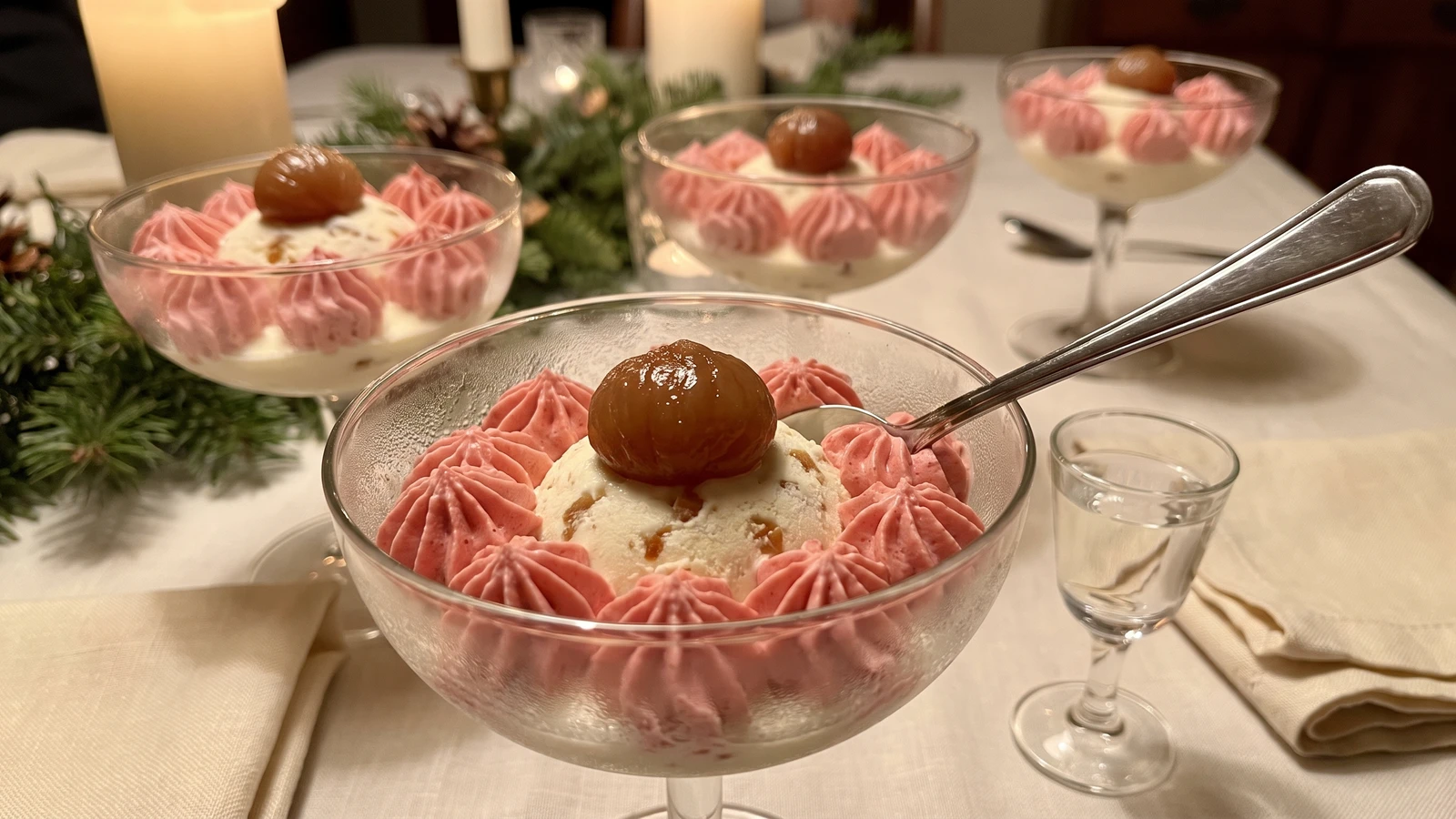
Coupes Clo-clo marry vanilla ice, maraschino-soaked marrons glacés, and strawberry Chantilly in a festive glass: cold against cream, cherry perfume against chestnut, softness against a firm piped ridge.
Coupes Clo-clo (vanilla ice coupes with maraschino chestnuts and strawberry whipped cream) teach one cold-kitchen rule: control the water and you control the finish. Before touching a pan, know this: the strawberry purée must be concentrated and completely cold. Warm or watery purée loosens the Chantilly, and a loose border slips.
The original entry assumed a professional cold pantry with vanilla ice ready, strained fruit purée waiting, and a pastry hand piping each coupe at service. At home, good bought vanilla ice cream replaces the separate ice station, a brief berry reduction replaces the prepared purée, and four chilled glasses keep everything composed. That professional scaffolding can go. The maraschino-macerated chestnut fragments, the whole marron at the centre, and the strawberry Chantilly must stay. One cook, one stove, one evening.
The finished coupe is ivory, rose, and polished chestnut brown, with cherry perfume rising through the vanilla as the spoon reaches the hidden fragments. The final fold matters most: add the cold purée gently, then stop as soon as the Chantilly holds a clean ridge.
Coupes Clo-clo belongs to the Parisian grand-kitchen family of named ice-cream coupes, composed in individual stemmed bowls from prepared ices, preserved fruits, liqueurs, and piped cream. The surviving formula records its composition more securely than the identity behind its playful name, so attaching it confidently to a particular person would be invention. Its design passed naturally from formal dining-room service to celebration tables because the components wait well in the cold, leaving only the Chantilly to pipe at the last moment.
Quantity
1 cup (240 ml / 150 g)
hulled and thawed if frozen
Quantity
½ cup (120 ml / 80 g)
broken into pea-size fragments
Quantity
2 tablespoons (30 ml / 32 g)
Quantity
3 cups (720 ml / 600 g)
Quantity
4 whole (about 80 g)
Quantity
1 cup (240 ml / 240 g)
Quantity
2 tablespoons (30 ml / 16 g)
| Ingredient | Quantity |
|---|---|
| fresh or unsweetened frozen strawberrieshulled and thawed if frozen | 1 cup (240 ml / 150 g) |
| brisures de marrons glacésbroken into pea-size fragments | ½ cup (120 ml / 80 g) |
| maraschino liqueur | 2 tablespoons (30 ml / 32 g) |
| premium vanilla ice cream | 3 cups (720 ml / 600 g) |
| whole marrons glacés | 4 whole (about 80 g) |
| cold heavy cream | 1 cup (240 ml / 240 g) |
| confectioners' sugar | 2 tablespoons (30 ml / 16 g) |
Blend the strawberries until smooth, then press them through a fine sieve into a small saucepan. Cook over medium-low heat, stirring often, until reduced to ¼ cup (60 ml / about 60 g), bright red and thick enough that a spatula drawn across the pan leaves a path for two seconds, about 6 to 8 minutes. Scrape the purée onto a cold plate and refrigerate until completely cold. Do not fold it into cream while even faintly warm; warmth loosens the Chantilly before the piping bag is filled.
Put the brisures de marrons glacés in a small bowl and spoon over the maraschino. Fold once without crushing the chestnuts, then leave them to macerate for 30 minutes. Lift the fragments from any unabsorbed liqueur before they meet the ice cream. They should be fragrant and moist, not swimming, because excess alcohol softens the ice.
Chill four coupe glasses in the freezer. Let the vanilla ice cream stand at room temperature for 5 to 8 minutes, just until pliable but still matte, then fold in the drained chestnut fragments with a cold spatula. Do not beat them through. If the ice turns glossy or slushy, stop and return the bowl to the freezer for 10 minutes. Ça se rattrape. Divide the mixture among the chilled coupes, level it lightly, and set one whole marron glacé upright in the centre of each. Freeze for 15 minutes while you make the Chantilly.
Whisk the cold cream in a chilled bowl until it holds soft ridges. Sift in the confectioners' sugar and continue whisking until firm peaks stand cleanly without looking grainy. Fold in the completely cold strawberry purée in three additions, turning the bowl and cutting through the centre so the cream keeps its air. Test a spoonful: its ridges must remain distinct. If they slowly close, chill the bowl for 10 minutes, set it over ice, and whisk briefly by hand until the ridges hold. Stop there; beating past firm turns the Chantilly rough.
Fit a piping bag with a 12 mm closed-star tip and fill it with the strawberry Chantilly. Pipe a firm ring of touching rosettes around the central marron in each coupe, keeping enough pressure on the bag that every ridge stands clearly. Serve at once, or hold the finished coupes in the freezer for no more than 20 minutes so the Chantilly stays supple rather than freezing hard. À table!
1 serving (about 275g)
Culinary guides, cultural storytelling, and the editorial depth that makes cooking meaningful.
Discover Culinary ExplorerChef Juliette
Five almond preparations, one discipline: remove the skins cleanly, dry every kernel through, then cut, toast, or cloak it in pale caramel without letting its fragrant oils escape.

Chef Juliette
A pastry pantry lesson in one tray: filberts warmed only until their red skins release, rubbed clean, cooled, and chopped into a fragrant mise-en-place for cakes, creams, pralines, and petits fours.

Chef Juliette
The smallest pâtisserie discipline decides whether a cake leaves its mould intact: clarified butter in every corner, followed by the lightest veil of dry flour or fécule.
Chef Juliette
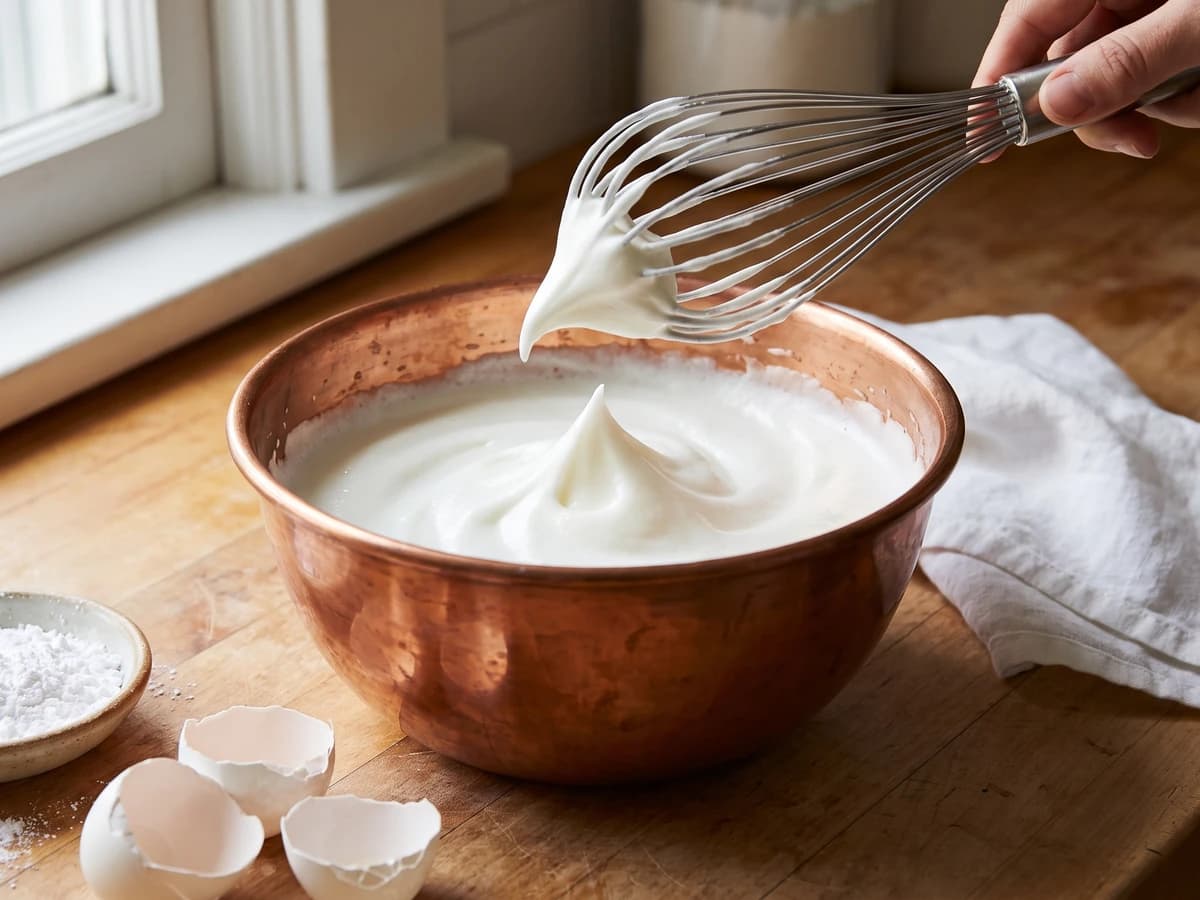
Four whites, one spotless bowl, and a patient change of speed: whisk gently until loosened, then briskly to glossy stiffness, with powdered sugar waiting if the foam begins to granulate.