
Chef Juliette
Various Almond Preparations
Five almond preparations, one discipline: remove the skins cleanly, dry every kernel through, then cut, toast, or cloak it in pale caramel without letting its fragrant oils escape.
A cooking platform built around craft, culture, and the stories behind what we eat.

Created by Chef Juliette
Based on No. 2793, Glace Marie-Thérèse, from Le Guide Culinaire (1907) by Auguste Escoffier
Chocolate ice forms the scalloped shell, vanilla Chantilly fills its heart, and tart pineapple ice crowns the unmoulded Glace Marie-Thérèse: a frozen celebration built on timing, contrast, and one decisive soft lining.
Glace Marie-Thérèse (a chocolate-clothed frozen mould filled with vanilla Chantilly and decorated with pineapple ice) teaches one decisive lesson: frozen mixtures obey temperature, not force. The chocolate ice must be supple enough to spread into an even shell before it sets hard. Once the mould is lined, the rest is patience and cold.
The original entry assumed an entremets station with several finished ices ready, a deep cold room, and a large Madeleine-mould shaped like a narrow scallop shell. At home, use a 1.2-liter fluted mould, excellent finished chocolate ice cream and pineapple sorbet, and an ordinary freezer. Making two separate ices for this assembled dessert was brigade scaffolding; the exact sequence, chocolate shell, vanilla Chantilly, unmoulding, then pineapple decoration, is the dish and stays. One cook, one stove, one evening, and for once the stove may remain cold.
Keep the chocolate ice soft, never melted, and press it into every groove before it firms. If the lining tears or leaves a bare patch, freeze it briefly and patch it with another spoonful. Ça se rattrape. The even chocolate shell is the one step that matters.
Glace Marie-Thérèse belongs to the Parisian grande cuisine family of entremets glacés (moulded frozen desserts), in which contrasting ices and an architectural mould gave each composition its identity. The Madeleine-mould is a single narrow scallop-shell form, not the tray of small cake wells now familiar in home kitchens. The link to Another Method of Preparing Aspics de Filets de Soles (No. 916) is not a flavor connection but a record that savory and pastry kitchens shared the technique of clothing a mould in a thin, even layer.
Quantity
2½ cups (600 ml / 400 g)
softened until spreadable
Quantity
1¼ cups (300 ml / 300 g)
thoroughly chilled
Quantity
¼ cup (60 ml / 30 g)
Quantity
2 teaspoons (10 ml / 10 g)
Quantity
1¼ cups (300 ml / 240 g)
softened only enough to pipe
| Ingredient | Quantity |
|---|---|
| glace au chocolat (chocolate ice), full-fat chocolate ice creamsoftened until spreadable | 2½ cups (600 ml / 400 g) |
| heavy cream containing at least 35 percent fatthoroughly chilled | 1¼ cups (300 ml / 300 g) |
| confectioners' sugar | ¼ cup (60 ml / 30 g) |
| pure vanilla extract | 2 teaspoons (10 ml / 10 g) |
| glace à l'ananas (pineapple ice), a fruit-forward pineapple sorbetsoftened only enough to pipe | 1¼ cups (300 ml / 240 g) |
Clear a level space in the freezer. Chill the clean, dry 1.2-liter mould and the serving platter for 20 minutes. The source's reference, Another Method of Preparing Aspics de Filets de Soles (No. 916), supplies the mould-clothing principle; it is a technique reference only, so no aspic enters this dessert. A large narrow scallop-shell mould gives the canonical shape, while a deeply fluted metal loaf mould is the honest home equivalent.
Leave the glace au chocolat in the refrigerator for 15 to 20 minutes, stirring once or twice, until it has the consistency of cold buttercream and holds the track of a spatula. Do not let it become liquid. Melted ice cream refreezes with coarse crystals; if the edges begin to run, stir them gently into the colder center and return the container to the freezer for 5 minutes.
Working quickly, press the softened chocolate ice into the deepest grooves first, then spread it over the base and sides in an even layer about ⅜ inch (1 cm) thick. This is clothing the mould: a complete shell with no exposed metal, thin enough to slice but strong enough to hold the Chantilly. Freeze for 30 minutes. Inspect the lining, and if a patch is thin or bare, add another spoonful of chocolate ice and freeze again. Ça se rattrape.
Reserve 2 tablespoons of the cold cream. Whisk the remainder with the confectioners' sugar and vanilla until it forms supple medium peaks: the ridges should hold, but their tips should bend. This is crème Chantilly, sweetened vanilla whipped cream, and it must remain smooth enough to settle into the mould. If it begins to look grainy, stop immediately and fold in the reserved liquid cream a spoonful at a time. The smooth body will return.
Spoon the Chantilly into the frozen chocolate shell in three additions, pressing each gently into the scalloped grooves to remove hidden air pockets without crushing out its volume. Fill to the rim and level the surface with a cold spatula. Cover the mould without touching the cream and freeze on a level shelf for at least 5 hours, until the center is completely firm.
Set the chilled platter over the mould. Wrap the outside of the mould with a towel dipped in warm water and wrung nearly dry for 5 seconds, then invert both together and lift the mould straight upward. If the dessert does not release, repeat with the towel for another 2 or 3 seconds. Do not pull or twist; too much warmth softens the ridges before the center lets go.
Soften the glace à l'ananas just until it can pass through a piping bag fitted with a large star nozzle. Pipe generous scallops or rosettes along the crest and around the base of the unmoulded Glace Marie-Thérèse, leaving enough chocolate visible to show the shell. If the pineapple ice slumps, scrape it back into its container and freeze both dessert and sorbet for 10 minutes before trying again. Return the decorated dessert to the freezer for 15 minutes, then let it stand in the refrigerator for 8 minutes before slicing with a hot, thoroughly dried knife. À table!
1 serving (about 123g)
Culinary guides, cultural storytelling, and the editorial depth that makes cooking meaningful.
Discover Culinary ExplorerChef Juliette
Five almond preparations, one discipline: remove the skins cleanly, dry every kernel through, then cut, toast, or cloak it in pale caramel without letting its fragrant oils escape.

Chef Juliette
A pastry pantry lesson in one tray: filberts warmed only until their red skins release, rubbed clean, cooled, and chopped into a fragrant mise-en-place for cakes, creams, pralines, and petits fours.

Chef Juliette
The smallest pâtisserie discipline decides whether a cake leaves its mould intact: clarified butter in every corner, followed by the lightest veil of dry flour or fécule.
Chef Juliette
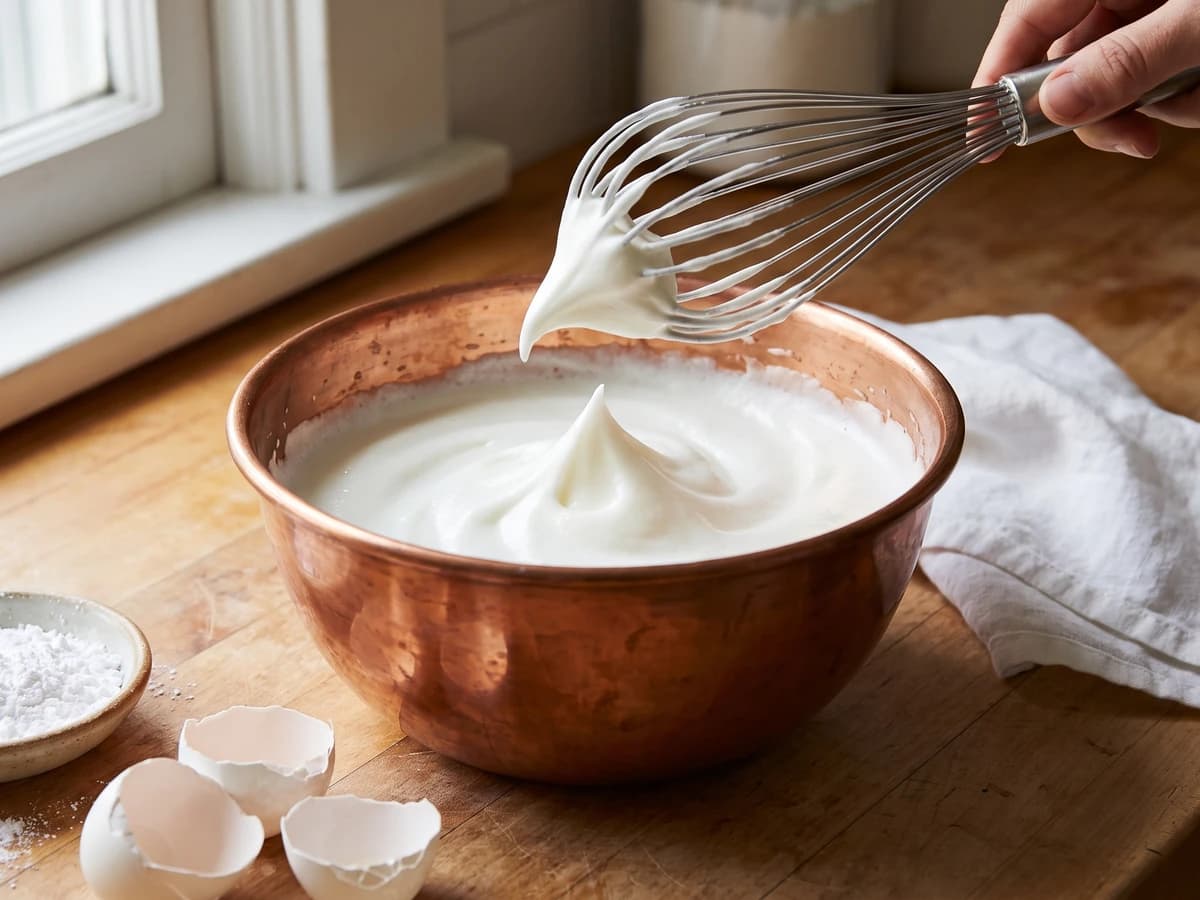
Four whites, one spotless bowl, and a patient change of speed: whisk gently until loosened, then briskly to glossy stiffness, with powdered sugar waiting if the foam begins to granulate.