
Chef Juliette
Various Almond Preparations
Five almond preparations, one discipline: remove the skins cleanly, dry every kernel through, then cut, toast, or cloak it in pale caramel without letting its fragrant oils escape.
A cooking platform built around craft, culture, and the stories behind what we eat.
Created by Chef Juliette
Based on No. 2790, Madeleine Glacée, from Le Guide Culinaire (1907) by Auguste Escoffier
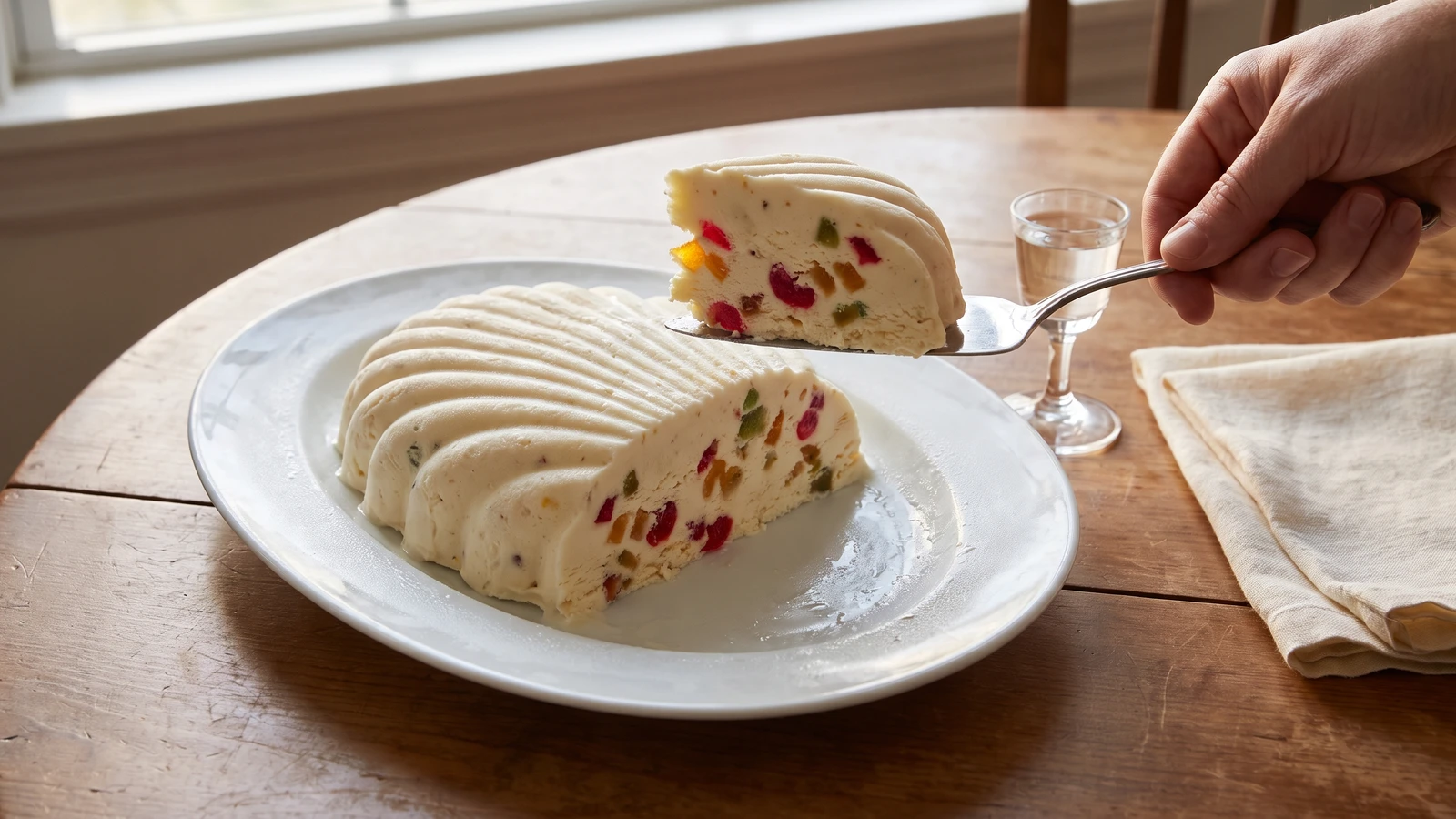
Madeleine glacée turns vanilla ice, soft Chantilly, and kirsch-tender candied fruit into a scallop-shell centerpiece, creamy enough to slice and generous enough for a holiday table.
Madeleine glacée (scallop-moulded vanilla ice) teaches one exact principle: fruit destined for the freezer must be softened before it freezes. Kirsch does more than perfume the candied fruit; it keeps each small dice tender inside the pale, creamy slice. Skip that maceration and the jewels turn to gravel.
The original entry assumed a pastry station with vanilla ice cream and Chantilly (sweetened vanilla whipped cream) ready, plus a dedicated narrow-shell Madeleine-mould. At home, use dense full-fat vanilla ice cream, whip the Chantilly yourself, and reach for a 1.5 to 1.75 litre scallop-shell mould or a fluted metal loaf tin. The pastry-station mise en place was brigade scaffolding and can go; the exact two parts vanilla ice cream to one part finished Chantilly, and the kirsch maceration, are the dish and must stay. The only change is the mould's outline when the old shell form isn't in your cupboard.
Fold while the ice cream is pliable but still thoroughly cold, and the mixture becomes lighter without turning loose or icy. The finished Madeleine glacée should slice cleanly, then soften on the tongue into vanilla cream with bright little pockets of cherry and citrus. Before you begin, give the chopped fruit its full four hours in kirsch; that is the step that decides this dish.
Madeleine glacée belongs to the Parisian repertoire of entremets glacés, moulded frozen sweets carried whole to the formal dessert table and sliced for the guests. Its name describes the narrow scallop-shell Madeleine-mould and does not make it a frozen version of the little cake associated with Commercy in Lorraine. Grand kitchens lightened vanilla ice with Chantilly and kept finely diced candied fruit supple with kirsch, a practical piece of pastry craft that lets the fruit survive the freezer.
Quantity
¾ cup (180 ml / 120 g)
cut into 5 mm dice
Quantity
¼ cup (60 ml / 55 g)
Quantity
4 cups (950 ml / about 800 g)
softened just until foldable
Quantity
1 cup (240 ml / 240 g)
very cold
Quantity
2 tablespoons (30 ml / 15 g)
sifted
Quantity
½ teaspoon (2.5 ml / 2 g)
| Ingredient | Quantity |
|---|---|
| mixed candied fruitcut into 5 mm dice | ¾ cup (180 ml / 120 g) |
| kirsch | ¼ cup (60 ml / 55 g) |
| dense full-fat vanilla ice creamsoftened just until foldable | 4 cups (950 ml / about 800 g) |
| heavy cream with at least 35% fatvery cold | 1 cup (240 ml / 240 g) |
| confectioners' sugarsifted | 2 tablespoons (30 ml / 15 g) |
| pure vanilla extract | ½ teaspoon (2.5 ml / 2 g) |
Put the candied fruit in a small nonreactive bowl, pour over the kirsch, and stir until every dice is moistened. Cover and refrigerate for at least 4 hours, preferably overnight, stirring once or twice. Taste one piece before proceeding: it should yield easily under the teeth and smell clearly of cherry spirit. If it remains stubbornly chewy, chop it finer and give it another hour. Frozen fruit magnifies every hard edge, so this waiting is part of the dish.
Place the clean Madeleine-mould, a large mixing bowl, the beaters, and the serving platter in the freezer for 20 minutes. Let the vanilla ice cream soften only until a spatula can pass through it without force, usually 10 to 15 minutes at room temperature, then work it briefly in the chilled bowl until smooth. It must be thick and pliable, never liquid. If a melted puddle forms around the edge, return the whole bowl to the freezer for 10 minutes before continuing.
Combine the cold cream, confectioners' sugar, and vanilla in the chilled bowl. Whip at medium speed until the Chantilly holds a soft ridge and the tip of a lifted peak bends over. Stop there; stiff cream will leave fatty flecks through the frozen dessert. If the Chantilly just begins to look grainy, whisk in a spoonful of the softened ice cream and stop. Ça se rattrape. Once distinct butter granules appear, however, the cream has gone too far and must be remade.
Drain the macerated fruit in a sieve for 10 minutes without pressing it dry; the kirsch absorbed inside is what keeps it tender, while loose spirit would make the dessert slow to set. Measure exactly 2 cups (475 ml) of finished Chantilly by volume. Fold one third into the softened vanilla ice cream to loosen it, then fold in the remaining Chantilly in two additions with broad strokes from the bottom of the bowl. Fold in the fruit just until evenly dispersed. If the mixture becomes soupy, chill it for 10 to 15 minutes, then fold once more before filling the mould.
Spoon a first layer into the frozen mould and press it carefully into every scallop ridge so no hollow pockets remain. Add the rest without crushing out the air, level the surface, and tap the mould twice on a folded towel. Lay parchment directly against the mixture, cover tightly, and freeze at the coldest back part of the freezer for at least 6 hours, preferably overnight. The centre must be completely firm before unmoulding.
Take the chilled platter from the freezer. Wrap the mould for 5 to 8 seconds in a towel dipped in warm water and wrung nearly dry, then invert it firmly onto the platter. If the Madeleine glacée clings, repeat with the warm towel for another few seconds; don't soak the mould or its scallop ridges will melt away. If the surface softens during the struggle, return the unmoulded dessert to the freezer for 10 minutes. Cut generous slices with a warm, dry knife and serve at once. À table!
1 serving (about 155g)
Culinary guides, cultural storytelling, and the editorial depth that makes cooking meaningful.
Discover Culinary ExplorerChef Juliette
Five almond preparations, one discipline: remove the skins cleanly, dry every kernel through, then cut, toast, or cloak it in pale caramel without letting its fragrant oils escape.

Chef Juliette
A pastry pantry lesson in one tray: filberts warmed only until their red skins release, rubbed clean, cooled, and chopped into a fragrant mise-en-place for cakes, creams, pralines, and petits fours.

Chef Juliette
The smallest pâtisserie discipline decides whether a cake leaves its mould intact: clarified butter in every corner, followed by the lightest veil of dry flour or fécule.
Chef Juliette
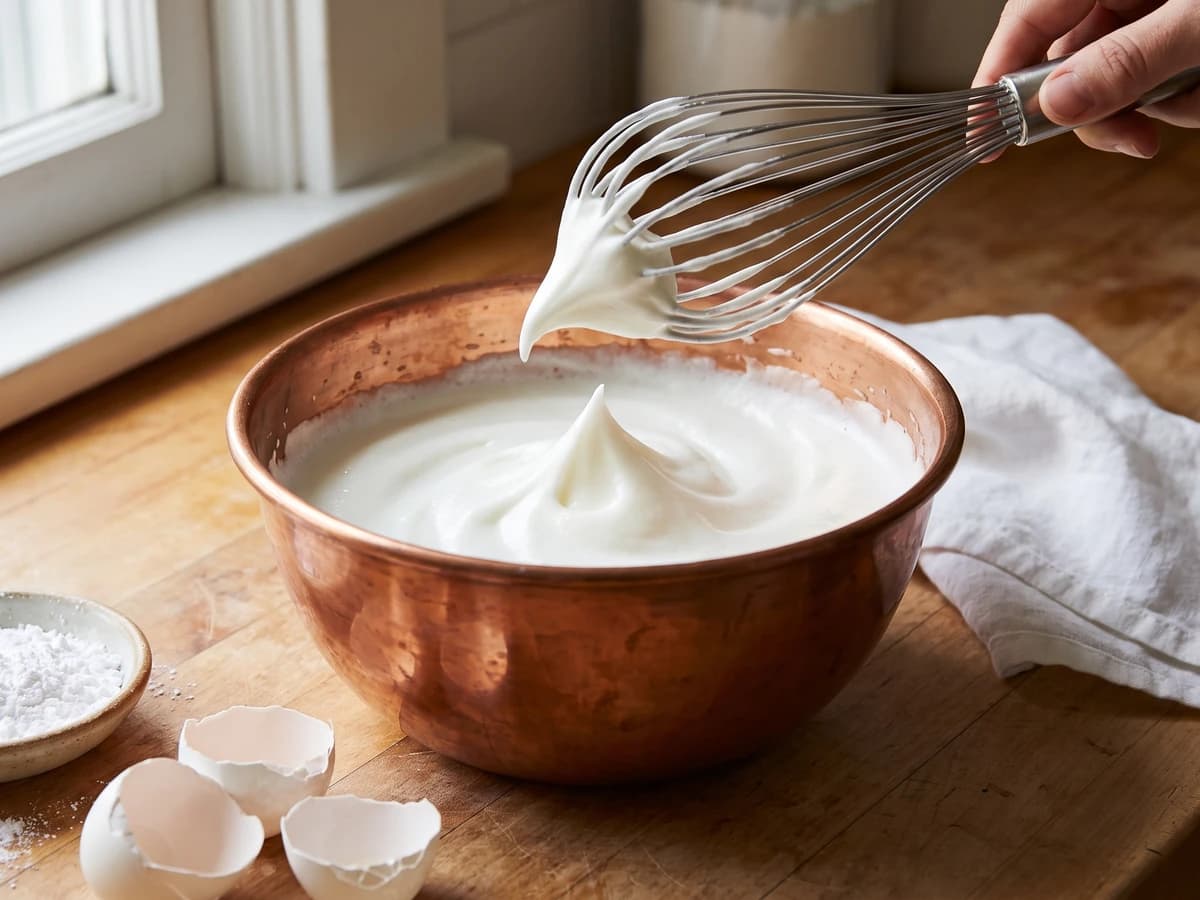
Four whites, one spotless bowl, and a patient change of speed: whisk gently until loosened, then briskly to glossy stiffness, with powdered sugar waiting if the foam begins to granulate.