Chef Juliette
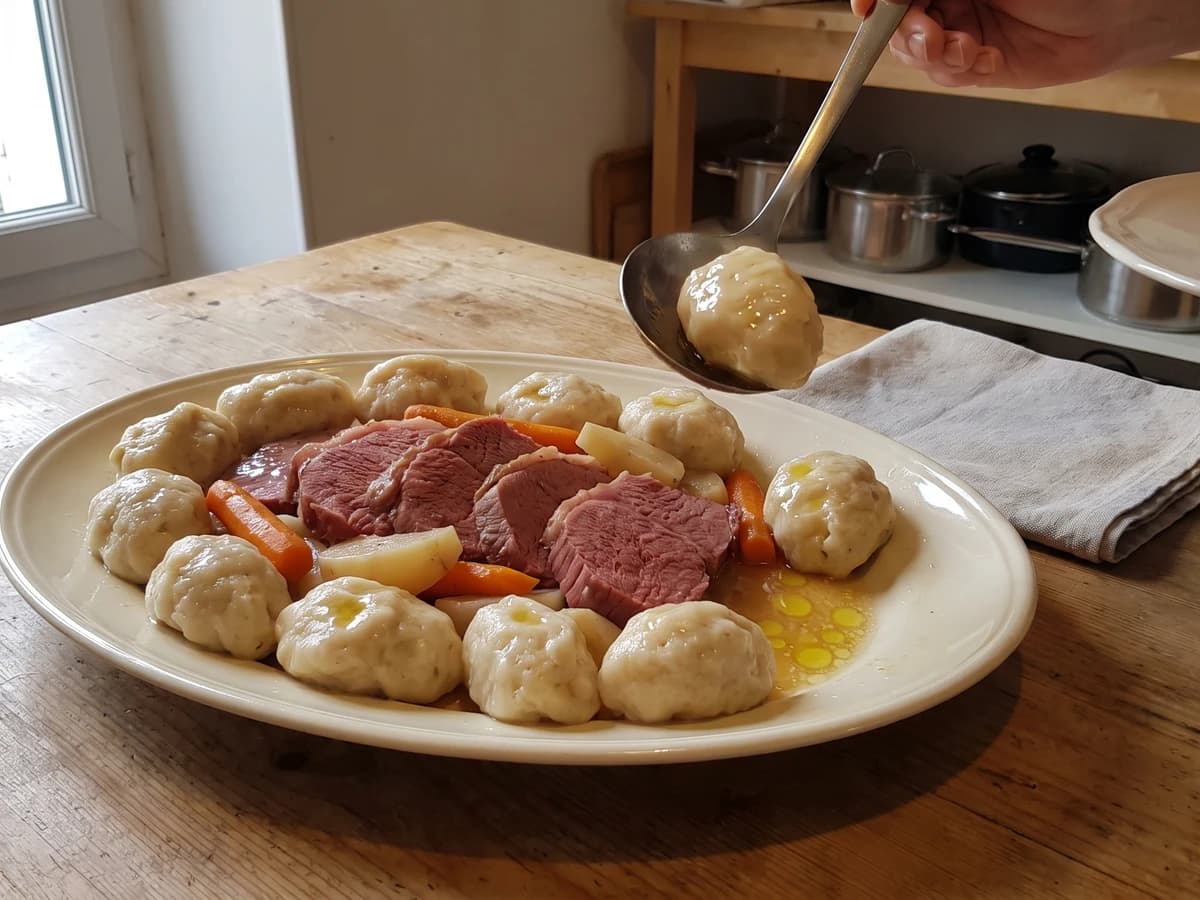
Suet Dumpling
Boulettes au suif, poached beside salt beef, turn equal weights of flour and finely chopped suet into tender, rich dumplings. Keep the beef liquor at a bare tremble and the old garnish works beautifully at home.
A cooking platform built around craft, culture, and the stories behind what we eat.
Created by Chef Juliette
Based on No. 278, Vegetable Creams and Purées, from Le Guide Culinaire (1907) by Auguste Escoffier
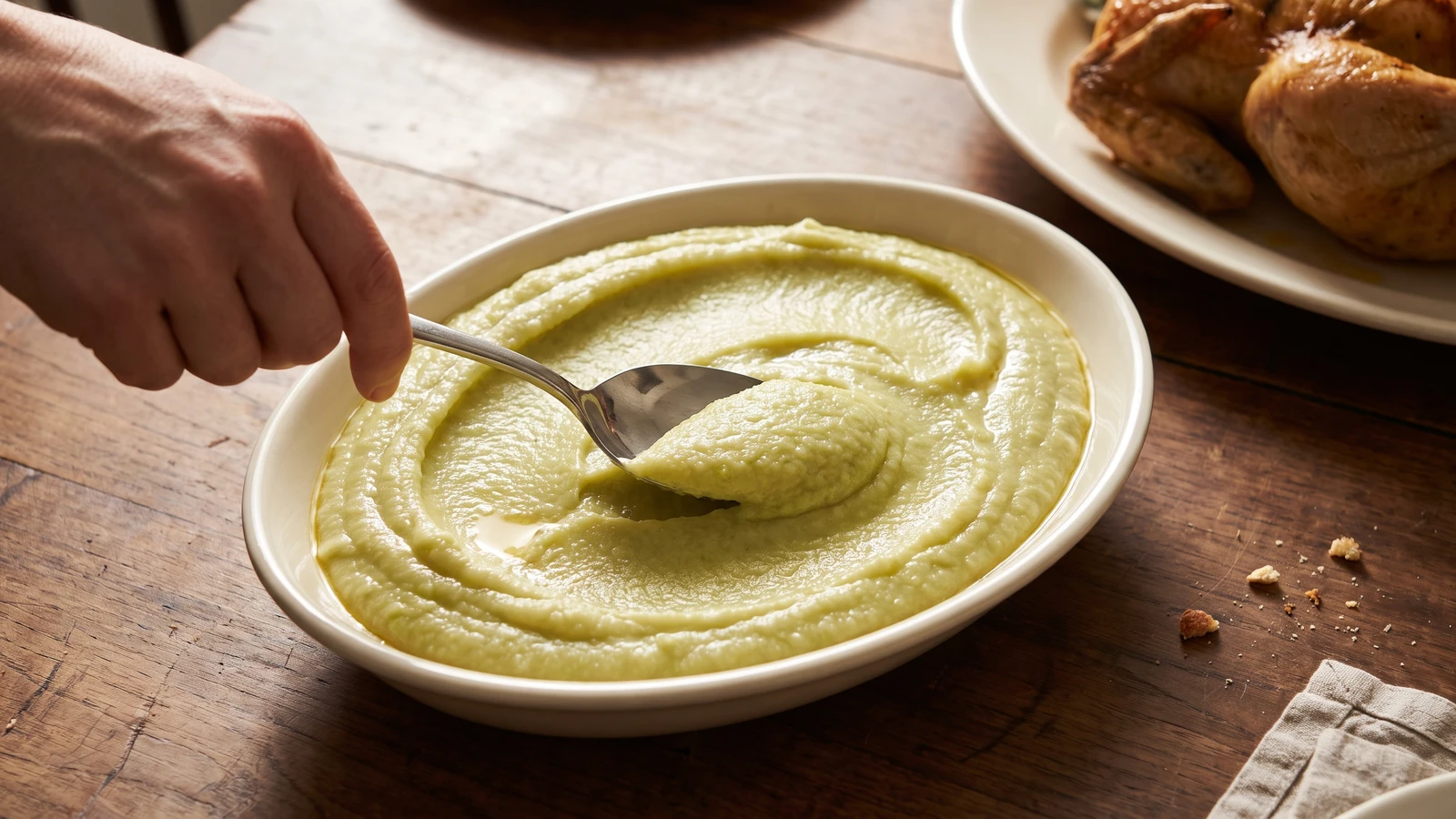
Purées et crèmes de légumes turn a sieve, brisk heat, butter, and the right liaison into satin: potato steadies watery vegetables, béchamel makes them a crème, and careful drying keeps every spoonful generous.
Purées et crèmes de légumes (vegetable purées and creams) teach one thing before all else: texture is governed by water. A dry or farinaceous vegetable needs sieving, brisk pan-drying, butter, and just enough milk or cream to relax it. An aqueous vegetable needs a liaison (a binding element) of mashed potato, or stiff Béchamel sauce when the result is a crème. C'est la même grammaire across dried peas, beans, cauliflower, celery, and chestnuts.
The professional formula assumed pints of cooked vegetables waiting beside a saucier free to sieve and work them over a brisk fire. At home, two cups fit a 10-inch sauté pan, and three tablespoons of butter preserve its one-and-one-half-ounce-per-pint proportion. A food mill or fine sieve replaces repeated brigade labor. Only the batch and the hands have changed: extra holding pans are scaffolding and can go, but sieving and drying are the dish. One cook, one stove, one evening.
When it is right, the purée holds a soft mound, tastes distinctly of its vegetable, and carries a quiet butter sheen without greasiness. The decisive step is the brisk drying. Do not reach for the milk or cream until the spoon leaves a trail that stays open briefly behind it.
Purées et crèmes de légumes belong to the Parisian classical kitchen and to cuisine bourgeoise tables across France, where they served as disciplined companions to roasts, chops, and braised dishes rather than as decorative spoonfuls. The distinction is technical: in this formula a crème is not merely a purée enriched with extra cream, but an aqueous vegetable bound with stiff Béchamel sauce, while mashed potato makes the corresponding purée. The method traveled easily from grand service to the home table because its essentials are a sieve, a sauté pan, butter, and a cook who controls water.
Quantity
Enough to make 2 cups (1 pint / 475 ml / about 500 g) after sieving
cooked until fully tender and thoroughly drained
Quantity
½ cup (120 ml / 110 g)
smooth and unseasoned; use only for an aqueous purée
Quantity
½ cup (120 ml / 125 g)
use instead of mashed potato for an aqueous crème
Quantity
3 tablespoons (45 ml / 42 g)
Quantity
¼ to ½ cup (60 to 120 ml / 60 to 120 g)
warmed
Quantity
½ teaspoon (2.5 ml / 3 g), plus more as needed
| Ingredient | Quantity |
|---|---|
| cooked chosen vegetablecooked until fully tender and thoroughly drained | Enough to make 2 cups (1 pint / 475 ml / about 500 g) after sieving |
| plain mashed potato (optional)smooth and unseasoned; use only for an aqueous purée | ½ cup (120 ml / 110 g) |
| stiff Béchamel sauce (optional)use instead of mashed potato for an aqueous crème | ½ cup (120 ml / 125 g) |
| unsalted butter | 3 tablespoons (45 ml / 42 g) |
| whole milk or heavy creamwarmed | ¼ to ½ cup (60 to 120 ml / 60 to 120 g) |
| fine salt | ½ teaspoon (2.5 ml / 3 g), plus more as needed |
Decide which family your vegetable belongs to. Dry and farinaceous vegetables, such as dried peas, white beans, chestnuts, or potatoes, need no liaison. Aqueous vegetables, including French beans, cauliflower, and celery, require mashed potato for a purée or stiff Béchamel sauce for a crème. Whatever you choose, cook it until completely tender, then drain it thoroughly. A knife should pass through without resistance; the sieve cannot correct an undercooked centre.
Pass the warm vegetable through the fine disk of a food mill or press it firmly through a fine-mesh sieve with a flexible scraper. Scrape the underside, where the smoothest pulp gathers, and measure 2 cups. Do not blend potatoes or other very starchy vegetables; a fast blade releases too much starch and turns them elastic. The sieve is not brigade ceremony. It removes skins and fibres while preserving a dense, clean texture.
For a dry or farinaceous vegetable, proceed directly to the pan. For 2 cups of aqueous vegetable pulp, fold in ½ cup of plain mashed potato, exactly one quarter of the vegetable's volume. To make a crème, use the same volume of stiff Béchamel sauce instead of potato. Never add both. If your sieve yields another amount, keep the proportion: one part liaison to four parts aqueous vegetable.
Put the purée in a broad, heavy sauté pan over medium-high heat. Work it continuously with a wooden spoon or firm spatula, adding the butter one tablespoon at a time as moisture escapes. The purée is ready when it gathers softly from the sides, no water beads at the rim, and the spoon leaves a trail that stays open for a moment. Brisk heat is correct, but scorched heat is not. If it catches, stop scraping and transfer the clean upper portion to another pan, leaving the dark layer behind. Ça se rattrape. If butter collects at the edge, lower the heat slightly and beat until the purée absorbs it.
Add the warm milk or cream one tablespoon at a time, beating each addition completely into the purée before judging the next. Stop when a spoonful settles slowly into a soft mound but does not run. Season with the salt and taste. If the purée becomes too loose, return it to brisk heat and work it until the excess moisture cooks away; if it is too tight, another spoonful of warm dairy restores it.
Scrape the purée into a warmed serving dish and draw one broad spoon across the surface. Serve it at once beside roasted, sautéed, or braised food, where its soft texture can catch the juices. It should taste of the vegetable first and butter second. Cooking well is not cooking fancy. À table!
1 serving (about 155g)
Culinary guides, cultural storytelling, and the editorial depth that makes cooking meaningful.
Discover Culinary ExplorerChef Juliette
Boulettes au suif, poached beside salt beef, turn equal weights of flour and finely chopped suet into tender, rich dumplings. Keep the beef liquor at a bare tremble and the old garnish works beautifully at home.

Chef Juliette
Bread, flour, frangipane, and rice become four cool, supple panades for binding forcemeats, each changing body and flavor while preserving tenderness. The finest Mousselines need none, and knowing that distinction is the lesson.

Chef Juliette
Panade au pain is bread, milk, salt, heat, and attention: stir until the paste releases cleanly, butter it against a skin, and you have the quiet binder behind tender French farces.

Chef Juliette
Panade de farine teaches the drying stroke behind pâte à choux: flour meets boiling buttered water, then stays over the fire until the paste gathers, smooths, and quits the pan cleanly.