
Chef Juliette
Various Almond Preparations
Five almond preparations, one discipline: remove the skins cleanly, dry every kernel through, then cut, toast, or cloak it in pale caramel without letting its fragrant oils escape.
A cooking platform built around craft, culture, and the stories behind what we eat.

Created by Chef Juliette
Based on No. 2778, Glace Carmen, from Le Guide Culinaire (1907) by Auguste Escoffier
Three frozen flavours, one clean reveal: raspberry ice, coffee ice, and vanilla ice cream set in bold vertical stripes inside a fluted mould, a lesson in patience disguised as celebration.
Glace Carmen (a striped moulded ice) teaches one thing before you touch a pan, though this dessert needs none: cold is an ingredient. Raspberry ice, coffee ice, and vanilla ice cream will hold as clean vertical bands only when every stripe is frozen firm before the next one touches it. Rush that interval and the colours bleed; respect it and the fluted mould lifts away from a small piece of theatre.
The original entry assumed a brigade pastry section with all three ices finished, a freezing cabinet ready, professional moulds, and another pair of hands to keep everything cold. Your honest equivalent is a 1.5 litre fluted mould, three good finished ices, a home freezer at its coldest setting, and six measured portions laid in with the mould on its side. The freezing cabinet and brigade scale are scaffolding, so they go. The raspberry, coffee, and vanilla sequence, repeated in clean bands, is the dish itself, so it stays.
Using finished ices is not a shortcut here; the source recipe begins with finished ices too. We scale the mould to eight generous slices and replace simultaneous brigade work with one orderly rhythm: soften one portion, spread it, freeze it, then continue. One cook, one stove, one evening, and for once the stove may stay cold. The step that decides Glace Carmen is the pause between stripes. Don't negotiate with it.
Glace Carmen belongs to the Parisian grand-kitchen repertoire of moulded ices, where pastry sections assembled several prepared flavours into a single formal dessert. Its name reflects that table's fondness for theatrical titles, but this is a French composition rather than a Spanish regional sweet. The alternating raspberry, coffee, and vanilla bands are more than decoration; they are the fixed arrangement by which the dish is recognized.
Quantity
2 cups (500 ml / approximately 475 g)
vividly tart; divided into two equal portions as used
Quantity
2 cups (500 ml / approximately 475 g)
strongly flavoured; divided into two equal portions as used
Quantity
2 cups (500 ml / approximately 450 g)
divided into two equal portions as used
| Ingredient | Quantity |
|---|---|
| water-based raspberry sorbet (raspberry ice)vividly tart; divided into two equal portions as used | 2 cups (500 ml / approximately 475 g) |
| water-based coffee sorbet (coffee ice)strongly flavoured; divided into two equal portions as used | 2 cups (500 ml / approximately 475 g) |
| vanilla ice cream made with cream and egg yolksdivided into two equal portions as used | 2 cups (500 ml / approximately 450 g) |
Set the freezer to -18°C / 0°F or colder. Chill a clean 1.5 litre fluted metal mould, the serving platter, and a small offset spatula for 30 minutes. Make room on a level shelf, then lay the mould on its side in a cradle of two tightly rolled towels, with its long axis horizontal and its open rim tipped slightly upward. Gravity will make each horizontal layer become a vertical stripe when the dessert is finally stood upright.
Take out only the raspberry sorbet and let it stand for 5 to 10 minutes, just until it yields to a spoon while remaining matte and firm. Measure 1 cup (250 ml / approximately 238 g), return the rest to the freezer, and pack the portion into the lowest side of the cold mould from the closed base to the open lip. Press it into every flute, then smooth its exposed face straight and parallel to the work surface. Freeze for 40 to 50 minutes, until a fingertip leaves no dent.
Temper 1 cup (250 ml / approximately 238 g) of the coffee sorbet until pliable. Test the raspberry before proceeding: if it dents, give it another 15 minutes. Spread the coffee gently across the frozen raspberry face without digging into it, keeping the band even from base to lip. If pink streaks begin drawing into the coffee, stop and lift off the stained portion with the spatula. Ça se rattrape: freeze the mould and coffee separately for 20 minutes, then spread again. Freeze the completed coffee stripe for 40 to 50 minutes.
Soften 1 cup (250 ml / approximately 225 g) of vanilla ice cream only until spreadable. Make certain the coffee stripe is hard, because dark smudges show plainly against vanilla. Press the ice cream over the coffee in an even band, working with short strokes and a clean spatula. Smooth the face, return the mould to its towel cradle, and freeze for 40 to 50 minutes.
Temper the remaining 1 cup (250 ml / approximately 238 g) of raspberry sorbet. Confirm that the vanilla is firm, then spread the raspberry from the closed base to the lip, pressing out trapped air without disturbing the pale stripe beneath. Level the face and freeze for another 40 to 50 minutes. Patience, not pressure, keeps the colours separate.
Soften and spread the remaining 1 cup (250 ml / approximately 238 g) of coffee sorbet over the hardened raspberry. Follow the same straight line established by the earlier bands, packing the coffee firmly into the fluting and smoothing its face. Freeze for 40 to 50 minutes, until completely firm.
Spread the remaining 1 cup (250 ml / approximately 225 g) of vanilla ice cream into the last space, pressing it carefully into the mould and levelling the open end so the finished Glace Carmen will stand squarely. Cover the opening with parchment and a fitted lid or snug foil. Keep the mould on its side for 1 hour, then stand it upright and freeze for at least 4 hours, preferably overnight.
Remove the cover and dip the mould to just below its rim in comfortably warm water for 5 to 8 seconds. Dry it, invert the chilled platter over the mould, then turn both together and lift gently. If the Glace Carmen refuses to release, wrap the mould in a warm damp towel for 5 seconds and try again; never pull at the dessert. If the outside begins softening before the centre releases, return the mould and platter to the freezer for 20 minutes, then begin again with less warmth. Once unmoulded, freeze for 15 minutes to reset the fluting. Cut with a warm, dry knife, wiping it between slices so every band stays distinct. À table!
1 serving (about 175g)
Culinary guides, cultural storytelling, and the editorial depth that makes cooking meaningful.
Discover Culinary ExplorerChef Juliette
Five almond preparations, one discipline: remove the skins cleanly, dry every kernel through, then cut, toast, or cloak it in pale caramel without letting its fragrant oils escape.

Chef Juliette
A pastry pantry lesson in one tray: filberts warmed only until their red skins release, rubbed clean, cooled, and chopped into a fragrant mise-en-place for cakes, creams, pralines, and petits fours.

Chef Juliette
The smallest pâtisserie discipline decides whether a cake leaves its mould intact: clarified butter in every corner, followed by the lightest veil of dry flour or fécule.
Chef Juliette
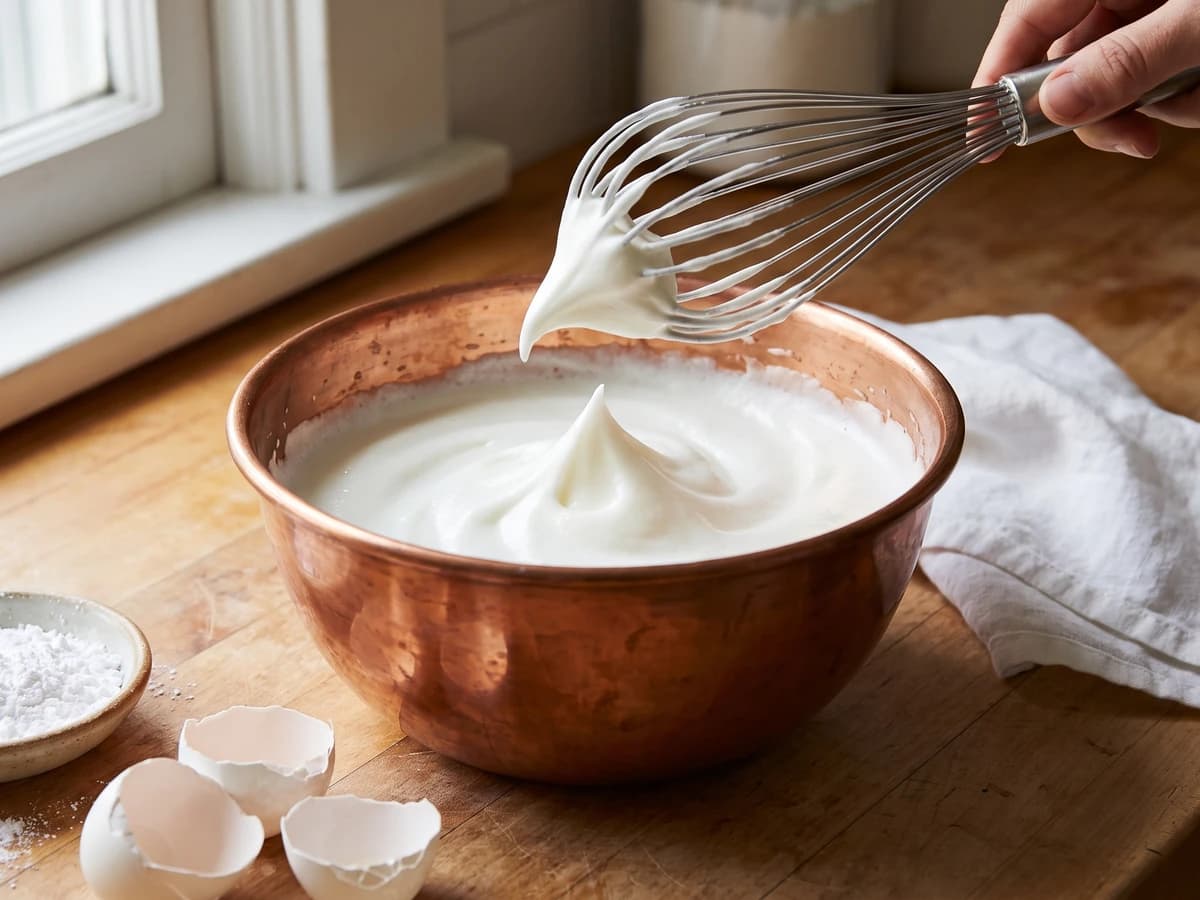
Four whites, one spotless bowl, and a patient change of speed: whisk gently until loosened, then briskly to glossy stiffness, with powdered sugar waiting if the foam begins to granulate.