
Chef Juliette
Various Almond Preparations
Five almond preparations, one discipline: remove the skins cleanly, dry every kernel through, then cut, toast, or cloak it in pale caramel without letting its fragrant oils escape.
A cooking platform built around craft, culture, and the stories behind what we eat.
Created by Chef Juliette
Based on No. 2775, Grape Ice, from Le Guide Culinaire (1907) by Auguste Escoffier
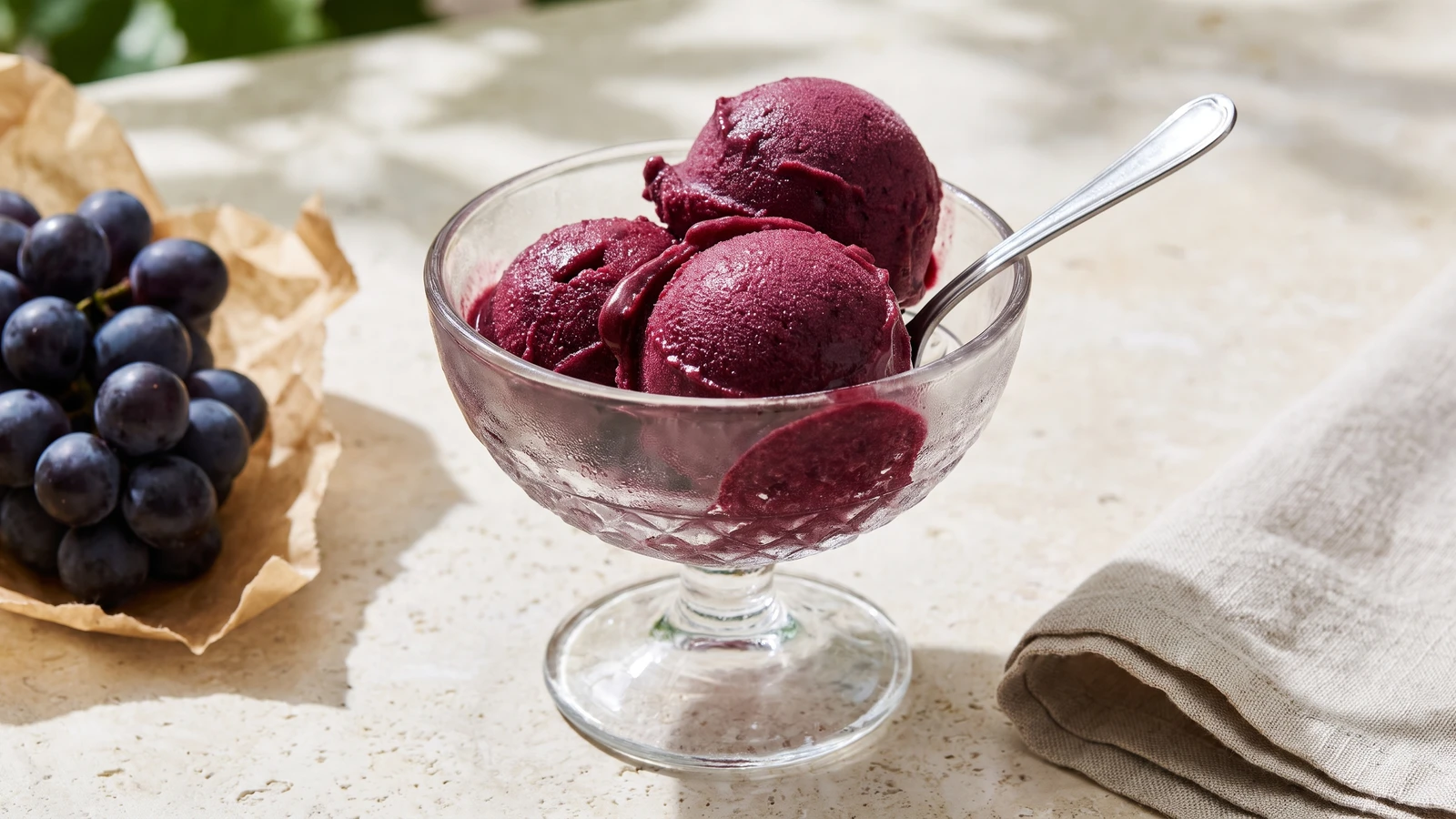
Glace aux raisins is sugar measured as structure: pressed sweet grapes, three lemons, and a precise 20° Baumé reading churn into a brilliant, fine-grained ice that tastes first of fruit.
Glace aux Raisins (grape ice) teaches the cleanest lesson in frozen dessert: sugar is structure before it is sweetness. The source's 20° is a Baumé syrup-gauge reading, about 35 to 36 °Bx on a modern refractometer. Hit it and the ice churns fine and yielding; miss low and it freezes hard, miss high and it slumps.
The source assumed a pèse-sirop (syrup gauge), a hand freezer packed with ice and salt, and someone available to turn it. Your honest equivalents are a pocket refractometer and a 1½-quart electric churn. The full 1½-pint measure stays because it already fits that machine and serves six to eight at home. Pure powdered sugar becomes superfine sugar, not starch-laced confectioners' sugar, because it dissolves cold without clouding the grape. The salt-and-ice pail is scaffolding; pressed juice, three lemons, the 20° reading, sieving, and churning are the dish.
Finished, the glace aux raisins is jewel-toned, tart at the first touch and deeply grapey as it melts. There is no cream or egg white hiding here. One cook, one stove, one evening, and tonight the stove can remain cold. The step that matters is simple: take the reading after all three lemons are in, then add the sugar by degrees and stop at 20°.
Glace aux raisins belongs to the repertoire of Parisian glaciers and the classical French entremets table, not to the rustic cooking of any single wine region. Pressed grapes carried much of their own sugar, lemon supplied brightness, and the pèse-sirop allowed confectioners to correct each batch because one harvest's juice never matched the next. The preparation traveled intact from the specialist's ice pail to the bourgeois dining room: fruit, acid, sugar, and controlled freezing, with neither cream nor egg white required.
Quantity
1½ Imperial pints (850 ml / about 900 g)
chilled
Quantity
3, yielding about ½ cup (120 ml / 120 g) juice
juiced
Quantity
About 1 to 1½ cups (240 to 360 ml / 200 to 300 g), or as needed to reach 20° Baumé (about 35 to 36 °Bx)
| Ingredient | Quantity |
|---|---|
| freshly pressed juice from ripe sweet grapeschilled | 1½ Imperial pints (850 ml / about 900 g) |
| medium lemonsjuiced | 3, yielding about ½ cup (120 ml / 120 g) juice |
| superfine sugar | About 1 to 1½ cups (240 to 360 ml / 200 to 300 g), or as needed to reach 20° Baumé (about 35 to 36 °Bx) |
Freeze the removable bowl of a 1½-quart ice cream machine until completely solid, usually at least 24 hours. Chill a shallow 1-quart container as well. A half-frozen churn bowl cannot pull heat from the juice quickly enough, and slow freezing makes coarse crystals.
If pressing whole grapes, crush them gently with a potato masher or food mill and press without breaking the seeds, which can make the juice bitter. Measure exactly 1½ Imperial pints (850 ml) of juice into a nonreactive bowl, then add the strained juice of all three lemons. Mix thoroughly before testing. The lemon changes both the flavor and the density, so a reading taken from grape juice alone tells you nothing useful.
Take a reading with the pèse-sirop or refractometer. Whisk in the superfine sugar about 2 tablespoons (25 g) at a time, letting each addition dissolve and the foam settle before testing again. As the mixture approaches the target, reduce each addition to 1 teaspoon (4 g). Stop at 20° Baumé, approximately 35 to 36 °Bx on a modern refractometer. Sweet grapes have already done much of the work, so the gauge, not a fixed cup measure, decides the final amount. If you pass the mark, don't freeze it and hope. Ça se rattrape. Dilute it with additional unsweetened grape and lemon juice in roughly a 7:1 ratio, then test again.
Rub the entire mixture through a fine-mesh sieve with a flexible spatula, as the source directs. This removes lemon pulp, grape skin, and any undissolved sugar while keeping the finest fruit in the base. Cover and chill until thoroughly cold, at least 2 hours and no warmer than 4°C (40°F). A warm base freezes slowly and gives you large, blunt crystals.
Start the machine before pouring in the cold mixture so none freezes into a solid layer against the bowl. Churn for 20 to 30 minutes, until the glace aux raisins is thick, fine-grained, and holds soft ridges from the dasher. If it remains liquid after 30 minutes, the bowl was not cold enough. Return the base to the refrigerator, freeze the bowl completely, and churn again; the mixture is not lost.
Pack the freshly churned ice into the chilled shallow container, press parchment directly against the surface, cover, and freeze for 2 to 3 hours. It should become firm enough to scoop while yielding after a few minutes at room temperature. If it stays syrupy after several hours, melt it, recheck the sugar, dilute an excessive reading with the same 7:1 grape-and-lemon mixture, and rechurn.
Let the container stand for 5 to 10 minutes, longer in a very cold freezer. Dip a serving spoon briefly in hot water, wipe it dry, and draw generous scoops into chilled coupes. Serve the glace aux raisins bare. Its color and clean grape perfume require no decoration. À table!
1 serving (about 160g)
Culinary guides, cultural storytelling, and the editorial depth that makes cooking meaningful.
Discover Culinary ExplorerChef Juliette
Five almond preparations, one discipline: remove the skins cleanly, dry every kernel through, then cut, toast, or cloak it in pale caramel without letting its fragrant oils escape.

Chef Juliette
A pastry pantry lesson in one tray: filberts warmed only until their red skins release, rubbed clean, cooled, and chopped into a fragrant mise-en-place for cakes, creams, pralines, and petits fours.

Chef Juliette
The smallest pâtisserie discipline decides whether a cake leaves its mould intact: clarified butter in every corner, followed by the lightest veil of dry flour or fécule.
Chef Juliette
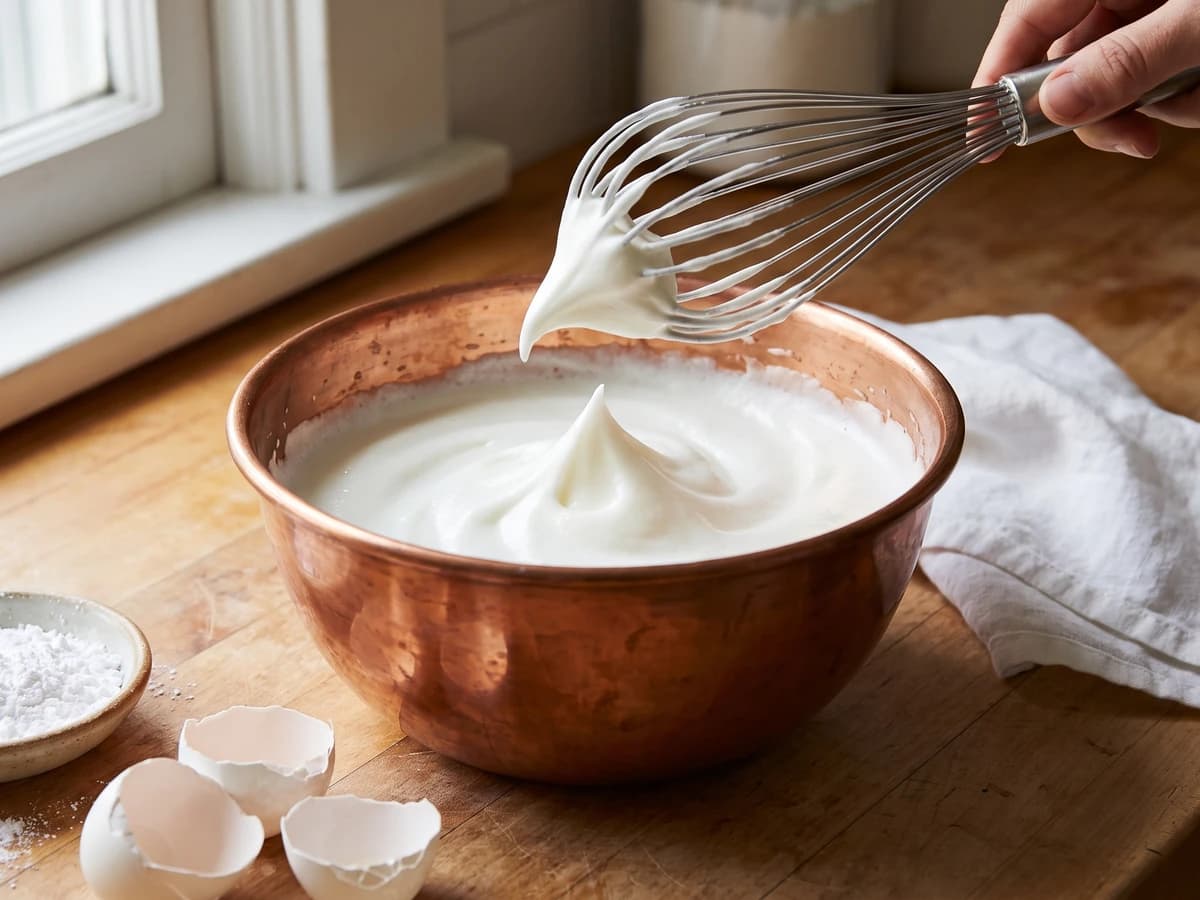
Four whites, one spotless bowl, and a patient change of speed: whisk gently until loosened, then briskly to glossy stiffness, with powdered sugar waiting if the foam begins to granulate.