
Chef Juliette
Various Almond Preparations
Five almond preparations, one discipline: remove the skins cleanly, dry every kernel through, then cut, toast, or cloak it in pale caramel without letting its fragrant oils escape.
A cooking platform built around craft, culture, and the stories behind what we eat.

Created by Chef Juliette
Based on No. 2773, Pear Ice, from Le Guide Culinaire (1907) by Auguste Escoffier
Glace aux Poires Williams turns ripe pear, sugar, lemon, and exact syrup density into a pale, fragrant ice: work quickly, sieve finely, and 22° Baumé gives the spoon its clean, yielding texture.
Glace aux Poires Williams (William pear ice) teaches the central rule of fruit ices: balance the fruit by density, not by blindly pouring in a fixed cup of water. The old 22° means 22° Baumé, about 39.5° Brix, and it gives this unusually sugar-rich formula a smooth, yielding freeze rather than a brittle block.
The source sets one pound of powdered sugar against two-thirds pound of cleaned pear, with two lemons for every pound of fruit. For a home batch, that becomes eight ounces of pear, twelve ounces of pure powdered sugar, and one lemon, with the ratio untouched. The confectioner's station had a mortar, a fine sieve, a syrup gauge, a salt-and-ice freezing pot, and spare hands to keep everything moving. Your food processor, sieve, refractometer, and ice cream machine do those jobs honestly. Hand pounding and constant cranking are brigade scaffolding and may go; the fine sieving and density balance are the dish and must stay. One cook, one stove, one evening, and the stove gets the night off.
When it's right, the ice is pale ivory, densely smooth, and fragrant enough that the pear reaches you before the first spoonful. Weigh the sugar, squeeze the lemon, and position the sieve before peeling anything, because cut pear browns while you look at it. The step that decides the dish is watering the strained purée back to 22° Baumé one spoonful at a time.
Glace aux poires belongs to the French glacier repertoire centered in Parisian confectionery and grand-house service, where fruit purées were balanced with a syrup gauge before freezing. Williams names the pear cultivar, sold as Bartlett in American markets, rather than a regional style, and the preparation traveled from the confectioner's station to bourgeois dining rooms as small sorbetières made it practical at home. The direction to bring the mixture to 22° records density on the Baumé scale, not temperature, which is why a fixed quantity of water cannot fully account for the sweetness of each pear.
Quantity
1½ cups (8 oz / 227 g), peeled and cored
cut only when ready to process
Quantity
About 3 cups (12 oz / 340 g)
Quantity
1, to yield about 3 tablespoons (45 ml / 45 g) juice
juiced immediately before use
Quantity
1 to 1½ cups (240 to 360 ml / 240 to 360 g)
used as needed to reach 22° Baumé
| Ingredient | Quantity |
|---|---|
| ripe Williams pears, sold as Bartlett pearscut only when ready to process | 1½ cups (8 oz / 227 g), peeled and cored |
| pure powdered sugar without cornstarch | About 3 cups (12 oz / 340 g) |
| medium lemonjuiced immediately before use | 1, to yield about 3 tablespoons (45 ml / 45 g) juice |
| filtered waterused as needed to reach 22° Baumé | 1 to 1½ cups (240 to 360 ml / 240 to 360 g) |
Freeze the ice cream machine bowl completely, following its maker's timing. Calibrate the refractometer with filtered water, dry it, and set a fine-mesh sieve over a chilled bowl. Squeeze the lemon and weigh the sugar before touching the pears. Once the fruit is cut, the work must move without interruption.
Peel and core the pears, weigh out exactly 8 ounces (227 g), and cut them directly into the food processor. Add all the powdered sugar and process immediately until the mixture becomes a flowing, completely smooth purée, about 60 to 90 seconds. This replaces pounding in a mortar, nothing more; the source ratio remains exactly one part pear to one and a half parts sugar by weight. If a cut face browns before it reaches the machine, trim away that thin surface and keep moving.
Pour in all the lemon juice and process for another 10 seconds. The acid sharpens the pear and arrests further oxidation. If the purée has already taken on a faint beige cast, continue without panic; its flavor is still sound, though lemon cannot return a color already lost. Do not add extra juice in pursuit of whiteness, because the book's two-lemons-per-pound proportion is part of the balance.
Rub the entire mixture through the fine-mesh sieve with a flexible scraper, pressing firmly until only dry fibers and any missed core fragments remain. Scrape the smooth purée from beneath the sieve into the bowl. The food processor removes the mortar work, but it does not replace this passage through the sieve; Williams pears can carry fine grit, and the finished ice should feel like satin under the spoon.
Stir 1 cup (240 ml / 240 g) of the filtered water thoroughly into the strained purée. Test a well-mixed drop with the refractometer, then add more water 1 tablespoon (15 ml / 15 g) at a time until the reading approaches 40.5° Brix. From there, add water by the teaspoon, stirring and testing after each addition, until the mixture reaches 39.5° Brix, equivalent to 22° Baumé. Stop there. If using a hydrometer, take the reading at its stated calibration temperature and look for 22° Baumé. Without either instrument, use about 1⅓ cups (320 ml / 320 g) water in total; this is the closest honest approximation, but it cannot account for the ripeness of your particular pears.
Cover the bowl with the covering pressed directly against the surface and refrigerate until the base is thoroughly cold, at least 2 hours. It should reach 4°C (40°F) or below before churning. A warm base wastes the machine's cold and begins melting its own ice crystals before they are properly formed.
Pour the cold base into the running ice cream machine and churn until it holds thick, soft folds and the dasher leaves a clear track, usually 20 to 30 minutes. If the mixture still sloshes after 30 minutes, stop before the machine warms it. Ça se rattrape: return the base to the refrigerator, refreeze the machine bowl completely, and churn again. Without a machine, freeze the base in a shallow metal pan and beat it vigorously every 30 minutes until evenly frozen; the texture will be slightly coarser, but the formula remains intact.
Pack the softly churned ice into a chilled 1-quart (950 ml) container, smooth the surface, cover closely, and freeze for about 3 hours. Let it stand at room temperature for 5 to 10 minutes before serving, just until a spoon enters without force. Form generous, loose spoonfuls rather than perfect spheres. The perfume should be pear first, lemon behind it, with no icy crunch under the teeth. À table!
1 serving (about 152g)
Culinary guides, cultural storytelling, and the editorial depth that makes cooking meaningful.
Discover Culinary ExplorerChef Juliette
Five almond preparations, one discipline: remove the skins cleanly, dry every kernel through, then cut, toast, or cloak it in pale caramel without letting its fragrant oils escape.

Chef Juliette
A pastry pantry lesson in one tray: filberts warmed only until their red skins release, rubbed clean, cooled, and chopped into a fragrant mise-en-place for cakes, creams, pralines, and petits fours.

Chef Juliette
The smallest pâtisserie discipline decides whether a cake leaves its mould intact: clarified butter in every corner, followed by the lightest veil of dry flour or fécule.
Chef Juliette
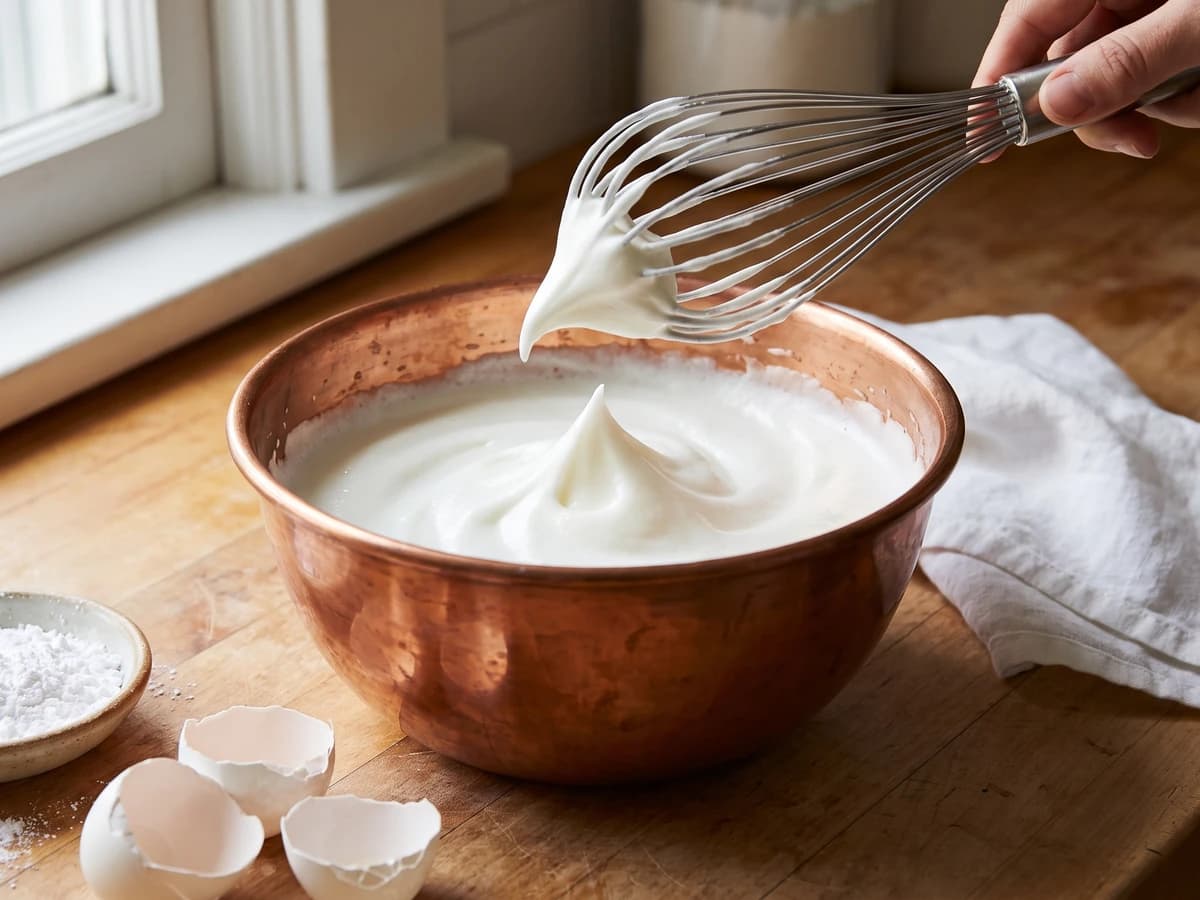
Four whites, one spotless bowl, and a patient change of speed: whisk gently until loosened, then briskly to glossy stiffness, with powdered sugar waiting if the foam begins to granulate.