Chef Juliette
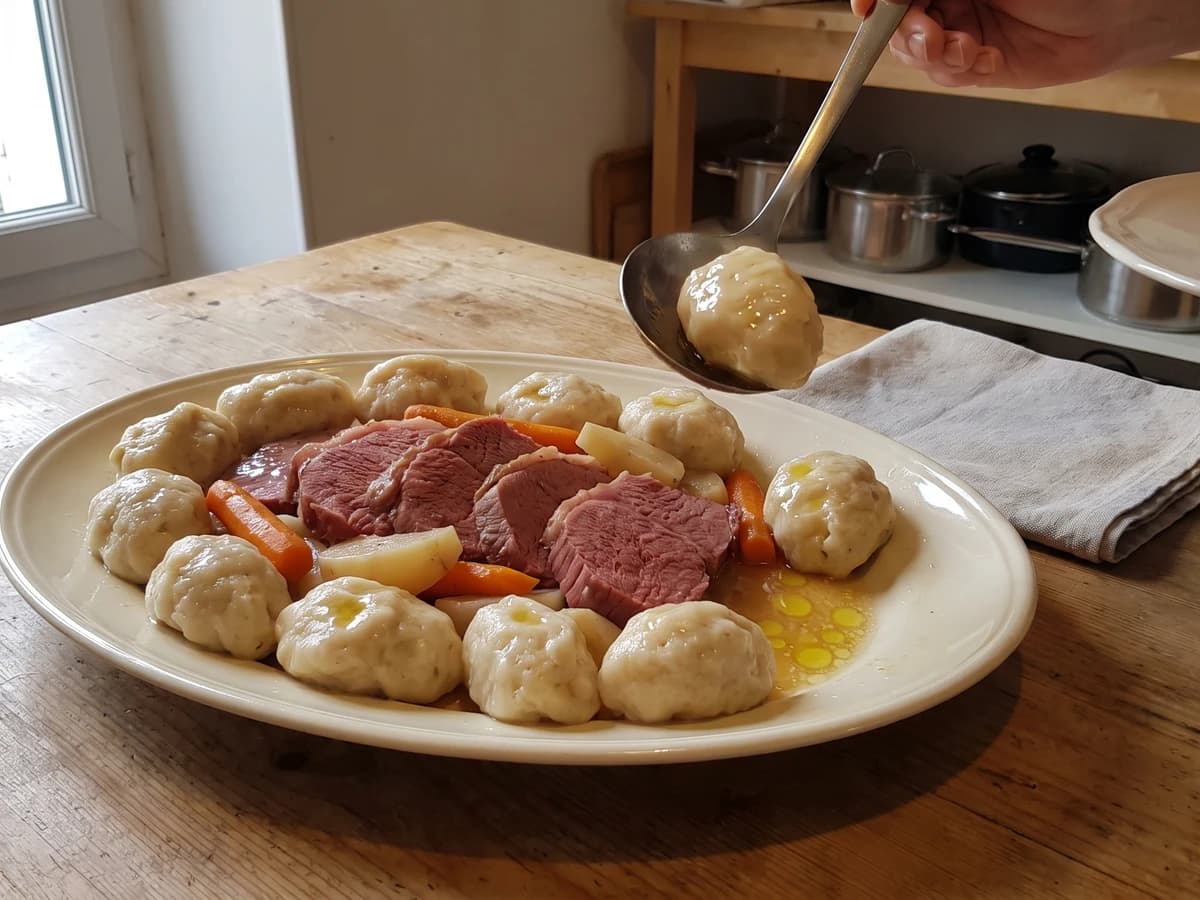
Suet Dumpling
Boulettes au suif, poached beside salt beef, turn equal weights of flour and finely chopped suet into tender, rich dumplings. Keep the beef liquor at a bare tremble and the old garnish works beautifully at home.
A cooking platform built around craft, culture, and the stories behind what we eat.

Created by Chef Juliette
Based on No. 277, Leason of Vegetables With Cream, from Le Guide Culinaire (1907) by Auguste Escoffier
Liaison de légumes à la crème proves that the sauce need not pool to be generous: vegetables stay firm, cream reduces to a silken coat, and cold butter seals the gloss.
Liaison de Légumes à la Crème (vegetables bound with cream) teaches one true thing: the vegetables must enter the cream somewhat firm. If they're already tender, the final simmer turns them soft before the cream has reduced, and no amount of butter can give them back their character.
The service kitchen assumed vegetables cooked separately, a saucier watching the reduction, and a prepared cream sauce waiting to stiffen a loose result. Your honest equivalent is a broad sauté pan, which reduces a small quantity quickly and evenly. At this scale the extra cream sauce is brigade scaffolding, so I've left it out; what remains is the dish itself, firm vegetables, boiling cream, reduction almost to dryness, then real butter away from the fire. One cook, one stove, one evening.
Done properly, each piece keeps its shape beneath a thin ivory gloss, rich but never drowned. The step that matters most is the final minute of reduction: stop when the cream clings and no longer gathers in a puddle, before its butterfat separates.
This liaison belongs to the Parisian classical service kitchen and the cuisine bourgeoise table rather than to one regional larder; cooks applied it to whatever firm vegetables the season supplied. It traveled easily into home cooking because its foundation requires no stock or elaborate sauce, only careful preliminary cooking, fresh cream, and reduction. Despite the name, this is not an egg-thickened liaison: the reduced cream and final butter do the binding.
Quantity
3 quarts (2.8 L / 2.8 kg)
for blanching
Quantity
1 tablespoon (15 ml / 18 g)
divided
Quantity
2 medium, about 1 1/2 cups (350 ml / 200 g)
peeled and cut into 1 cm dice
Quantity
2 small, about 1 1/2 cups (350 ml / 200 g)
peeled and cut into 1 cm dice
Quantity
7 ounces, about 2 cups (475 ml / 200 g)
trimmed and cut into 3 cm lengths
Quantity
1 cup (240 ml / 140 g)
fresh or frozen
Quantity
1 1/4 cups (300 ml / 300 g)
reserve 2 tablespoons cold
Quantity
2 tablespoons (30 ml / 28 g)
cut into small cubes
| Ingredient | Quantity |
|---|---|
| waterfor blanching | 3 quarts (2.8 L / 2.8 kg) |
| fine sea saltdivided | 1 tablespoon (15 ml / 18 g) |
| carrotspeeled and cut into 1 cm dice | 2 medium, about 1 1/2 cups (350 ml / 200 g) |
| turnipspeeled and cut into 1 cm dice | 2 small, about 1 1/2 cups (350 ml / 200 g) |
| green beanstrimmed and cut into 3 cm lengths | 7 ounces, about 2 cups (475 ml / 200 g) |
| green peasfresh or frozen | 1 cup (240 ml / 140 g) |
| heavy cream with at least 35 percent fatreserve 2 tablespoons cold | 1 1/4 cups (300 ml / 300 g) |
| cold unsalted buttercut into small cubes | 2 tablespoons (30 ml / 28 g) |
Bring the water to a full boil in a large saucepan and add 2 1/2 teaspoons of the salt, reserving the remainder for the finish. Cut each vegetable evenly and keep the varieties separate. Equal pieces cook at equal speed; careless cutting gives you hard turnip beside collapsing carrot.
Blanch the carrots for 4 to 5 minutes, the turnips for 3 to 4 minutes, and the beans for 2 to 3 minutes, lifting each batch out before adding the next. Finish with the peas, allowing about 1 minute for fresh peas or 30 seconds for frozen. Each vegetable should yield at the surface but remain plainly firm at its centre, because its cooking will finish in the cream.
Spread the blanched vegetables in a single layer on a clean towel and blot them thoroughly. Leave them for 3 to 5 minutes so surface water can escape. This matters more than it appears: wet vegetables dilute the cream, lengthen the reduction, and overcook while that unwanted water boils away.
Pour all but the reserved 2 tablespoons of cream into a broad 30 cm sauté pan. Bring it to a full boil over medium heat, watching carefully because cream rises with alarming confidence. Let it boil for 30 seconds, then add the drained vegetables. The cream should moisten every piece and form a shallow layer beneath them, never cover them.
Cook at a lively but controlled simmer for 5 to 8 minutes, turning the vegetables gently and only occasionally. The vegetables should finish cooking as the cream reduces almost entirely, leaving a thin coat rather than a pool. If the vegetables become tender first, lift them out and reduce the cream alone before returning them; if the cream tightens while their centres remain firm, add the reserved cold cream a tablespoon at a time. Ça se rattrape.
Take the pan completely off the heat. Monter au beurre, round the liaison with cold butter, by adding the cubes a few at a time and turning the vegetables gently until the sauce becomes smooth and glossy. Taste and add the reserved salt only as needed. If yellow beads of butter appear, the pan retained too much heat; add 1 teaspoon cold water and stir gently until the liaison comes together again. Do not return it to the boil. Serve at once. À table!
1 serving (about 245g)
Culinary guides, cultural storytelling, and the editorial depth that makes cooking meaningful.
Discover Culinary ExplorerChef Juliette
Boulettes au suif, poached beside salt beef, turn equal weights of flour and finely chopped suet into tender, rich dumplings. Keep the beef liquor at a bare tremble and the old garnish works beautifully at home.

Chef Juliette
Bread, flour, frangipane, and rice become four cool, supple panades for binding forcemeats, each changing body and flavor while preserving tenderness. The finest Mousselines need none, and knowing that distinction is the lesson.

Chef Juliette
Panade au pain is bread, milk, salt, heat, and attention: stir until the paste releases cleanly, butter it against a skin, and you have the quiet binder behind tender French farces.

Chef Juliette
Panade de farine teaches the drying stroke behind pâte à choux: flour meets boiling buttered water, then stays over the fire until the paste gathers, smooths, and quits the pan cleanly.