
Chef Juliette
Various Almond Preparations
Five almond preparations, one discipline: remove the skins cleanly, dry every kernel through, then cut, toast, or cloak it in pale caramel without letting its fragrant oils escape.
A cooking platform built around craft, culture, and the stories behind what we eat.
Created by Chef Juliette
Based on No. 2767, Raspberry Ice, from Le Guide Culinaire (1907) by Auguste Escoffier
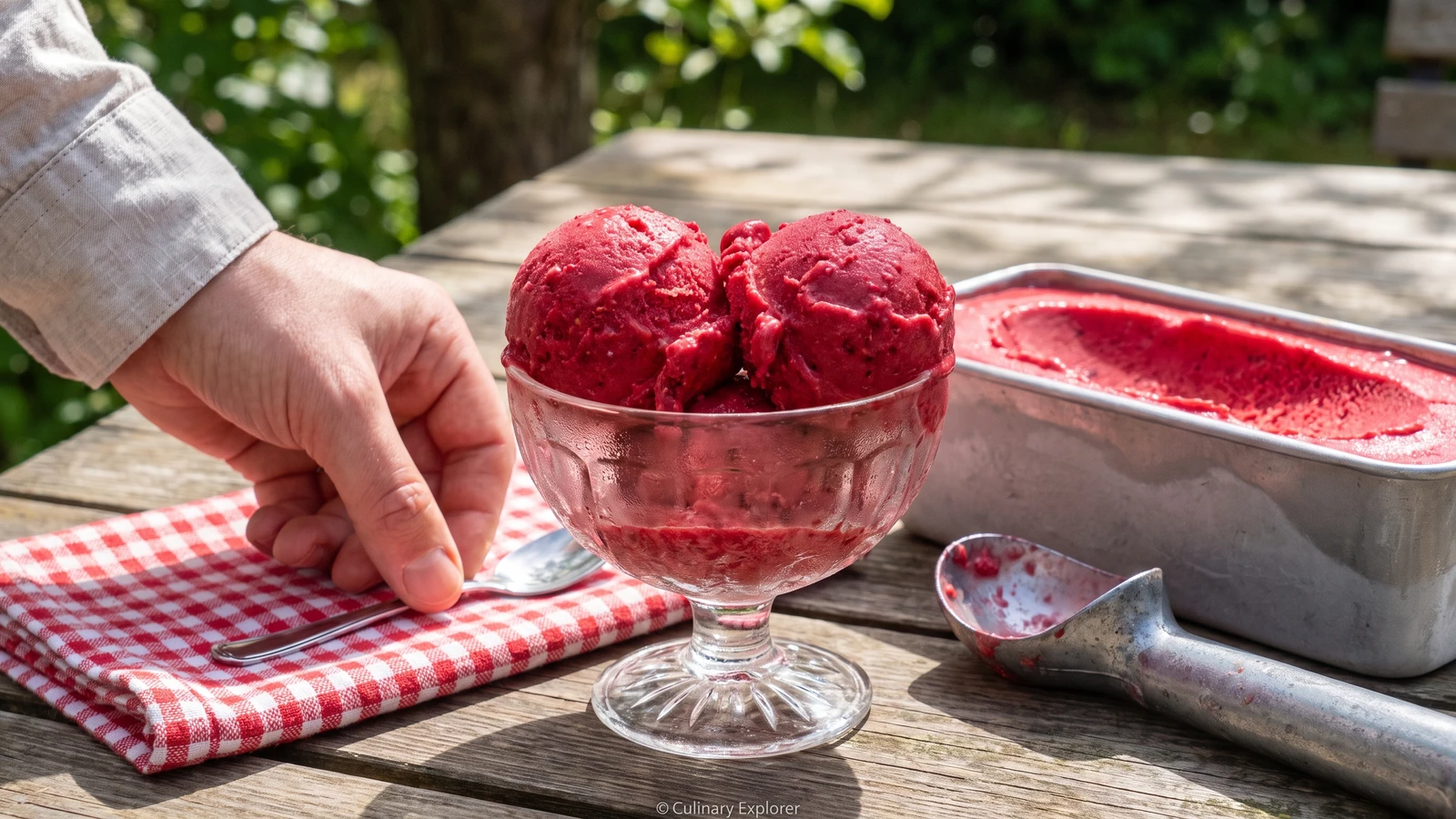
Glace aux framboises turns purée, syrup, orange, and lemon into a ruby ice, then adds cold cream at the half-set stage for a softer scoop without losing the fruit's bright edge.
Glace aux framboises (raspberry ice) teaches the governing balance of every fruit ice: syrup keeps the frozen purée supple, citrus keeps its flavour awake, and cold cream softens without concealing the fruit. Sieve first, measure second. Raspberry seeds crushed into the purée bring grit and astringency, and no amount of cream can make them charming.
The printed entry directs the cook to Strawberry Ice (No. 2766), assuming prepared syrup, a density gauge reading 16° to 18°, a hand-cranked sorbetière, and quantities suited to service. At home, scale that formula proportionally to 3 cups, measure carefully in place of the gauge, and use a 1.5-quart ice-cream machine or a shallow metal pan. The quantity changed because one freezer needs dessert, not inventory; the fruit, syrup, orange, and lemon proportions remain intact. Here raw cream means liquid and unwhipped, so cold pasteurized heavy cream is the honest modern equivalent.
Half-freezing before the cream goes in is not brigade scaffolding. It is the dish. Add the cream while the raspberry base is thick but still yielding, and it disperses into a fine, rosy ice; wait until the base is solid and it cannot blend evenly. If that happens, soften and process it smooth before continuing. Ça se rattrape. Catching that half-set moment is the step that decides the glace.
Glace aux framboises belongs to the repertoire of Parisian glaciers, the specialist ice-makers whose fruit ices also became fixtures of bourgeois summer tables. Classical collections often define one fruit ice by cross-reference to another, as this entry does with Strawberry Ice (No. 2766), because the balance of purée, syrup, and citrus forms a shared grammar while the fruit changes. Unwhipped cream added during freezing does not turn the preparation into a custard; it tempers raspberry's acidity and astringency while leaving the fruit in command.
Quantity
3 cups (720 ml / about 780 g) Strawberry Ice (No. 2766)
stopped before final freezing
Quantity
¾ cup (180 ml / 180 g)
kept liquid and unwhipped
| Ingredient | Quantity |
|---|---|
| Strawberry Ice formula, prepared with strained raspberry purée instead of strawberry puréestopped before final freezing | 3 cups (720 ml / about 780 g) Strawberry Ice (No. 2766) |
| cold pasteurized heavy cream, at least 35% fatkept liquid and unwhipped | ¾ cup (180 ml / 180 g) |
Press the raspberry purée through a fine-mesh sieve before measuring it for the linked formula. Work with a flexible spatula and stop when the sieve holds a dry-looking bed of seeds; grinding harder only forces bitter fragments through. If visible seeds have escaped, pass the purée through dampened muslin or an even finer sieve now. Ça se rattrape before freezing, not after.
Prepare Strawberry Ice (No. 2766) by its purée-and-syrup method, replacing its strawberry purée with an equal measure of sieved raspberry purée and scaling every quantity proportionally until you have 3 cups of base. Keep the prescribed syrup, orange juice, lemon juice, and their sequence exactly. Stir until completely uniform, but do not cook the raspberries; heat would flatten the perfume this ice is meant to preserve.
Cover the base and chill it for at least 2 hours, until it is as cold as the refrigerator throughout. A lukewarm mixture freezes slowly and grows coarse crystals, so don't ask the machine to do the refrigerator's work. If the base has separated while standing, whisk it briefly until the colour is even again.
Churn the cold base until it resembles a loose granité, thick enough to mound briefly before settling, usually 12 to 18 minutes. This half-set texture suspends the cream instead of letting it sink. Without a machine, pour the base into a shallow metal pan, freeze until the edges firm, then scrape and beat it every 20 minutes until the whole pan is slushy and evenly crystalline.
With the machine running, pour in the very cold unwhipped cream in a thin stream. Churn for another 5 to 10 minutes, until no pale streaks remain and the glace holds a soft scoop. If the fruit base has already frozen hard, don't force the cream into it. Let the base soften for 10 minutes, break it into pieces, process it smooth, then churn with the cream. Ça se rattrape.
Pack the glace into a cold freezer container, press parchment directly against the surface, cover, and freeze for 2 to 3 hours. Let it stand in the refrigerator for about 10 minutes before serving, just until a scoop passes through without splintering the ice. Spoon it generously into chilled coupes. À table!
1 serving (about 120g)
Culinary guides, cultural storytelling, and the editorial depth that makes cooking meaningful.
Discover Culinary ExplorerChef Juliette
Five almond preparations, one discipline: remove the skins cleanly, dry every kernel through, then cut, toast, or cloak it in pale caramel without letting its fragrant oils escape.

Chef Juliette
A pastry pantry lesson in one tray: filberts warmed only until their red skins release, rubbed clean, cooled, and chopped into a fragrant mise-en-place for cakes, creams, pralines, and petits fours.

Chef Juliette
The smallest pâtisserie discipline decides whether a cake leaves its mould intact: clarified butter in every corner, followed by the lightest veil of dry flour or fécule.
Chef Juliette
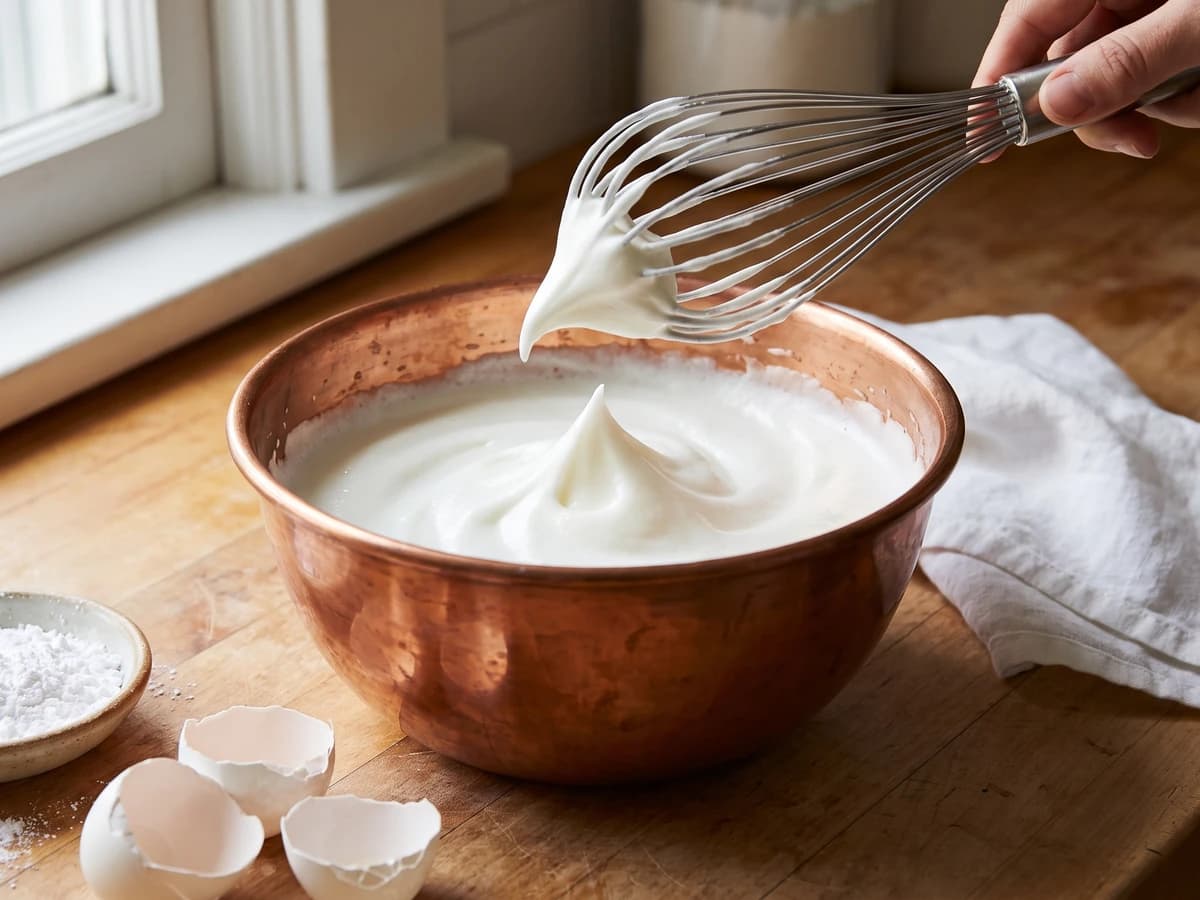
Four whites, one spotless bowl, and a patient change of speed: whisk gently until loosened, then briskly to glossy stiffness, with powdered sugar waiting if the foam begins to granulate.