
Chef Juliette
Various Almond Preparations
Five almond preparations, one discipline: remove the skins cleanly, dry every kernel through, then cut, toast, or cloak it in pale caramel without letting its fragrant oils escape.
A cooking platform built around craft, culture, and the stories behind what we eat.
Created by Chef Juliette
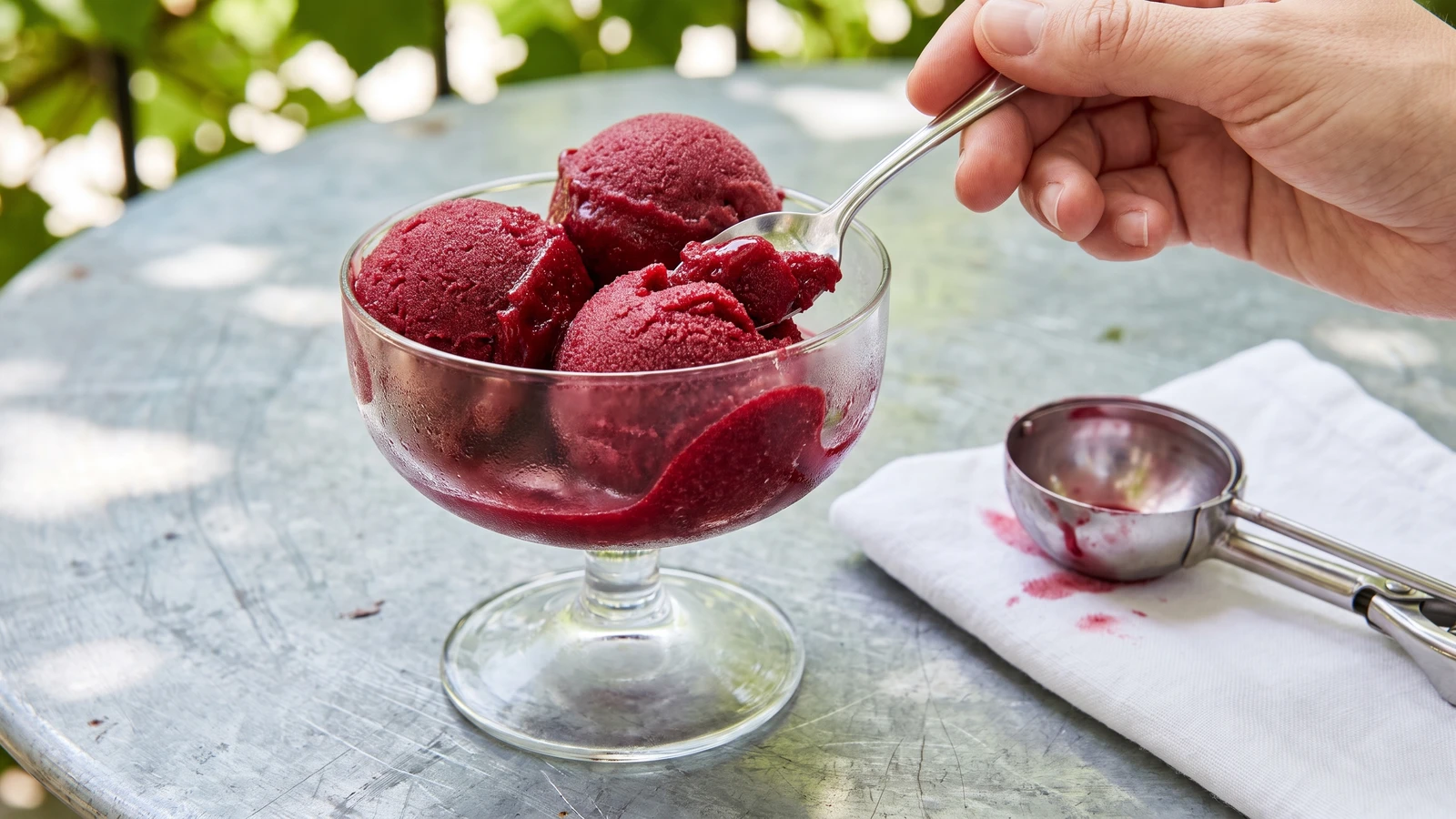
Based on No. 2764, Cherry Ice, from Le Guide Culinaire (1907) by Auguste Escoffier
Ripe cherries, kirsched syrup, lemon, and one restrained almond note become a garnet ice that scoops softly, tastes intensely of its fruit, and waits beautifully for the long outdoor table.
Glace aux cerises teaches the balance at the heart of every fruit ice: sugar keeps it supple, lemon gives the fruit a clean edge, and cold quiets both, so the unfrozen mixture must taste a little too sweet and a little too vivid. Get that balance right before freezing. The machine can smooth a mixture, but it cannot correct one.
The entry assumed a mortar, a syrup gauge reading 21°, and an ice-and-salt freezing pail managed alongside a brigade batch. At home, a blender and fine sieve do the crushing, a fixed syrup ratio stands in for the gauge, and a small ice-cream maker replaces the freezing pail. The book's pint-for-pint formula becomes one cup of cherries to one cup of syrup, enough for four, with its ratio unchanged. Those tools and quantities are scaffolding. The hour of maceration, the kirsched syrup, the sieve, the lemon, and the final balance are the dish and must stay.
The old almond perfume came from pulverized cherry stones. That step does not belong in a home kitchen because broken cherry kernels can release cyanide; one drop of food-grade almond extract supplies the intended noyau perfume safely, and this is the only change to the flavoring. Keep it barely perceptible. The step that decides this glace aux cerises is the tasting before the churn: brighter and sweeter than you want at the table, because the freezer will soften both.
Glace aux cerises belongs to the repertoire of Parisian confiseurs and grand dining tables, where fruit ices were balanced by a syrup gauge, strained smooth, and frozen in an ice-and-salt pail. Kirsch connects its flavor to the cherry-growing larders of Alsace and Franche-Comté, but does not make the dish specifically Alsatian; throughout the classical canon, the spirit sharpens the taste of cherry. The noyau, or kernel, note was traditionally drawn from crushed stones, a practice retained here by intent through a minute amount of safe food-grade almond extract rather than the hazardous kernels themselves.
Quantity
1 packed cup (240 ml / 150 g)
pitted, measured after pitting, with their juices saved
Quantity
7/8 cup (210 ml / 175 g)
Quantity
2/3 cup (160 ml / 160 g)
Quantity
1 tablespoon (15 ml / 14 g)
Quantity
1 drop
Quantity
Juice of 1/2 medium lemon, about 1 tablespoon (15 ml / 15 g)
Quantity
Up to 1 tablespoon (15 ml / 15 g)
only if needed for balancing
| Ingredient | Quantity |
|---|---|
| ripe dark sweet cherriespitted, measured after pitting, with their juices saved | 1 packed cup (240 ml / 150 g) |
| granulated sugar | 7/8 cup (210 ml / 175 g) |
| water | 2/3 cup (160 ml / 160 g) |
| Kirsch | 1 tablespoon (15 ml / 14 g) |
| food-grade pure almond extract | 1 drop |
| fresh lemon juice | Juice of 1/2 medium lemon, about 1 tablespoon (15 ml / 15 g) |
| cold water (optional)only if needed for balancing | Up to 1 tablespoon (15 ml / 15 g) |
Combine the sugar and water in a small saucepan. Warm gently, stirring only until every crystal has dissolved and the syrup is clear; a hard boil only drives off water and spoils the measured balance. Cool completely, then measure exactly 1 cup (240 ml / about 290 g) for the cherries and reserve the small remainder. Stir the Kirsch and one drop of almond extract into the measured syrup. Use a dropper or the tip of a clean toothpick, never free-pour the extract. The almond should hide behind the cherry rather than announce itself.
Pit the cherries over a bowl so every drop of juice is kept, then discard all the stones intact. Do not crack, crush, or grind them. Pulse the cherry flesh and its collected juice briefly in a blender or food processor until it becomes a coarse, juicy pulp, not a smooth purée. This replaces the mortar for the fruit alone.
Combine the crushed cherries with exactly 1 cup of the kirsched syrup. Cover and leave to macerate for one hour at cool room temperature, stirring once halfway through. The sugar draws color, juice, and perfume from the fruit while the Kirsch settles into it. Do not shorten this rest. The old freezing apparatus was scaffolding; this hour is the dish.
Rub the macerated mixture through a fine-mesh sieve with a flexible spatula until only fairly dry skins remain, then stir in the lemon juice. The book's 21° syrup-gauge endpoint is approximately 36 to 37 °Bx on a modern refractometer, though fruit and alcohol make the reading approximate. The quantities are set to land there, but cherries vary: if the base tastes cloying or reads above 38 °Bx, add cold water 1 teaspoon at a time; if it tastes thin and sharply tart or reads below 35 °Bx, add the reserved syrup 1 teaspoon at a time. Ça se rattrape. Stop when the mixture tastes distinctly of cherry, a shade sweeter and brighter than you want it frozen.
Cover and chill the base until thoroughly cold, at least 2 hours. Churn it in a fully frozen ice-cream maker according to the machine's directions, usually 20 to 25 minutes, until dense, softly mounded, and the color of dark garnet. If it remains liquid after 30 minutes, the base or machine bowl was too warm. Stop before friction warms it further, pour it into a shallow metal pan, freeze until firm around the edges, then beat vigorously or pulse briefly in the food processor before freezing again.
Transfer the churned glace aux cerises to a shallow covered container, press parchment directly against the surface, and freeze for 2 hours to firm. Let it stand at room temperature for 5 to 10 minutes before scooping; if it has frozen quite hard, patience restores the proper texture better than harsh heat. Spoon it into chilled coupes and carry it straight to the table. À table!
1 serving (about 120g)
Culinary guides, cultural storytelling, and the editorial depth that makes cooking meaningful.
Discover Culinary ExplorerChef Juliette
Five almond preparations, one discipline: remove the skins cleanly, dry every kernel through, then cut, toast, or cloak it in pale caramel without letting its fragrant oils escape.

Chef Juliette
A pastry pantry lesson in one tray: filberts warmed only until their red skins release, rubbed clean, cooled, and chopped into a fragrant mise-en-place for cakes, creams, pralines, and petits fours.

Chef Juliette
The smallest pâtisserie discipline decides whether a cake leaves its mould intact: clarified butter in every corner, followed by the lightest veil of dry flour or fécule.
Chef Juliette
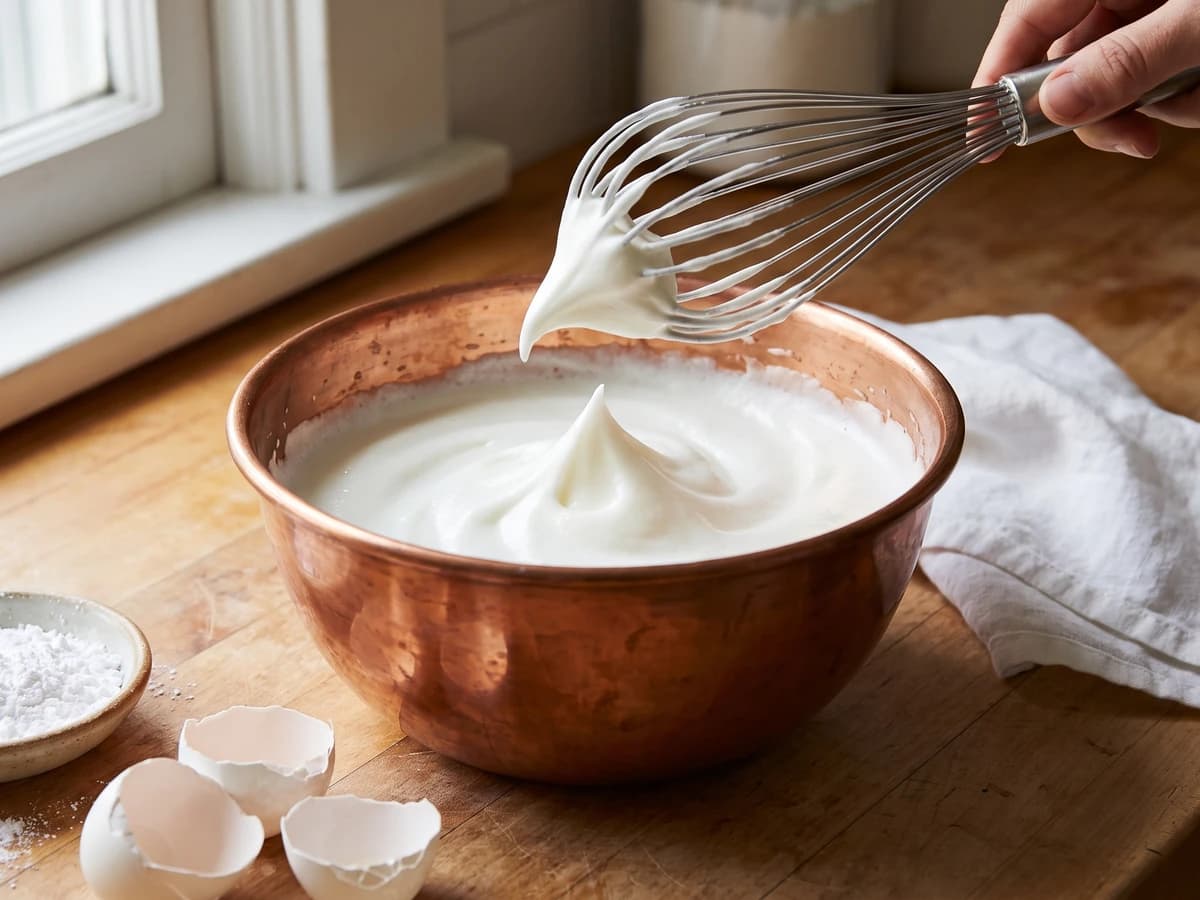
Four whites, one spotless bowl, and a patient change of speed: whisk gently until loosened, then briskly to glossy stiffness, with powdered sugar waiting if the foam begins to granulate.