
Chef Juliette
Various Almond Preparations
Five almond preparations, one discipline: remove the skins cleanly, dry every kernel through, then cut, toast, or cloak it in pale caramel without letting its fragrant oils escape.
A cooking platform built around craft, culture, and the stories behind what we eat.

Created by Chef Juliette
Based on No. 2761, Apricot Ice, from Le Guide Culinaire (1907) by Auguste Escoffier
Glace aux abricots holds ripe fruit at the exact sweetness that freezes smooth: apricot perfume sharpened with lemon, churned pale orange, and served cold enough to soften slowly.
Glace aux abricots (apricot ice) teaches one true thing: a fruit ice is only as fragrant as the fruit that goes into it. An underripe apricot gives you colour and no perfume. Sugar can correct the freeze, and lemon can sharpen the flavour, but neither can invent ripeness.
The original entry assumes fresh purée and syrup waiting in the pastry kitchen, a saccharometer for judging their density, and a sorbetière turned in salted ice. A blender and fine sieve make the purée tonight, a digital refractometer translates the syrup reading, and a countertop churn replaces the ice tub. The pint-for-pint quantity already fits a 1.5-quart machine, so it needs no theatrical brigade batch. One cook, one stove, one evening. The syrup vat and hand-turning are scaffolding; equal measures of fruit and syrup, two lemons, and the final density are the dish.
When it is right, the ice is a saturated apricot orange, smooth beneath the spoon and fragrant before it reaches your mouth. Measure the fully mixed base after the lemon goes in. That density check is the step that decides the texture before the freezer gets a vote.
Glace aux abricots belongs to the French confiserie tradition, particularly the Parisian dessert repertory, while its fragrant fruit points south to the Rhône Valley and Provence. Confiseurs and grand kitchens balanced fresh purée with measured syrup, then carried the preparation to bourgeois tables through the hand-turned sorbetière. Cream is neither required nor desirable here: syrup controls the texture, and dairy would quiet the apricot perfume.
Quantity
6 to 8 (about 1½ pounds / 680 g), yielding 2 cups (475 ml / 500 g) purée
pitted
Quantity
1⅝ cups (390 ml / 325 g)
for the syrup
Quantity
1 cup plus 3 tablespoons (285 ml / 285 g)
for the syrup
Quantity
2, yielding about ⅓ cup (80 ml / 80 g) juice
juiced
Quantity
up to 2 tablespoons (30 ml / 25 g)
only for density correction
Quantity
up to ¼ cup (60 ml / 60 g)
only for density correction
| Ingredient | Quantity |
|---|---|
| very ripe fresh apricotspitted | 6 to 8 (about 1½ pounds / 680 g), yielding 2 cups (475 ml / 500 g) purée |
| granulated sugarfor the syrup | 1⅝ cups (390 ml / 325 g) |
| waterfor the syrup | 1 cup plus 3 tablespoons (285 ml / 285 g) |
| medium lemonsjuiced | 2, yielding about ⅓ cup (80 ml / 80 g) juice |
| granulated sugar (optional)only for density correction | up to 2 tablespoons (30 ml / 25 g) |
| cold water (optional)only for density correction | up to ¼ cup (60 ml / 60 g) |
Combine the 1⅝ cups sugar and 1 cup plus 3 tablespoons water in a small saucepan. Warm gently, stirring only until every crystal disappears, then bring the clear syrup to a boil and cook for 1 minute without stirring. Remove it from the heat and cool completely. Measure 2 cups (475 ml) for the recipe; if evaporation left you a little short, add enough cold water to reach the line. If crystals form as it cools, do not discard it. Ça se rattrape: add 1 tablespoon of water, warm gently until clear, and cool it again.
Pit the apricots and blend the flesh raw until completely fluid. Pass it through a fine-mesh sieve, pressing firmly with a flexible spatula, then measure exactly 2 cups (475 ml / 500 g). Process another apricot if you are short, and reserve any excess for breakfast. Do not stretch the purée with water. Cooking or diluting it costs the fresh perfume this preparation exists to preserve.
Whisk the 2 cups apricot purée with the 2 cups cooled syrup, then add the juice of both lemons. Check a smooth drop of the mixture with a digital refractometer at room temperature. The classical target of 18° to 19° on the saccharometer is approximately 32° to 34° Brix. If the reading is low, whisk in the correction sugar 1 teaspoon at a time until fully dissolved; if it is high, add cold water 1 teaspoon at a time. Rest the base for a minute and recheck after every addition.
Cover the base closely and refrigerate it for at least 4 hours, until it is cold through rather than merely cool at the surface. A warm base melts the freezer bowl before the ice has time to form finely, which leaves coarse crystals. Stir once before churning so the fruit solids are evenly suspended.
Pour the cold base into a fully frozen 1.5-quart ice cream machine and churn according to its directions, usually 25 to 35 minutes. Stop when the ice holds the trace of the paddle and mounds softly on a spoon. If it remains pourable after 35 minutes, the bowl was not cold enough; return the base to the refrigerator, freeze the clean bowl until solid, and churn again. Do not correct a warm machine with extra sugar.
Pack the churned ice into a shallow freezer container, press a piece of parchment directly against the surface, cover, and freeze for about 2 hours. This short hardening gives it a clean scoop without turning it into a block. If it has frozen overnight, let it stand in the refrigerator for 15 minutes, or at room temperature for 8 to 10 minutes, before serving.
Scoop the glace aux abricots into chilled coupes and serve without garnish. For a picnic, carry the covered container between solid frozen blocks in a well-insulated cooler and open it only when the bowls are ready. The ice needs no biscuit tower, herb sprig, or other nonsense. Ripe apricot has already done the work. À table!
1 serving (about 149g)
Culinary guides, cultural storytelling, and the editorial depth that makes cooking meaningful.
Discover Culinary ExplorerChef Juliette
Five almond preparations, one discipline: remove the skins cleanly, dry every kernel through, then cut, toast, or cloak it in pale caramel without letting its fragrant oils escape.

Chef Juliette
A pastry pantry lesson in one tray: filberts warmed only until their red skins release, rubbed clean, cooled, and chopped into a fragrant mise-en-place for cakes, creams, pralines, and petits fours.

Chef Juliette
The smallest pâtisserie discipline decides whether a cake leaves its mould intact: clarified butter in every corner, followed by the lightest veil of dry flour or fécule.
Chef Juliette
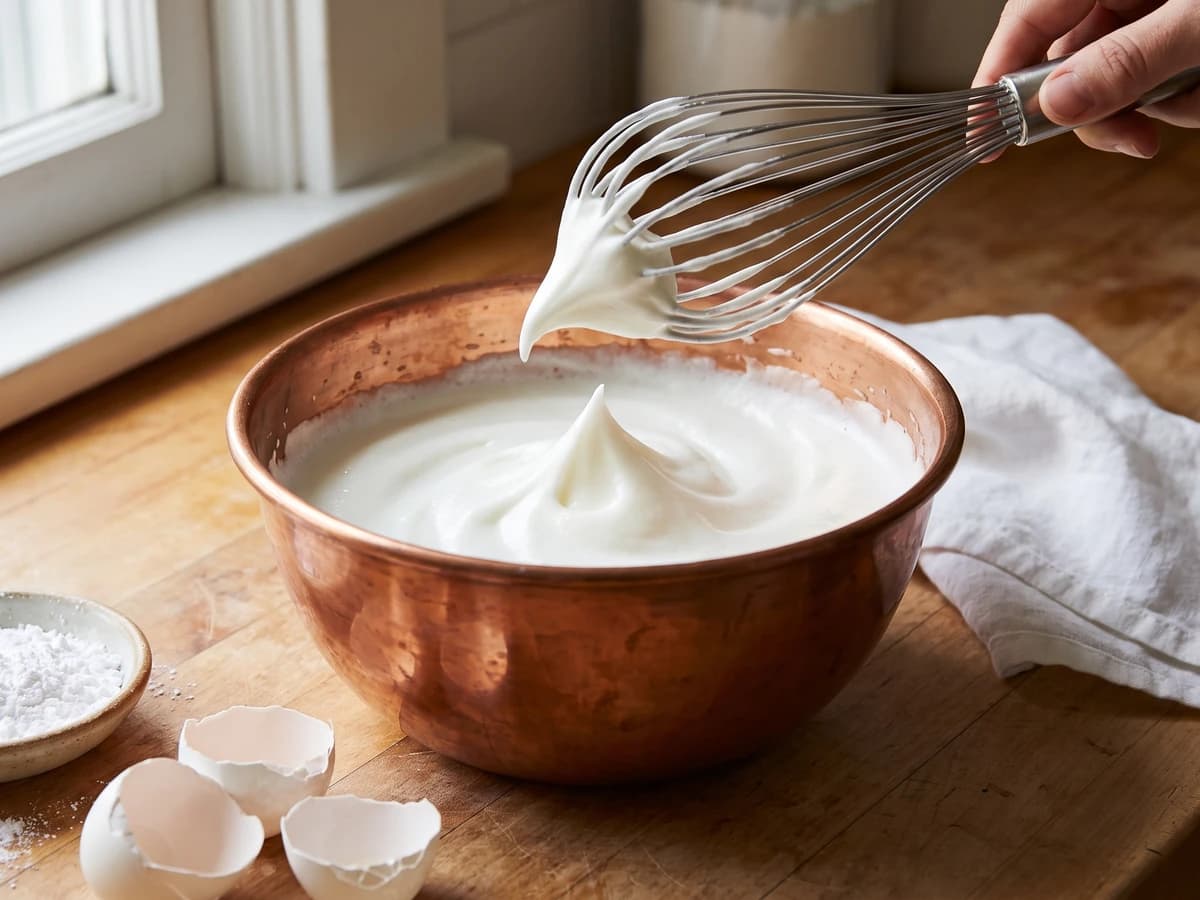
Four whites, one spotless bowl, and a patient change of speed: whisk gently until loosened, then briskly to glossy stiffness, with powdered sugar waiting if the foam begins to granulate.