Chef Juliette
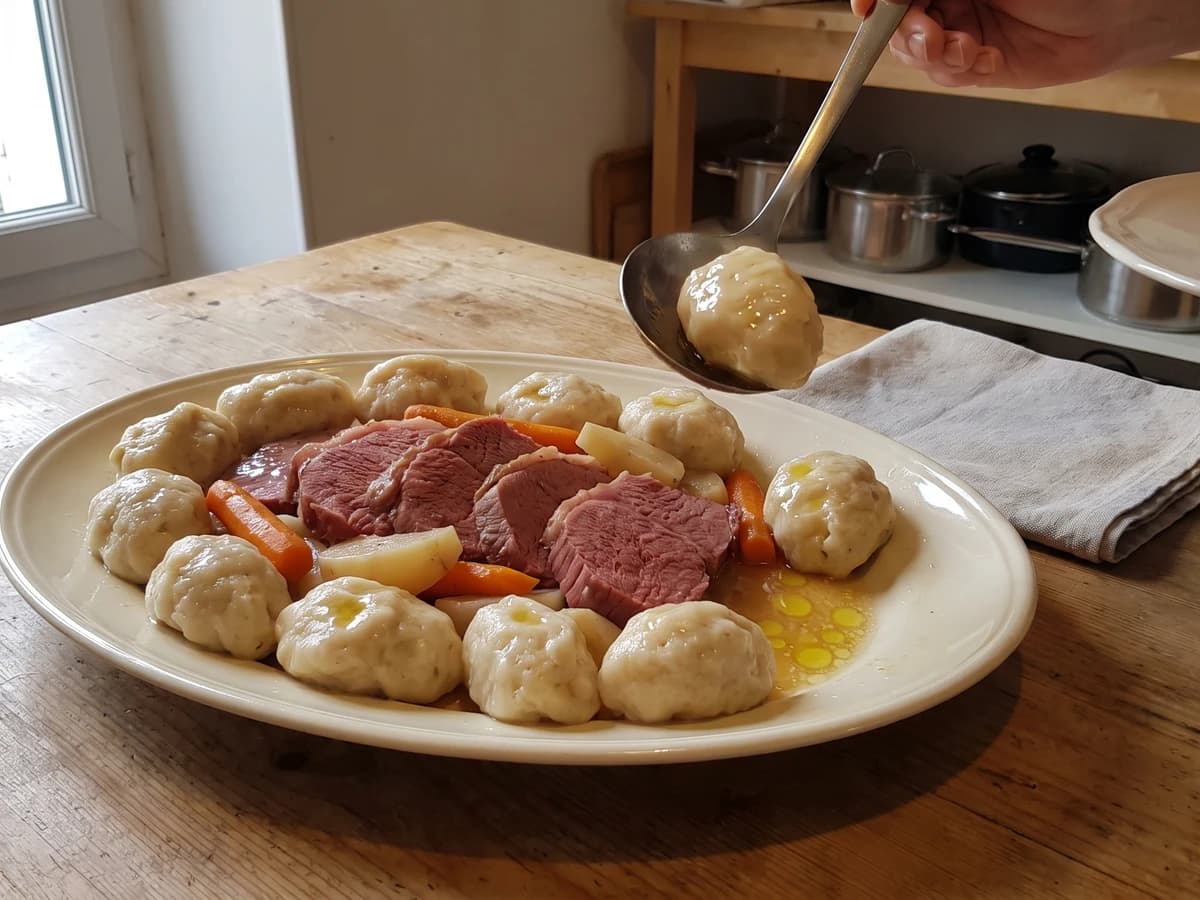
Suet Dumpling
Boulettes au suif, poached beside salt beef, turn equal weights of flour and finely chopped suet into tender, rich dumplings. Keep the beef liquor at a bare tremble and the old garnish works beautifully at home.
A cooking platform built around craft, culture, and the stories behind what we eat.
Created by Chef Juliette
Based on No. 276, Leason of Green Vegetables With Butter, from Le Guide Culinaire (1907) by Auguste Escoffier
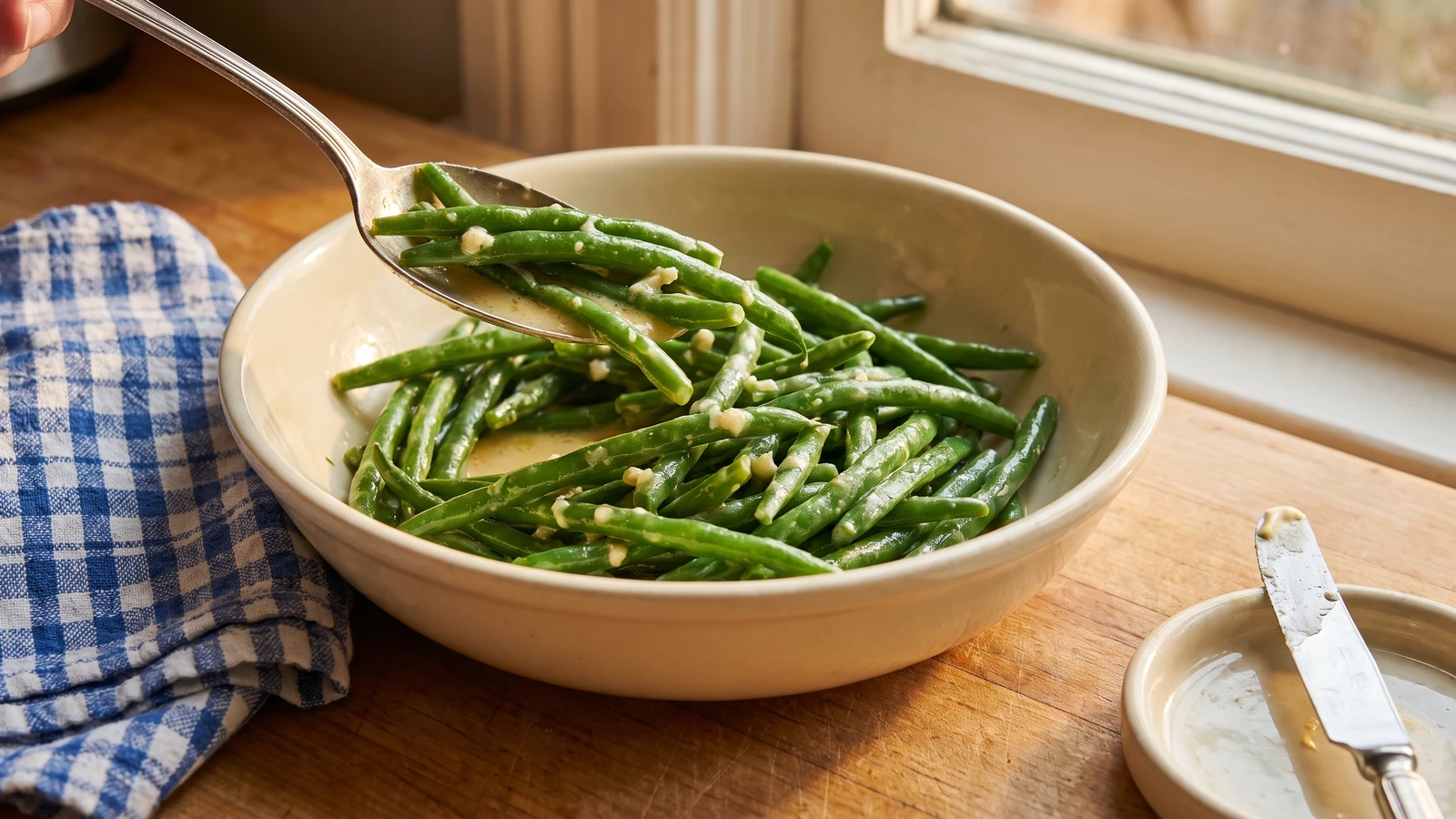
Liaison is the quiet discipline behind perfect buttered greens: drive off every drop of water, leave the heat, then roll cold butter around the pan until it clings in a shining coat.
Liaison des légumes verts au beurre (green vegetables bound with butter) teaches one true thing: butter cannot bind to vegetables still wearing their cooking water. Dry them over heat first, take the pan off the fire, then roll in cold butter until it coats every piece with a fine gloss. Melt the butter carelessly into wet vegetables and you get a greasy puddle, pleasant enough, but not a liaison. The word carries the technique.
The source begins after the vegetable is cooked and leaves its kind to the season. For a repeatable home plate, this version uses haricots verts, whose smooth skins make the liaison easy to see. The grand kitchen assumed a hot range and a cook finishing many small saucepans to order, though this preparation needs no stockpot, salamander, or separate sauce from a saucier. Your equivalent is one wide skillet holding four portions, moved completely off the burner before the cold butter enters. I changed the vessel to let moisture escape and scaled the quantity for a home table; the source's sequence remains intact.
Finishing each order in its own little saucepan was brigade scaffolding, so that goes. Blanching carefully, draining thoroughly, drying over the fire, seasoning, and rolling in butter away from the heat are the dish itself, so every one stays. Before the butter touches the pan, listen: the wet hiss must have faded to a dry rustle. That is the step that decides everything.
At the Parisian classical table, this liaison was a finishing method rather than a regional dish: cooked green vegetables were dried at the last moment, then bound with butter before service. The method passed naturally into cuisine bourgeoise because it needed only a saucepan and judgment, not a separate sauce or special apparatus. Calling any vegetables slicked with melted butter the same thing misses the point; liaison means the fat clings as a thin gloss, with no greasy pool beneath.
Quantity
6 cups (1.4 L / 570 g)
trimmed
Quantity
3 quarts (2.8 L / 2.8 kg)
for blanching
Quantity
2 tablespoons plus ½ teaspoon (32.5 ml / 39 g)
divided between blanching and finishing
Quantity
4 cups (950 ml / 550 g)
Quantity
2 quarts (1.9 L / 1.9 kg)
for the ice bath
Quantity
4 tablespoons (60 ml / 57 g)
cut into ½-inch cubes
Quantity
⅛ teaspoon (0.6 ml / 0.3 g)
Quantity
1 teaspoon (5 ml / 5 g)
only if needed to rescue the liaison
| Ingredient | Quantity |
|---|---|
| haricots verts or slender green beanstrimmed | 6 cups (1.4 L / 570 g) |
| waterfor blanching | 3 quarts (2.8 L / 2.8 kg) |
| fine sea saltdivided between blanching and finishing | 2 tablespoons plus ½ teaspoon (32.5 ml / 39 g) |
| ice | 4 cups (950 ml / 550 g) |
| cold waterfor the ice bath | 2 quarts (1.9 L / 1.9 kg) |
| cold unsalted buttercut into ½-inch cubes | 4 tablespoons (60 ml / 57 g) |
| finely ground white pepper | ⅛ teaspoon (0.6 ml / 0.3 g) |
| ice-cold water (optional)only if needed to rescue the liaison | 1 teaspoon (5 ml / 5 g) |
Fill a large bowl with the ice and cold water. Spread a clean kitchen towel over a tray, set a colander beside the sink, and keep the cubed butter in the cold. Have everything ready before blanching; once the beans are dry and hot, the liaison takes less than a minute and rewards your full attention.
Bring the 3 quarts of water to a full boil in a large pot and add 2 tablespoons of the salt. Drop in the beans and cook uncovered for 3 to 5 minutes, depending on their thickness, until vivid green and tender enough to bite without squeaking but still firm at the centre. Lift one out and taste it rather than trusting the clock. Transfer the beans immediately to the ice bath and stir for about 45 seconds, just until cold, then drain.
Shake the colander firmly, then spread the beans over the prepared towel and roll them gently in it. Leave them for 3 to 5 minutes, turning once, until the towel has taken up all visible water. This first drying prevents the skillet from becoming a second cooking bath; the heat will remove the fine film the towel cannot reach.
Set a wide, dry skillet over medium-high heat. Add the beans with no fat and toss them constantly for 2 to 3 minutes. At first the pan will hiss sharply; keep tossing until that wet hiss fades, no beads of water remain, and the beans move with a soft, dry rustle. Tip away any water that collects. If the skins begin to color before they are dry, lower the heat and keep them moving. Ça se rattrape. The aim is to heat and dry them, not to brown them.
Season the beans with the remaining ½ teaspoon salt and the white pepper, toss once, then remove the skillet completely from the heat and set it on a cool trivet. Wait 10 seconds. Add 3 tablespoons of the cold butter, one cube at a time, while rolling the skillet in small circles and gently tossing the beans. The butter should soften into a creamy film and cling, not turn into clear yellow oil. Add the reserved tablespoon in two portions and continue rolling until every bean gleams. If the butter melts into a pool, the pan was too hot. Ça se rattrape: lift the beans into the serving bowl, swirl the teaspoon of ice-cold water through the pooled butter until it turns cloudy, add one reserved cold cube, then return the beans and roll them through the rebuilt liaison.
Taste one bean and correct the seasoning while the skillet remains off the heat. Transfer everything to a warm, shallow serving bowl, including the thin coating left on the pan, and bring it straight to the table. The beans should shine individually, with no butter collecting underneath. Cooking well is not cooking fancy. À table!
1 serving (about 150g)
Culinary guides, cultural storytelling, and the editorial depth that makes cooking meaningful.
Discover Culinary ExplorerChef Juliette
Boulettes au suif, poached beside salt beef, turn equal weights of flour and finely chopped suet into tender, rich dumplings. Keep the beef liquor at a bare tremble and the old garnish works beautifully at home.

Chef Juliette
Bread, flour, frangipane, and rice become four cool, supple panades for binding forcemeats, each changing body and flavor while preserving tenderness. The finest Mousselines need none, and knowing that distinction is the lesson.

Chef Juliette
Panade au pain is bread, milk, salt, heat, and attention: stir until the paste releases cleanly, butter it against a skin, and you have the quiet binder behind tender French farces.

Chef Juliette
Panade de farine teaches the drying stroke behind pâte à choux: flour meets boiling buttered water, then stays over the fire until the paste gathers, smooths, and quits the pan cleanly.