Chef Juliette
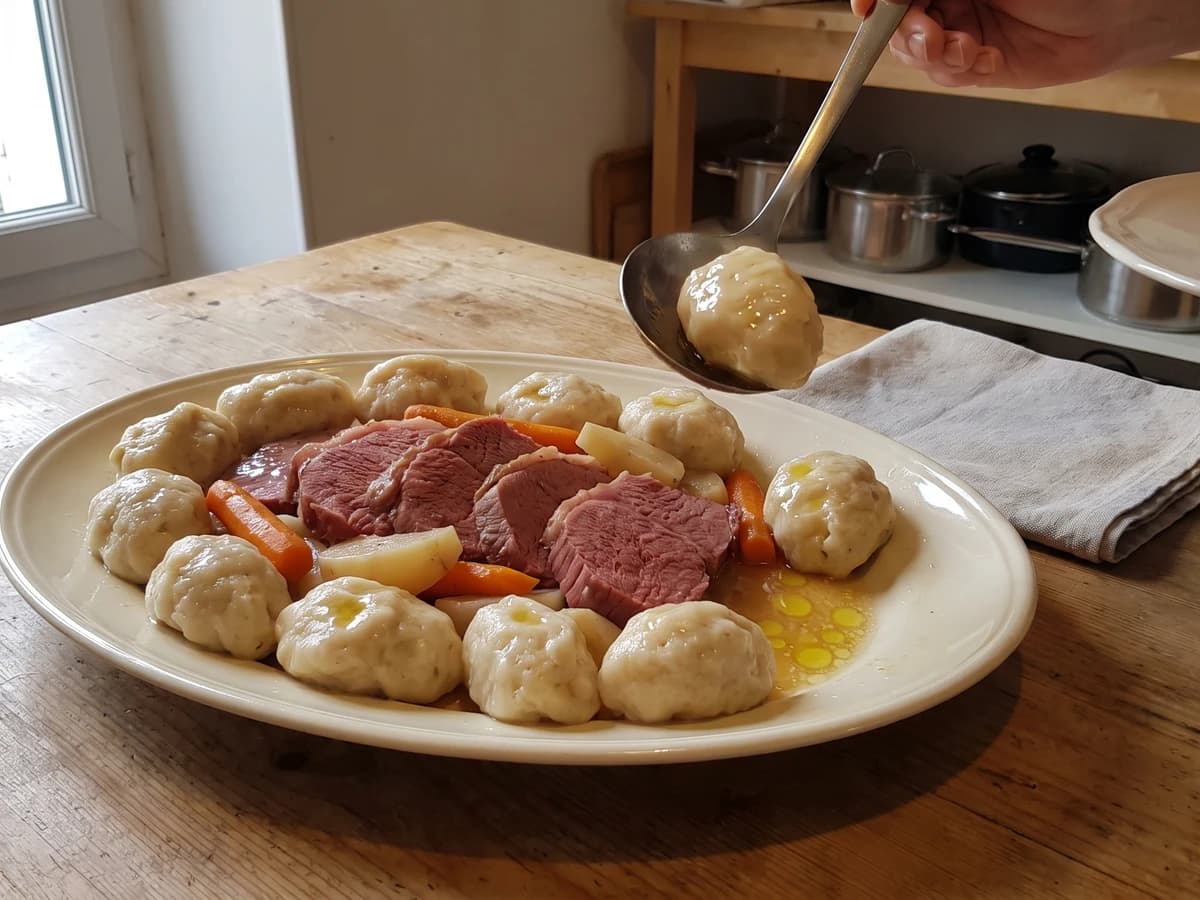
Suet Dumpling
Boulettes au suif, poached beside salt beef, turn equal weights of flour and finely chopped suet into tender, rich dumplings. Keep the beef liquor at a bare tremble and the old garnish works beautifully at home.
A cooking platform built around craft, culture, and the stories behind what we eat.

Created by Chef Juliette
Based on No. 274, The Treatment of Dry Vegetables, from Le Guide Culinaire (1907) by Auguste Escoffier
Traitement des légumes secs turns dried beans creamy without a long soak: start cold and salted, skim once, add aromatics, then let the quietest boil do the work.
Traitement des légumes secs teaches the quiet rule behind tender beans: sound, recent-crop legumes need no soaking. Begin them in cold salted water, bring them up slowly, skim before the aromatics go in, then keep the pot at the gentlest boil. The beans hydrate as they cook, their skins stay composed, and their centres turn creamy rather than waterlogged.
The original formula expressed its salt against five quarts of water, a professional measure, and assumed a large saucepan kept under a cook's eye. Here, one pound of beans meets eight cups of water and eleven grams of salt in a heavy four-quart pot. The large measure and constant attendance are scaffolding; a timer and an occasional glance replace them. The cold salted start, skimming before the aromatic garnish, and covered gentle cooking are the treatment itself and must stay. Bouquet garni, a tied herb bundle, replaces the source's obsolete English label, but the herbs themselves are unchanged. One cook, one stove, one evening.
The one step that decides the pot is controlling the boil. Beans knocked about by rolling water split before their centres yield, so once the surface is skimmed, lower the heat until the liquid barely moves. Patience, not commotion.
Traitement des légumes secs is a national foundation rather than a single regional dish: the same grammar serves the green lentils of Le Puy in Auvergne, white beans in the Lauragais, and flageolets beside lamb around Paris. Household thrift carried the method into the classical kitchen, where it became the standard preliminary cooking for purées, gratins, and garnished legumes. Its striking position is no long soak for sound recent-crop legumes, with only a brief soft-water swelling allowed for old or inferior stock.
Quantity
2½ cups (600 ml / 454 g)
sorted and rinsed
Quantity
8 cups (1.9 L / 1,900 g), plus more as needed
soft or filtered if the tap water is very hard
Quantity
2 teaspoons (10 ml / 11 g)
Quantity
1 medium (about 3½ oz / 100 g)
peeled and quartered
Quantity
1 medium (about 5 oz / 150 g)
peeled and quartered
Quantity
2 cloves (about ⅓ oz / 10 g)
lightly crushed
Quantity
1
2 parsley stems, 1 thyme sprig, and 1 bay leaf tied securely
| Ingredient | Quantity |
|---|---|
| recent-crop dried white beans, such as coco beans, flageolets, or navy beanssorted and rinsed | 2½ cups (600 ml / 454 g) |
| cold watersoft or filtered if the tap water is very hard | 8 cups (1.9 L / 1,900 g), plus more as needed |
| fine sea salt | 2 teaspoons (10 ml / 11 g) |
| carrotpeeled and quartered | 1 medium (about 3½ oz / 100 g) |
| yellow onionpeeled and quartered | 1 medium (about 5 oz / 150 g) |
| garlic (optional)lightly crushed | 2 cloves (about ⅓ oz / 10 g) |
| bouquet garni2 parsley stems, 1 thyme sprig, and 1 bay leaf tied securely | 1 |
Spread the beans on a tray and remove stones, broken pieces, and any badly shrivelled beans, then rinse them under cold water. Sound recent-crop beans go straight to the pot without soaking. If you know the beans are old or they look unusually dry and wrinkled, cover them with soft water for no more than 1½ hours, then drain and rinse; this brief swelling is the source's sole concession to age, not an overnight ritual.
Put the beans in a heavy 4-quart saucepan and add the cold water and salt. The water should cover the beans by about 2 inches (5 cm). Stir once to dissolve the salt, set the uncovered pot over medium heat, and bring it up slowly until small bubbles begin breaking across the surface. The cold start lets the skins and centres hydrate together; dropping dry beans into boiling water gives the outside a head start it doesn't need.
As the water reaches its first gentle boil, skim away the grey-white foam until the surface looks clear. Only then add the quartered carrot, onion, optional garlic, and bouquet garni. Skimming first keeps the aromatics from becoming tangled in the foam and preserves a clean cooking liquor.
Cover the saucepan and lower the heat until the liquid moves with only an occasional bubble. Cook gently, checking after 45 minutes: flageolets may be ready within an hour, while small white beans commonly need 60 to 90 minutes. Keep the beans covered with liquid, adding hot water down the side of the pot when needed, and stir only by gently rocking the pan. If the pot boils hard and the skins begin splitting, lower the heat immediately and add ½ cup (120 ml / 120 g) hot water. Ça se rattrape: stop stirring, let the beans settle, and they can still finish creamy even if they are less tidy.
Taste three beans from different parts of the pot. Each should be tender through the centre, with no pale, chalky core, while the skin remains intact enough to hold its shape. One soft bean can lie. If any centre is firm, continue cooking for 10 minutes before testing again; undercooked beans need time, not a harder boil.
Remove the bouquet garni, carrot, onion, and garlic. For a side dish, lift the beans into a warm shallow bowl and spoon over just enough cooking liquor to leave them moist and gleaming; never rinse away the flavour you have built. For batch cooking, cool and store the beans in their liquor so their skins do not dry or split. À table!
1 serving (about 220g)
Culinary guides, cultural storytelling, and the editorial depth that makes cooking meaningful.
Discover Culinary ExplorerChef Juliette
Boulettes au suif, poached beside salt beef, turn equal weights of flour and finely chopped suet into tender, rich dumplings. Keep the beef liquor at a bare tremble and the old garnish works beautifully at home.

Chef Juliette
Bread, flour, frangipane, and rice become four cool, supple panades for binding forcemeats, each changing body and flavor while preserving tenderness. The finest Mousselines need none, and knowing that distinction is the lesson.

Chef Juliette
Panade au pain is bread, milk, salt, heat, and attention: stir until the paste releases cleanly, butter it against a skin, and you have the quiet binder behind tender French farces.

Chef Juliette
Panade de farine teaches the drying stroke behind pâte à choux: flour meets boiling buttered water, then stays over the fire until the paste gathers, smooths, and quits the pan cleanly.