
Chef Juliette
Various Almond Preparations
Five almond preparations, one discipline: remove the skins cleanly, dry every kernel through, then cut, toast, or cloak it in pale caramel without letting its fragrant oils escape.
A cooking platform built around craft, culture, and the stories behind what we eat.
Created by Chef Juliette
Based on No. 2738, Mousseline of Eggs, Mimi, from Le Guide Culinaire (1907) by Auguste Escoffier
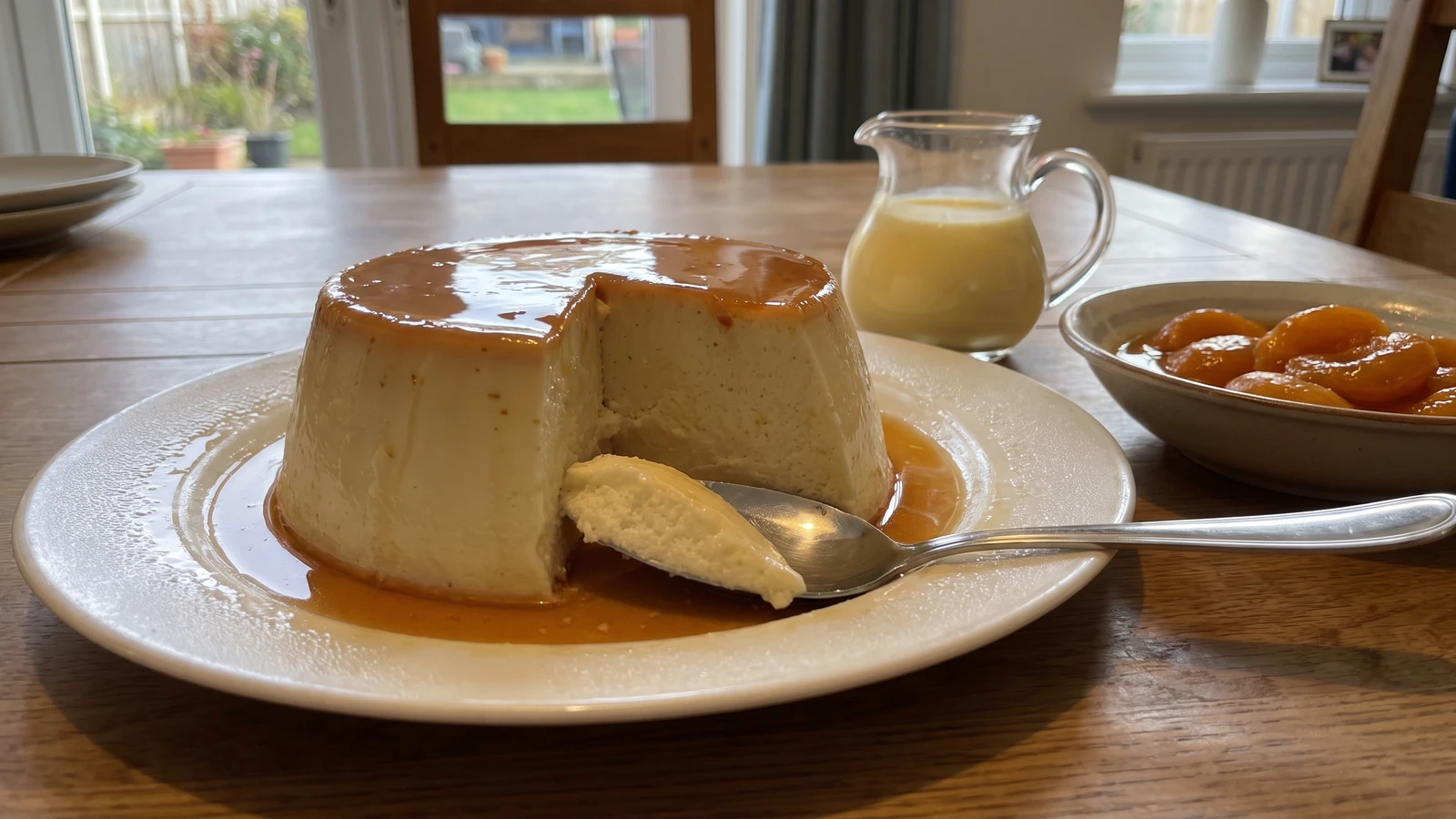
Caramel-clothed Mousseline d’Œufs Mimi rises from a trembling bain-marie, then chills into a feather-light pudding served with tart apricot compote and crème anglaise, each waiting in its own bowl.
Mousseline d’Œufs Mimi (Mimi-style egg mousseline) teaches the discipline of gentle heat. The one true thing to know is this: the water in the bain-marie must tremble, never boil. Gentle water sets the Meringue à l’Italienne (No. 2383) into a tender, close mousseline; boiling water knocks out its air and leaves it rubbery at the edges.
The original assumed a pastry station where hot sugar and whipped whites could be ready together, eight whites at a time, followed by a broad service mould and plenty of cold space. Your honest equivalent is a stand mixer, half a batch of meringue in the book’s exact proportion, a 1-quart smooth metal mould, and a lidded pot. The large batch and ice bench were brigade scaffolding, so they go. The caramel clothing, Italian meringue, gentle poach, and complete chilling are the dish itself, so they stay. One cook, one stove, one evening.
Turned out cold, the mousseline stands ivory-white beneath an amber caramel glaze, soft enough for a spoon but firm enough to hold its crown. Tart stewed fruit and crème anglaise wait separately, as the formula directs, so each guest chooses the balance. The step that decides everything is the poach: keep the bath trembling, never boiling.
Mousseline d’Œufs Mimi belongs to the Parisian grand-kitchen repertoire, where airy meringue preparations were gathered into moulded dinner-party desserts and then carried naturally onto bourgeois home tables. The Italian in Meringue à l’Italienne describes the hot-sugar technique, while crème anglaise is the French name for English custard; neither name changes the dessert’s home in the French canon. The surviving formula never identifies Mimi, so attaching a confident biography to the name would be invention.
Quantity
½ cup (120 ml / 100 g)
Quantity
2 tablespoons (30 ml / 30 g)
Quantity
½ batch Meringue à l’Italienne (No. 2383), about 4 cups (950 ml / 345 g)
Quantity
3 cups (710 ml / 450 g)
halved and pitted
Quantity
¼ cup (60 ml / 50 g)
Quantity
¼ cup (60 ml / 60 g)
Quantity
1 tablespoon (15 ml / 15 g)
Quantity
1½ cups (355 ml / 350 g)
chilled
| Ingredient | Quantity |
|---|---|
| granulated sugar for clothing the mould | ½ cup (120 ml / 100 g) |
| water for the caramel | 2 tablespoons (30 ml / 30 g) |
| freshly prepared Italian meringue | ½ batch Meringue à l’Italienne (No. 2383), about 4 cups (950 ml / 345 g) |
| ripe apricotshalved and pitted | 3 cups (710 ml / 450 g) |
| granulated sugar for the fruit | ¼ cup (60 ml / 50 g) |
| water for the fruit | ¼ cup (60 ml / 60 g) |
| fresh lemon juice | 1 tablespoon (15 ml / 15 g) |
| crème anglaise (English custard)chilled | 1½ cups (355 ml / 350 g) |
Put the apricot halves, sugar, water, and lemon juice in a wide saucepan. Bring them slowly to a gentle simmer, then cook for 8 to 12 minutes, turning the fruit once, until the halves are tender but still recognizable and the juices have become lightly syrupy. If very ripe fruit collapses, let it. You have compote rather than neat halves, and it will taste splendid. Cool, cover, and chill.
Warm a 1-quart smooth metal mould with hot tap water, dry it thoroughly, and set it on a heatproof surface. Combine the caramel sugar and water in a small heavy saucepan, heat gently until the sugar dissolves, then boil without stirring until it reaches a clear, deep amber. If crystals appear before the syrup colours, add a spoonful of water and dissolve them again over low heat. Pour the caramel immediately into the mould and, gripping it with thick dry towels, rotate it so the base and sides receive a thin coating. The source calls this clothing the mould, borrowing the coating motion described in Another Method of Preparing Aspics de Filets de Soles (No. 916); only the motion comes across, naturally, not the aspic. Caramel burns fiercely, so keep your fingers clear of the rim.
Place a low trivet in a deep, lidded pot wide enough to hold the mould. Add enough water to reach halfway up the mould and warm it to 82 to 88°C, when the surface barely quivers and releases an occasional small bubble. This bain-marie, the hot-water bath, shields the meringue from direct heat.
Prepare the half batch of Meringue à l’Italienne (No. 2383) while the caramelled mould and bain-marie wait. Use it promptly, while it is still supple and glossy. Spoon it into the mould in several additions, pressing each gently against the sides to avoid large empty pockets without beating out its air. Leave about 1 inch at the top, smooth the surface, and cover with the mould’s lid or a round of parchment beneath tightly crimped foil.
Lower the covered mould onto the trivet, check that the water reaches halfway up its sides, and cover the pot. Poach over the lowest heat for 35 to 45 minutes, keeping the water at a constant tremble. Never let it boil. If it does, lift the pot off the heat immediately and uncover it until the violence subsides, then return it to the lowest setting. Ça se rattrape. The mousseline is ready when its centre feels resilient, a fine skewer emerges without wet foam, and the middle reaches at least 71°C.
Lift the mould from the bath and remove its cover. Let it cool for no more than 1 hour, then cover and refrigerate for at least 5 hours, preferably overnight. Do not turn it out warm. The cold is part of the structure, allowing the set meringue to contract slightly while the caramel becomes a flowing amber syrup.
Dip the lower part of the mould in hot tap water for 5 to 8 seconds, dry the outside, and loosen only the upper edge with a thin flexible knife. Place a chilled, low-rimmed serving plate over the mould and invert them together decisively. If the mousseline stays put, return the mould to the water for another 3 seconds and try again; prolonged warming will soften the outside, so work in brief passes. Bring it to the table cold, with the stewed apricots and chilled crème anglaise in separate bowls. À table!
1 serving (about 325g)
Culinary guides, cultural storytelling, and the editorial depth that makes cooking meaningful.
Discover Culinary ExplorerChef Juliette
Five almond preparations, one discipline: remove the skins cleanly, dry every kernel through, then cut, toast, or cloak it in pale caramel without letting its fragrant oils escape.

Chef Juliette
A pastry pantry lesson in one tray: filberts warmed only until their red skins release, rubbed clean, cooled, and chopped into a fragrant mise-en-place for cakes, creams, pralines, and petits fours.

Chef Juliette
The smallest pâtisserie discipline decides whether a cake leaves its mould intact: clarified butter in every corner, followed by the lightest veil of dry flour or fécule.
Chef Juliette
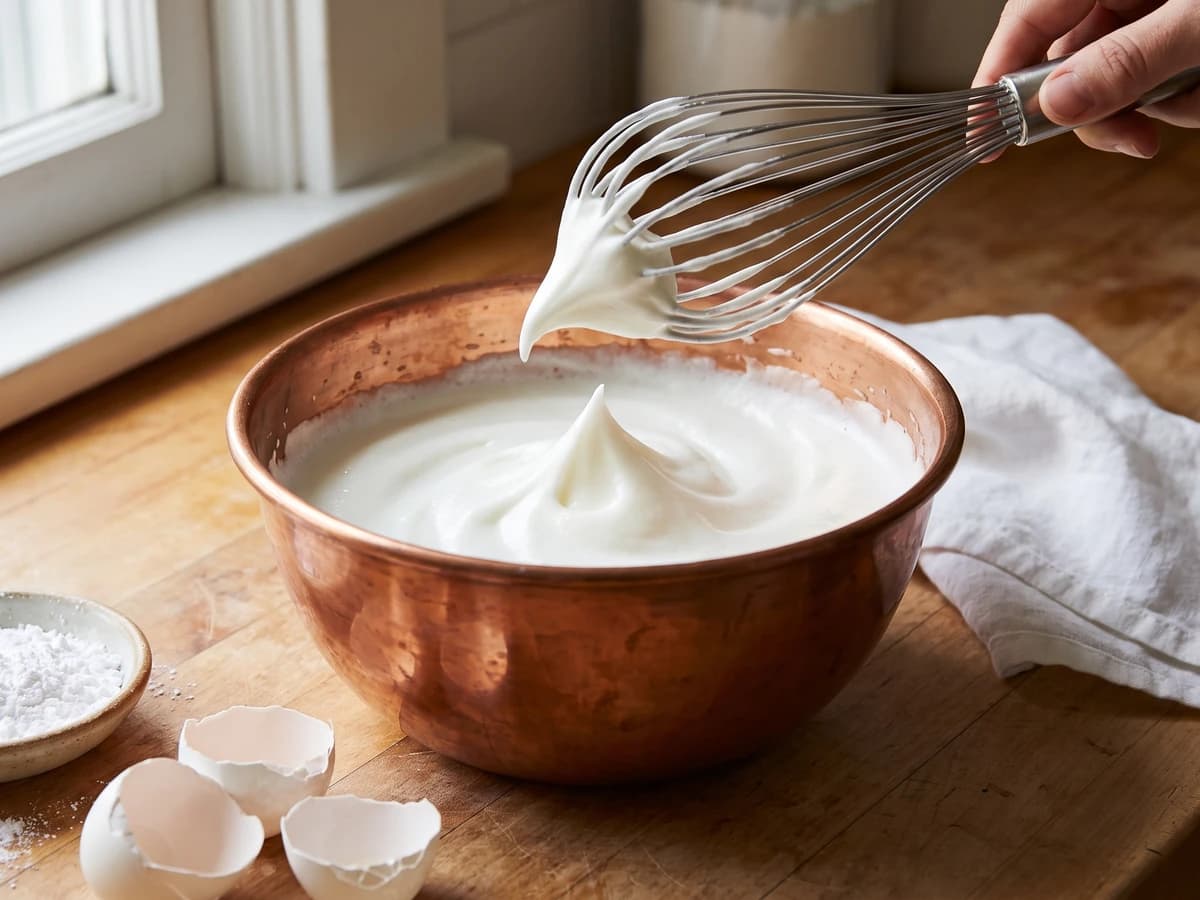
Four whites, one spotless bowl, and a patient change of speed: whisk gently until loosened, then briskly to glossy stiffness, with powdered sugar waiting if the foam begins to granulate.