
Chef Juliette
Various Almond Preparations
Five almond preparations, one discipline: remove the skins cleanly, dry every kernel through, then cut, toast, or cloak it in pale caramel without letting its fragrant oils escape.
A cooking platform built around craft, culture, and the stories behind what we eat.

Created by Chef Juliette
Based on No. 2736, Moulded Œufs à la Neige, from Le Guide Culinaire (1907) by Auguste Escoffier
Poached meringue ovals held inside a chilled ring of crème anglaise, pale, trembling, and cleanly unmoulded. The dessert turns on one moment: pour the custard cold, but still flowing.
Œufs à la neige moulés (moulded snow eggs) teach one severe little lesson: gelatined custard has a pouring point. The crème anglaise (English custard) must be cold enough not to soften the poached meringues, yet fluid enough to surround them in one smooth layer. Miss that moment and the mould records every hesitant pour.
The book assumed the full eight-white Ordinary Meringue (No. 2382), separate hands tending meringue and custard with the concentration of a saucier, and a border mould held in ice. For four people, one cook uses a quarter batch, a 1-litre ring mould, an ice bath, and the refrigerator. The proportions and intention remain intact. One cook, one stove, one evening.
The separate hands and great ice surround were brigade scaffolding, so they can go. The poaching, the gelatine, and the single cold but flowing pour are the dish, so they stay. Watch that ribbon from the spatula; when it falls smoothly without setting into threads, fill the mould at once.
Œufs à la neige belong to cuisine bourgeoise across France, with a particularly firm place on the Parisian table, where egg-shaped meringues were poached and served with crème anglaise. The moulded form is their grand-kitchen cousin: a border mould and gelatine turned a soft spoon dessert into a cold entremets that could be carried whole to the dining room. Menus often blur œufs à la neige with île flottante, but the former are properly individual poached meringues, and this preparation keeps those distinct eggs even as it binds them into a ring.
Quantity
¼ batch Ordinary Meringue (No. 2382), about 2 cups (475 ml / 175 g)
freshly prepared
Quantity
3 cups (710 ml / 730 g)
for poaching
Quantity
2 cups (475 ml / 500 g)
freshly prepared and strained
Quantity
3 leaves (6 g)
Quantity
2 cups (475 ml / 475 g)
for soaking the gelatine
Quantity
1 teaspoon (5 ml / 4 g)
for the mould
| Ingredient | Quantity |
|---|---|
| Ordinary Meringuefreshly prepared | ¼ batch Ordinary Meringue (No. 2382), about 2 cups (475 ml / 175 g) |
| whole milkfor poaching | 3 cups (710 ml / 730 g) |
| crème anglaise (English custard)freshly prepared and strained | 2 cups (475 ml / 500 g) |
| gold-strength gelatine leaves | 3 leaves (6 g) |
| cold waterfor soaking the gelatine | 2 cups (475 ml / 475 g) |
| neutral oilfor the mould | 1 teaspoon (5 ml / 4 g) |
Chill a smooth 1-litre border mould for 10 minutes. Brush the inside with the neutral oil, then wipe it almost dry with kitchen paper. You want the thinnest possible film: enough to release the custard, never enough to leave oily droplets on its pale surface.
Pour the milk into a wide, shallow saucepan and bring it to a bare tremble, about 82 to 85°C. Using two damp dessert spoons, shape the Ordinary Meringue (No. 2382) into 8 small egg-shaped quenelles. Poach 3 or 4 at a time for about 90 seconds, turn them gently, and cook for another 90 seconds, until puffed and set through. The milk must never boil, because hard bubbles roughen and collapse the meringues. If one spreads, lower the heat and shape the next one smaller; the uneven piece can sit inside the mould where nobody will see it. Drain on a clean cloth, cool completely, then refrigerate.
Lay the gelatine leaves in the cold water for 5 to 10 minutes, until completely pliable. Lift them out and squeeze away the water. Warm ½ cup (120 ml) of the crème anglaise over the lowest heat to about 40°C, only warm enough to melt the gelatine, then remove it from the stove. Whisk in the leaves one at a time until they disappear, blend this mixture into the remaining crème anglaise, and pass everything through a fine sieve. If gelatine threads remain, warm the custard very gently while stirring, then strain it again.
Set the bowl of custard over ice and stir slowly with a spatula, scraping the sides and base without beating in bubbles. Stop when it is thoroughly cold and has gained the body of light cream but still falls from the spatula in one smooth, continuous ribbon. This is the step that decides the dish. If the custard begins setting against the bowl or drops in soft lumps, move it over barely warm water and stir just until fluid again. Ça se rattrape. Pour neither warm custard nor half-set custard: the first softens the meringues, and the second makes streaky layers.
Arrange the cold poached meringues snugly in the oiled border mould, alternating their narrow ends so the ring fills evenly. Pour in the cold, fluid custard in one steady stream, directing it down the inside wall so it travels into every gap without knocking the meringues out of place. Tap the mould once against a folded cloth to release large air pockets. The meringues may lift slightly; leave them alone. Pouring in stages is the brigade habit to discard here, because each pause can set as a visible stripe.
Cover the mould and refrigerate for at least 4 hours, preferably overnight, until the custard is softly but completely set. Dip the outside of the mould in warm water for 5 seconds, dry it, cover it with a chilled serving platter, and invert both together. If the ring does not release, repeat the warm-water dip for only 2 seconds; too much warmth melts the clean edge. Cut with a thin knife dipped in warm water and wiped dry between slices. À table!
1 serving (about 185g)
Culinary guides, cultural storytelling, and the editorial depth that makes cooking meaningful.
Discover Culinary ExplorerChef Juliette
Five almond preparations, one discipline: remove the skins cleanly, dry every kernel through, then cut, toast, or cloak it in pale caramel without letting its fragrant oils escape.

Chef Juliette
A pastry pantry lesson in one tray: filberts warmed only until their red skins release, rubbed clean, cooled, and chopped into a fragrant mise-en-place for cakes, creams, pralines, and petits fours.

Chef Juliette
The smallest pâtisserie discipline decides whether a cake leaves its mould intact: clarified butter in every corner, followed by the lightest veil of dry flour or fécule.
Chef Juliette
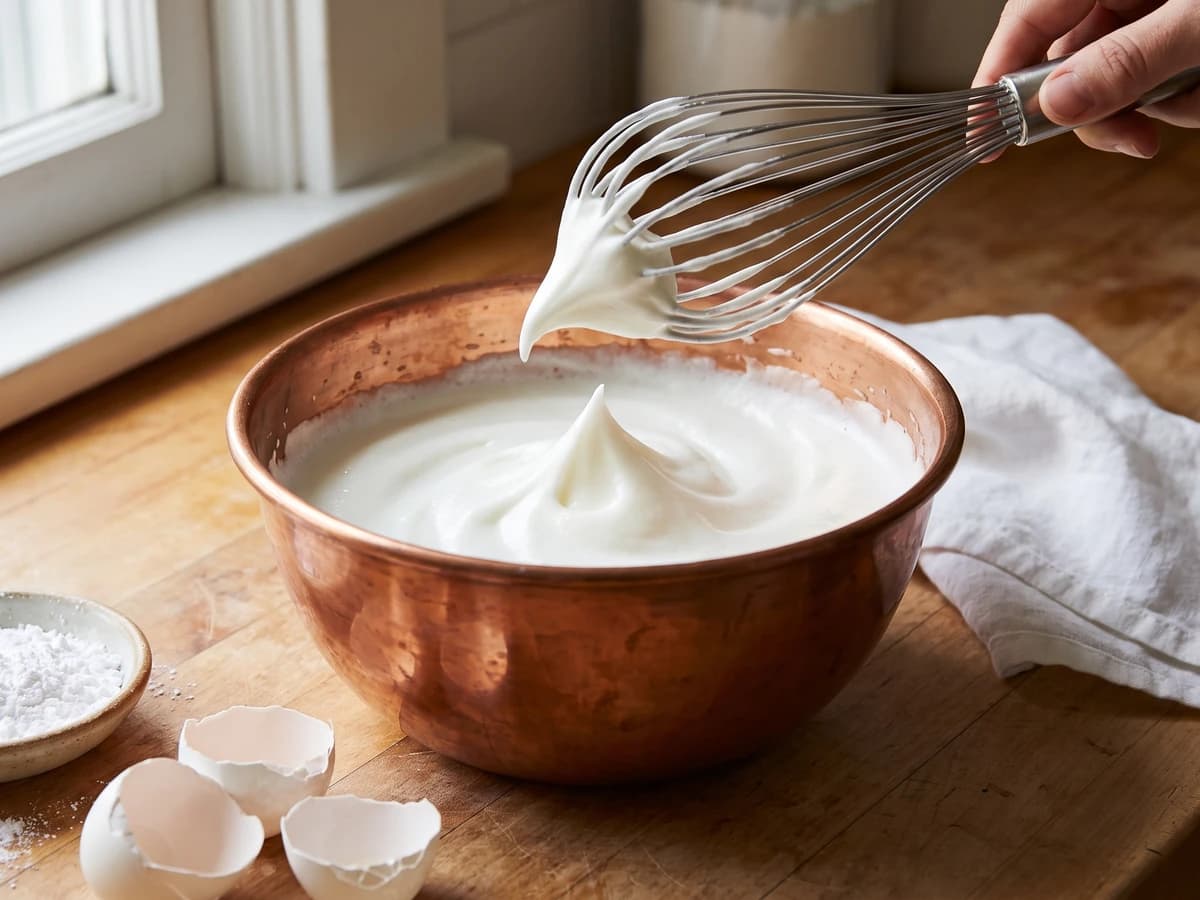
Four whites, one spotless bowl, and a patient change of speed: whisk gently until loosened, then briskly to glossy stiffness, with powdered sugar waiting if the foam begins to granulate.