
Chef Juliette
Various Almond Preparations
Five almond preparations, one discipline: remove the skins cleanly, dry every kernel through, then cut, toast, or cloak it in pale caramel without letting its fragrant oils escape.
A cooking platform built around craft, culture, and the stories behind what we eat.

Created by Chef Juliette
Based on No. 2727, Marquise Alice, from Le Guide Culinaire (1907) by Auguste Escoffier
A chilled praline Bavarois wrapped in anisette-soaked ladyfingers, cloaked in vanilla Chantilly, feathered with tart red-currant jelly, and ringed with crisp praline-glazed puff triangles for a celebration worth planning ahead.
Marquise Alice (praline Bavarian cream) teaches one true thing before you touch a pan: cold gives a molded dessert its structure, but timing keeps it light. The pralin custard must be cool enough to hold whipped cream without melting it, yet fluid enough to fold without setting into little rubbery knots. Hit that narrow, manageable moment and the Bavarois turns out cleanly, soft as velvet inside its anisette-soaked ladyfingers.
The original formula assumed a full pâtisserie section with Pralin (No. 2352), ladyfingers, and puff paste already waiting on the shelf, plus several pairs of hands to manage custard, cream, molding, and decoration. At home, crisp purchased ladyfingers and good all-butter puff pastry remove only the brigade scaffolding, while a 6-inch springform stands in honestly for the manqué mould (deep round cake pan). What stays is the dish itself: both forms of Pralin (No. 2352), real anisette, a properly set Bavarois, very stiff Chantilly, the combed currant jelly, and those little Condé triangles. One cook, one stove, one evening, then the refrigerator does the unattended work.
When finished, the Marquise Alice stands tall and ivory under its Chantilly, with ruby lines feathered across the top and crisp almond-gold pastry around its base. Chill it hard before unmolding. The moment that decides everything comes earlier, when you fold the cream into the cooled but still-fluid pralin custard.
Marquise Alice belongs to the named entremets of Parisian grande cuisine, where pastry kitchens assembled molded creams from prepared biscuits, nut confections, jellies, and baked decorations. Despite the title marquise, this formula is not the familiar chocolate dessert: structurally it is a charlotte built around pralin Bavarois, then concealed beneath Chantilly. The surviving formula does not identify Alice, so the name records a dedication rather than regional provenance; anisette, red-currant jelly, and the Condé pastry border provide the dessert's particular identity.
Quantity
18 to 20 (about 7 oz / 200 g)
Quantity
1/2 cup (120 ml / 125 g)
Quantity
3 tablespoons (45 ml / 45 g)
Quantity
2 1/4 teaspoons (11 ml / 7 g)
Quantity
1 cup (240 ml / 245 g)
Quantity
4 (about 2 1/2 oz / 72 g)
Quantity
1/4 cup (60 ml / 50 g)
Quantity
1/8 teaspoon (0.6 ml / 0.7 g)
Quantity
3/4 cup (180 ml / 100 g) Pralin (No. 2352)
prepared separately for the Bavarois
Quantity
1 1/4 cups (300 ml / 300 g)
at least 35% fat and very cold
Quantity
1/2 sheet (4 oz / 115 g)
thawed but cold
Quantity
1/4 cup (60 ml / 70 g) Pralin (No. 2352)
prepared separately for Pralin à Condé
Quantity
1 1/2 cups plus 2 tablespoons (390 ml / 390 g)
at least 35% fat and very cold
Quantity
1/3 cup (80 ml / 40 g)
Quantity
1 teaspoon (5 ml / 5 g)
Quantity
1/3 cup (80 ml / 100 g)
| Ingredient | Quantity |
|---|---|
| crisp ladyfingers | 18 to 20 (about 7 oz / 200 g) |
| anisette | 1/2 cup (120 ml / 125 g) |
| cold water | 3 tablespoons (45 ml / 45 g) |
| powdered gelatin | 2 1/4 teaspoons (11 ml / 7 g) |
| whole milk | 1 cup (240 ml / 245 g) |
| large egg yolks | 4 (about 2 1/2 oz / 72 g) |
| fine granulated sugar | 1/4 cup (60 ml / 50 g) |
| fine sea salt | 1/8 teaspoon (0.6 ml / 0.7 g) |
| nougat-powder Pralinprepared separately for the Bavarois | 3/4 cup (180 ml / 100 g) Pralin (No. 2352) |
| heavy cream for the Bavaroisat least 35% fat and very cold | 1 1/4 cups (300 ml / 300 g) |
| all-butter puff pastrythawed but cold | 1/2 sheet (4 oz / 115 g) |
| spreading-form Pralinprepared separately for Pralin à Condé | 1/4 cup (60 ml / 70 g) Pralin (No. 2352) |
| heavy cream for the Chantillyat least 35% fat and very cold | 1 1/2 cups plus 2 tablespoons (390 ml / 390 g) |
| icing sugar | 1/3 cup (80 ml / 40 g) |
| pure vanilla extract | 1 teaspoon (5 ml / 5 g) |
| red-currant jelly | 1/3 cup (80 ml / 100 g) |
Line the base and sides of a 6-inch (15 cm) deep springform or manqué mould with parchment. Trim enough ladyfingers to stand closely around the wall, then fit the remaining biscuits across the base, cutting pieces to close every gap. Brush the anisette over them in several slow passes, turning loose pieces as needed, until the biscuits are saturated but still hold their shape. A broken biscuit is no calamity; press it into a gap on the base and continue.
Sprinkle the gelatin evenly over the cold water and leave it to swell for 5 minutes. Heat the milk in a small saucepan until trembling just below a simmer. Whisk the yolks with the granulated sugar and salt until smooth, then slowly whisk in half the hot milk. Return everything to the saucepan and cook over low heat, stirring constantly, until the custard reaches 180°F (82°C) and coats the back of a spoon. Never let it boil. If a few curds appear at the edge, pull the pan from the heat and strain the custard immediately; ça se rattrape. A custard cooked into firm scrambled egg must be remade.
Add the swollen gelatin to the hot custard and stir until completely dissolved. Whisk in the nougat-powder Pralin (No. 2352), then pass the mixture through a fine sieve into a wide bowl. Set the bowl over ice water and stir until the custard cools to 75 to 80°F (24 to 27°C). It should feel cool, flow in a thick ribbon, and show no set rim around the bowl.
Whip the 1 1/4 cups (300 ml) cream to soft peaks that bend at their tips. Fold one-third into the pralin custard to lighten it, then fold in the remainder with broad strokes until no white streaks remain. This temperature is the principle of the dish: a warm base melts the cream, while a cold one sets before it can be folded. If gelatin begins setting around the bowl, warm it for a few seconds over barely warm water and whisk it smooth before adding the cream. Spoon the Bavarois into the lined mould, level the top, cover, and refrigerate for at least 6 hours, preferably overnight.
Heat the oven to 400°F (200°C). Cut the cold puff pastry into 12 small triangles, each about 2 inches (5 cm) tall, and prick them lightly with a fork. Arrange them between two sheets of parchment with a second baking sheet resting on top, then bake until crisp and evenly golden, 12 to 15 minutes. Remove the upper sheet, spread each triangle thinly with the spreading-form Pralin (No. 2352), the Pralin à Condé required by the formula, and lower the oven to 300°F (150°C). Dry the coated triangles for 8 to 10 minutes, until the topping is set and old-gold rather than dark brown. Cool completely on a rack.
Chill the serving plate. Run a thin knife around the top edge of the mould, release the ring, and peel away the side parchment. Set the plate over the Marquise Alice and invert it carefully, then lift away the base and remaining paper. If the centre yields when touched or the sides begin to bow, return it to the cold before forcing matters; another 2 hours in the refrigerator, or 20 minutes in the freezer, will firm it enough to unmold cleanly.
Reserve 2 tablespoons of the measured cream, then whip the remainder with the icing sugar and vanilla until it holds very stiff, smooth peaks. Coat the top and sides of the unmolded Marquise Alice evenly, closing every gap and keeping the surface level enough to carry the jelly design. Stop whipping as soon as the whisk leaves sharp ridges. If the Chantilly turns slightly grainy, fold in the reserved cold cream a spoonful at a time until smooth; once butter grains form, it has gone beyond rescue.
Warm the red-currant jelly over low heat only until smooth and pipeable, then press it through a fine sieve and let it cool to room temperature. Chill the Chantilly-coated marquise for 10 minutes. Pipe thin parallel jelly lines across the top, spacing them about 1/2 inch (1 cm) apart. Draw the point of a small knife through the lines at right angles, alternating direction with each pass and wiping the blade clean every time. If the jelly begins bleeding into the cream, stop, chill the dessert for 10 minutes, and patch the mark with a little reserved Chantilly before continuing.
Stand the cooled Condé triangles around the base, overlapping them slightly so they form a crisp pastry collar. Chill the completed Marquise Alice for 30 minutes, then cut it with a thin knife dipped in hot water and wiped dry between slices. Serve it properly cold, while the Bavarois is silky and the pastry remains crisp. À table!
1 serving (about 230g)
Culinary guides, cultural storytelling, and the editorial depth that makes cooking meaningful.
Discover Culinary ExplorerChef Juliette
Five almond preparations, one discipline: remove the skins cleanly, dry every kernel through, then cut, toast, or cloak it in pale caramel without letting its fragrant oils escape.

Chef Juliette
A pastry pantry lesson in one tray: filberts warmed only until their red skins release, rubbed clean, cooled, and chopped into a fragrant mise-en-place for cakes, creams, pralines, and petits fours.

Chef Juliette
The smallest pâtisserie discipline decides whether a cake leaves its mould intact: clarified butter in every corner, followed by the lightest veil of dry flour or fécule.
Chef Juliette
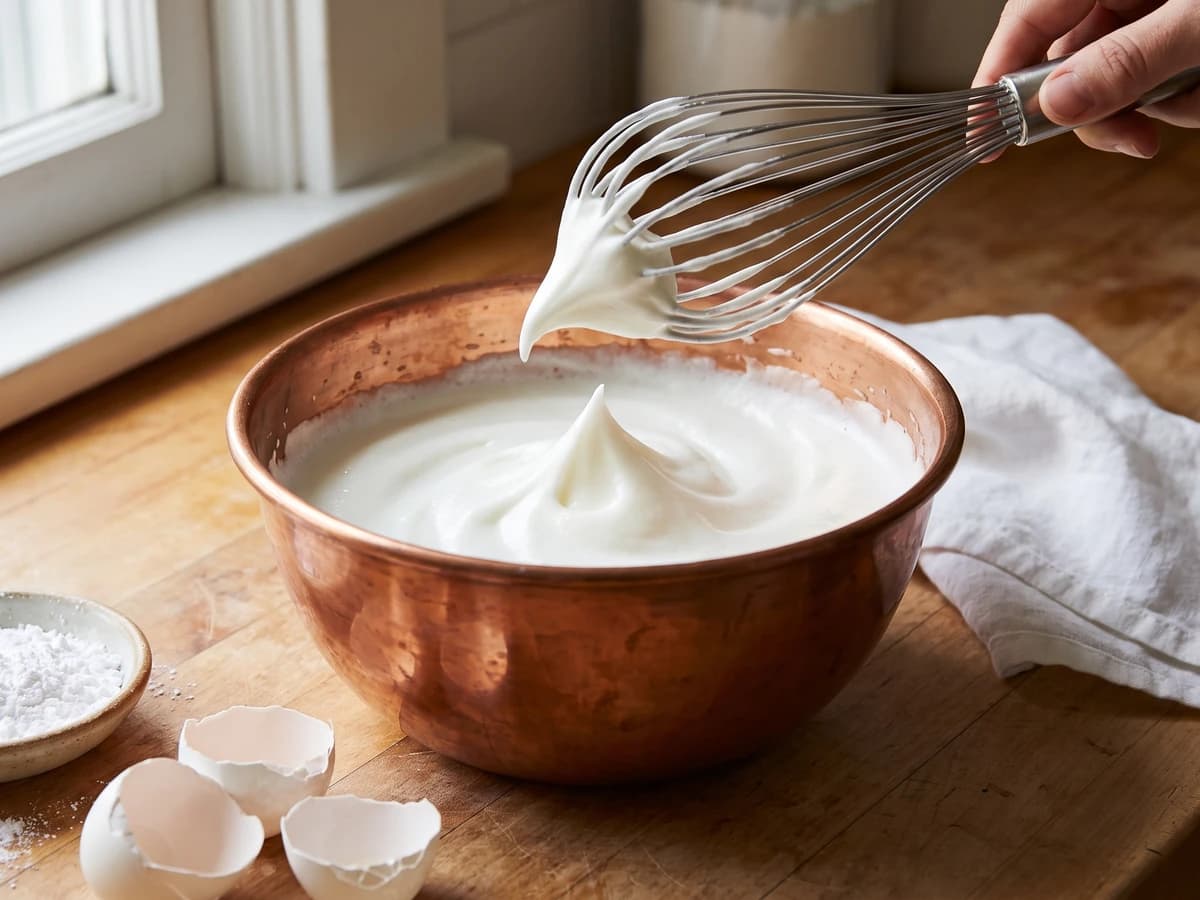
Four whites, one spotless bowl, and a patient change of speed: whisk gently until loosened, then briskly to glossy stiffness, with powdered sugar waiting if the foam begins to granulate.