
Chef Juliette
Various Almond Preparations
Five almond preparations, one discipline: remove the skins cleanly, dry every kernel through, then cut, toast, or cloak it in pale caramel without letting its fragrant oils escape.
A cooking platform built around craft, culture, and the stories behind what we eat.

Created by Chef Juliette
Based on No. 2720, Biscuit à la Reine, from Le Guide Culinaire (1907) by Auguste Escoffier
Biscuit à la Reine layers crisp pâte sèche, airy biscuit de Savoie, cold kümmel syrup, piped glace royale, and maraschino Bavarois into one composed celebration cake, with cold saturation as its governing discipline.
Biscuit à la Reine (Savoy sponge with maraschino Bavarois) teaches the discipline of cold assembly. The one true thing is simple: saturate a cold biscuit with cold syrup. Warmth makes the crumb swell unevenly, weakens its structure, and turns a stately cake into pudding before the crown reaches it.
The original kitchen assumed a pastry brigade with biscuit de Savoie, pâte sèche, boiled apricot glaze, glace royale, and Bavarois already moving through separate stations. It also assumed a decorative Richelieu mould waiting on the shelf. I have kept every layer and the original sequence, but scaled the cake to an 18 cm manqué and replaced the specialized Richelieu with a 650 ml fluted pudding mould. The ornate mould and brigade portions are scaffolding; the crisp base, cold kümmel saturation, piped icing, and maraschino cream are the dish. One cook, one stove, one evening.
Finished properly, the biscuit is airy but thoroughly perfumed, the pâte sèche snaps neatly beneath it, and the pale Bavarois sits above like a cool satin crown. Make the components patiently, but guard one moment above all: let both sponge and syrup become completely cold before they meet.
Biscuit à la Reine belongs to the Parisian tradition of composed entremets, even though its airy biscuit de Savoie points toward Savoie. Grand pastry kitchens readily absorbed cosmopolitan bottles into the French canon: caraway-scented kümmel soaked the sponge while maraschino perfumed the moulded cream, and the finished sweet traveled naturally to bourgeois celebration tables. The title à la Reine is a courtly naming convention rather than secure proof of one queen's invention; the dish is defined by its architecture of crisp base, saturated sponge, glace royale, and a smaller Bavarois turned out above.
Quantity
¾ cup plus 1 tablespoon (195 ml / 100 g)
Quantity
¼ cup plus 1 tablespoon (75 ml / 35 g)
Quantity
3½ tablespoons (52 ml / 50 g)
diced
Quantity
1 large egg
separated; yolk for the pâte sèche and white reserved for the glace royale
Quantity
1 teaspoon (5 ml / 5 g)
use only if needed
Quantity
⅛ teaspoon (0.6 ml / 0.75 g)
Quantity
2 teaspoons (10 ml / 10 g)
Quantity
1 tablespoon (15 ml / 8 g)
Quantity
4
separated
Quantity
½ cup plus 2 tablespoons (150 ml / 120 g)
Quantity
½ cup (120 ml / 60 g)
sifted
Quantity
⅓ cup (80 ml / 45 g)
sifted
Quantity
⅛ teaspoon (0.6 ml / 0.75 g)
Quantity
2¼ teaspoons (11 ml / 7 g)
Quantity
2 tablespoons (30 ml / 30 g)
Quantity
¾ cup (180 ml / 185 g)
Quantity
3
Quantity
¼ cup (60 ml / 50 g)
Quantity
3 tablespoons (45 ml / 42 g)
Quantity
1 cup (240 ml / 240 g)
Quantity
½ cup (120 ml / 120 g)
Quantity
½ cup (120 ml / 100 g)
Quantity
3 tablespoons (45 ml / 42 g)
Quantity
¼ cup (60 ml / 80 g), prepared to the small-thread stage according to The Cooking of Sugar (No. 2344)
Quantity
1¼ cups (300 ml / 150 g)
sifted
Quantity
1 teaspoon (5 ml / 5 g)
| Ingredient | Quantity |
|---|---|
| all-purpose flour, for the pâte sèche | ¾ cup plus 1 tablespoon (195 ml / 100 g) |
| confectioners' sugar, for the pâte sèche | ¼ cup plus 1 tablespoon (75 ml / 35 g) |
| cold unsalted butterdiced | 3½ tablespoons (52 ml / 50 g) |
| pasteurized eggseparated; yolk for the pâte sèche and white reserved for the glace royale | 1 large egg |
| cold water, for the pâte sèche (optional)use only if needed | 1 teaspoon (5 ml / 5 g) |
| fine salt, for the pâte sèche | ⅛ teaspoon (0.6 ml / 0.75 g) |
| softened unsalted butter, for the manqué mould | 2 teaspoons (10 ml / 10 g) |
| all-purpose flour, for dusting the manqué mould | 1 tablespoon (15 ml / 8 g) |
| large eggs, for the biscuit de Savoieseparated | 4 |
| superfine sugar, for the biscuit de Savoie | ½ cup plus 2 tablespoons (150 ml / 120 g) |
| all-purpose flour, for the biscuit de Savoiesifted | ½ cup (120 ml / 60 g) |
| cornstarchsifted | ⅓ cup (80 ml / 45 g) |
| fine salt, for the biscuit de Savoie | ⅛ teaspoon (0.6 ml / 0.75 g) |
| powdered gelatin | 2¼ teaspoons (11 ml / 7 g) |
| cold water, for blooming the gelatin | 2 tablespoons (30 ml / 30 g) |
| whole milk | ¾ cup (180 ml / 185 g) |
| large egg yolks | 3 |
| superfine sugar, for the Bavarois | ¼ cup (60 ml / 50 g) |
| maraschino liqueur | 3 tablespoons (45 ml / 42 g) |
| cold heavy cream, at least 35% fat | 1 cup (240 ml / 240 g) |
| water, for the kümmel syrup | ½ cup (120 ml / 120 g) |
| granulated sugar, for the kümmel syrup | ½ cup (120 ml / 100 g) |
| kümmel liqueur | 3 tablespoons (45 ml / 42 g) |
| smooth strained apricot jam | ¼ cup (60 ml / 80 g), prepared to the small-thread stage according to The Cooking of Sugar (No. 2344) |
| confectioners' sugar, for the glace royalesifted | 1¼ cups (300 ml / 150 g) |
| fresh lemon juice | 1 teaspoon (5 ml / 5 g) |
Rub the cold butter into the flour, confectioners' sugar, and salt until the mixture resembles fine crumbs. Add the reserved egg yolk and press the dough together; if dry flour remains, add the cold water a few drops at a time. Do not knead. Flatten into a disc and chill for 30 minutes. Heat the oven to 350°F (175°C). Roll the dough 3 mm thick, cut a 20 cm round, prick it all over, and chill it for another 10 minutes. Bake on a lined sheet for 16 to 20 minutes, until evenly golden and dry through the centre. Cool completely on a rack.
Lower the oven to 340°F (170°C). Butter and flour an 18 cm manqué mould. Whisk the four yolks with ⅔ of the superfine sugar until thick, pale, and capable of holding a ribbon for several seconds. In a clean bowl, beat the whites with the salt to soft peaks, then add the remaining sugar gradually and beat to glossy medium peaks. Fold one-third of the whites into the yolks to loosen them. Fold in half the sifted flour and cornstarch, then the remaining whites and dry ingredients, turning the bowl and cutting cleanly through the centre so the foam keeps its air. Transfer immediately to the mould and bake for 25 to 30 minutes, until golden, springy, and beginning to draw from the sides. Rest for 10 minutes, turn out, and cool completely on a rack.
Rinse a 650 ml fluted pudding mould with cold water and leave it undried. Sprinkle the gelatin over its cold water and let it bloom for 10 minutes. Heat the milk just to a simmer. Whisk the three yolks with the sugar, temper them gradually with the milk, then return everything to low heat. Stir constantly until the crème anglaise coats the spoon and reaches 180 to 183°F (82 to 84°C); do not boil. If fine grains appear, remove it from the heat, blend briefly, and strain at once. Ça se rattrape. Stir in the bloomed gelatin, strain into a clean bowl, and cool until barely warm and beginning to gain body. Stir in the maraschino. Whip the cream to soft folds and fold it into the custard in three additions. If the custard starts setting before the cream is incorporated, place the bowl over barely warm water and stir only until fluid again. Fill the mould, cover, and chill for at least 4 hours, until fully set.
Bring the water and granulated sugar to a boil, stirring only until the sugar dissolves. Boil for one minute, remove from the heat, and cool completely. Stir in the kümmel only when the syrup is cold, preserving its caraway perfume instead of sending it up from the saucepan. Refrigerate until needed.
Have the strained apricot jam prepared to the small-thread stage as directed in The Cooking of Sugar (No. 2344). Warm it only enough to become brushable; do not cook it again. Set the pâte sèche on the serving plate and brush a thin layer of jam over its centre, leaving a narrow pastry rim visible. If necessary, trim the bottom of the cold biscuit level, then press it gently onto the jam. The jam is adhesive here, not a filling, so use only enough to hold the two layers together.
Confirm that both biscuit and kümmel syrup are cold. Spoon or brush the syrup evenly over the top in three or four passes, waiting after each pass so the crumb can drink before receiving more. Work from the centre toward the edge and use nearly all the syrup; the biscuit should feel substantially heavier but remain upright. If syrup begins pooling at the base, stop and chill the cake for 15 minutes before continuing by small spoonfuls. Ça se rattrape. Warm cake or warm syrup is the failure that does not negotiate, so keep both cold.
Beat the reserved pasteurized egg white with the lemon juice, then add the sifted confectioners' sugar gradually. Beat until the glace royale (royal icing) is white, smooth, and stiff enough to hold a clean ridge. If it tears as it leaves the piping tip, beat in cold water one drop at a time; if the ridge slumps, add more sifted sugar by the spoonful. Transfer to a piping bag fitted with a small star or plain tip. Pipe a border around the visible pastry edge, a second border around the upper rim, and close vertical shells or lines around the sides. Let the icing stand for 20 minutes to form a light crust.
Dip the Bavarois mould into warm water for 5 to 8 seconds, keeping the water below the rim, then dry the mould. Invert it squarely onto the centre of the biscuit and lift without twisting. If it clings, place a warm towel over the mould for several seconds and try again; repeated shaking breaks the clean shape. Chill the assembled cake for 20 to 30 minutes if the surface softened during unmoulding. Cut with a thin knife warmed in hot water and wiped dry between slices. Serve cold. À table!
1 serving (about 210g)
Culinary guides, cultural storytelling, and the editorial depth that makes cooking meaningful.
Discover Culinary ExplorerChef Juliette
Five almond preparations, one discipline: remove the skins cleanly, dry every kernel through, then cut, toast, or cloak it in pale caramel without letting its fragrant oils escape.

Chef Juliette
A pastry pantry lesson in one tray: filberts warmed only until their red skins release, rubbed clean, cooled, and chopped into a fragrant mise-en-place for cakes, creams, pralines, and petits fours.

Chef Juliette
The smallest pâtisserie discipline decides whether a cake leaves its mould intact: clarified butter in every corner, followed by the lightest veil of dry flour or fécule.
Chef Juliette
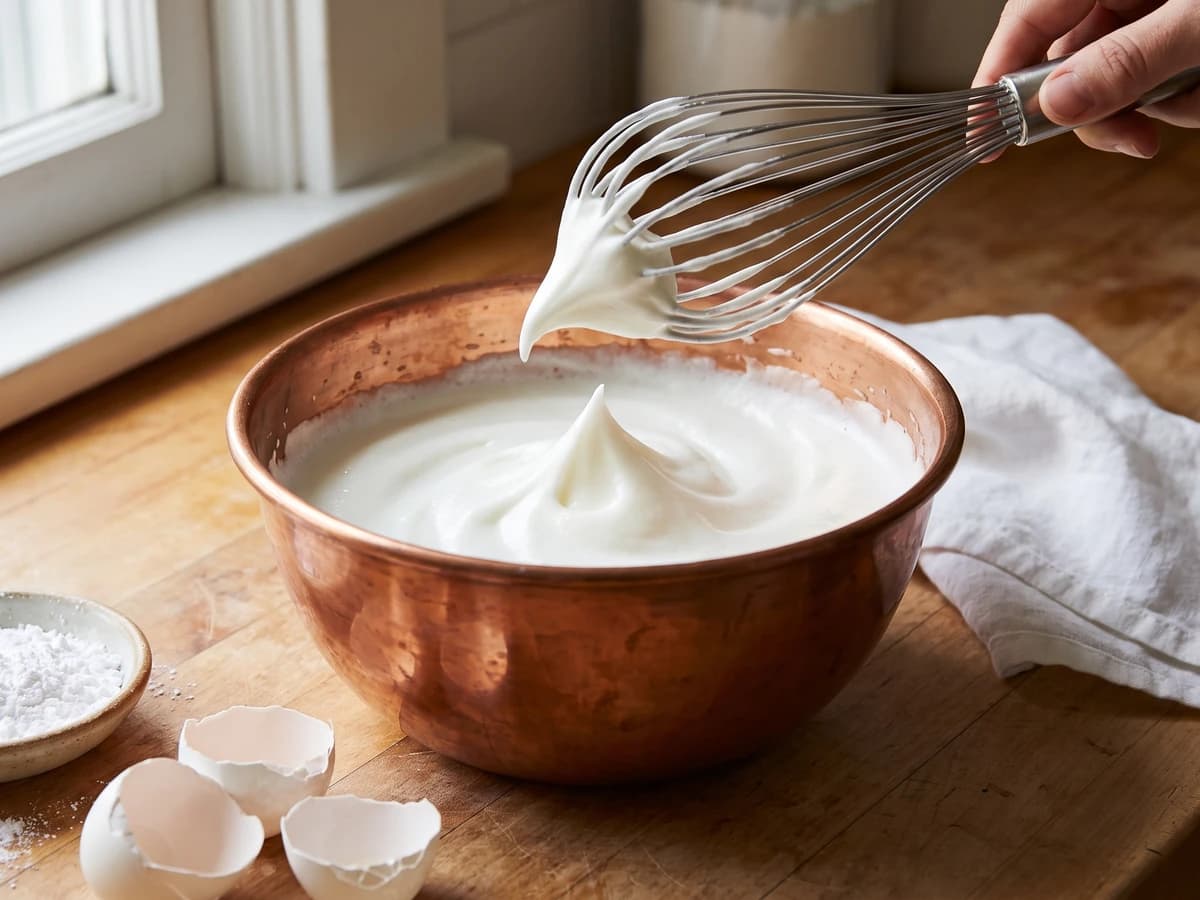
Four whites, one spotless bowl, and a patient change of speed: whisk gently until loosened, then briskly to glossy stiffness, with powdered sugar waiting if the foam begins to granulate.