
Chef Juliette
Various Almond Preparations
Five almond preparations, one discipline: remove the skins cleanly, dry every kernel through, then cut, toast, or cloak it in pale caramel without letting its fragrant oils escape.
A cooking platform built around craft, culture, and the stories behind what we eat.

Created by Chef Juliette
Based on No. 2719, Pommes à la Royale, from Le Guide Culinaire (1907) by Auguste Escoffier
Six vanilla-poached apples, cool and intact beneath a scarlet red-currant glaze, each on its own crisp blanc-mange tartlet, with clear Maraschino jelly gathered at the center.
Pommes à la Royale (vanilla-poached apples on blanc-mange tartlets) teaches one true thing before you touch a pan: poaching is not boiling. The apples must cook in a syrup that barely stirs, gaining tenderness without losing their clean shape. Let the syrup bubble hard and the fruit swells, cracks, and finally bursts.
The original entry assumed a pâtisserie station where tartlet cases, almond blanc-mange, Maraschino jelly, and glazing jelly were already waiting, plus a tube-cutter for making identical cores. Your honest equivalents are six small tartlet tins, a narrow apple corer, and a schedule that overlaps the chilling. I have scaled the dish to six portions and built each component in sequence. The brigade's trays of ready-made parts were scaffolding and can go; the gentle poach, cold blanc-mange, red-currant glaze, and Maraschino jelly are the dish and must stay.
When it is right, each apple remains plump and whole beneath a translucent garnet coat, the almond filling is cool and ivory, and the chopped jelly catches the light at the center of the platter. One cook, one stove, one evening. Guard the quiet poach above everything else.
Pommes à la Royale belongs to the classical Parisian entremets repertoire, where poached fruit was paired with small pastry foundations and molded jellies for formal service. Its construction shows the pastry station at work: vanilla syrup for the apples, almond blanc-mange for cool softness, red-currant jelly for glaze, and Maraschino jelly for a clear, cherry-scented center. Royale signals a richly composed presentation rather than a documented royal origin, and the architecture survives perfectly at a home table.
Quantity
6, about 1½ pounds (680 g) total
Quantity
3 cups (720 ml / 720 g)
Quantity
1½ cups (360 ml / 300 g)
Quantity
1
split lengthwise
Quantity
½ cup (120 ml / 160 g)
Quantity
1 tablespoon (15 ml / 15 g)
Quantity
1 cup (240 ml / 120 g)
Quantity
¼ cup (60 ml / 30 g)
Quantity
⅛ teaspoon (0.6 ml / 0.8 g)
Quantity
5 tablespoons (75 ml / 70 g)
diced
Quantity
1
Quantity
1 to 2 teaspoons (5 to 10 ml / 5 to 10 g)
Quantity
½ cup (120 ml / 70 g)
Quantity
¾ cup (180 ml / 180 g)
Quantity
⅓ cup (80 ml / 80 g)
Quantity
2 tablespoons (30 ml / 25 g)
Quantity
1¼ teaspoons (6 ml / 4 g)
Quantity
1½ tablespoons (22 ml / 22 g)
Quantity
⅛ teaspoon (0.6 ml / about 0.5 g)
Quantity
1¼ teaspoons (6 ml / 4 g)
Quantity
1 tablespoon (15 ml / 15 g)
Quantity
⅓ cup (80 ml / 80 g)
Quantity
2 tablespoons (30 ml / 25 g)
Quantity
¼ cup (60 ml / about 58 g)
| Ingredient | Quantity |
|---|---|
| small, firm dessert apples | 6, about 1½ pounds (680 g) total |
| water for poaching | 3 cups (720 ml / 720 g) |
| granulated sugar for poaching | 1½ cups (360 ml / 300 g) |
| vanilla beansplit lengthwise | 1 |
| smooth red-currant jelly | ½ cup (120 ml / 160 g) |
| reserved vanilla-poaching syrup | 1 tablespoon (15 ml / 15 g) |
| all-purpose flour | 1 cup (240 ml / 120 g) |
| confectioners' sugar | ¼ cup (60 ml / 30 g) |
| fine salt | ⅛ teaspoon (0.6 ml / 0.8 g) |
| cold unsalted butterdiced | 5 tablespoons (75 ml / 70 g) |
| large egg yolk | 1 |
| ice water | 1 to 2 teaspoons (5 to 10 ml / 5 to 10 g) |
| whole blanched almonds | ½ cup (120 ml / 70 g) |
| cold water for the almond milk | ¾ cup (180 ml / 180 g) |
| heavy cream | ⅓ cup (80 ml / 80 g) |
| granulated sugar for the blanc-mange | 2 tablespoons (30 ml / 25 g) |
| powdered gelatin for the blanc-mange | 1¼ teaspoons (6 ml / 4 g) |
| cold water for blooming the blanc-mange gelatin | 1½ tablespoons (22 ml / 22 g) |
| pure almond extract | ⅛ teaspoon (0.6 ml / about 0.5 g) |
| powdered gelatin for the Maraschino jelly | 1¼ teaspoons (6 ml / 4 g) |
| cold water for blooming the Maraschino jelly gelatin | 1 tablespoon (15 ml / 15 g) |
| water for the Maraschino jelly | ⅓ cup (80 ml / 80 g) |
| granulated sugar for the Maraschino jelly | 2 tablespoons (30 ml / 25 g) |
| Maraschino liqueur | ¼ cup (60 ml / about 58 g) |
Sprinkle the Maraschino jelly gelatin over its 1 tablespoon of cold water and leave it for 5 minutes. Warm the remaining ⅓ cup water with the sugar just until the grains disappear, then take the pan from the heat and whisk in the swollen gelatin. Let the mixture cool until merely warm before stirring in the Maraschino liqueur, which keeps its perfume when it is not boiled. Pour into a shallow dish to make a layer about ¼ inch (6 mm) deep and chill for at least 2 hours, until firm enough to cut.
Combine the flour, confectioners' sugar, and salt. Add the cold butter and use your fingertips to make a sablage, rubbing the butter into the flour until the mixture resembles fine, cool sand. Work in the egg yolk and only enough ice water for the dough to hold when pressed. If it remains crumbly, add water a few drops at a time; if it turns sticky, flatten it between two sheets of parchment and chill it rather than burying it in more flour. Ça se rattrape. Form a flat disc and chill for 30 minutes.
Heat the oven to 350°F (180°C). Roll the pastry between parchment to a scant ⅛ inch (3 mm), then line six 3-inch (7.5 cm) fluted tartlet tins. Press into the corners without stretching, trim the rims, prick the bases, and chill for 10 minutes. Line each shell with a small piece of foil and fill with baking weights. Bake for 12 minutes, remove the weights, and bake for another 6 to 8 minutes, until evenly butter-gold and dry at the base. If a shell shows a crack, press a crumb of reserved raw dough over it while the shell is still warm and return it to the oven for 2 minutes. Cool completely in the tins, then unmold.
Blend the blanched almonds with ¾ cup cold water until the liquid is opaque and milky. Strain through a fine sieve lined with cheesecloth, squeezing firmly to recover the almond milk. Sprinkle the blanc-mange gelatin over its 1½ tablespoons of cold water and leave it for 5 minutes. Warm the almond milk with the cream and sugar until the sugar dissolves, but do not boil. Remove from the heat, whisk in the swollen gelatin and almond extract, then cool over a bowl of ice water, stirring until it begins to coat the spoon like light cream. Divide among the cold tartlet shells and chill for about 2 hours. If the blanc-mange sets in the pan before the shells are filled, warm it over the gentlest heat until it flows again.
Combine the 3 cups water, 1½ cups sugar, and vanilla bean in a snug saucepan. Heat gently until the sugar dissolves, then hold the syrup just below a simmer. Peel and core the apples one at a time with the narrow corer, cutting a clean tube from stem to blossom, and lower each directly into the syrup. Cover the surface with a parchment cartouche so the fruit stays submerged. Poach at 180 to 190°F (82 to 88°C), with no hard bubbling, for 12 to 20 minutes depending on the apples. Turn them carefully once and test near the shoulder with a thin skewer; it should enter with slight resistance. If the first hairline split appears, take the pan off the heat immediately and let the fruit finish in the residual warmth. The split can face inward on the platter and disappear beneath the glaze. Ça se rattrape. Cool the apples completely in their syrup, then chill.
Lift the cold apples onto a rack and blot them very gently. Warm the red-currant jelly with 1 tablespoon of reserved poaching syrup until fluid, then pass it through a fine sieve. Brush each cold apple with a thin first coat and chill for 10 minutes before adding a fuller second coat. If the jelly slides away, the apple is wet or too warm; blot it, chill it again, and begin with the thinnest tack coat. If the glaze stiffens in the pan, warm it only until it loosens.
Cut the firm Maraschino jelly into small cubes, then chop them once or twice so they catch the light without becoming crushed. Arrange the six blanc-mange tartlets in a circle on a chilled platter and place one glazed apple squarely on each. Spoon the chopped Maraschino jelly into the open center. Keep the assembled dessert cold and serve within 2 hours so the pastry remains crisp. À table!
1 serving (about 250g)
Culinary guides, cultural storytelling, and the editorial depth that makes cooking meaningful.
Discover Culinary ExplorerChef Juliette
Five almond preparations, one discipline: remove the skins cleanly, dry every kernel through, then cut, toast, or cloak it in pale caramel without letting its fragrant oils escape.

Chef Juliette
A pastry pantry lesson in one tray: filberts warmed only until their red skins release, rubbed clean, cooled, and chopped into a fragrant mise-en-place for cakes, creams, pralines, and petits fours.

Chef Juliette
The smallest pâtisserie discipline decides whether a cake leaves its mould intact: clarified butter in every corner, followed by the lightest veil of dry flour or fécule.
Chef Juliette
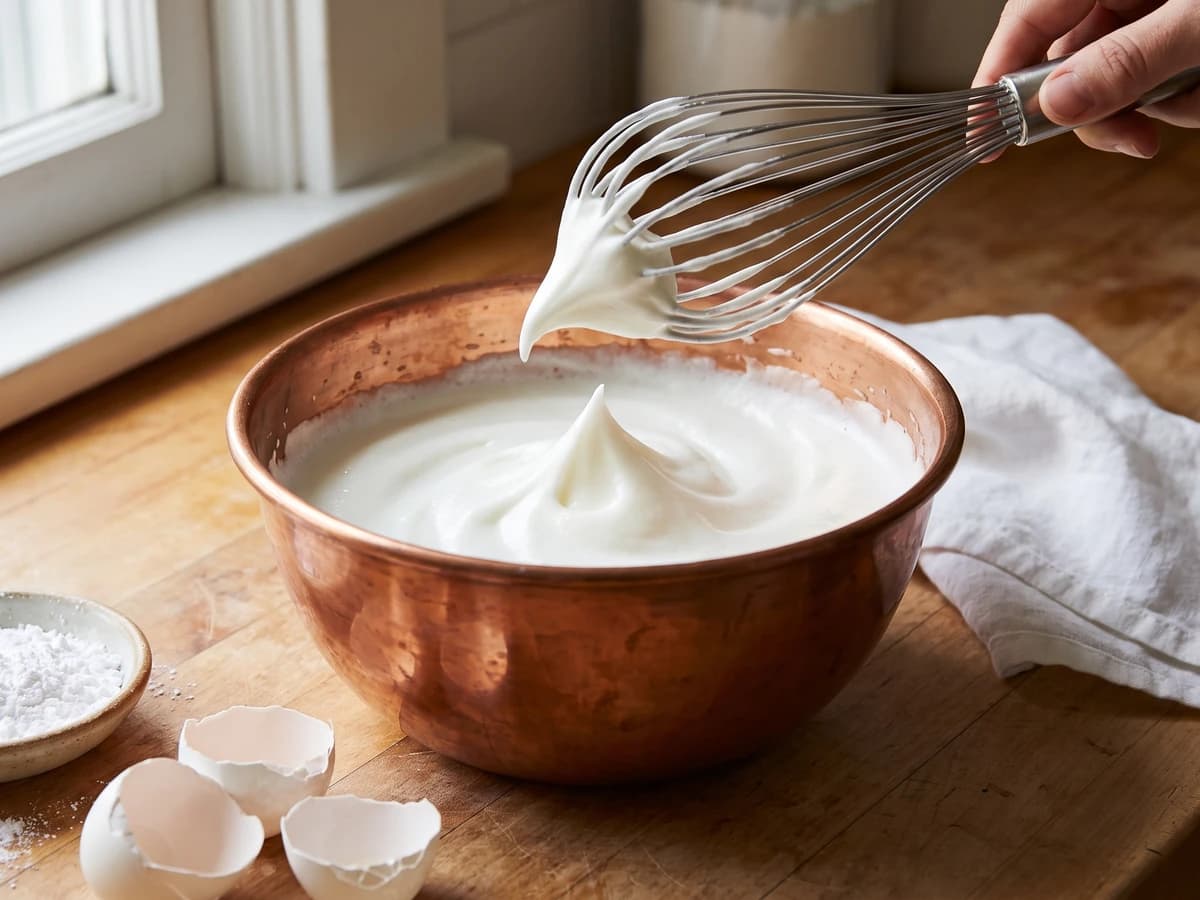
Four whites, one spotless bowl, and a patient change of speed: whisk gently until loosened, then briskly to glossy stiffness, with powdered sugar waiting if the foam begins to granulate.