
Chef Juliette
Various Almond Preparations
Five almond preparations, one discipline: remove the skins cleanly, dry every kernel through, then cut, toast, or cloak it in pale caramel without letting its fragrant oils escape.
A cooking platform built around craft, culture, and the stories behind what we eat.
Created by Chef Juliette
Based on No. 2718, Poires à la Reine Emma, from Le Guide Culinaire (1907) by Auguste Escoffier
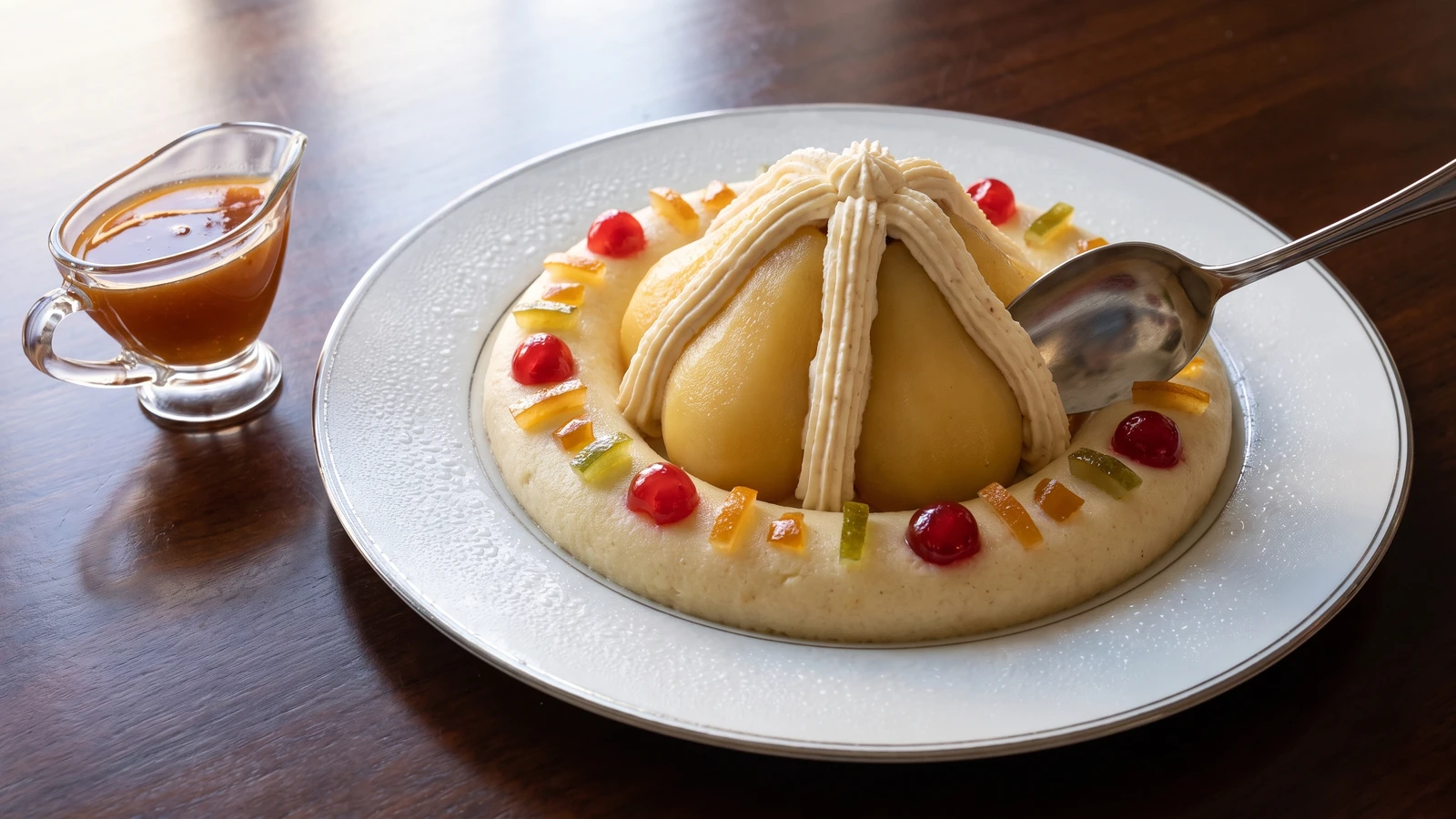
An ivory flamri crown, jewelled with candied fruit, surrounds vanilla-poached pears under frangipane, almond macaroon, and stiff Chantilly, while a glossy kirsch-apricot sauce waits at the table.
Poires à la Reine Emma (Queen Emma pears) teaches the discipline of the grand cold entremets: each soft element must hold its own shape, then yield together on the spoon. A candied-fruit flamri, a poached semolina custard, forms the ivory border. Vanilla pears rise within it, masked with crème frangipane (almond pastry cream), dry macaroon crumbs, and twice the frangipane's volume of crème Chantilly (sweetened whipped cream).
The original entry assumed a pastry brigade with every component waiting in its own bowl and an even border mould ready for poaching. At home, one smooth 1-litre savarin mould replaces that professional mould, and good apricot preserves thinned with pear syrup replace a saucepan of apricot sauce held for service. Parallel preparation is brigade scaffolding and can go. The decorated border, the sequence, and the final 1:1/4:2 ratio of frangipane, macaroon crumbs, and Chantilly are the dish and must stay.
The one true thing to know before touching the pan is this: flamri must poach in quiet water. A hard boil drives bubbles against the mould and pits the custard; keep the bain-marie below a simmer, and the border will turn out smooth, pale, and properly tender.
Poires à la Reine Emma belongs to the Parisian grand-kitchen repertoire of named entremets, where moulded custards, poached fruit, creams, and companion sauces became ceremonial table pieces. Flamri has roots in the milk-and-grain puddings of German-speaking Europe; French pastry kitchens adopted the form, poached it in decorative moulds, and dressed it with candied fruit and rich service-pantry creams. Despite its royal title, this is not a regional pear dish: its identity lies in the precise contrast of set semolina, yielding fruit, almond cream, airy Chantilly, and kirsch-bright apricot.
Quantity
1 tablespoon (15 ml / 14 g)
Quantity
1/3 cup (80 ml / 55 g)
cut into small pieces
Quantity
3 cups (720 ml / 720 g)
Quantity
1/2 cup (120 ml / 85 g)
Quantity
1/3 cup (80 ml / 67 g)
divided
Quantity
1/4 teaspoon (1.25 ml / 1.5 g)
Quantity
3
separated
Quantity
2 tablespoons (30 ml / 28 g)
Quantity
3 large
peeled, cored, and quartered
Quantity
3 cups (720 ml / 720 g)
Quantity
1 cup (240 ml / 200 g)
Quantity
1
split lengthwise
Quantity
1 tablespoon (15 ml / 15 g)
Quantity
1/2 cup (120 ml / 120 g)
Quantity
1
Quantity
2 tablespoons (30 ml / 25 g)
Quantity
1 tablespoon (15 ml / 8 g)
Quantity
3 tablespoons (45 ml / 18 g)
Quantity
2 teaspoons (10 ml / 9 g)
Quantity
3 tablespoons (45 ml / 22 g)
finely crushed
Quantity
1 1/4 cups (300 ml / 300 g)
Quantity
3 tablespoons (45 ml / 23 g)
Quantity
1 teaspoon (5 ml / 5 g)
Quantity
3/4 cup (180 ml / 240 g)
Quantity
1/4 cup (60 ml / 60 g)
Quantity
1 tablespoon (15 ml / 14 g)
Quantity
1 teaspoon (5 ml / 5 g)
| Ingredient | Quantity |
|---|---|
| softened unsalted butter, for the mould | 1 tablespoon (15 ml / 14 g) |
| mixed candied cherries and citrus peelcut into small pieces | 1/3 cup (80 ml / 55 g) |
| whole milk, for the flamri | 3 cups (720 ml / 720 g) |
| fine semolina | 1/2 cup (120 ml / 85 g) |
| superfine sugar, for the flamridivided | 1/3 cup (80 ml / 67 g) |
| fine sea salt | 1/4 teaspoon (1.25 ml / 1.5 g) |
| large eggsseparated | 3 |
| unsalted butter, for the flamri | 2 tablespoons (30 ml / 28 g) |
| firm-ripe Bosc pearspeeled, cored, and quartered | 3 large |
| water | 3 cups (720 ml / 720 g) |
| superfine sugar, for the pear syrup | 1 cup (240 ml / 200 g) |
| vanilla beansplit lengthwise | 1 |
| fresh lemon juice, for the pears | 1 tablespoon (15 ml / 15 g) |
| whole milk, for the crème frangipane | 1/2 cup (120 ml / 120 g) |
| large egg yolk | 1 |
| superfine sugar, for the crème frangipane | 2 tablespoons (30 ml / 25 g) |
| all-purpose flour | 1 tablespoon (15 ml / 8 g) |
| finely ground almond flour | 3 tablespoons (45 ml / 18 g) |
| unsalted butter, for the crème frangipane | 2 teaspoons (10 ml / 9 g) |
| crisp dry almond macaroonsfinely crushed | 3 tablespoons (45 ml / 22 g) |
| cold heavy cream | 1 1/4 cups (300 ml / 300 g) |
| confectioners' sugar | 3 tablespoons (45 ml / 23 g) |
| vanilla extract | 1 teaspoon (5 ml / 5 g) |
| smooth apricot preserves | 3/4 cup (180 ml / 240 g) |
| reserved pear poaching syrup | 1/4 cup (60 ml / 60 g) |
| Kirsch | 1 tablespoon (15 ml / 14 g) |
| fresh lemon juice, for the apricot sauce | 1 teaspoon (5 ml / 5 g) |
Heat the oven to 300°F (150°C). Butter a smooth 4-cup (1-litre) ring or savarin mould generously, reaching into every curve. Press the candied fruit into the butter in a simple, even pattern around the base and sides. Set the mould in a deep roasting pan lined with a folded kitchen towel, which keeps it steady in the bain-marie.
Bring the milk, salt, and half the flamri sugar just to a simmer. Rain in the semolina while whisking, then cook over low heat for 8 to 10 minutes, stirring constantly, until the grains are tender and the mixture pulls heavily from the pan. Take it off the heat, beat in the butter, then add the egg yolks one at a time. Whisk the egg whites to soft peaks, add the remaining sugar gradually, and continue to glossy medium peaks. Fold them through the warm semolina in three additions, keeping as much air as you can.
Spoon the flamri carefully into the decorated mould and smooth the surface without scraping away the fruit. Pour hot, not fiercely boiling, water into the roasting pan until it reaches halfway up the mould. Bake for 40 to 50 minutes, until the border is set at the edges and trembles slightly when nudged. The water must remain quiet. If it begins bubbling hard, lift out the pan, replace a little water with cool water, and lower the oven by 25°F (15°C); caught promptly, the custard will finish smoothly. Cool in the mould for 30 minutes, cover, and chill for at least 4 hours.
Combine the water, sugar, lemon juice, vanilla seeds, and vanilla pod in a saucepan. Bring to a boil to dissolve the sugar, then reduce to a bare simmer and add the pear quarters. Cover them with a round of parchment and poach for 12 to 18 minutes, turning once, until a small knife enters with slight resistance. If the pears soften faster than expected, lift them out immediately, cool the syrup over an ice bath, then return the fruit to it. Cool and chill the pears in their syrup.
Heat the milk until small bubbles gather at the rim. Whisk the egg yolk with the sugar, flour, and almond flour until smooth, then pour in the hot milk gradually while whisking. Return everything to the saucepan and cook over medium-low heat, whisking constantly, until thick and bubbling; keep it there for 1 minute to cook the flour. Remove from the heat and beat in the butter. If the cream forms lumps, whisk it hard off the heat and pass it through a fine sieve while warm. Ça se rattrape. Spread it in a shallow dish, cover its surface directly, and chill completely.
Warm the apricot preserves with the reserved pear syrup until fluid, then pass the mixture through a fine sieve. If it runs like water, simmer it briefly before adding the Kirsch; if it is too thick to pour, loosen it with another spoonful of pear syrup. Cool, then stir in the Kirsch and lemon juice. Cover and hold the sauce separately.
Reserve 1 tablespoon of the cold cream. Whip the rest with the confectioners' sugar and vanilla until it holds very firm, clean peaks, stopping before the surface turns grainy. If it begins to roughen, fold in the reserved unwhipped cream by hand until smooth. Measure 1 1/2 cups (360 ml) for the pear coating and transfer the remainder to a piping bag fitted with a medium star tip.
Dip a thin knife in hot water and loosen only the inner and outer rims of the flamri. Lay a warm, damp towel around the mould for 5 seconds, place a round serving dish over it, and invert both together. If it does not release, repeat the warm towel once. Do not pry at the custard, which will tear before it agrees to be hurried.
Drain the pear quarters thoroughly and blot their surfaces; wet fruit makes the coating slide. Arrange them inside the flamri border in an overlapping pyramid. Measure 3/4 cup (180 ml) of cold crème frangipane and stir in the 3 tablespoons (45 ml) of macaroon crumbs, exactly one quarter of its volume. Fold in the measured 1 1/2 cups (360 ml) of Chantilly, exactly twice the frangipane's volume. Spoon this mixture over the pear quarters, masking them while preserving the shape of the pyramid. If the coating slumps, chill the bowl for 10 minutes rather than adding more crumbs.
Pipe the remaining Chantilly over the top of the pear pyramid in generous shells or rosettes. Chill the assembled dish for 30 minutes so the coating settles, then let it stand for 10 minutes before serving. Bring the kirsch-apricot sauce to the table in a small sauceboat and spoon it beside each portion, never over the decorated border in advance. À table!
1 serving (about 410g)
Culinary guides, cultural storytelling, and the editorial depth that makes cooking meaningful.
Discover Culinary ExplorerChef Juliette
Five almond preparations, one discipline: remove the skins cleanly, dry every kernel through, then cut, toast, or cloak it in pale caramel without letting its fragrant oils escape.

Chef Juliette
A pastry pantry lesson in one tray: filberts warmed only until their red skins release, rubbed clean, cooled, and chopped into a fragrant mise-en-place for cakes, creams, pralines, and petits fours.

Chef Juliette
The smallest pâtisserie discipline decides whether a cake leaves its mould intact: clarified butter in every corner, followed by the lightest veil of dry flour or fécule.
Chef Juliette
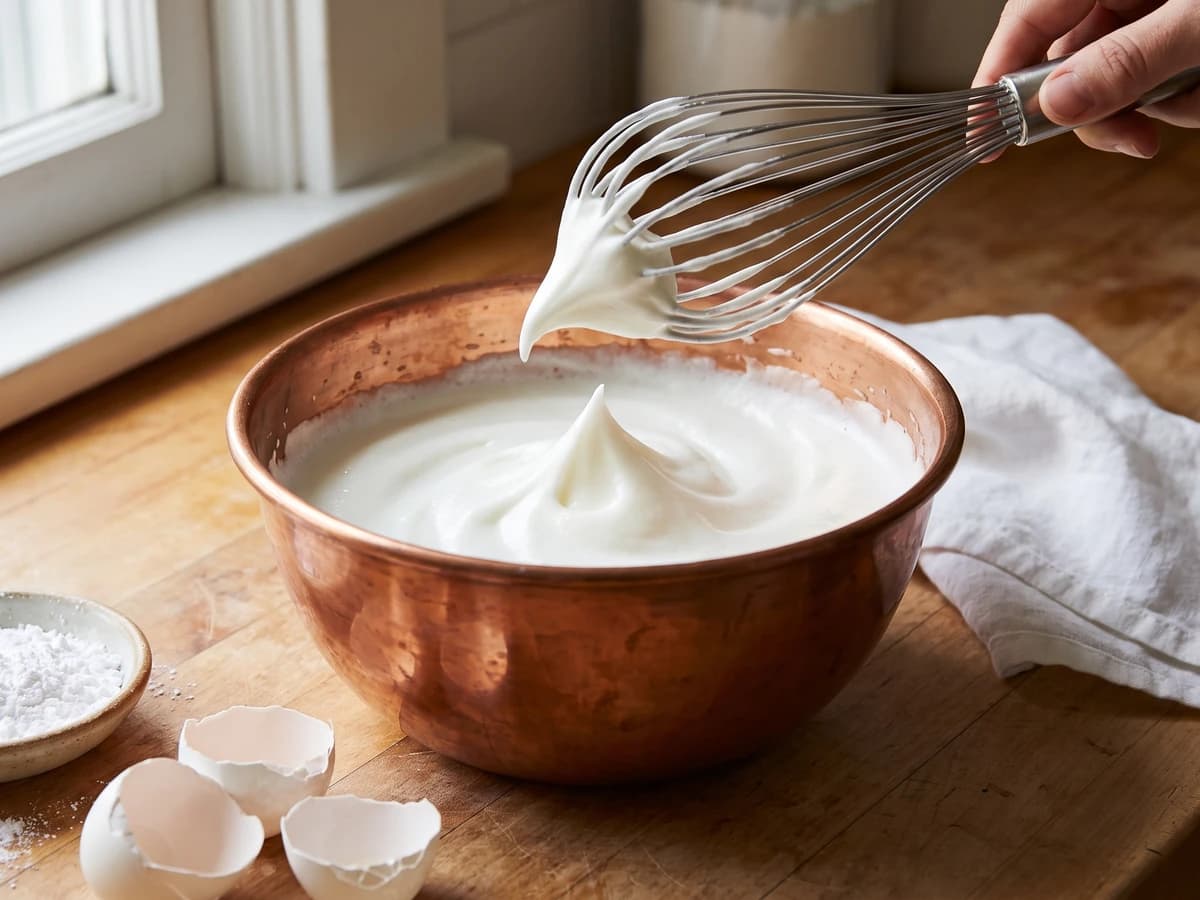
Four whites, one spotless bowl, and a patient change of speed: whisk gently until loosened, then briskly to glossy stiffness, with powdered sugar waiting if the foam begins to granulate.