
Chef Juliette
Mayonnaise de Volaille
Cold roast chicken, ciseled lettuce, and a shining coat of homemade mayonnaise, arranged with capers, olives, anchovies, eggs, and lettuce hearts, then tossed at the table as the canon intends.
A cooking platform built around craft, culture, and the stories behind what we eat.

Created by Chef Juliette
Based on No. 2717, Poires au Rhum, from Le Guide Culinaire (1907) by Auguste Escoffier
Poires au Rhum turn a simple pear poach into a lesson in control: tender fruit, a clear pink syrup lightly bound with arrowroot, and warm rum flamed at the table.
Poires au Rhum (rum-scented pears) teach the light hand. The syrup must cling enough to shine, never so heavily that it turns the fruit into pudding. Arrowroot gives that clear, delicate gloss, but it loses its grace under a hard boil. Know this before you touch the pan: once the arrowroot enters, gentle heat and a watchful eye decide everything.
The source entry assumed a pastry section poaching fruit by the tray, a cook able to bind syrup by eye, and dining-room hands ready to manage the flame. At home, four pears stew in a snug saucepan, a heatproof deep serving bowl stands in for the formal timbale, and measured rum warmed in a small pan replaces the service lamp. The brigade quantity and dedicated service kit are scaffolding and can go. The gentle stew, the arrowroot gloss, the faint pink tint, and the last-moment rum flame are the dish, so they stay. One cook, one stove, one evening.
The pears should yield to a knife without losing their shape, sitting under a translucent rose-colored syrup that catches the light. If the sauce tightens too far, reserved poaching syrup brings it back. Ça se rattrape. The step that decides the dish is binding the syrup: cold slurry into hot syrup, one brief return to gentle heat, then stop.
Poires au Rhum belong to the French classical dessert table rather than to a single region: poached fruit was arranged in a compotier or timbale and dressed with its own finished syrup. The preparation moved easily between bourgeois dining rooms and formal service because the kitchen could hold the pears ahead, while the rum flame gave the dining room the final act. The cold and hot forms are siblings, not rivals: rum perfumes the cooled syrup in one, while in the other it is poured on hot at the last moment and lit.
Quantity
4 medium (about 1 3/4 pounds / 800 g)
peeled, halved lengthwise, and cored
Quantity
2 1/2 cups plus 1 tablespoon (615 ml / 615 g)
divided
Quantity
3/4 cup (180 ml / 150 g)
Quantity
2 1/2 teaspoons (12 ml / 7 g)
divided
Quantity
1 drop
Quantity
1/4 cup (60 ml / 57 g)
| Ingredient | Quantity |
|---|---|
| firm-ripe pears, such as Bosc or Bartlettpeeled, halved lengthwise, and cored | 4 medium (about 1 3/4 pounds / 800 g) |
| cold waterdivided | 2 1/2 cups plus 1 tablespoon (615 ml / 615 g) |
| granulated sugar | 3/4 cup (180 ml / 150 g) |
| arrowroot starchdivided | 2 1/2 teaspoons (12 ml / 7 g) |
| red liquid food coloring | 1 drop |
| dark rum, at least 40% alcohol by volume | 1/4 cup (60 ml / 57 g) |
Combine 2 1/2 cups (600 ml / 600 g) of the water and the sugar in a wide 3-quart saucepan. Heat gently, stirring only until the sugar dissolves, then bring the syrup to a quiet simmer. Cut a parchment round to fit inside the pan; it will keep the fruit beneath the syrup without requiring a great cauldron of liquid.
Lower the pear halves into the syrup in one snug layer and lay the parchment directly on their surface. Hold the syrup at the barest tremble for 15 to 25 minutes, turning the pears once, until a small knife enters the thickest part with little resistance. Remove any pear that becomes tender before the others. A hard boil batters the edges and cooks the outside before the center; gentle movement, not bubbling violence, is the technique.
Lift the pears carefully with a slotted spoon and arrange them, rounded sides uppermost, in a warmed 1 1/2-quart heatproof timbale, meaning a deep round serving bowl. Keep the arrangement generous and close rather than fussy. Measure 2 cups (480 ml) of the poaching syrup back into the saucepan and reserve whatever remains for adjusting the finished sauce.
Mix 2 teaspoons of the arrowroot with 2 teaspoons of the remaining cold water until completely smooth. Bring the measured syrup just to a simmer, remove it from the heat, and whisk in the slurry. Return the pan to low heat and stir for 30 to 60 seconds, only until the syrup turns clear and lightly coats a spoon. Do not let it boil hard. If it becomes too thick, whisk in reserved hot syrup a tablespoon at a time. If prolonged heat makes it thin again, mix the reserved 1/2 teaspoon arrowroot with the last teaspoon of cold water, add it off the heat, then warm gently until clear. Ça se rattrape. Put one drop of red coloring into a small spoonful of the thickened syrup, then add this colored syrup back to the pan a few drops at a time. Stop at the palest rose blush. Pour the hot syrup evenly over the pears.
Pour the measured rum into a small saucepan while it is away from any flame, then close the bottle and put it well aside. Warm the rum over the lowest heat until it reaches about 120°F (50°C) and smells fragrant, without simmering. Turn off the burner before carrying the saucepan to the table.
Set the timbale on a sturdy trivet with candles, loose linens, sleeves, hair, and the rum bottle well away. Keep a metal lid or baking sheet close enough to cover the bowl if needed. Pour the warm rum over the hot pears, then immediately ignite it at the edge with a long match or wand lighter, keeping your face and hands back. Let the blue flame die naturally and never carry the dish while it burns. If the rum does not catch on the first attempt, do not pour on more from the bottle; serve the pears as they are, because the flavor is already there. Spoon one pear and plenty of glossy syrup into each warm bowl. À table!
1 serving (about 365g)
Culinary guides, cultural storytelling, and the editorial depth that makes cooking meaningful.
Discover Culinary ExplorerChef Juliette
Cold roast chicken, ciseled lettuce, and a shining coat of homemade mayonnaise, arranged with capers, olives, anchovies, eggs, and lettuce hearts, then tossed at the table as the canon intends.

Chef Juliette
Cold roast or poached chicken with fine ribbons of lettuce, dressed at the final moment with oil and vinegar: a composed salad whose freshness depends entirely on timing.
Chef Juliette
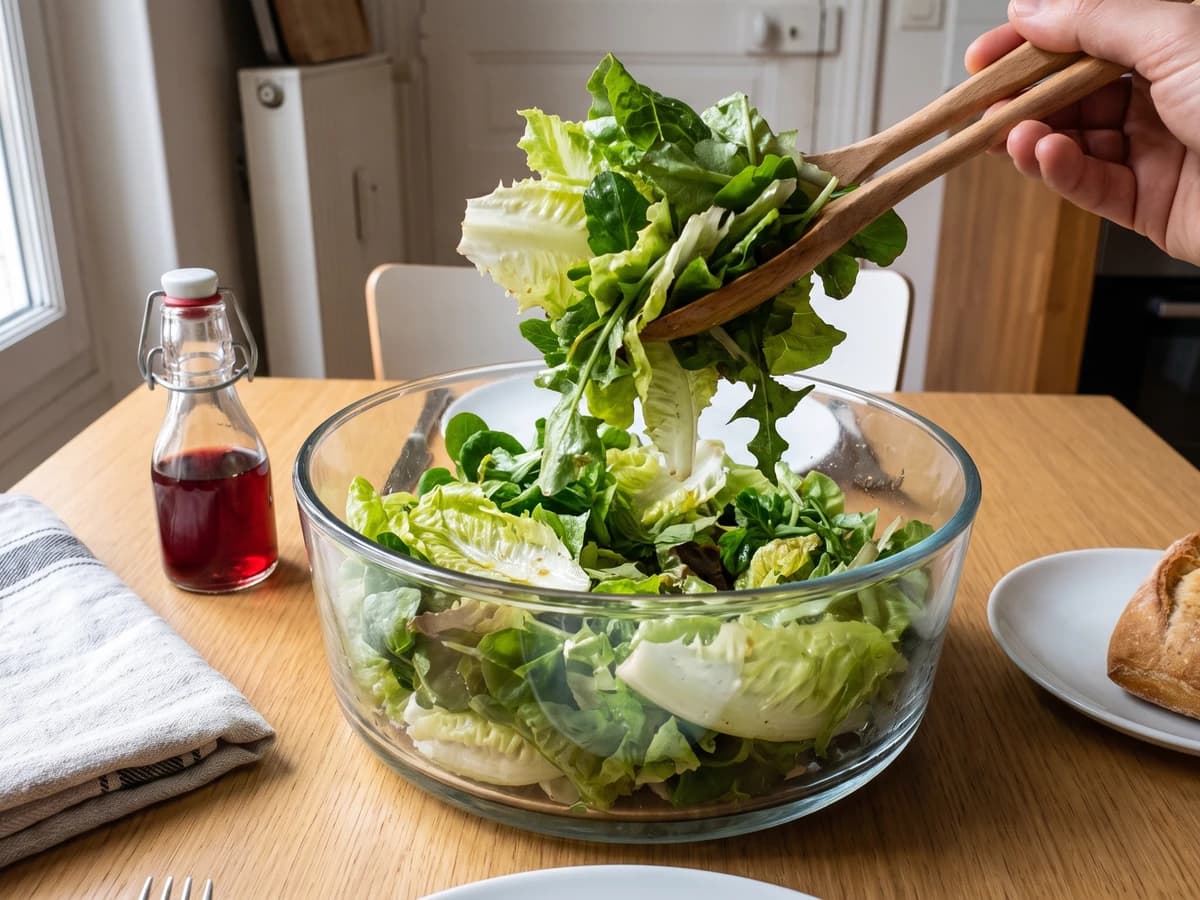
Five leaves, one living rule: laitue, romaine, chicorée, mâche, or pissenlit must be washed, dried, and dressed only as they go to the table, while every leaf still carries its light vinaigrette.
Chef Juliette
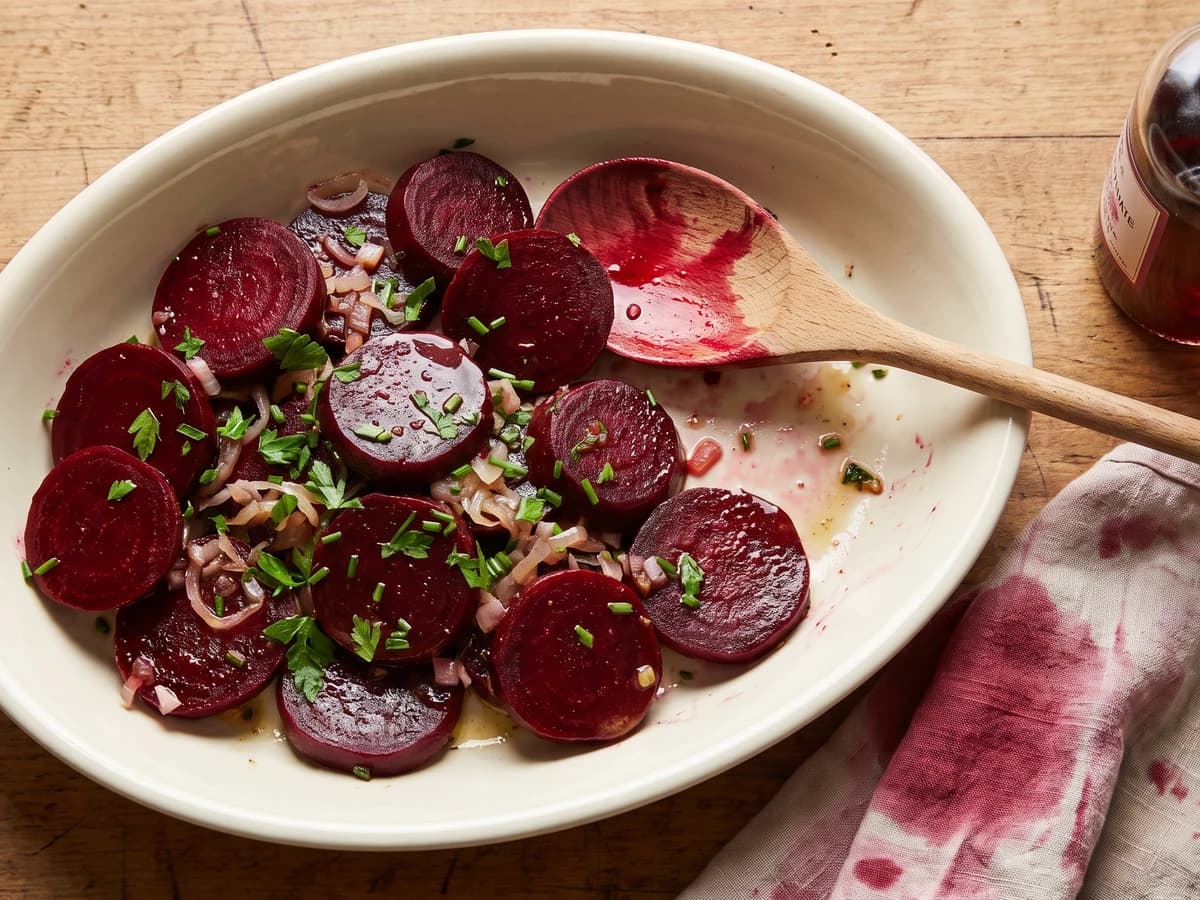
Salade de Betteraves proves that baking, not boiling, is the whole argument: concentrated garnet sweetness, tender baked onion, sharp mustard, and herbs cut into a weeknight salad worth making ahead.