
Chef Juliette
Various Almond Preparations
Five almond preparations, one discipline: remove the skins cleanly, dry every kernel through, then cut, toast, or cloak it in pale caramel without letting its fragrant oils escape.
A cooking platform built around craft, culture, and the stories behind what we eat.
Created by Chef Juliette
Based on No. 2705, Pêches Rose-Pompon, from Le Guide Culinaire (1907) by Auguste Escoffier
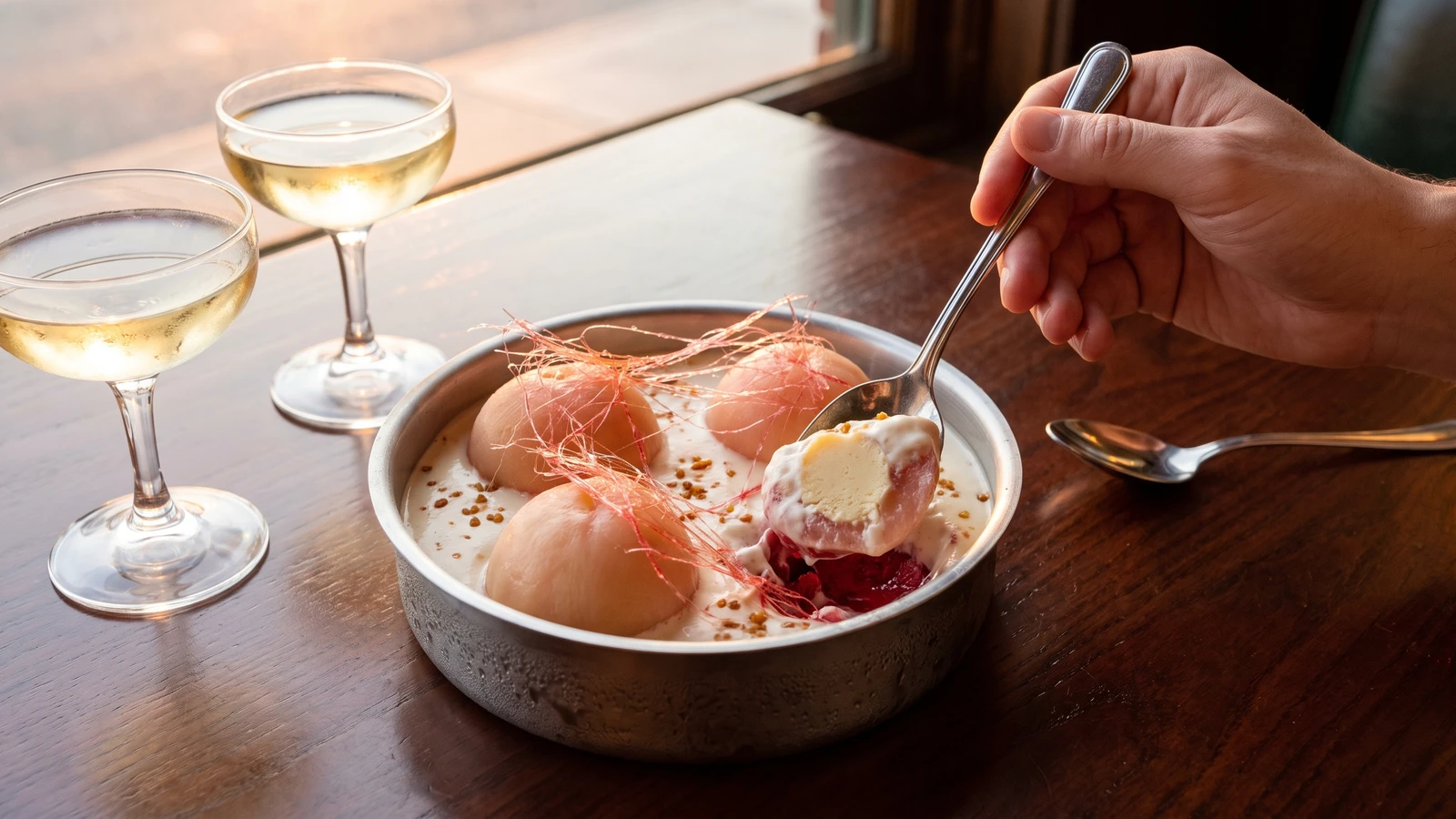
A whole peach that stays whole: vanilla ice hidden inside, raspberry ice beneath, pralined Chantilly above, and a last veil of pink spun sugar. The dessert is architecture made delicate.
Pêches Rose-Pompon (whole poached peaches filled with vanilla ice) teaches concealed construction: the fruit must look untouched even after you have removed its stone and replaced it with something frozen. The one true thing before you touch a pan is this: choose peaches fragrant and ripe enough to peel, yet firm enough to endure poaching and delicate knife work. Soft peaches are for compote. They cannot hold this form.
The original needed neither a saucier nor a salamander; its brigade luxury lay elsewhere. It assumed vanilla ice cream, raspberry ice, pralined Chantilly, and spun sugar arriving from separate pastry hands, followed by a silver timbale held in a fierce cold cabinet. At home, buy a dense vanilla ice cream, make the raspberry ice in a shallow pan and food processor, use chilled stainless steel for silver, and give the assembled dessert thirty minutes in the freezer. Those are brigade scaffolds and they can go. The whole peach, hidden vanilla center, raspberry bed, pralined cream, and last pink veil are the dish, and every one stays.
When the spoon enters, pale poached peach gives way to vanilla ice, sharp raspberry, nutty Chantilly, and sugar threads that crack lightly under the spoon. One cook, one stove, one evening, though the freezer does some of the waiting. The decisive step is working the stone out through the stalk cavity without opening the peach; go slowly, and if the flesh tears, ça se rattrape in the cold.
Pêches Rose-Pompon belongs to the Parisian grand-kitchen repertory of named entremets, where poached fruit, molded ices, Chantilly, and decorative sugar were composed together in a silver timbale. Its title evokes the compact, densely petaled pompon rose: the rounded peach supplies the bud, while pralined cream and pink spun sugar create the bloom. Because its elements can be prepared separately, the form passed readily from brigade service to private celebration tables, even though the concealed construction made it look forbidding.
Quantity
4 medium (about 1½ lb / 680 g)
stems removed
Quantity
2½ cups (600 ml / 600 g)
Quantity
1¼ cups (300 ml / 250 g)
Quantity
1
split lengthwise
Quantity
3 cups (720 ml / 360 g)
fresh or frozen and thawed
Quantity
½ cup (120 ml / 120 g)
Quantity
½ cup (120 ml / 100 g)
Quantity
½ cup (120 ml / 110 g)
kept very firm
Quantity
1 cup (240 ml / 240 g)
very cold
Quantity
⅓ cup (80 ml / 45 g)
finely ground
Quantity
¾ cup (180 ml / 150 g)
Quantity
¼ cup (60 ml / 60 g)
Quantity
1 tablespoon (15 ml / 20 g)
Quantity
1 small drop
| Ingredient | Quantity |
|---|---|
| firm-ripe freestone peachesstems removed | 4 medium (about 1½ lb / 680 g) |
| water for the poaching syrup | 2½ cups (600 ml / 600 g) |
| granulated sugar for the poaching syrup | 1¼ cups (300 ml / 250 g) |
| vanilla beansplit lengthwise | 1 |
| raspberriesfresh or frozen and thawed | 3 cups (720 ml / 360 g) |
| water for the raspberry ice | ½ cup (120 ml / 120 g) |
| granulated sugar for the raspberry ice | ½ cup (120 ml / 100 g) |
| dense vanilla ice creamkept very firm | ½ cup (120 ml / 110 g) |
| heavy cream with at least 35 percent fatvery cold | 1 cup (240 ml / 240 g) |
| dry pralinfinely ground | ⅓ cup (80 ml / 45 g) |
| granulated sugar for the pink spun sugar | ¾ cup (180 ml / 150 g) |
| water for the pink spun sugar | ¼ cup (60 ml / 60 g) |
| liquid glucose | 1 tablespoon (15 ml / 20 g) |
| pink gel food coloring | 1 small drop |
Bring the water and sugar for the raspberry ice to a boil, stirring only until the sugar dissolves. Boil for one minute, then cool completely. Purée the raspberries, press them through a fine sieve to remove the seeds, and mix the purée with the cold syrup. Pour it into a shallow metal pan and freeze until firm around the edges, about two hours. Break it up, process it until fine and smooth, then return it to the freezer for another two hours. If it becomes a solid block, leave it at room temperature for eight minutes and process it again. Ça se rattrape.
Prepare a bowl of ice water and bring a saucepan of plain water to a full boil. Lower in the peaches for 20 to 30 seconds, then transfer them directly to the ice water. Slip off the skins with your fingers, using the tip of a paring knife only where necessary. Do not score the peaches beforehand because the finished fruit must retain its unbroken form. If a skin refuses to move, return that peach to the boiling water for another ten seconds instead of scraping away its flesh.
Combine the poaching water and sugar in a snug saucepan. Scrape in the vanilla seeds, add the pod, and bring the syrup to a boil. Lower the heat, add the peeled peaches, and cover the surface with a round of parchment so the exposed fruit stays moist. Poach at the barest tremble, turning the peaches carefully, until a fine knife enters with slight resistance, about six to ten minutes. They must become supple without collapsing. Take the pan from the heat and cool the peaches completely in their syrup, then chill them for at least one hour.
Lift the cold peaches from the syrup and drain them stalk-side down. Working through the stalk cavity, slide a narrow paring knife around the stone while keeping its cutting edge turned inward. Pass a slim seafood pick or narrow spoon handle around the stone to release any clinging flesh, then grip the stone with food-dedicated narrow-tip pliers and twist as you pull. Never pry against the outside wall of the peach. If the flesh begins to split, stop, release the stone with another circuit of the knife, then press the tear gently closed and chill the peach seam-side down. The cream will cover the repair, and the fruit will still serve beautifully.
Shape the vanilla ice cream into four narrow plugs with two teaspoons and freeze them until very firm. Blot the peach cavities with the rolled corner of a clean towel, then push one plug into the space left by each stone. Draw the flesh gently around the filling and place each reconstructed peach stalk-side down on a cold tray. If the ice cream begins to soften, stop and return it to the freezer for ten minutes. Firm ice slips into place; soft ice smears through the fruit.
Process or scrape the raspberry ice once more until it is fine and spoonable. Pack it into a 1-inch layer across the bottom of a chilled stainless-steel timbale or deep serving bowl. Nestle the reconstructed peaches upright in the ice with their stalk cavities hidden underneath. The metal bowl is the honest home equivalent of the original silver timbale: it conducts cold efficiently and gives the dessert the support it needs.
Reserve two tablespoons of the cold cream, then whip the remainder to soft peaks. Fold in the dry pralin, the caramelized nut powder that makes the Chantilly pralined, and continue whisking only until the cream holds a supple medium peak. Cover the peaches generously, allowing the cream to settle between them and conceal their joins. If the Chantilly turns grainy, whisk in the reserved liquid cream one spoonful at a time until it smooths. Do not throw it out.
Place the assembled timbale uncovered in the freezer for exactly 30 minutes. This replaces the intensely cold pastry refrigerator assumed by the original brigade recipe. The hold firms the hidden vanilla ice and settles the Chantilly without freezing the poached peaches hard; do not leave it there for hours.
Cover the work surface with parchment and suspend two wooden spoon handles over it. Combine the sugar, water, liquid glucose, and pink coloring in a small clean saucepan. Heat gently until clear, then boil without stirring to 150°C. Remove the pan from the heat and wait until a fork dipped into the syrup draws a fine thread rather than heavy drops. Sweep the fork rapidly over the spoon handles to form loose pink strands. If the syrup is too fluid, wait another minute; if it hardens in the pan, warm it gently. If crystals form, add a tablespoon of water, cover for 30 seconds, and cook it again. Hot sugar burns fiercely, so use the fork and never your fingers.
Lift the cold sugar threads from the handles only after they have hardened, then arrange them loosely over the timbale like a fine pink veil. Do this at the last possible moment because spun sugar dissolves against cold cream and humid air. Carry the whole timbale to the table and serve each peach with raspberry ice and a generous spoonful of pralined Chantilly. À table!
1 serving (about 440g)
Culinary guides, cultural storytelling, and the editorial depth that makes cooking meaningful.
Discover Culinary ExplorerChef Juliette
Five almond preparations, one discipline: remove the skins cleanly, dry every kernel through, then cut, toast, or cloak it in pale caramel without letting its fragrant oils escape.

Chef Juliette
A pastry pantry lesson in one tray: filberts warmed only until their red skins release, rubbed clean, cooled, and chopped into a fragrant mise-en-place for cakes, creams, pralines, and petits fours.

Chef Juliette
The smallest pâtisserie discipline decides whether a cake leaves its mould intact: clarified butter in every corner, followed by the lightest veil of dry flour or fécule.
Chef Juliette
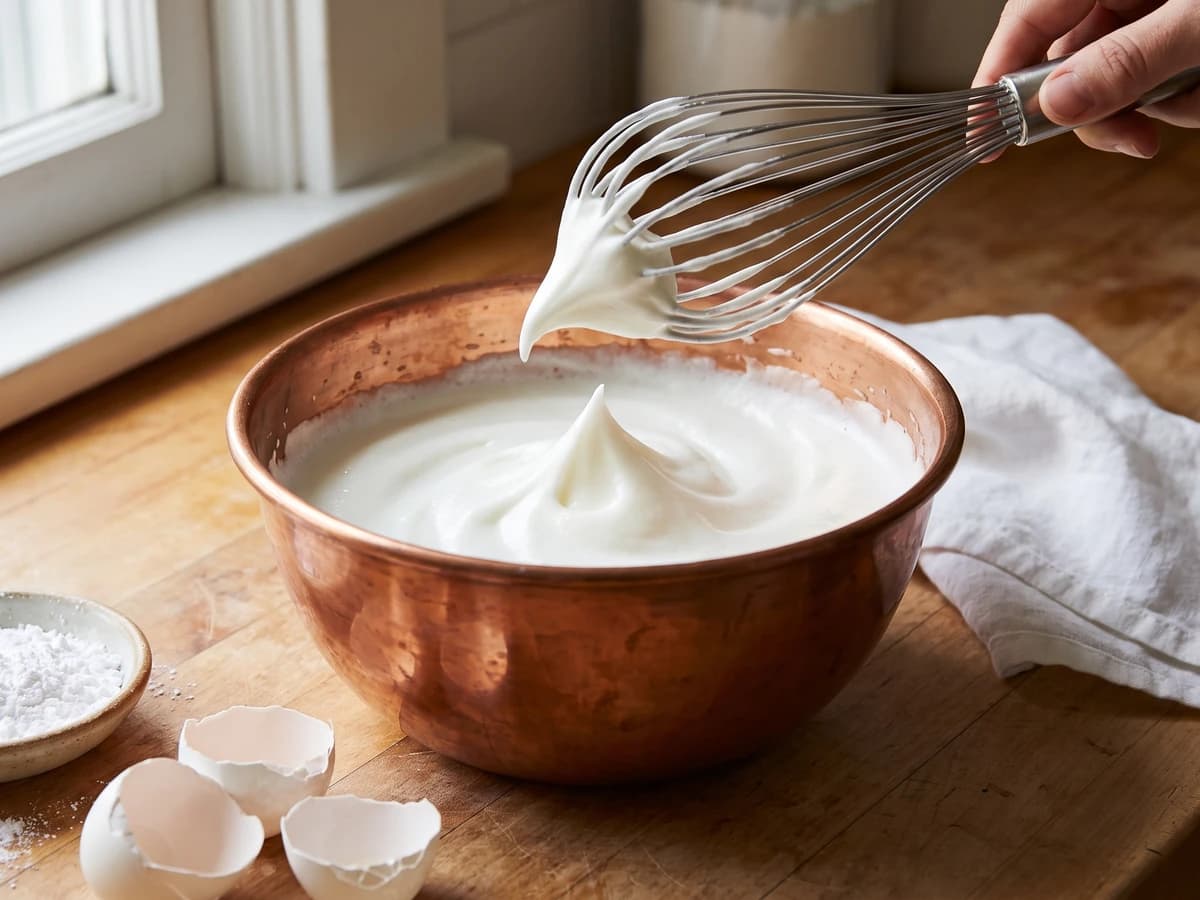
Four whites, one spotless bowl, and a patient change of speed: whisk gently until loosened, then briskly to glossy stiffness, with powdered sugar waiting if the foam begins to granulate.