
Chef Juliette
Various Almond Preparations
Five almond preparations, one discipline: remove the skins cleanly, dry every kernel through, then cut, toast, or cloak it in pale caramel without letting its fragrant oils escape.
A cooking platform built around craft, culture, and the stories behind what we eat.

Created by Chef Juliette
Based on No. 2689, Mandarines en Surprise, from Le Guide Culinaire (1907) by Auguste Escoffier
A cold jewel of tangerine jelly hidden inside its own peel, masked in meringue italienne and browned in seconds: the lesson is contrast, and the center must be fully set before the heat arrives.
Mandarines en Surprise (jellied mandarins beneath browned meringue) teach the discipline of contrast. The shell must look warm and bronzed while the center stays bright, cold, and firm. One true thing before you touch a pan: set the jelly hard. Everything after that moves quickly.
The classical kitchen assumed prepared jelly at the pâtisserie station, several hands to empty and mask a tray of fruit, and a salamander fierce enough to colour meringue in seconds. The home answer is four mandarins, their own juice, meringue italienne (hot-syrup meringue), and the hottest broiler you own. Elaborate decorative piping is brigade scaffolding, so it goes; the firm tangerine jelly, complete meringue mask, and rapid browning are the dish, so they stay. One cook, one stove, one evening.
Dry the peels before masking, then bronze the meringue before the cold has time to surrender. If it slides, a thin first coat gives the second something to hold. Ça se rattrape. The decisive work happens earlier: don't begin the meringue until every filled shell can be tilted without a tremor.
Mandarines en Surprise belongs to the Parisian grand-kitchen repertory of desserts en surprise, preparations whose familiar exterior concealed a contrasting center. The orange method hid orange ice inside an emptied peel, but this formula makes the precise substitution of tangerine jelly, giving the smaller fruit a center firm enough to survive its brief passage under the salamander. At the bourgeois celebration table, the natural shell, cold jelly, and browned meringue carry the spectacle without a brigade.
Quantity
6 (about 1¾ lb / 800 g)
chilled; 4 for shells and all 6 for juice
Quantity
1 cup (240 ml / 250 g)
extracted from the fruit above
Quantity
¼ cup (60 ml / 50 g)
Quantity
1 tablespoon (15 ml / 15 g)
Quantity
2¼ teaspoons (11 ml / 7 g)
Quantity
2 tablespoons (30 ml / 30 g)
Quantity
2 large (¼ cup / 60 ml / 60 g)
at room temperature
Quantity
½ cup (120 ml / 100 g)
Quantity
2 tablespoons (30 ml / 30 g)
| Ingredient | Quantity |
|---|---|
| large mandarins or tangerineschilled; 4 for shells and all 6 for juice | 6 (about 1¾ lb / 800 g) |
| strained fresh mandarin juiceextracted from the fruit above | 1 cup (240 ml / 250 g) |
| granulated sugar for the jelly | ¼ cup (60 ml / 50 g) |
| fresh lemon juice | 1 tablespoon (15 ml / 15 g) |
| unflavored powdered gelatin | 2¼ teaspoons (11 ml / 7 g) |
| cold water for blooming the gelatin | 2 tablespoons (30 ml / 30 g) |
| large egg whitesat room temperature | 2 large (¼ cup / 60 ml / 60 g) |
| granulated sugar for the meringue italienne | ½ cup (120 ml / 100 g) |
| water for the sugar syrup | 2 tablespoons (30 ml / 30 g) |
Choose the four mandarins with the soundest, tightest skins. Cut a neat lid from the stem end of each, about ½ inch (1.5 cm) deep, and save the lids. Ease out the segments with a small spoon, working around the white center without piercing the peel. Juice the removed flesh with the two remaining mandarins, strain it without pressing bitter pulp through the sieve, and measure 1 cup (240 ml). Pat the four shells dry and stand them upright in ramekins. If one splits, use one of the extra fruits as its replacement; a torn shell is easier to replace now than to repair after filling.
Put the cold water in a small bowl and sprinkle the gelatin evenly over its surface. Leave it for 5 to 10 minutes, until every grain has swollen and the mixture resembles a firm sponge. Blooming first prevents stubborn beads of gelatin from wandering through the finished jelly.
Warm ½ cup (120 ml) of the mandarin juice with the jelly sugar over low heat, stirring only until the sugar dissolves. Remove the pan before the juice boils, add the bloomed gelatin, and stir until completely clear. Mix in the remaining mandarin juice and lemon juice, then strain the jelly into a small jug. If gelatin threads remain, return the mixture to the lowest heat just until they disappear. Don't boil it; prolonged heat weakens gelatin and steals the fruit's fresh perfume.
Divide the jelly among the four shells, stopping about ⅛ inch (3 mm) below each rim. Refrigerate the filled shells upright for at least 4 hours, with their lids beside them, until the jelly is cold and decisively firm. Tilt one gently before continuing: the center must not shift. If it still trembles loosely, give it another hour in the cold. The hard set is not decorative fuss; it is what lets the surprise survive the broiler.
Heat the broiler to its highest setting and place a rack about 6 inches (15 cm) below it. Put the meringue sugar and water in a small heavy saucepan, warm until clear, then boil without stirring. When the syrup reaches 230°F (110°C), begin beating the egg whites to soft peaks. At 244°F (118°C), remove the syrup from the heat and pour it in a thin stream down the inside of the bowl while beating continuously, never onto the moving whisk. Continue whisking until the meringue is thick, glossy, and barely warm, about 5 to 7 minutes. If the syrup crystallizes in the pan, add 1 tablespoon of water and dissolve it again over low heat before returning to the boil. Ça se rattrape.
Set the lids back on the firm jelly and dry every trace of condensation from the peels. Place each fruit on a compact ring of crumpled foil set on a sturdy sheet pan. Spread on a thin key coat of meringue, then add a second coat about ¼ inch (6 mm) thick, covering the lid and every visible part of the peel while leaving the base bare. Make broad ridges with the back of a spoon. If the meringue slides, wipe that patch clean, dry the peel again, and rebuild it with the thin first coat.
Put the tray directly beneath the fully heated broiler and watch without looking away. Colour the meringue for 20 to 45 seconds, rotating the tray once only if needed, until the high ridges are deep gold and the hollows remain ivory. Pull the tray at once. If the broiler has cool patches, brown the fruits one at a time beneath its hottest point rather than prolonging the heat for all four; the colour must arrive before the jelly begins to soften.
Let the mandarins stand for 1 minute, just long enough for the surface to settle, then transfer them to chilled dessert plates. Bring them whole to the table so each guest breaks through the bronzed meringue and natural peel to find the clear orange jelly inside. Serve at once. À table!
1 serving (about 130g)
Culinary guides, cultural storytelling, and the editorial depth that makes cooking meaningful.
Discover Culinary ExplorerChef Juliette
Five almond preparations, one discipline: remove the skins cleanly, dry every kernel through, then cut, toast, or cloak it in pale caramel without letting its fragrant oils escape.

Chef Juliette
A pastry pantry lesson in one tray: filberts warmed only until their red skins release, rubbed clean, cooled, and chopped into a fragrant mise-en-place for cakes, creams, pralines, and petits fours.

Chef Juliette
The smallest pâtisserie discipline decides whether a cake leaves its mould intact: clarified butter in every corner, followed by the lightest veil of dry flour or fécule.
Chef Juliette
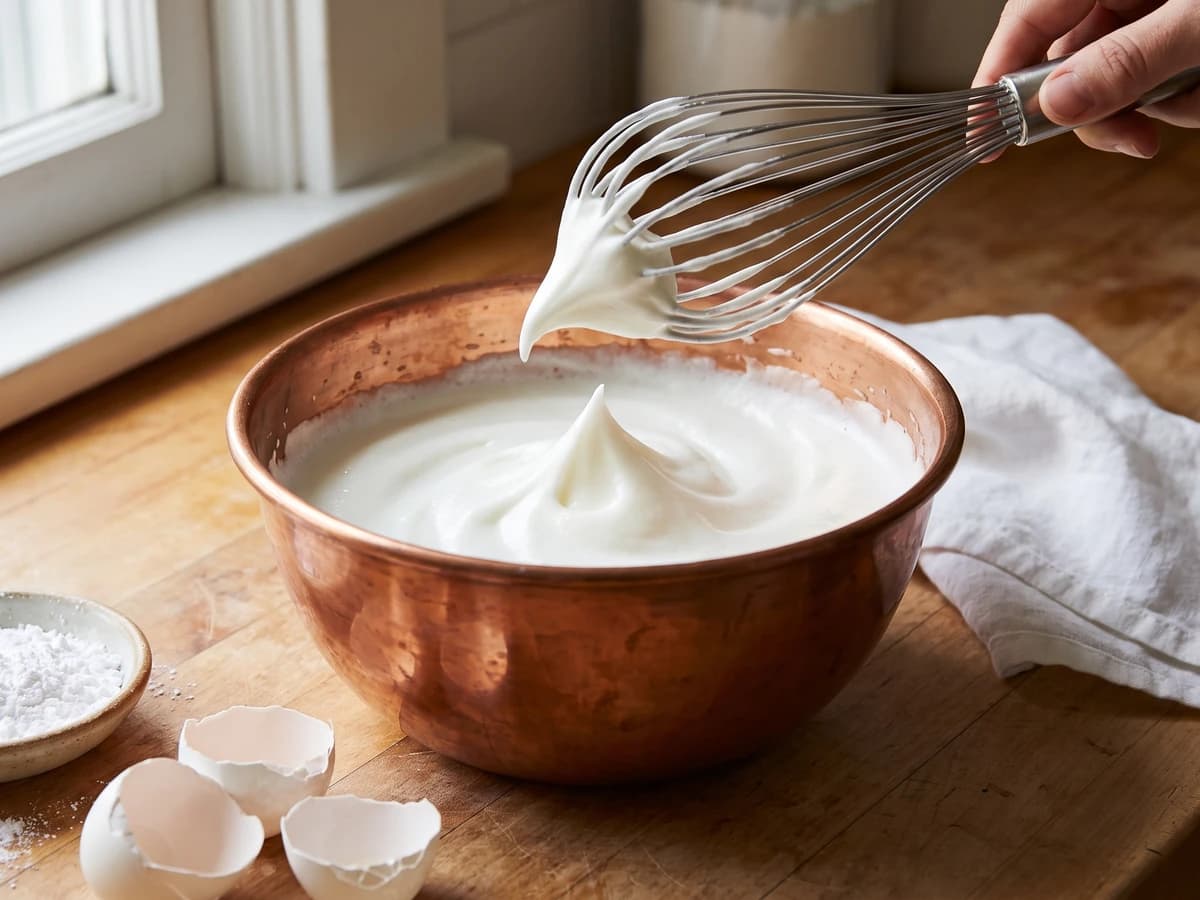
Four whites, one spotless bowl, and a patient change of speed: whisk gently until loosened, then briskly to glossy stiffness, with powdered sugar waiting if the foam begins to granulate.