
Chef Juliette
Various Almond Preparations
Five almond preparations, one discipline: remove the skins cleanly, dry every kernel through, then cut, toast, or cloak it in pale caramel without letting its fragrant oils escape.
A cooking platform built around craft, culture, and the stories behind what we eat.

Created by Chef Juliette
Based on No. 2679, Fraises Romanoff, from Le Guide Culinaire (1907) by Auguste Escoffier
Fraises Romanoff proves cold timing is a technique: orange-and-Curaçao berries kept bright and whole, then covered at the last moment with broad grooved ribbons of supple Chantilly.
Fraises Romanoff (strawberries with Curaçao and Chantilly) teaches restraint in a cold dessert. Before you touch a berry, know this: temperature is part of the structure. Macerate the fruit cold and briefly so it stays bright, fragrant, and recognizably itself, then pipe the Chantilly only as the dessert goes to the table.
The source assumed a cold pastry station, a service timbale surrounded with ice, and a piping bag already fitted with a large grooved tube. At home, the single brigade timbale becomes four chilled coupes so one cook can finish each portion and send it straight out; a shallow tray of crushed ice keeps them cold during assembly. The elaborate holding arrangement was service scaffolding. Cold maceration and last-minute piping are the dish, and both stay.
The orange juice sharpens the strawberries, the Curaçao leaves its bitter-orange perfume, and the Chantilly settles over them in generous ivory ridges. Cooking well is not cooking fancy. The step that decides Fraises Romanoff is the Chantilly: stop whipping at firm, supple peaks, before it turns grainy, and pipe it only when everyone is ready for dessert.
Fraises Romanoff belongs to the French grand-hotel dessert table that ran between Paris and London, where Russian courtly names sat comfortably beside French pastry-kitchen technique. Stories tying the dish directly to the Romanov household compete with one another, but its canonical form is unmistakably French in grammar: fruit macerated with liqueur, crème Chantilly, and cold service over ice. Versions abroad often add vanilla ice cream, while this preparation keeps the leaner composition of strawberries, orange, Curaçao, and piped cream.
Quantity
4 cups (950 ml / 500 g)
washed, thoroughly dried, and hulled
Quantity
1/4 cup (60 ml / 60 g)
strained
Quantity
2 tablespoons (30 ml / 29 g)
Quantity
1 cup (240 ml / 240 g)
Quantity
2 tablespoons (30 ml / 15 g)
sifted
Quantity
1/2 teaspoon (2.5 ml / 2 g)
Quantity
2 tablespoons (30 ml / 30 g)
Quantity
About 4 cups (950 ml / 500 g)
for holding the coupes cold
| Ingredient | Quantity |
|---|---|
| ripe strawberrieswashed, thoroughly dried, and hulled | 4 cups (950 ml / 500 g) |
| freshly squeezed orange juicestrained | 1/4 cup (60 ml / 60 g) |
| orange Curaçao | 2 tablespoons (30 ml / 29 g) |
| cold heavy cream, at least 35 percent fat | 1 cup (240 ml / 240 g) |
| confectioners' sugarsifted | 2 tablespoons (30 ml / 15 g) |
| pure vanilla extract | 1/2 teaspoon (2.5 ml / 2 g) |
| cold heavy cream for rescuing the Chantilly (optional) | 2 tablespoons (30 ml / 30 g) |
| crushed icefor holding the coupes cold | About 4 cups (950 ml / 500 g) |
Put four 180 to 240 ml dessert coupes, the cream bowl, and the whisk or mixer beaters in the refrigerator for at least 20 minutes. Shortly before assembly, spread the crushed ice in a rimmed tray and settle the coupes securely into it. Cold is doing real work here: it keeps the macerated fruit fresh and gives the Chantilly enough body to hold the grooves of the piping tube.
Leave small strawberries whole and halve or quarter larger ones so every piece can be eaten neatly with a spoon. Work gently and discard any bruised or watery fruit. Put the berries in a cold nonreactive bowl; aluminum can give the orange juice an unpleasant metallic edge.
Mix the strained orange juice with the Curaçao, pour it over the strawberries, and fold with a broad spoon until every berry is glossed. Cover and refrigerate for 20 to 30 minutes, folding once halfway through. Do not leave them for hours: the fruit will soften and surrender too much juice. If that has happened, ça se rattrape. Lift the berries out with a slotted spoon, divide them among the coupes, and add back only enough liquid to make them gleam rather than swim.
Combine the cold cream, sifted confectioners' sugar, and vanilla in the chilled bowl. Whip first at moderate speed until the cream thickens, then more slowly until it forms firm, supple peaks that stand while their tips bend slightly. The Chantilly must hold a piped ridge without becoming stiff or grainy. If it begins to look rough, stop immediately and whisk in the optional cold cream one teaspoon at a time; ça se rattrape while it is only grainy. Once it has separated into butter and liquid, save it for another use and begin again.
Fit a piping bag with a large grooved tube, a 12 to 15 mm open-star tip is the honest home equivalent, and fill it with the Chantilly. Divide the strawberries and a modest spoonful of their orange-Curaçao liquid among the chilled coupes. Pipe broad overlapping rosettes or a generous ridged spiral over each portion, covering the berries as the source directs. Finish all four without delay and carry them straight to the table while the cream holds its clear grooves. À table!
1 serving (about 210g)
Culinary guides, cultural storytelling, and the editorial depth that makes cooking meaningful.
Discover Culinary ExplorerChef Juliette
Five almond preparations, one discipline: remove the skins cleanly, dry every kernel through, then cut, toast, or cloak it in pale caramel without letting its fragrant oils escape.

Chef Juliette
A pastry pantry lesson in one tray: filberts warmed only until their red skins release, rubbed clean, cooled, and chopped into a fragrant mise-en-place for cakes, creams, pralines, and petits fours.

Chef Juliette
The smallest pâtisserie discipline decides whether a cake leaves its mould intact: clarified butter in every corner, followed by the lightest veil of dry flour or fécule.
Chef Juliette
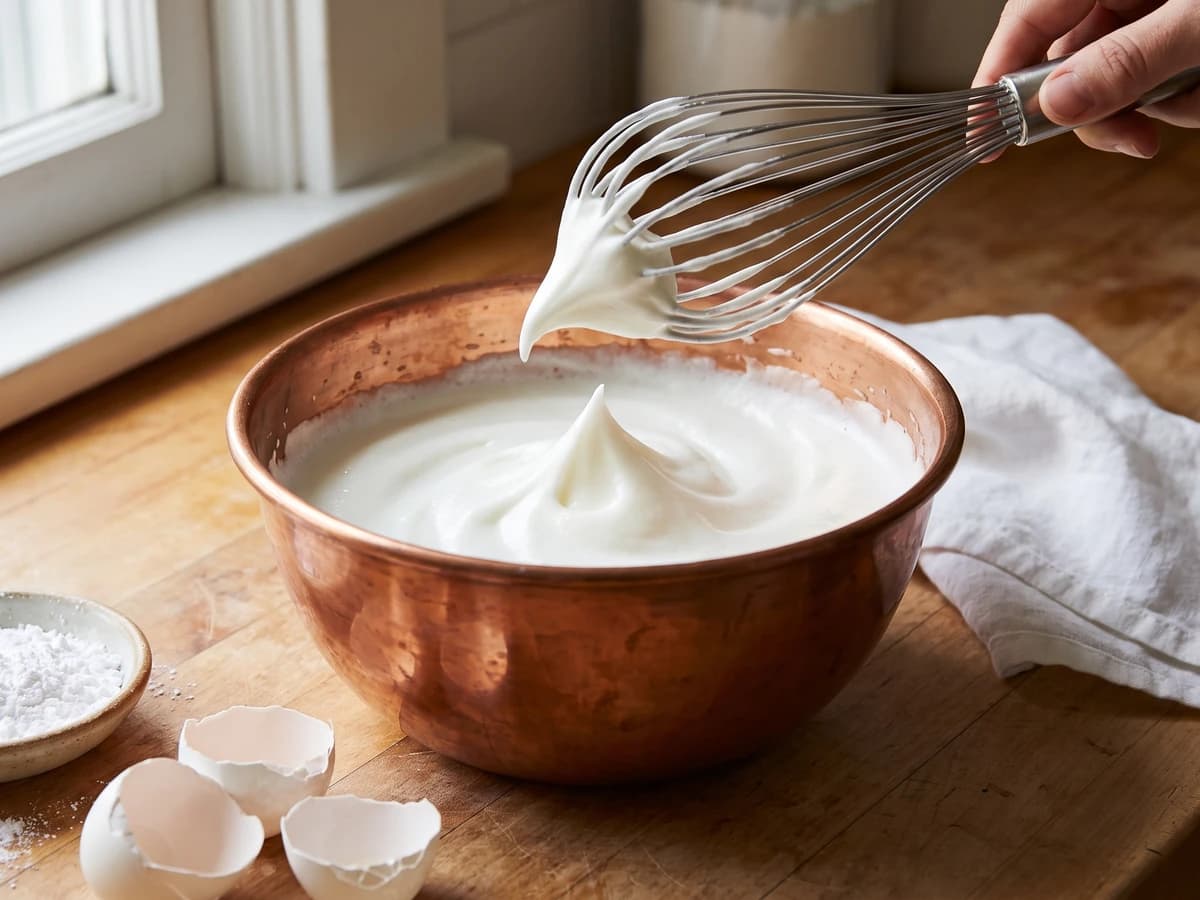
Four whites, one spotless bowl, and a patient change of speed: whisk gently until loosened, then briskly to glossy stiffness, with powdered sugar waiting if the foam begins to granulate.