
Chef Juliette
Various Almond Preparations
Five almond preparations, one discipline: remove the skins cleanly, dry every kernel through, then cut, toast, or cloak it in pale caramel without letting its fragrant oils escape.
A cooking platform built around craft, culture, and the stories behind what we eat.
Created by Chef Juliette
Based on No. 2675, Fraises Marguerite, from Le Guide Culinaire (1907) by Auguste Escoffier
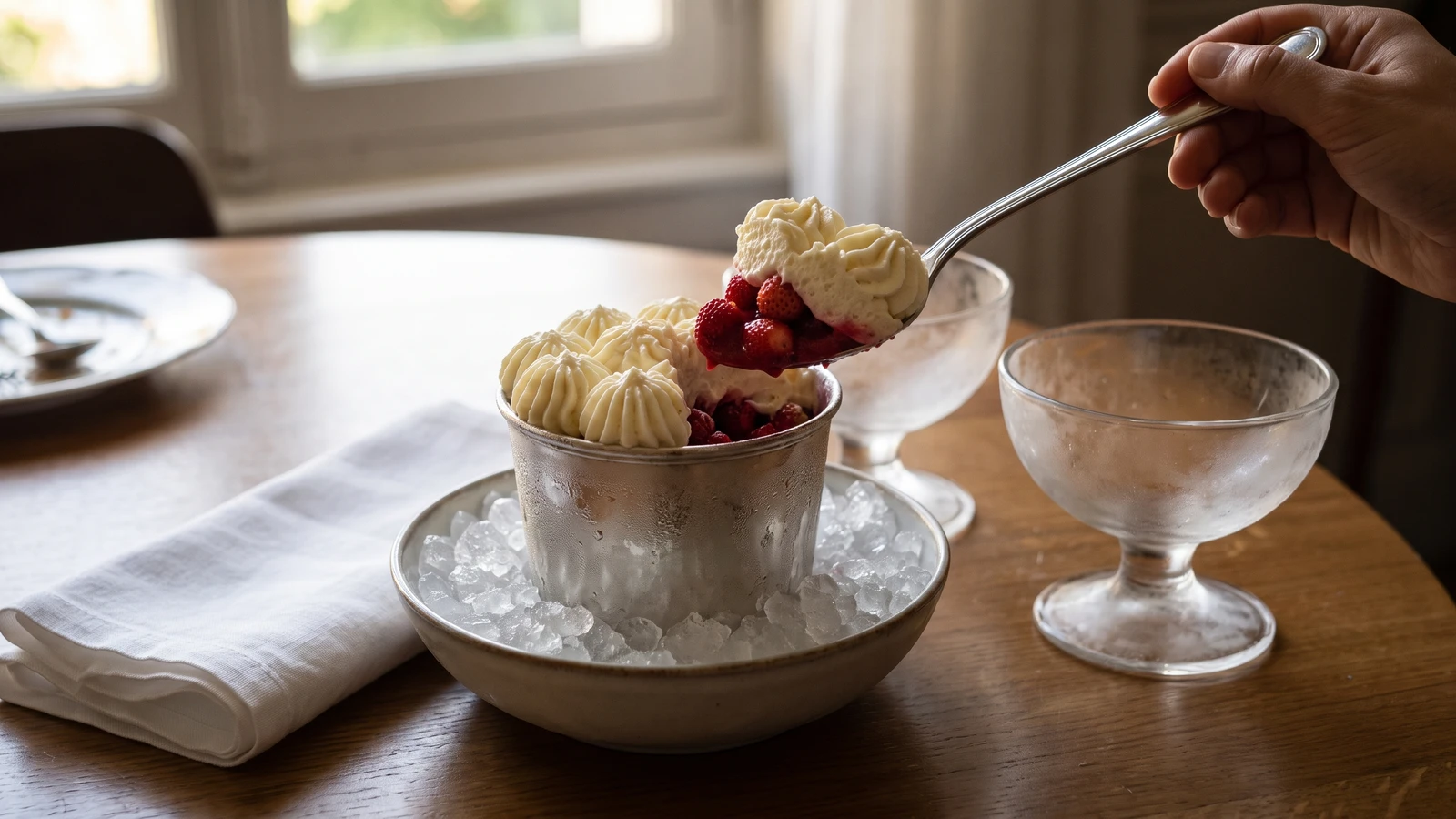
Wild strawberries meet their equal weight of ruby pomegranate sorbet, then disappear beneath maraschino Chantilly. The lesson is drainage: leave the kirsch syrup behind, and the frozen fruit stays bright, distinct, and spoonable.
Fraises Marguerite (wild strawberries with pomegranate sorbet and maraschino Chantilly) teaches one uncompromising lesson: fruit destined for a frozen dessert must be drained until its surface is dry. Leave kirsch syrup clinging to the berries and the sorbet loosens into slush; drain them properly and each little berry stays perfumed, bright, and distinct beneath the ivory cream.
The original formula assumed a pastry station with pomegranate sherbet already churned, a silver timbale held in ice, and enough hands to assemble dessert at the instant of service. At home, use a sharp, water-based pomegranate sorbet, a chilled stainless steel bowl nested in ice, and a scale. The book's equal quantity becomes equal weights of drained berries and sorbet, so the ratio survives its scale down to four. Churning a separate batch and keeping silver on hand are brigade scaffolding; the kirsch maceration, ruthless drainage, equal proportion, maraschino Chantilly, and last-minute assembly are the dish, and they stay.
Fold only until the ruby sorbet clings around the berries, then cover it generously with Chantilly and bring the timbale to the table beaded with cold. The decisive work happens before that fold: drain the strawberries, blot beneath the sieve, and give them five minutes more than impatience wants. One cook, one stove, one evening.
Fraises Marguerite belongs to the entremets glacés, composed frozen desserts, of the Parisian grand-kitchen table rather than to a strawberry-growing region with a folk recipe of the same name. Its structure records that service clearly: fraises des bois perfumed with kirsch, pomegranate sherbet for tart color, and maraschino crème Chantilly presented from a silver timbale banked in ice. Marguerite is the composition's title, not an instruction to shape the dessert like a daisy; the cream decoration is required, but a floral garnish is not.
Quantity
2 cups (480 ml / 300 g)
picked over with calyxes removed
Quantity
2 tablespoons (30 ml / 25 g)
Quantity
2 tablespoons (30 ml / 28 g)
Quantity
About 1½ cups (360 ml / 300 g), using exactly the same weight as the drained strawberries
kept frozen until needed
Quantity
1 cup (240 ml / 240 g)
divided
Quantity
2 tablespoons (30 ml / 15 g)
sifted
Quantity
1 tablespoon (15 ml / 14 g)
Quantity
6 cups (1.4 L / 1.3 kg)
for surrounding the timbale
| Ingredient | Quantity |
|---|---|
| wild strawberries (fraises des bois)picked over with calyxes removed | 2 cups (480 ml / 300 g) |
| superfine sugar | 2 tablespoons (30 ml / 25 g) |
| kirsch | 2 tablespoons (30 ml / 28 g) |
| water-based pomegranate sherbetkept frozen until needed | About 1½ cups (360 ml / 300 g), using exactly the same weight as the drained strawberries |
| cold heavy creamdivided | 1 cup (240 ml / 240 g) |
| confectioners’ sugarsifted | 2 tablespoons (30 ml / 15 g) |
| cold maraschino liqueur | 1 tablespoon (15 ml / 14 g) |
| icefor surrounding the timbale | 6 cups (1.4 L / 1.3 kg) |
Put a 1 litre stainless steel timbale or deep serving bowl, a larger bowl that will hold it, the mixer beaters, and the cream bowl in the freezer for 30 minutes. The stainless steel timbale is the honest home equivalent of silver: it conducts the cold quickly and keeps the sherbet firm while you finish the cream. Keep the ice frozen until the moment of assembly.
Place the wild strawberries in a shallow nonreactive bowl. Scatter over the superfine sugar and kirsch, then turn the berries gently with a spoon so every one is glossed without being crushed. Refrigerate for 20 minutes, turning them once halfway through. The sugar and kirsch should perfume the fruit and draw a little juice, not collapse it; longer maceration only gives you wetter, softer berries.
Tip the strawberries into a fine-mesh sieve set over a bowl and leave them for 15 minutes, turning them once with the lightest hand. Set the sieve on a folded clean kitchen towel for another minute so the towel draws moisture from beneath, but never press the fruit. The berries are ready when their surfaces look nearly matte and no syrup gathers below them. Weigh the drained berries and note the exact amount; that weight determines how much pomegranate sherbet you will use. If they still glisten with free syrup, give them another five minutes. This is the dish, not a dispensable precaution.
Reserve 1 tablespoon of the cold cream. Whip the remainder with the confectioners’ sugar in the chilled bowl until it holds soft peaks, then drizzle in the cold maraschino liqueur while whisking. Continue only until the crème Chantilly holds a supple medium peak suitable for covering and piping. If the liqueur loosens it, set the bowl over ice and whisk briefly; if the cream turns grainy, work in the reserved cold cream by hand until smooth. Keep one-third in a piping bag fitted with a medium star tip and refrigerate both portions.
Move the pomegranate sherbet from the freezer to the refrigerator for 8 to 10 minutes, just until a spoon can cut through it while it still holds a firm mound. Weigh out exactly the same amount as the drained strawberries. Flatten the sherbet in the chilled timbale, add the berries, and make four to six broad folds with a cold spatula, stopping as soon as the sherbet coheres around the fruit. Stirring breaks the berries and melts the sherbet. If the mixture loosens into slush, ça se rattrape: spread it in a shallow chilled metal tray, freeze for 8 to 10 minutes, then fold it once and continue.
Pack the ice into the larger chilled bowl and settle the empty timbale into it so the ice reaches halfway up its sides. Dry the inside, spoon in the strawberry and sherbet mixture, and level it without compressing the fruit. Cover the entire surface with the maraschino Chantilly, then decorate with the reserved piped Chantilly in generous rosettes or a simple fluted border, exactly as the original preparation intends. Serve immediately, or hold it nested in ice for no more than 15 minutes before spooning it into chilled dessert cups. À table!
1 serving (about 210g)
Culinary guides, cultural storytelling, and the editorial depth that makes cooking meaningful.
Discover Culinary ExplorerChef Juliette
Five almond preparations, one discipline: remove the skins cleanly, dry every kernel through, then cut, toast, or cloak it in pale caramel without letting its fragrant oils escape.

Chef Juliette
A pastry pantry lesson in one tray: filberts warmed only until their red skins release, rubbed clean, cooled, and chopped into a fragrant mise-en-place for cakes, creams, pralines, and petits fours.

Chef Juliette
The smallest pâtisserie discipline decides whether a cake leaves its mould intact: clarified butter in every corner, followed by the lightest veil of dry flour or fécule.
Chef Juliette
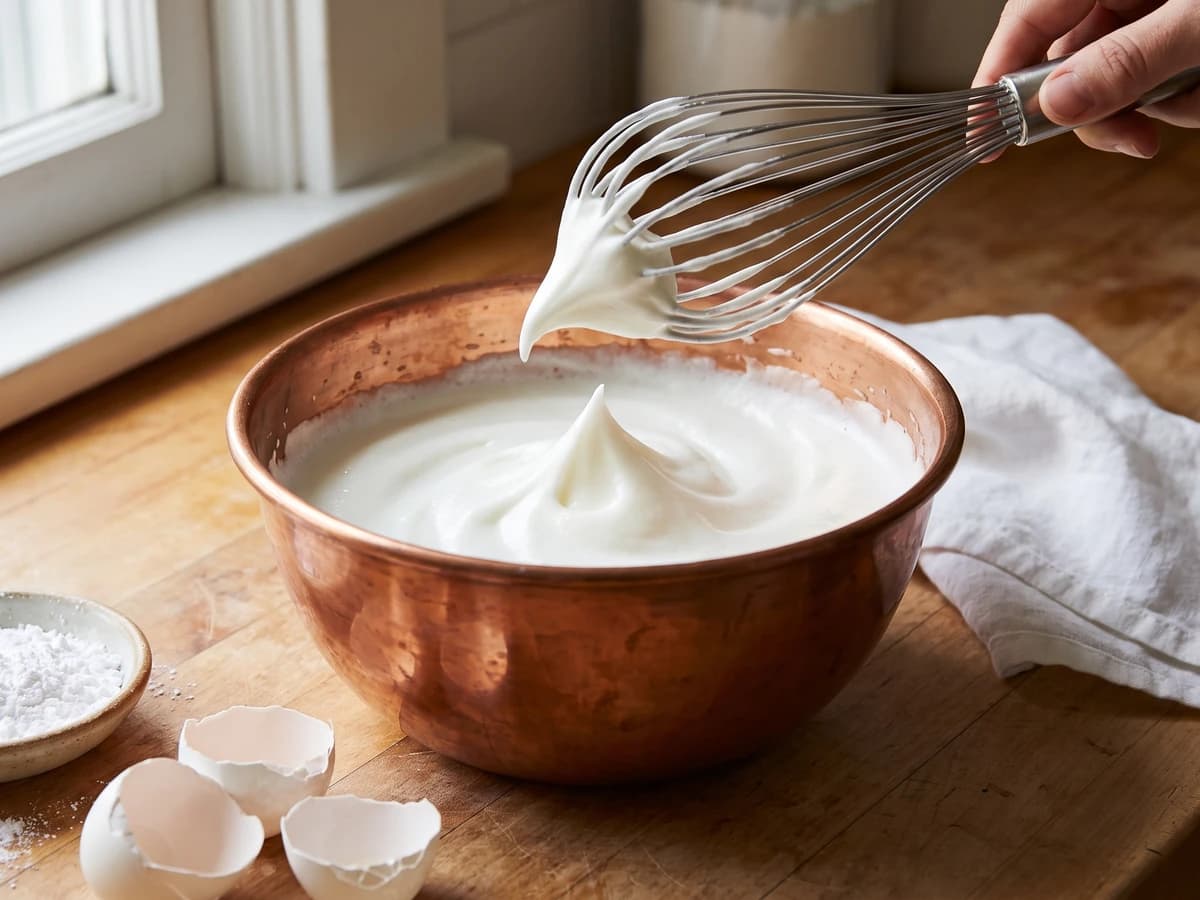
Four whites, one spotless bowl, and a patient change of speed: whisk gently until loosened, then briskly to glossy stiffness, with powdered sugar waiting if the foam begins to granulate.