
Chef Juliette
Mayonnaise de Volaille
Cold roast chicken, ciseled lettuce, and a shining coat of homemade mayonnaise, arranged with capers, olives, anchovies, eggs, and lettuce hearts, then tossed at the table as the canon intends.
A cooking platform built around craft, culture, and the stories behind what we eat.

Created by Chef Juliette
Based on No. 2673, Fraises à la Créole, from Le Guide Culinaire (1907) by Auguste Escoffier
Ripe strawberries and pineapple teach macération, resting fruit with sugar and kirsch: the juice becomes syrup, and a simple crown turns cold fruit into a generous dinner-party finish.
Fraises à la Créole (strawberries with pineapple and kirsch) teaches macération, the resting of fruit with sugar and spirit until its own juice becomes the dressing. The one true thing is simple: sugar goes on first. It draws the strawberry juice, dissolves into it, and gives you the syrup that will gloss the finished fruit; kirsch follows, for perfume rather than sweetness.
The clipped original entry assumed a garde-manger to prepare immaculate fruit, a pastry section with kirsch-flavoured syrup ready, and a tazza broad enough for a close pineapple crown. For one cook, one stove, one evening, a shallow footed compote or rimmed platter does the work, and the maceration liquor becomes the syrup. Making a separate batch of syrup was brigade scaffolding and can go; the equal measure of strawberries and diced pineapple, the kirsch, and the crown around a central pyramid are the dish, so they stay.
Serve the fruit cold but not numb, ruby and gold under a clear sheen of its own juices. Give the sugar ten minutes alone with the fruit before adding the kirsch. That short wait decides the dish.
Fraises à la Créole belongs to the formal French service of entremets de fruits, composed fruit desserts arranged on a tazza for the dining-room table rather than tied to Lyon, Normandy, or another provincial larder. In classical French menu vocabulary, à la Créole was a loose label often attached to tropical produce; here pineapple carries the name, while kirsch reflects the confectioner's pantry of eastern France. The preparation passed naturally into home entertaining because its ceremony comes from macération and arrangement, not specialized cooking.
Quantity
2 cups (475 ml / 300 g)
washed, dried, and hulled; larger berries halved
Quantity
1 medium pineapple (about 2½ lb / 1.1 kg whole), yielding 2 cups (475 ml / 300 g) dice and 8 thin half-ring slices (about 1½ cups / 355 ml / 225 g)
peeled and cored; one portion cut into ½-inch dice and the remainder into thin half-rings
Quantity
⅓ cup (80 ml / 40 g)
Quantity
¼ cup (60 ml / 56 g)
divided
| Ingredient | Quantity |
|---|---|
| small ripe but firm strawberrieswashed, dried, and hulled; larger berries halved | 2 cups (475 ml / 300 g) |
| ripe pineapplepeeled and cored; one portion cut into ½-inch dice and the remainder into thin half-rings | 1 medium pineapple (about 2½ lb / 1.1 kg whole), yielding 2 cups (475 ml / 300 g) dice and 8 thin half-ring slices (about 1½ cups / 355 ml / 225 g) |
| powdered sugar | ⅓ cup (80 ml / 40 g) |
| Kirschdivided | ¼ cup (60 ml / 56 g) |
Wash the strawberries before hulling them, dry them thoroughly, and leave small berries whole while halving only the larger ones. Cut 2 cups (475 ml / 300 g) of pineapple into even ½-inch dice, matching the weight of the strawberries, then cut 8 thin half-ring slices for the crown. Even pieces macerate at the same pace; bruised or ragged fruit collapses before the platter reaches the table.
Put the strawberries and diced pineapple in a nonreactive bowl. Sift the powdered sugar over them in two additions, folding gently after each so every surface is coated without crushing the berries. Leave the sugared fruit for 10 minutes at cool room temperature, then fold in 2 tablespoons (30 ml / 28 g) of the Kirsch and refrigerate for 30 minutes. Sugar first is the principle: it draws the juice that becomes the syrup. If the strawberries begin softening quickly, shorten the chilled rest to 10 minutes and drain them at once; ça se rattrape.
Lay the pineapple half-rings in a shallow dish and spoon 1 tablespoon (15 ml / 14 g) of Kirsch evenly over them. Cover and chill for 30 minutes, turning once with your fingers or a thin spatula. Keep the slices intact because they are the architecture of the finished dish, not a spare garnish.
Set a fine-mesh strainer over a bowl and drain the strawberry and diced-pineapple mixture for 5 minutes without pressing. Add the liquid from the pineapple slices and the remaining 1 tablespoon (15 ml / 14 g) Kirsch, then stir until the syrup is clear and lightly thickened by the dissolved sugar. If the fruit has released a great flood, use only enough syrup to gloss it and serve the rest alongside. If it has released very little, crush one strawberry into the liquid, leave it for 5 minutes, and strain again.
Arrange the pineapple half-rings in a close, overlapping crown around the rim of a chilled shallow footed compote or a platter with a slight lip. Lift the strawberries and diced pineapple into the centre with a slotted spoon, building a generous pyramid without packing or pressing. Let a few strawberries remain visible at the top and tuck loose pineapple dice into the gaps.
Spoon the kirsch syrup over the central fruit and lightly across the pineapple crown, stopping when everything gleams but no longer swims. Chill the assembled dish for no more than 20 minutes, then bring it out 5 minutes before serving so the perfume of the kirsch can open. At an outdoor table, keep it shaded and set the compote over a chilled plate until everyone is seated. À table!
1 serving (about 230g)
Culinary guides, cultural storytelling, and the editorial depth that makes cooking meaningful.
Discover Culinary ExplorerChef Juliette
Cold roast chicken, ciseled lettuce, and a shining coat of homemade mayonnaise, arranged with capers, olives, anchovies, eggs, and lettuce hearts, then tossed at the table as the canon intends.

Chef Juliette
Cold roast or poached chicken with fine ribbons of lettuce, dressed at the final moment with oil and vinegar: a composed salad whose freshness depends entirely on timing.
Chef Juliette
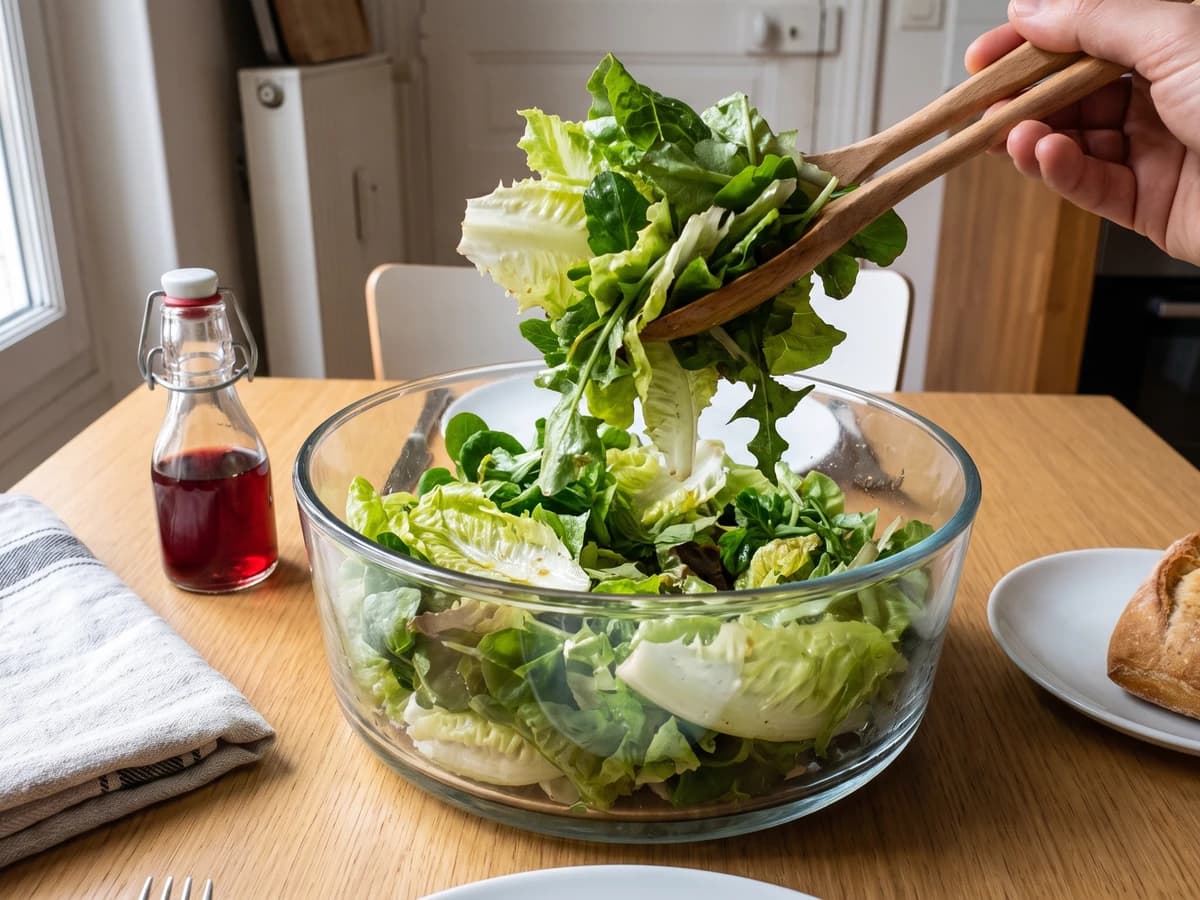
Five leaves, one living rule: laitue, romaine, chicorée, mâche, or pissenlit must be washed, dried, and dressed only as they go to the table, while every leaf still carries its light vinaigrette.
Chef Juliette
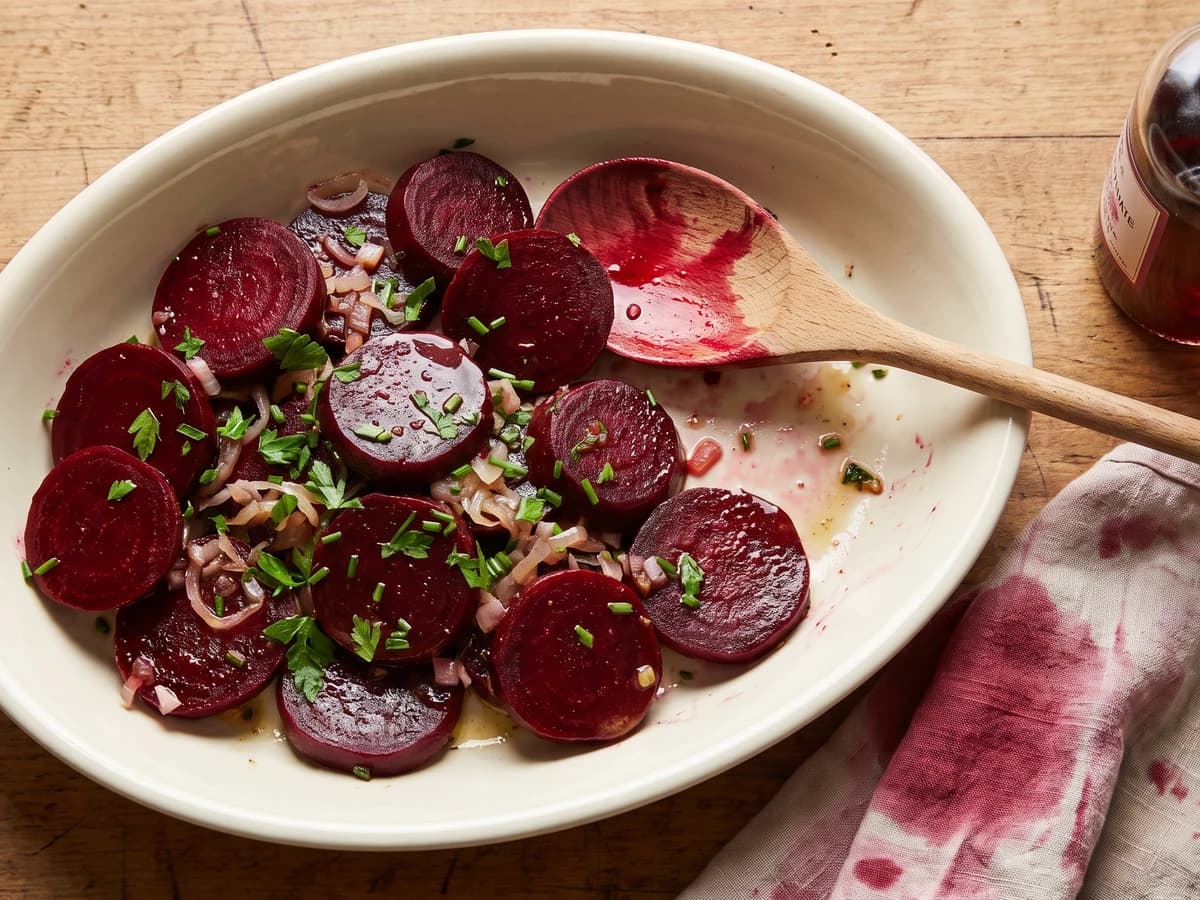
Salade de Betteraves proves that baking, not boiling, is the whole argument: concentrated garnet sweetness, tender baked onion, sharp mustard, and herbs cut into a weeknight salad worth making ahead.