
Chef Juliette
Various Almond Preparations
Five almond preparations, one discipline: remove the skins cleanly, dry every kernel through, then cut, toast, or cloak it in pale caramel without letting its fragrant oils escape.
A cooking platform built around craft, culture, and the stories behind what we eat.

Created by Chef Juliette
Based on No. 2666, Abricots à la Parisienne, from Le Guide Culinaire (1907) by Auguste Escoffier
Vanilla-poached apricots close around walnut-sized vanilla ice, perch on overturned almond macaroons, and disappear beneath pointed Chantilly with fine filbert Pralin (No. 2352), held together by one discipline: drain the fruit dry.
Abricots à la Parisienne (Parisian-style apricots) teaches the discipline of cold assembly: the fruit must be tender, fragrant, and absolutely dry before cream or ice touches it. That is the one true thing to know before you reach for the pan. Syrup left clinging to an apricot softens the macaroon and sends the Chantilly down the plate; drain well and the whole little architecture stands.
The original assumed a pastry brigade with poached fruit cooling in one corner, vanilla ice cream hardening in another, and large macaroons and fine filbert Pralin (No. 2352) already waiting for service. At home, use a dense bought vanilla ice cream, good plain almond macaroons, and prepared Pralin (No. 2352), then poach four apricots and whip the Chantilly yourself. Batch quantities and a second pair of hands were brigade scaffolding, so they can go; the vanilla poach, reconstructed fruit, overturned macaroon, pointed cream, and filbert finish are the dish, so they stay.
Done properly, each pale cone breaks open to a glossy orange apricot closed around a cold walnut of vanilla ice, with a crisp almond base underneath. One cook, one stove, one evening. Give the drained halves time on a rack, then blot them before assembly; if the surface still shines with syrup, it isn't ready.
Abricots à la Parisienne belongs to the Parisian repertory of entremets glacés, composed frozen desserts built from separately prepared fruit, biscuit, ice, cream, and Pralin (No. 2352) for dining-room service. The apricot may suggest Provence, but the form is Parisian: poached fruit disciplined into a tall presentation, with several pastry preparations meeting only at the last moment. As the dish passed to private celebration tables, the brigade mise en place became individual portions, while the inverted macaroon and cone of Chantilly remained its identifying structure.
Quantity
4 large (about 8 ounces / 225 g total)
halved and pitted
Quantity
2 cups (480 ml / 480 g)
Quantity
1 cup (240 ml / 200 g)
Quantity
1
split lengthwise with the seeds scraped and divided
Quantity
1/2 cup (120 ml / 100 g)
divided into 4 walnut-sized balls
Quantity
4 large (about 3 1/2 ounces / 100 g total)
each about 3 inches / 7.5 cm wide
Quantity
1 cup (240 ml / 240 g)
very cold
Quantity
2 tablespoons (30 ml / 16 g)
sifted
Quantity
2 tablespoons (30 ml / 18 g) fine filbert Pralin (No. 2352)
| Ingredient | Quantity |
|---|---|
| ripe but firm apricotshalved and pitted | 4 large (about 8 ounces / 225 g total) |
| water | 2 cups (480 ml / 480 g) |
| granulated sugar | 1 cup (240 ml / 200 g) |
| vanilla beansplit lengthwise with the seeds scraped and divided | 1 |
| dense vanilla ice creamdivided into 4 walnut-sized balls | 1/2 cup (120 ml / 100 g) |
| plain almond macaroonseach about 3 inches / 7.5 cm wide | 4 large (about 3 1/2 ounces / 100 g total) |
| heavy creamvery cold | 1 cup (240 ml / 240 g) |
| icing sugarsifted | 2 tablespoons (30 ml / 16 g) |
| fine filbert Pralin | 2 tablespoons (30 ml / 18 g) fine filbert Pralin (No. 2352) |
Line a small tray with baking paper. Scoop the vanilla ice cream into four compact balls, about 2 tablespoons each and the size of a walnut, then freeze them for at least 45 minutes. They must be firm enough to handle without flattening; if a scoop takes a fingerprint when touched, give it more time in the freezer.
Combine the water, granulated sugar, vanilla pod, and half the vanilla seeds in a saucepan just wide enough to hold the apricot halves in one layer. Warm gently, stirring only until the sugar dissolves, then simmer for 3 minutes. The syrup should remain clear and pale; caramel has no business in this dish.
Lower the apricot halves into the syrup, cut sides down. Hold the syrup at the faintest tremble for 3 to 5 minutes, turning the fruit once, until a paring knife enters with slight resistance. The halves must soften without losing their shape. If an edge begins to fray, lift that half out immediately with a slotted spoon and cool it on a plate; once cold, it will still reconstruct neatly beneath the Chantilly.
Take the pan off the heat and set it in a bowl of cold water. Let the apricots cool in their syrup for 15 minutes, then refrigerate them for 30 minutes. Lift the cold halves onto a rack, cut sides down, and drain for another 30 minutes. Blot every surface gently, especially the hollow left by the stone. If the fruit still feels slippery, blot again and chill it uncovered for 10 minutes. Ça se rattrape. Dry fruit is the difference between a standing cone and cream on the plate.
Pour 2 tablespoons of the cold cream into a small cup and return it to the refrigerator as insurance. Whip the remaining cream with the icing sugar and reserved vanilla seeds until it holds firm, smooth piping peaks. Stop as soon as the whisk leaves clean ridges. If the Chantilly turns grainy, whisk in the reserved cream one teaspoon at a time until it smooths; it can be rescued provided it has not gone all the way to butter.
Place one macaroon on each chilled dessert plate with its flat underside facing upward, exactly what the old instruction means by overturned. Take one ice cream ball from the freezer and close two matching apricot halves around it, rebuilding the shape of the whole fruit. Set it immediately on its macaroon and repeat with the remaining portions, returning any softening ice cream to the freezer before it begins to slump.
Transfer the Chantilly to a piping bag fitted with a large plain or open-star tip. Pipe a broad ring around the base of each apricot, then spiral upward in narrowing circles until the fruit is completely covered and the cream ends in a compact cone. If the cream slides, lift it away, blot the apricot again, chill the assembly for 5 minutes, and repipe with colder Chantilly. Sprinkle each cone evenly with the fine filbert Pralin (No. 2352), then serve at once while the macaroon remains crisp and the vanilla ice holds firm. À table!
1 serving (about 185g)
Culinary guides, cultural storytelling, and the editorial depth that makes cooking meaningful.
Discover Culinary ExplorerChef Juliette
Five almond preparations, one discipline: remove the skins cleanly, dry every kernel through, then cut, toast, or cloak it in pale caramel without letting its fragrant oils escape.

Chef Juliette
A pastry pantry lesson in one tray: filberts warmed only until their red skins release, rubbed clean, cooled, and chopped into a fragrant mise-en-place for cakes, creams, pralines, and petits fours.

Chef Juliette
The smallest pâtisserie discipline decides whether a cake leaves its mould intact: clarified butter in every corner, followed by the lightest veil of dry flour or fécule.
Chef Juliette
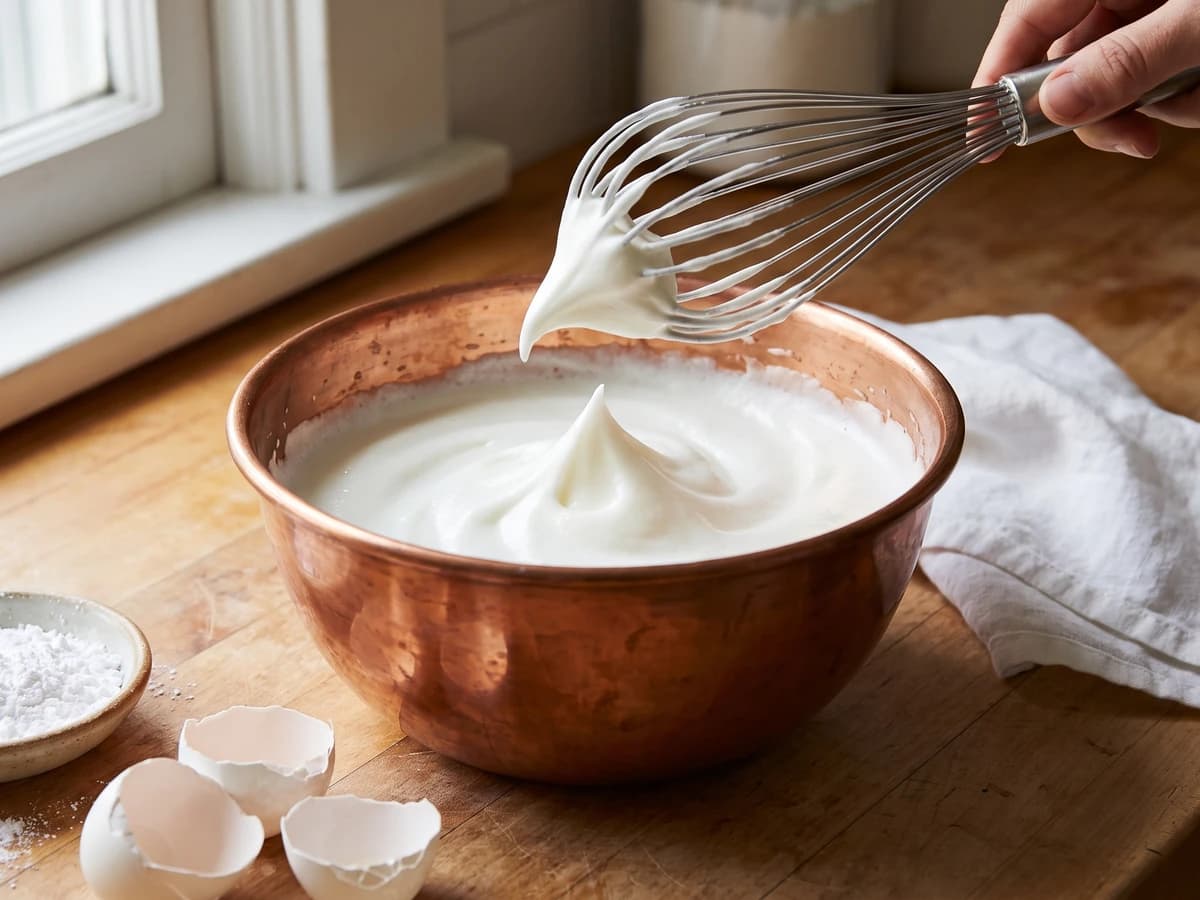
Four whites, one spotless bowl, and a patient change of speed: whisk gently until loosened, then briskly to glossy stiffness, with powdered sugar waiting if the foam begins to granulate.