
Chef Juliette
Various Almond Preparations
Five almond preparations, one discipline: remove the skins cleanly, dry every kernel through, then cut, toast, or cloak it in pale caramel without letting its fragrant oils escape.
A cooking platform built around craft, culture, and the stories behind what we eat.

Created by Chef Juliette
Based on No. 2663, Pudding à la Nesselrode, from Le Guide Culinaire (1907) by Auguste Escoffier
Chestnut gives this frozen pudding its body, Madeira fruit its jewel-like bite, and maraschino cream its lift. Freeze it hard in the mould, then turn it out under a crown of candied chestnuts.
Pudding à la Nesselrode (frozen chestnut pudding) teaches one thing before all else: the chestnut is the dish. Its purée must be smooth, concentrated, and unsweetened, because custard and whipped cream can soften a good chestnut but cannot give character to a watery one. The finished pudding should cut into an ivory-chestnut slice that yields under the spoon, with Madeira-soaked fruit bright through it and maraschino arriving as perfume, not heat.
The original assumed a pastry station with Crème Anglaise (No. 2397) waiting, a paper-lined Charlotte mould sealed with butter, and salted ice watched by another pair of hands. A dry home freezer, food-safe film, and a chilled rimmed platter replace the butter seal, ice packing, and service napkin; those were brigade scaffolding. The smooth chestnut base, four nearly equal measures of fruit, sweetened Madeira, maraschino cream, and sealed mould are the dish and stay untouched. Here the loose brigade yield becomes one 2-litre holiday mould, generous enough for eight to ten and manageable by one cook in an evening while the freezer keeps the night shift.
Partial freezing before the cream is folded in keeps the texture fine and the fruit suspended instead of stranded at the bottom. That is the step to watch: the chestnut custard must be almost congealed, thick as soft snow, before it meets the maraschino cream.
Pudding à la Nesselrode belongs to the Franco-Russian diplomatic table that linked Paris and Saint Petersburg, and it carries the name of Count Karl Robert von Nesselrode, though claims about its precise inventor remain unsettled. French pâtissiers carried the combination of chestnut purée, crème anglaise, candied fruit, and liqueur into grand hotels and British holiday service, where generations kept the word pudding. Despite the name, it is a frozen entremets rather than a hot pudding, and its identity is cosmopolitan, not the specialty of a French chestnut-growing region.
Quantity
2 cups (480 ml / 500 g) Crème Anglaise (No. 2397)
Quantity
1 cup (240 ml / 227 g)
Quantity
3 tablespoons (45 ml / 28 g)
picked over
Quantity
3 tablespoons (45 ml / 28 g)
picked over
Quantity
2 tablespoons (30 ml / 28 g)
finely diced
Quantity
2 tablespoons (30 ml / 29 g)
finely diced
Quantity
⅓ cup (80 ml / 80 g)
Quantity
1 tablespoon (15 ml / 12 g)
Quantity
2 cups (480 ml / 475 g)
2 tablespoons held back
Quantity
2 tablespoons (30 ml / 29 g)
Quantity
8 (about 200 g)
for the crown
| Ingredient | Quantity |
|---|---|
| cold Crème Anglaise | 2 cups (480 ml / 500 g) Crème Anglaise (No. 2397) |
| smooth unsweetened chestnut purée | 1 cup (240 ml / 227 g) |
| dried currantspicked over | 3 tablespoons (45 ml / 28 g) |
| sultanaspicked over | 3 tablespoons (45 ml / 28 g) |
| candied orange peelfinely diced | 2 tablespoons (30 ml / 28 g) |
| candied cherriesfinely diced | 2 tablespoons (30 ml / 29 g) |
| medium-dry Madeira | ⅓ cup (80 ml / 80 g) |
| granulated sugar | 1 tablespoon (15 ml / 12 g) |
| cold heavy cream2 tablespoons held back | 2 cups (480 ml / 475 g) |
| maraschino liqueur | 2 tablespoons (30 ml / 29 g) |
| fine candied chestnutsfor the crown | 8 (about 200 g) |
Put the currants and sultanas in a small bowl and cover them with tepid water. Leave them for 10 minutes, just until plump, then drain thoroughly and blot them dry. They must swell without carrying water into the pudding, because excess water freezes into coarse crystals.
Stir the sugar into the Madeira until dissolved. Add the currants, sultanas, diced orange peel, and diced cherries, keeping the four fruits nearly equal by weight as the classical formula directs. Cover and macerate for at least 4 hours, or overnight in the cold. Before using, drain the fruit in a sieve for 10 minutes and blot away the excess Madeira without pressing the pieces dry.
Line the bottom and sides of a 2-litre metal Charlotte mould with broad, overlapping sheets of food-safe film, leaving enough overhang to cover the surface later. Smooth out the largest creases. Set the mould in the freezer while you make the pudding so the mixture meets a properly cold vessel.
Press the chestnut purée through a fine-mesh sieve into a large bowl, even if the tin calls it smooth. Whisk in about ¼ cup of the cold Crème Anglaise (No. 2397) to loosen the purée, then add the remaining custard gradually until the mixture is completely even and tastes clearly of chestnut. If you still see coarse flecks, pass the whole base through the sieve now; once the fruit is added, that rescue is gone.
Fold the well-drained fruit through the chestnut custard and spread the mixture in a shallow metal pan. Freeze for 60 to 90 minutes, scraping the frozen edges into the centre every 20 minutes, until the whole base resembles thick, soft snow and a spatula leaves a track. This is the almost-congealed stage the original method allows. If it catches solid around the edges, leave it out for 10 minutes and work it smooth with the spatula before continuing.
Put the cream, apart from the reserved 2 tablespoons, in a cold bowl and whip until it holds very soft peaks. Drizzle in the maraschino liqueur while whisking gently, then add the reserved cream by hand until the cream falls from the whisk in broad folds. Do not take it stiff. If it begins to look grainy, stop and work in the reserved liquid cream a teaspoon at a time. Ça se rattrape.
Stir one-third of the maraschino cream into the partially frozen chestnut base to lighten it. Fold in the remainder in two additions, turning from the bottom of the bowl until no white streaks remain. The mixture should be airy but substantial enough to suspend the fruit. Spoon it into the cold mould, press it carefully into the fluted sides, and tap the mould once against a folded towel to dislodge large air pockets. Smooth the top, fold over the film, and seal with the fitted lid or a second tight layer of film and foil.
Freeze the sealed mould undisturbed for at least 8 hours, preferably overnight. Give it the full time. A softly frozen centre slumps when unmoulded, while a pudding frozen hard holds the classical shape and softens properly as each slice reaches the plate.
Chill a rimmed serving platter. Uncover the mould, dip its exterior in warm water for 5 to 8 seconds, dry it, and invert it decisively onto the platter. Lift away the mould and peel off the film. If it refuses to release, dip it again for 3 seconds rather than forcing it. Arrange the candied chestnuts in a generous crown around the base. Cut with a knife dipped in hot water and wiped dry between slices. À table!
1 serving (about 180g)
Culinary guides, cultural storytelling, and the editorial depth that makes cooking meaningful.
Discover Culinary ExplorerChef Juliette
Five almond preparations, one discipline: remove the skins cleanly, dry every kernel through, then cut, toast, or cloak it in pale caramel without letting its fragrant oils escape.

Chef Juliette
A pastry pantry lesson in one tray: filberts warmed only until their red skins release, rubbed clean, cooled, and chopped into a fragrant mise-en-place for cakes, creams, pralines, and petits fours.

Chef Juliette
The smallest pâtisserie discipline decides whether a cake leaves its mould intact: clarified butter in every corner, followed by the lightest veil of dry flour or fécule.
Chef Juliette
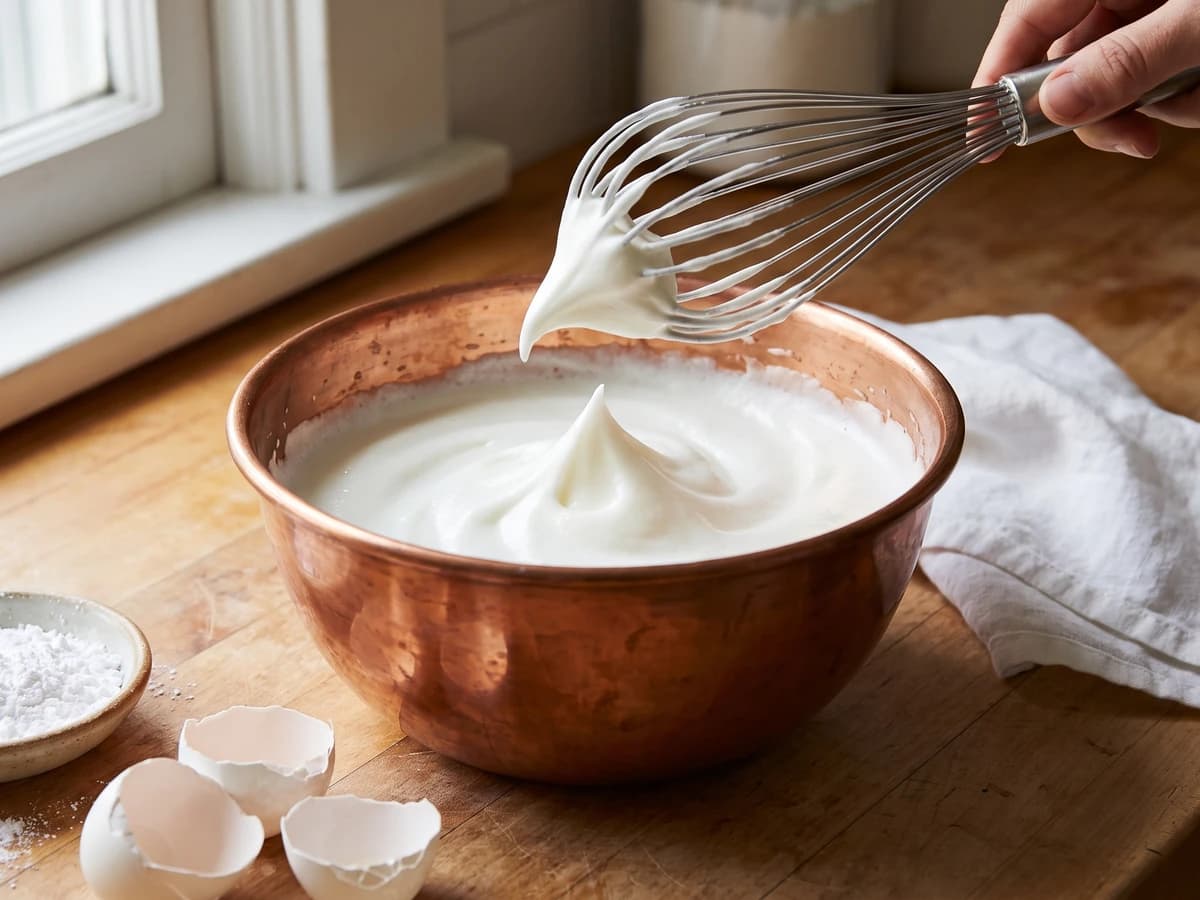
Four whites, one spotless bowl, and a patient change of speed: whisk gently until loosened, then briskly to glossy stiffness, with powdered sugar waiting if the foam begins to granulate.