
Chef Juliette
Various Almond Preparations
Five almond preparations, one discipline: remove the skins cleanly, dry every kernel through, then cut, toast, or cloak it in pale caramel without letting its fragrant oils escape.
A cooking platform built around craft, culture, and the stories behind what we eat.
Created by Chef Juliette
Based on No. 2656, Jellies à la Moscovite, from Le Guide Culinaire (1907) by Auguste Escoffier
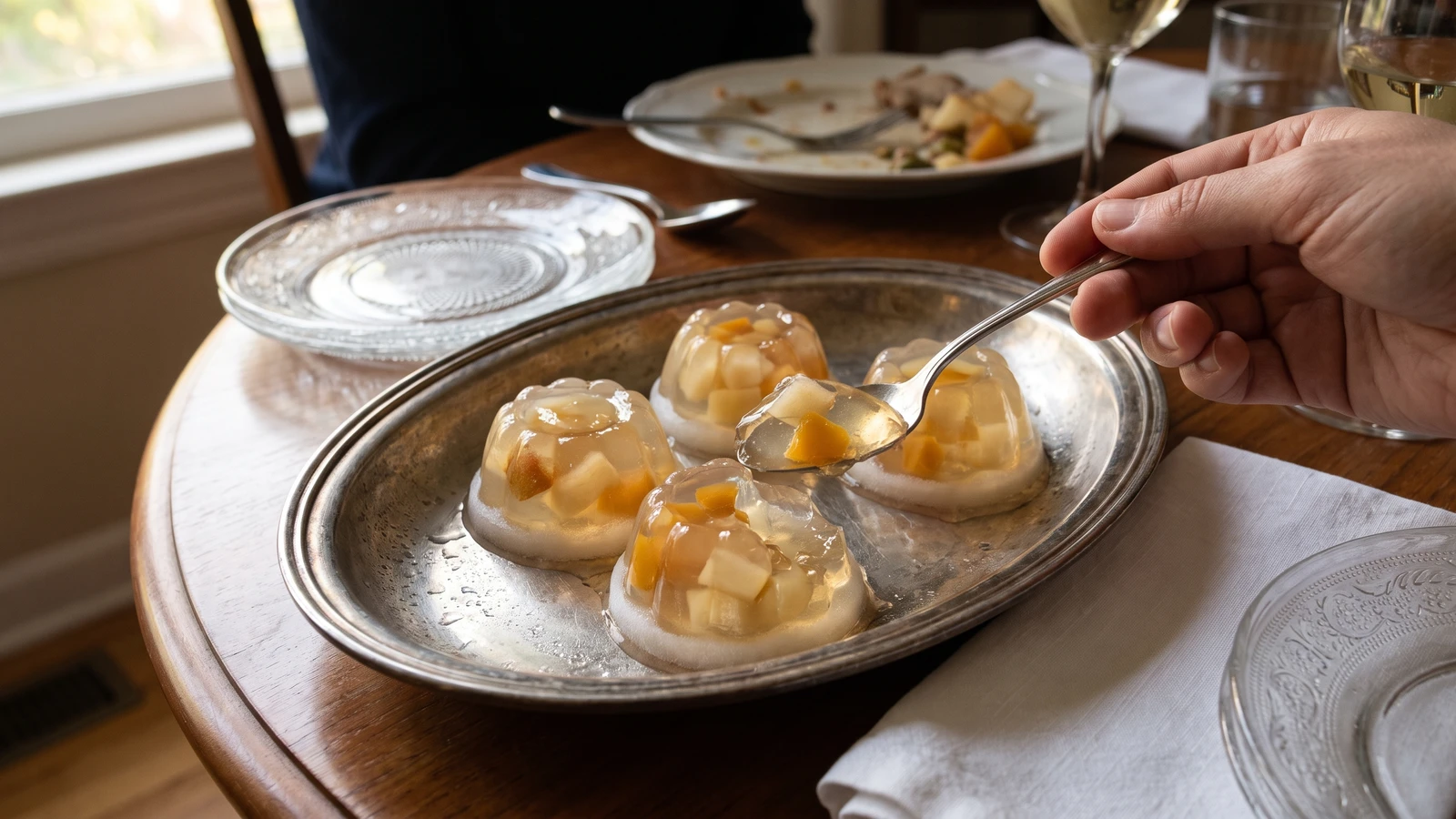
Gelées à la Moscovite turn an ordinary clear fruit jelly into a lesson in cold: sealed metal moulds, salted ice, and the nerve to stop at a delicate frosted coat.
Gelées à la Moscovite (salted-ice frosted jellies) teach one true thing: cold is an ingredient, and the cook must stop it at exactly the right moment. The jelly should leave its mould with a thin, snowy coat around a clear, tender centre. Another few minutes in the freezing mixture turns delicacy into a block.
The original assumed brigade quantities, tightly closing metal moulds, twenty-five pounds of ice, freezing salt, and saltpetre. For one cook, one stove, one evening, four small stainless-steel moulds, two kilograms of crushed ice, and one part coarse salt to five parts ice do the same work. Saltpetre goes because the smaller moulds and salted ice provide sufficient cold without it. The chemical and the brigade bulk were scaffolding; the sealed mould and sharply timed freezing are the dish.
The entry specifies a treatment rather than one fixed flavour, so clear apple and lemon provide the ordinary jelly, pale enough to show its frosted coat. Cool it until faintly syrupy before sealing the moulds, then stay beside the ice. Pull them when the centres quiver together and the outer edge has just turned cloudy. That judgment is the step that matters most.
Gelées à la Moscovite belong to the formal French service table and the grand-kitchen repertory of moulded jellies; the Russian name describes their unusually severe cold, not a Russian flavour or pantry. Professional kitchens sealed metal moulds with butter and buried them in ice fortified with coarse salt and saltpetre, producing an opaque frozen skin around an otherwise tender jelly. As service moved into silver bowls and deep dishes, cooks often placed macédoine beneath softer jelly and used less gelatine, but the brief salted-ice frosting remained the preparation’s defining act.
Quantity
2¼ cups (540 ml / 540 g)
divided
Quantity
1 tablespoon plus 1 teaspoon (20 ml / 12 g)
Quantity
⅓ cup (80 ml / 65 g)
Quantity
3 tablespoons (45 ml / 45 g)
finely strained
Quantity
½ cup (120 ml / 90 g)
cut into small dice and drained very well
Quantity
1 tablespoon (15 ml / 14 g)
softened, for sealing the moulds
Quantity
About 14 cups (3.3 litres / 2 kg)
Quantity
1½ cups (360 ml / 400 g)
for the freezing mixture only
| Ingredient | Quantity |
|---|---|
| clear unsweetened apple juicedivided | 2¼ cups (540 ml / 540 g) |
| unflavoured powdered gelatine | 1 tablespoon plus 1 teaspoon (20 ml / 12 g) |
| granulated sugar | ⅓ cup (80 ml / 65 g) |
| fresh lemon juicefinely strained | 3 tablespoons (45 ml / 45 g) |
| macédoine of poached pear and canned apricotcut into small dice and drained very well | ½ cup (120 ml / 90 g) |
| unsalted buttersoftened, for sealing the moulds | 1 tablespoon (15 ml / 14 g) |
| crushed ice | About 14 cups (3.3 litres / 2 kg) |
| coarse rock saltfor the freezing mixture only | 1½ cups (360 ml / 400 g) |
Rinse four lidded 6-ounce (180 ml) stainless-steel moulds with cold water and leave the interiors barely wet; that fine film helps the jellies release without oil. Dry the rims thoroughly. Divide the macédoine, the small mixture of poached pear and apricot, among the moulds and keep them cold while you make the jelly.
Pour ½ cup (120 ml) of the cold apple juice into a bowl, sprinkle the gelatine evenly over it, and leave it for 10 minutes to swell. Warm the remaining apple juice with the sugar just until the sugar dissolves; don't boil it, because hard boiling dulls the fresh flavour and traps bubbles. Remove from the heat, stir in the swollen gelatine until completely clear, then add the strained lemon juice. Pass the mixture through a fine sieve without pressing.
Set the pan in a bowl of cold water and stir gently until the jelly is cool and faintly syrupy, about 10 to 15 minutes. It should coat a spoon lightly but still pour in a clean stream. If it sets around the edges, don't force it through the sieve. Ça se rattrape: stand the pan over barely warm water and stir just until fluid again.
Pour the cooled jelly among the moulds, leaving about ¼ inch (5 mm) of headroom. Smooth a continuous thread of softened butter around each dry lid edge, close the mould firmly, and wipe away the excess. The butter is a gasket, not a garnish; any gap admits salt brine and ruins the jelly.
Put a layer of crushed ice in a deep pot or small insulated cooler. Stand the sealed moulds upright, then alternate the remaining ice and rock salt around them, keeping the source proportion of one part salt to five parts ice by weight. Pack the mixture firmly to just below the lids. Melting ice will make its own brine, so add no water. Wear insulated gloves and use tongs, because this bath becomes cold enough to injure bare skin.
Begin checking after 10 minutes. Lift one mould out, wipe every trace of brine from it, open the lid, and tilt it gently. The centre is ready when it moves as one trembling mass and a narrow cloudy band has appeared around the edge. If the centre still flows, reseal with a fresh thread of butter and return it to the ice for 2 minutes at a time. Remove all four as soon as that coat forms, usually within 10 to 18 minutes. If a jelly becomes hard throughout, leave it sealed in the refrigerator for 20 to 30 minutes until it yields; if it then weeps, melt it gently and reset it as an ordinary jelly. The frosted coat is lost, but dessert is not.
Rinse the closed moulds briefly under cold water to remove the last salt, then dry them completely. Remove the lids, invert each mould over a chilled dish, and lift straight upward. If one clings, wrap the outside in a lukewarm, well-wrung cloth for no more than 2 seconds; too much warmth erases the frosted coat you worked to make. Serve immediately while the edge remains pale and icy and the centre still trembles. À table!
1 serving (about 190g)
Culinary guides, cultural storytelling, and the editorial depth that makes cooking meaningful.
Discover Culinary ExplorerChef Juliette
Five almond preparations, one discipline: remove the skins cleanly, dry every kernel through, then cut, toast, or cloak it in pale caramel without letting its fragrant oils escape.

Chef Juliette
A pastry pantry lesson in one tray: filberts warmed only until their red skins release, rubbed clean, cooled, and chopped into a fragrant mise-en-place for cakes, creams, pralines, and petits fours.

Chef Juliette
The smallest pâtisserie discipline decides whether a cake leaves its mould intact: clarified butter in every corner, followed by the lightest veil of dry flour or fécule.
Chef Juliette
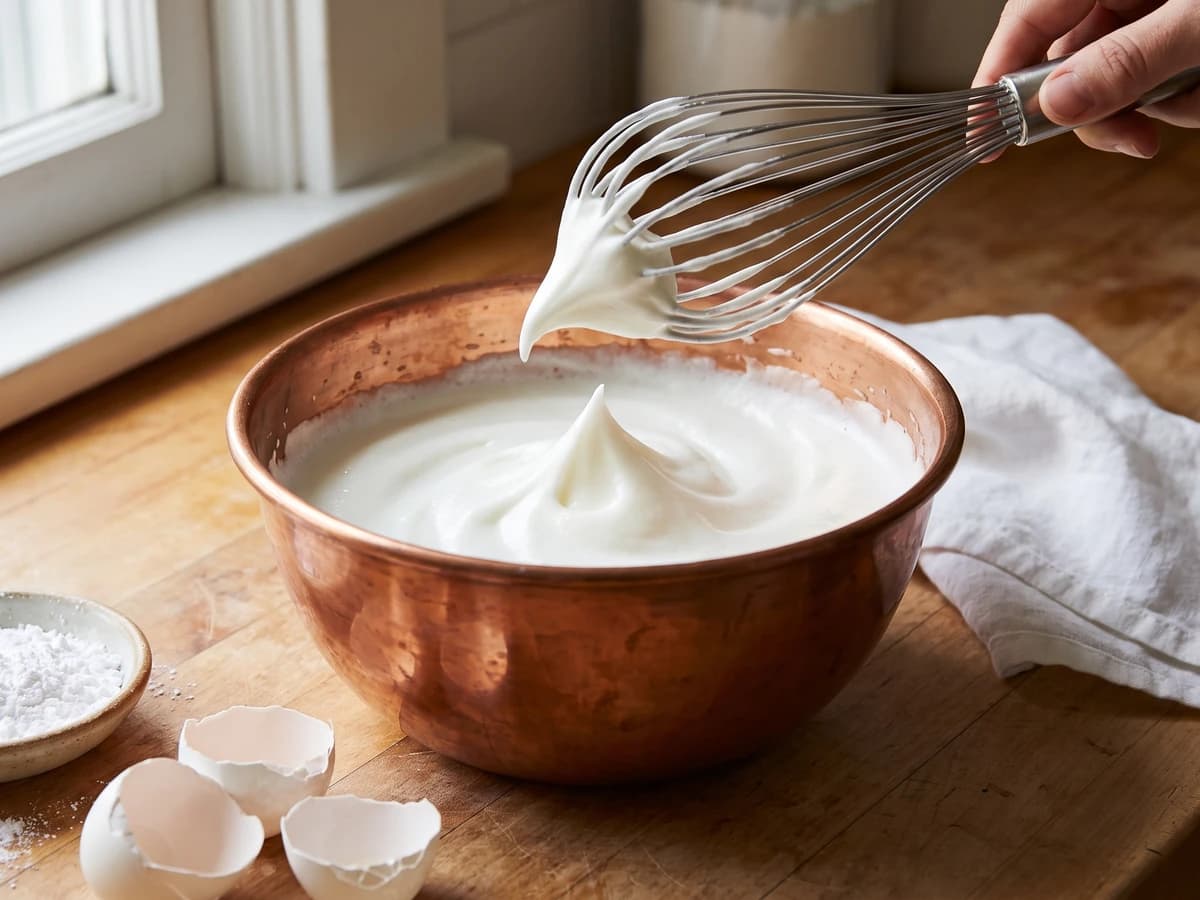
Four whites, one spotless bowl, and a patient change of speed: whisk gently until loosened, then briskly to glossy stiffness, with powdered sugar waiting if the foam begins to granulate.