
Chef Juliette
Various Almond Preparations
Five almond preparations, one discipline: remove the skins cleanly, dry every kernel through, then cut, toast, or cloak it in pale caramel without letting its fragrant oils escape.
A cooking platform built around craft, culture, and the stories behind what we eat.

Created by Chef Juliette
Based on No. 2654, Gelées Rubannées, from Le Guide Culinaire (1907) by Auguste Escoffier
Gelées rubannées turn patience into pattern: six equal bands of raspberry-red and orange-gold jelly, clean at every edge, unmoulded cold and served exactly as the canon intends, without garnish.
Gelées rubannées (ribboned jellies) teach temperature and patience in visible stripes. The one true thing to know before touching a pan is this: each lower ribbon must be completely set, while the jelly poured above it must be cool enough not to melt that clean boundary but still perfectly fluid. Rush either condition and the colours wander into one another.
The source entry assumed a grand-kitchen cold station, several pans of finished jelly ready to hand, and a mould large enough for service. At home, two small saucepans, six measured cups, a level refrigerator shelf, and one straight-sided 1 litre mould do the same work. The cold station was brigade scaffolding and can go; alternating ribbons of equal thickness are the dish and must stay. One cook, one stove, one evening, followed by a proper final chill.
The entry prescribes no fixed flavours, only distinct flavours and colours, so raspberry red and orange gold supply the required contrast without artificial colouring. Before you begin, clear and level the refrigerator shelf. The layer beneath must be firm through its centre, and the portion above must be cool but fluid; that meeting point decides every ribbon.
Gelées rubannées belong to the French grand entremets table rather than to one province, where disciplined gelée work turned fruit juices and clear sweet jellies into a formal moulded dessert. The name describes construction, not a fixed flavour formula, so the perfumes and colours could change while the defining rule remained: alternate ribbons, even in thickness and clean at every boundary. From the grand pastry station the dish passed readily to bourgeois celebration tables, since its effect depends on patient chilling and a good mould, not rare ingredients.
Quantity
1⅞ cups (450 ml / 450 g)
finely strained
Quantity
1⅞ cups (450 ml / 450 g)
finely strained
Quantity
¼ cup (60 ml / 50 g)
divided equally
Quantity
2 tablespoons (30 ml / 18 g)
divided equally
| Ingredient | Quantity |
|---|---|
| unsweetened raspberry juicefinely strained | 1⅞ cups (450 ml / 450 g) |
| orange juicefinely strained | 1⅞ cups (450 ml / 450 g) |
| fine granulated sugardivided equally | ¼ cup (60 ml / 50 g) |
| powdered gelatindivided equally | 2 tablespoons (30 ml / 18 g) |
Rinse a straight-sided 1 litre terrine mould with very cold water and drain it without wiping. Set it on a small tray and place it on a level refrigerator shelf; use a folded slip of card beneath the tray if the shelf tilts. Equal volume produces equal ribbons only when the vessel is straight-sided and level, so settle this before any jelly is poured.
Put 5 tablespoons (75 ml / 75 g) of the cold raspberry juice in a bowl and rain 1 tablespoon (15 ml / 9 g) of the gelatin evenly over its surface. Leave it undisturbed for 5 minutes to swell. Warm the remaining raspberry juice with half the sugar over gentle heat just until the sugar dissolves, then remove the pan before the juice simmers. Stir in the swollen gelatin until the liquid is perfectly smooth. Gelatin loses strength when boiled. If a few gelatin specks remain, warm the mixture gently and strain it; ça se rattrape.
Repeat the same method with the orange juice, remaining sugar, and remaining gelatin. Strain both gelées into separate jugs and cool them to 22 to 24°C (72 to 75°F), fluid but no longer warm. Measure each flavour into three heatproof cups containing exactly ⅔ cup (150 ml) apiece. A small surplus may remain to account for what clings to the pans and sieve.
Pour one ⅔ cup (150 ml) portion of raspberry gelée into the chilled mould without splashing its sides. Refrigerate for 40 to 50 minutes, until the ribbon is firm through the centre and does not shift when the mould is tilted gently. A surface skin is not enough. The whole band must be set before the next one arrives.
If the next orange portion has set in its cup, stand the cup in warm water and stir just until the gelée becomes fluid, then cool it again to 22 to 24°C (72 to 75°F). Hold a chilled spoon close above the raspberry layer and pour the orange gelée slowly over its back, which spreads the liquid without gouging the surface. Chill until fully set, then repeat with raspberry, orange, raspberry, and finally orange, setting every ribbon completely before adding the next. If a first spoonful lands too warm and softens the band below, lift it off while still liquid and return the mould to the refrigerator. Ça se rattrape: firm the lower ribbon, cool the reserved gelée properly, and begin that layer again.
Once the sixth ribbon is firm, cover the mould without letting wrapping touch the surface and refrigerate for at least 4 hours, preferably overnight. This final rest sets the layers into one sliceable whole. Moving or unmoulding it sooner can separate bands that looked finished but had not yet settled together.
Dip the mould in comfortably warm water for 5 to 8 seconds, wipe its outside dry, place a cold serving platter over it, and invert both together. Give one short, decisive shake. If the gelée clings, repeat with 2-second dips rather than one long bath, which would soften the outer ribbons and blur their edges. Serve the gelées rubannées thoroughly cold and without garnish, exactly as the dish intends. À table!
1 serving (about 121g)
Culinary guides, cultural storytelling, and the editorial depth that makes cooking meaningful.
Discover Culinary ExplorerChef Juliette
Five almond preparations, one discipline: remove the skins cleanly, dry every kernel through, then cut, toast, or cloak it in pale caramel without letting its fragrant oils escape.

Chef Juliette
A pastry pantry lesson in one tray: filberts warmed only until their red skins release, rubbed clean, cooled, and chopped into a fragrant mise-en-place for cakes, creams, pralines, and petits fours.

Chef Juliette
The smallest pâtisserie discipline decides whether a cake leaves its mould intact: clarified butter in every corner, followed by the lightest veil of dry flour or fécule.
Chef Juliette
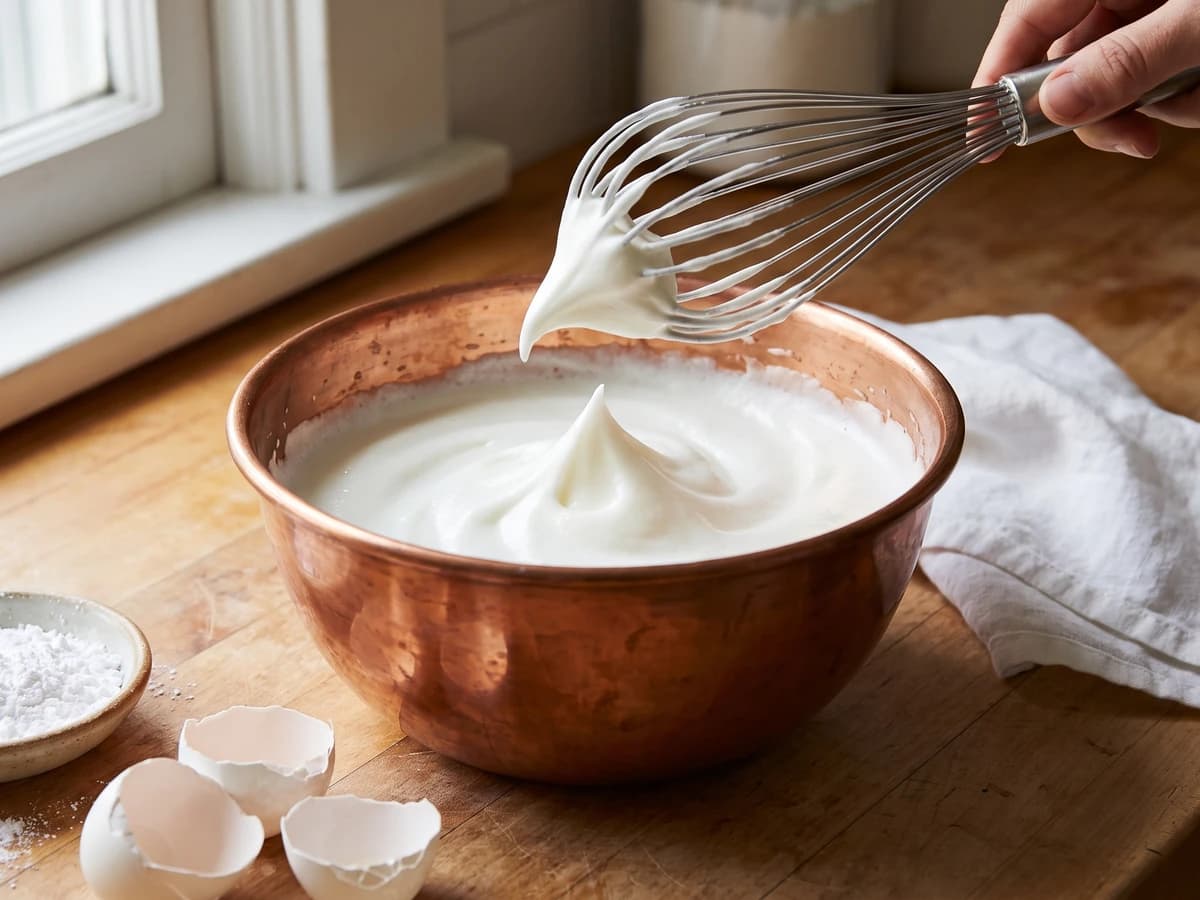
Four whites, one spotless bowl, and a patient change of speed: whisk gently until loosened, then briskly to glossy stiffness, with powdered sugar waiting if the foam begins to granulate.