
Chef Juliette
Various Almond Preparations
Five almond preparations, one discipline: remove the skins cleanly, dry every kernel through, then cut, toast, or cloak it in pale caramel without letting its fragrant oils escape.
A cooking platform built around craft, culture, and the stories behind what we eat.
Created by Chef Juliette
Based on No. 2646, Crème Caprice, from Le Guide Culinaire (1907) by Auguste Escoffier
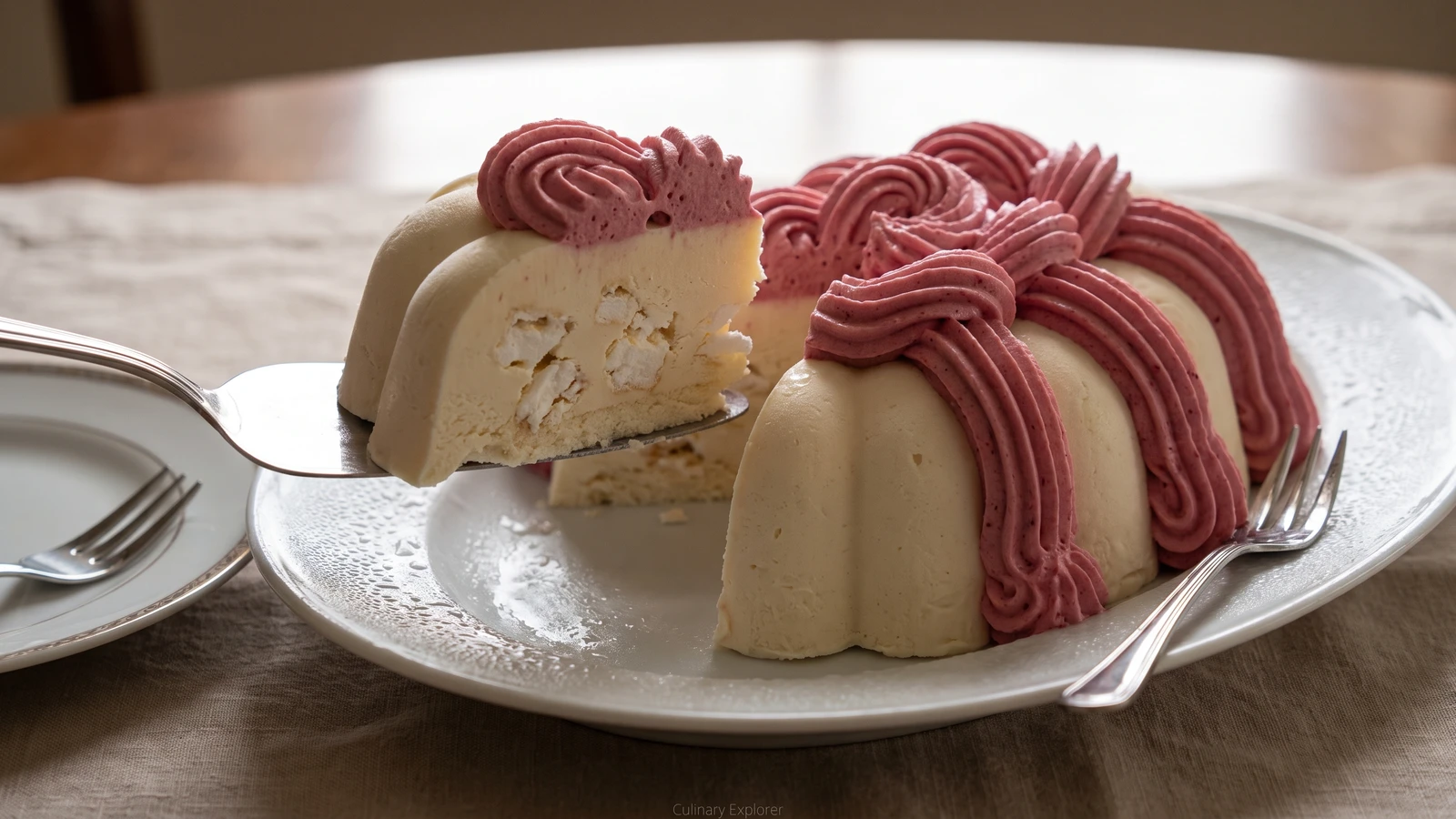
Crème Caprice proves that texture can be the whole dessert: cold Chantilly, rough pieces of crisp meringue, and a shell of berry-pink cream, all set in one narrow mold for a celebration.
Crème Caprice (frozen Chantilly with rough meringue) teaches a small, decisive lesson: texture must be folded in, not beaten away. The one true thing to know before touching a bowl is that the meringue must remain in irregular pieces. Powder drinks the cream and turns pasty; crisp rubble gives the cold, airy interior its character.
The original assumed a narrow scallop-shaped Madeleine-mould, white paper, a lid sealed and tied against meltwater, and enough packed ice to hold it for two hours. Your honest equivalent is a chilled one-quart narrow mold or loaf pan lined with white parchment, sealed under foil, and set in the freezer. The burial in ice and the string were brigade scaffolding and can go; the quarter-volume of meringue, the gentle fold, and the two-hour set are the dish and stay.
Turned out at the last moment, Crème Caprice is ivory and softly firm, with crisp white pockets inside and pale pink Chantilly following its ridges. Whip the cream only until it holds a curved peak, then break Ordinary Meringue (No. 2382) by hand into pebbles, never dust. That rough break is the step that matters most.
Crème Caprice belongs not to a provincial repertory but to the Parisian grand-kitchen table, among entremets glacés molded for the formal dessert course. Its narrow scallop-shell Madeleine-mould, sealed paper lining, and fanciful name marked it as a service dessert, while packed ice supplied the cold that a home freezer now gives without ceremony. Despite crème in the title, it is not a custard: Chantilly gives the body, freezing supplies the set, and broken meringue provides the defining contrast.
Quantity
2 cups (480 ml / about 485 g)
Quantity
2 tablespoons (30 ml / about 30 g)
Quantity
1/4 cup (60 ml / 30 g)
sifted
Quantity
1 teaspoon (5 ml / 5 g)
Quantity
3/4 cup (180 ml / about 30 g) Ordinary Meringue (No. 2382)
fully dried and roughly broken into irregular 1/2- to 1-inch pieces
Quantity
1 1/2 teaspoons (7.5 ml / about 8 g)
strained
Quantity
1 1/2 teaspoons (7.5 ml / about 8 g)
strained
| Ingredient | Quantity |
|---|---|
| cold heavy cream | 2 cups (480 ml / about 485 g) |
| cold heavy cream for rescue (optional) | 2 tablespoons (30 ml / about 30 g) |
| confectioners' sugarsifted | 1/4 cup (60 ml / 30 g) |
| pure vanilla extract | 1 teaspoon (5 ml / 5 g) |
| Ordinary Meringuefully dried and roughly broken into irregular 1/2- to 1-inch pieces | 3/4 cup (180 ml / about 30 g) Ordinary Meringue (No. 2382) |
| strawberry juicestrained | 1 1/2 teaspoons (7.5 ml / about 8 g) |
| raspberry juicestrained | 1 1/2 teaspoons (7.5 ml / about 8 g) |
Set a 1-quart narrow mold, scallop-shaped Madeleine-mould, or 8-by-4-inch loaf pan in the freezer for fifteen minutes. Line it with two crossing strips of white baking parchment, smoothing them against the cold surface and leaving enough overhang to lift the dessert later. Keep the mold in the freezer while you prepare the cream.
Pour the 2 cups of cold heavy cream into a chilled bowl and add the confectioners' sugar and vanilla. Whisk first at low speed, then at medium, until the cream roughly doubles in volume and holds distinct ridges with a peak that bends at its tip. Stop before it becomes stiff or grainy. If the surface begins to look rough, stop immediately and whisk in 1 tablespoon of the reserved cold cream by hand; add the second only if needed. Ça se rattrape. You want about 4 cups of supple Chantilly, not butter waiting to happen.
Measure 3 cups of Chantilly into a wide cold bowl and reserve the remaining cup, covered, in the refrigerator for decoration. Measure 3/4 cup of roughly broken Ordinary Meringue (No. 2382), exactly one-quarter of the filling cream by volume. If breaking produced dust, lift out the irregular pieces and leave the powder behind; it would dissolve into paste. Fold the pieces through the 3 cups of Chantilly with three or four broad turns of a flexible spatula, stopping as soon as they are distributed.
Spoon the mixture into the chilled lined mold without crushing the meringue pieces. Ease it into the corners with the spatula and level the top, but don't pack it down. Lay a fresh piece of parchment directly over the surface, fold over the lining, and seal the mold tightly with foil. Freeze in the coldest part of the freezer for two hours, until the center feels firm when pressed through the covering. If it still yields deeply, give it another twenty to thirty minutes.
Stir the strained strawberry and raspberry juices together. Fold them into the reserved Chantilly in three additions until the cream is evenly pale pink, preserving as much volume as possible. If the juice loosens the cream enough that it no longer holds a ridge, chill it for ten minutes and whisk it gently by hand until the curved peak returns. Fit a piping bag with a 1/2-inch grooved or star pipe, fill it with the pink Chantilly, and keep it cold.
Uncover the mold only when you are ready to serve. Invert it onto a cold platter and lift away the mold using the parchment overhang. If it clings, wrap the outside with a room-temperature damp towel for five seconds, then try again; don't warm the cream itself. Peel off the paper and pipe the berry-pink Chantilly generously along the ridges and around the base. Cut with a knife dipped in hot water and wiped dry between slices. À table!
1 serving (about 99g)
Culinary guides, cultural storytelling, and the editorial depth that makes cooking meaningful.
Discover Culinary ExplorerChef Juliette
Five almond preparations, one discipline: remove the skins cleanly, dry every kernel through, then cut, toast, or cloak it in pale caramel without letting its fragrant oils escape.

Chef Juliette
A pastry pantry lesson in one tray: filberts warmed only until their red skins release, rubbed clean, cooled, and chopped into a fragrant mise-en-place for cakes, creams, pralines, and petits fours.

Chef Juliette
The smallest pâtisserie discipline decides whether a cake leaves its mould intact: clarified butter in every corner, followed by the lightest veil of dry flour or fécule.
Chef Juliette
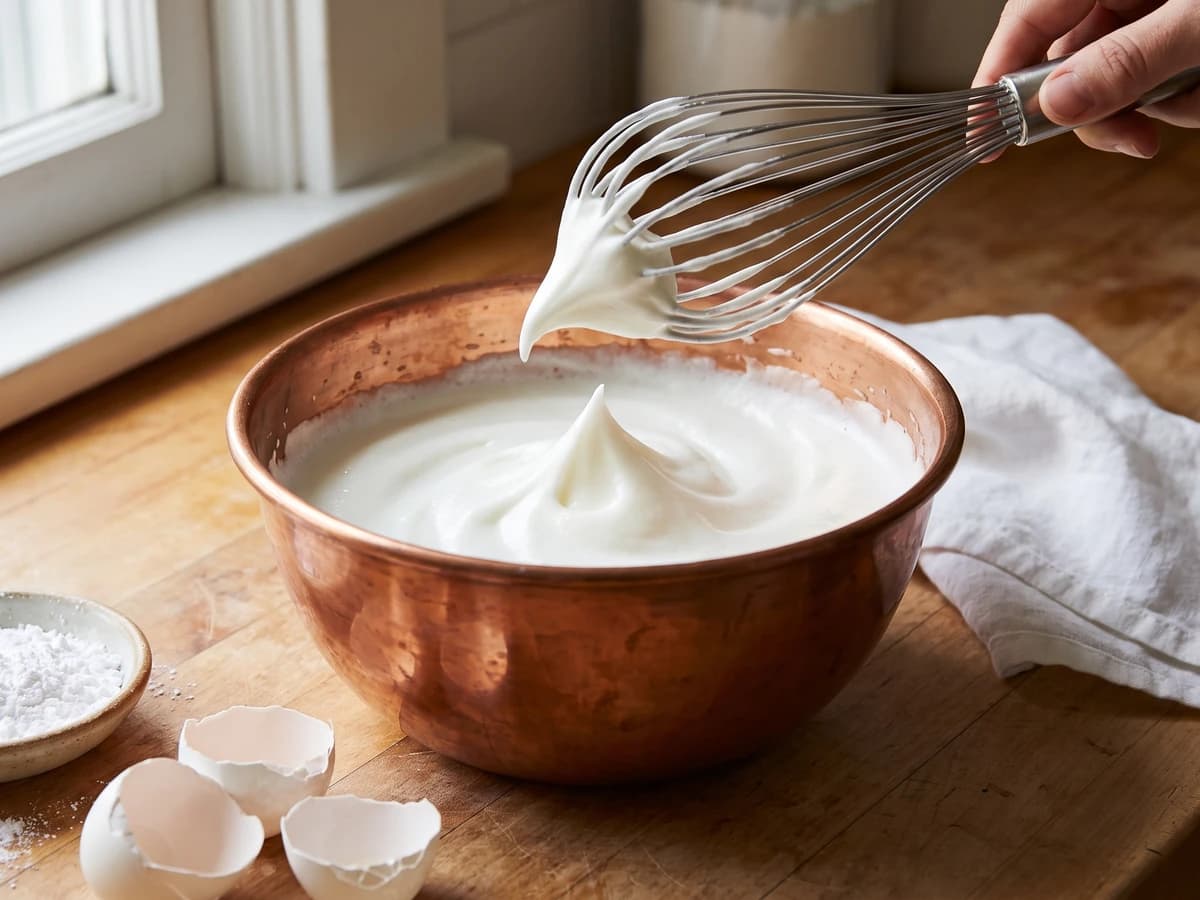
Four whites, one spotless bowl, and a patient change of speed: whisk gently until loosened, then briskly to glossy stiffness, with powdered sugar waiting if the foam begins to granulate.