
Chef Juliette
Various Almond Preparations
Five almond preparations, one discipline: remove the skins cleanly, dry every kernel through, then cut, toast, or cloak it in pale caramel without letting its fragrant oils escape.
A cooking platform built around craft, culture, and the stories behind what we eat.

Created by Chef Juliette
Based on No. 2640, Crème au Caramel, from Le Guide Culinaire (1907) by Auguste Escoffier
Crème au Caramel turns four plain ingredients into a trembling vanilla custard beneath liquid amber. The lesson is exact heat: old-gold sugar, then a water bath gentle enough to keep the custard smooth.
Crème au Caramel (caramel custard) teaches the discipline of heat. The one true thing to know before touching a pan is that caramel doesn't wait: have the mould warm, dry, and within reach before the sugar reaches old gold.
The classical entry assumed a copper sugar pan, a pastry cook practiced at judging syrup with bare fingers, broken ice for clothing cold aspic moulds, and enough portions for a full service. Your honest equivalents are a small pale saucepan, judgment by colour, one warm 1 litre mould, and an oven bain-marie. The finger tests and broken ice are brigade scaffolding and can go. Clothing the mould with caramel and poaching the custard gently are the dish, and they stay.
When it is right, the custard stands pale and trembling while its caramel loosens into a clear amber sauce around it. Pull the sugar the moment it reaches old gold. A shade darker and bitterness follows you all the way to the table.
Crème au caramel belongs to the French table bourgeoise and the Parisian bistro, though no single province owns it; the grand kitchen codified a household marriage of egg custard and cooked sugar found in related forms across Europe. In French classical practice, crème names the set custard, not a requirement that cream be added, and whole milk gives this version its clean vanilla flavour and delicate tremble. The caramel is not a decoration spooned on afterward: it clothes the mould before the custard enters, then loosens during poaching into its own amber sauce.
Quantity
½ cup (120 ml / 100 g), prepared according to The Cooking of Sugar (No. 2344) and used to clothe the mould by the coating principle in Another Method of Preparing Aspics de Filets de Soles (No. 916)
Quantity
2 cups (500 ml / 515 g)
Quantity
1
split lengthwise
Quantity
½ cup (120 ml / 100 g)
Quantity
4
| Ingredient | Quantity |
|---|---|
| granulated sugar for golden caramel | ½ cup (120 ml / 100 g), prepared according to The Cooking of Sugar (No. 2344) and used to clothe the mould by the coating principle in Another Method of Preparing Aspics de Filets de Soles (No. 916) |
| whole milk | 2 cups (500 ml / 515 g) |
| vanilla beansplit lengthwise | 1 |
| granulated sugar for the custard | ½ cup (120 ml / 100 g) |
| large eggs | 4 |
Heat the oven to 150°C (300°F). Set a folded kitchen towel in the bottom of a deep roasting pan so the mould cannot skate, and bring a kettle of water nearly to the boil. Warm a clean, completely dry 1 litre metal mould in the oven for 3 minutes, then place it on a heatproof surface beside the stove. Do not grease it. Caramel must meet the mould directly.
Prepare the granulated sugar for golden caramel according to The Cooking of Sugar (No. 2344). Replace the reference's bare-finger tests with a pale saucepan and your eyes: the instant the syrup becomes clear old gold and smells faintly toasted, pull it from the heat. If it grains before colouring, return it to low heat with 1 tablespoon (15 ml / 15 g) water and let the crystals dissolve without stirring. Ça se rattrape. Sugar that has become smoky and bitter cannot be rescued, so begin again rather than carrying that bitterness into the custard. Immediately pour the caramel into the warm mould. Wearing oven gloves, tilt and rotate it until the bottom and sides wear a thin, even coat, following the coating principle in Another Method of Preparing Aspics de Filets de Soles (No. 916). That aspic method uses broken ice to set jelly; omit it here because hot caramel sets by itself and sudden chilling risks thermal shock. If the caramel hardens before the sides are clothed, hold the mould over the lowest heat for a few seconds to soften it, then continue tilting.
Scrape the vanilla seeds into the milk and add the pod. Heat gently until small bubbles gather around the edge and the surface begins to quiver, never letting it boil. Cover, remove from the heat, and infuse for 10 minutes. Lift out the pod and press it against the pan so its milk returns to the custard.
Stir the eggs and custard sugar together just until the whites disappear. Do not whip; trapped air becomes holes in the finished crème au caramel. Pour in the warm vanilla milk gradually, stirring steadily so the eggs warm without scrambling, then pass the mixture through a fine sieve. If a few egg threads formed, the sieve catches them and the custard is saved. Let it stand for 5 minutes and skim away any foam.
Pour the custard into the caramel-clothed mould. The hardened caramel may crack beneath it. This looks alarming and is exactly right. Cover the mould loosely with foil, place it in the prepared roasting pan, and pour hot water around it until the water reaches halfway up the sides. Pocher au bain-marie means to poach gently in a water bath. Bake for 40 to 50 minutes, checking at 40. The outer custard should be set while a circle about 5 cm (2 inches) wide still trembles softly at the centre; an instant-read thermometer there should register 80 to 82°C (176 to 180°F). If the bath begins bubbling, lower the oven and add a little cool water. A boiling bath makes a grainy custard, but caught early, it recovers.
Lift the mould from the water and remove the foil. Cool it on a rack for 45 minutes, then cover and refrigerate for at least 6 hours, preferably overnight. The custard finishes setting in the cold while moisture dissolves the caramel into sauce. Do not try to unmould it warm; patience, not force.
Run a thin knife only around the upper edge of the custard. Dip the base of the mould into warm water for 10 seconds, dry it, and set a low-rimmed serving plate upside down over the top. Hold plate and mould firmly together, invert them in one confident movement, and lift the mould away. If the custard clings, return the base to warm water for another 5 seconds rather than prying. Let every drop of amber caramel run over the custard and pool around it. Serve chilled, with nothing to hide its vanilla or its tremble. À table!
1 serving (about 150g)
Culinary guides, cultural storytelling, and the editorial depth that makes cooking meaningful.
Discover Culinary ExplorerChef Juliette
Five almond preparations, one discipline: remove the skins cleanly, dry every kernel through, then cut, toast, or cloak it in pale caramel without letting its fragrant oils escape.

Chef Juliette
A pastry pantry lesson in one tray: filberts warmed only until their red skins release, rubbed clean, cooled, and chopped into a fragrant mise-en-place for cakes, creams, pralines, and petits fours.

Chef Juliette
The smallest pâtisserie discipline decides whether a cake leaves its mould intact: clarified butter in every corner, followed by the lightest veil of dry flour or fécule.
Chef Juliette
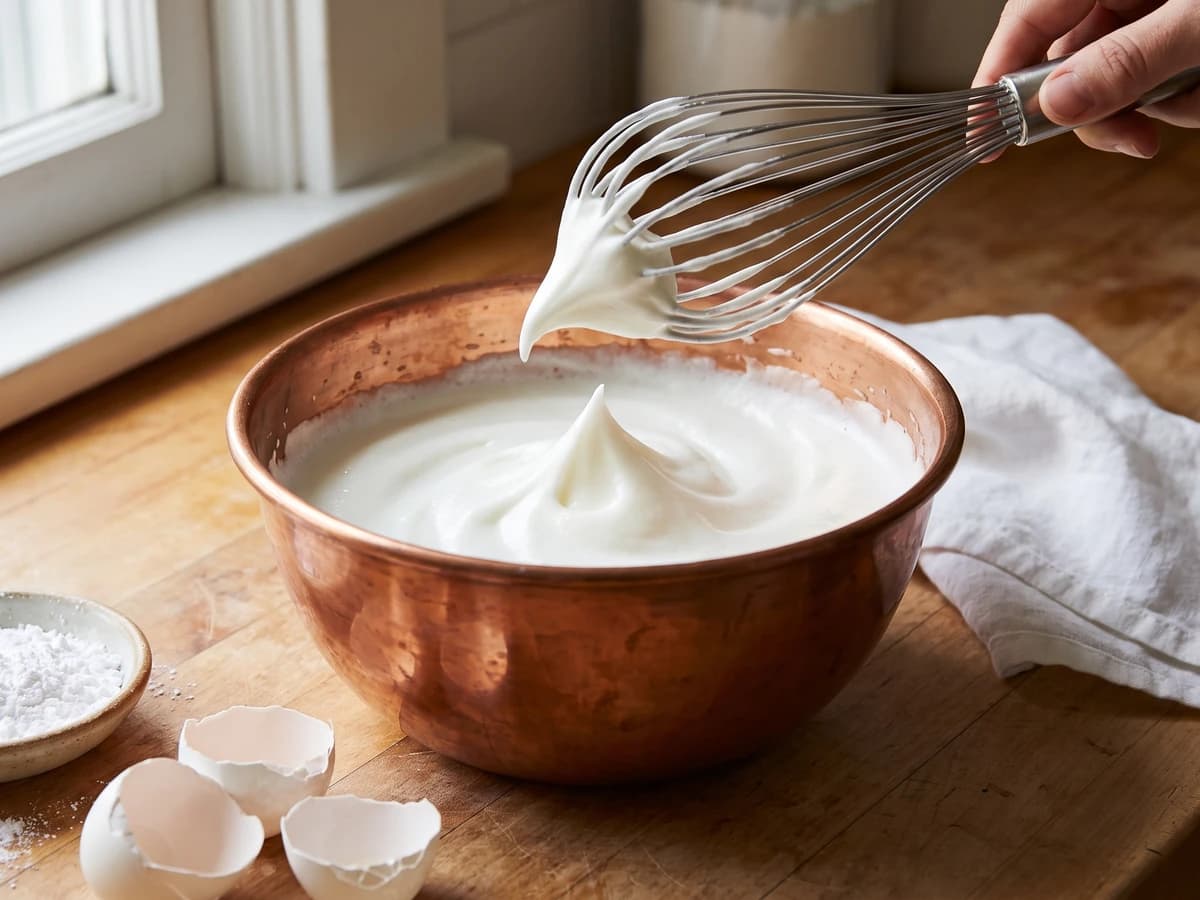
Four whites, one spotless bowl, and a patient change of speed: whisk gently until loosened, then briskly to glossy stiffness, with powdered sugar waiting if the foam begins to granulate.