
Chef Juliette
Various Almond Preparations
Five almond preparations, one discipline: remove the skins cleanly, dry every kernel through, then cut, toast, or cloak it in pale caramel without letting its fragrant oils escape.
A cooking platform built around craft, culture, and the stories behind what we eat.

Created by Chef Juliette
Based on No. 2630, Charlotte Carmen, from Le Guide Culinaire (1907) by Auguste Escoffier
A sweet Parisian charlotte of tomato, red capsicum, candied ginger, lemon, and whipped cream, held in crisp gaufrettes: strange on paper, bright and persuasive once properly balanced.
Charlotte Carmen (a sweet tomato, red capsicum, ginger, and cream charlotte) teaches a severe little pastry truth: gelatine fixes your judgment as firmly as it fixes the mousse. Taste the base before it begins to set. It must seem brighter, sweeter, and more sharply lemoned than the finished dessert, because whipped cream softens every edge.
The grand formula assumed a pastry section with stewed tomato and capsicum ready, syrup tested at 32° on a saccharometer, a cold room, and enough hands to line many moulds with gaufrettes. Here the formula is halved for one 18 cm charlotte, canned tomato and plain jarred roasted capsicum replace indifferent fresh produce, and a weighed sugar-water ratio gives the same syrup without the obsolete meter. Those are brigade scaffolds and they can go. The flavour ratio, the moment of thickening, and the fold into real whipped cream are the dish, so they stay. One cook, one stove, one evening, then the cold does the rest.
On the plate it is pale coral, cool and softly set, with small flashes of candied ginger and a crisp wafer case. Strange on paper, yes, but it should taste unmistakably sweet: fruit first, lemon next, ginger at the finish. The one step that decides it is the pause before folding, when the base has just begun to thicken but has not set. Miss that window and it either sinks or clumps, but ça se rattrape, and the method shows you how.
Charlotte Carmen belongs to the Parisian grand-kitchen family of moulded entremets, where a gaufrette case held chilled fruit-and-cream preparations for formal service. Its tomato and red capsicum are not a savoury reinterpretation: the formula treats both as fruit, balancing them with dense syrup, candied ginger, lemon, gelatine, and a great volume of whipped cream. The precise reason for the name Carmen is less certain than the practice it records, a cosmopolitan pastry canon willing to turn ingredients from the savoury larder toward dessert.
Quantity
¾ cup (180 ml / 170 g), yielding ½ cup (120 ml / 113 g) after stewing
drained and puréed
Quantity
½ cup (120 ml / 85 g), yielding ¼ cup (60 ml / 57 g) after stewing
drained and puréed
Quantity
1/16 teaspoon (0.3 ml / 0.15 g)
Quantity
¼ cup (60 ml / 43 g)
cut into small dice
Quantity
3 tablespoons (45 ml / 45 g), from about 1½ lemons
Quantity
½ cup plus 2 teaspoons (130 ml / 110 g)
Quantity
¼ cup plus 2 teaspoons (70 ml / 70 g)
Quantity
2½ leaves (5 g total)
soaked in cold water
Quantity
2 cups plus 1 tablespoon (500 ml / 500 g)
well chilled
Quantity
24 to 30 wafers (about 120 g)
enough to line the mould
| Ingredient | Quantity |
|---|---|
| canned whole peeled tomatoesdrained and puréed | ¾ cup (180 ml / 170 g), yielding ½ cup (120 ml / 113 g) after stewing |
| plain jarred roasted red capsicumdrained and puréed | ½ cup (120 ml / 85 g), yielding ¼ cup (60 ml / 57 g) after stewing |
| ground ginger | 1/16 teaspoon (0.3 ml / 0.15 g) |
| candied gingercut into small dice | ¼ cup (60 ml / 43 g) |
| fresh lemon juice | 3 tablespoons (45 ml / 45 g), from about 1½ lemons |
| granulated sugar | ½ cup plus 2 teaspoons (130 ml / 110 g) |
| water | ¼ cup plus 2 teaspoons (70 ml / 70 g) |
| gold-strength gelatine leavessoaked in cold water | 2½ leaves (5 g total) |
| heavy cream, at least 35% fatwell chilled | 2 cups plus 1 tablespoon (500 ml / 500 g) |
| thin, unfilled gaufrettes (special wafers)enough to line the mould | 24 to 30 wafers (about 120 g) |
Line the base of an 18 cm straight-sided springform pan with parchment and fit an acetate collar around the inside. Trim enough gaufrettes to stand neatly against the sides, placing them close together, then cover the base with more wafers and fitted pieces. Small gaps underneath are harmless, but the upright wafers should form a continuous wall so the filling cannot push between them. Keep the lined mould in a cool, dry place while the filling is made.
Put the puréed tomato in a small saucepan and simmer gently, stirring often, until thick, glossy, and reduced to exactly ½ cup (120 ml / 113 g), about 8 to 10 minutes. Transfer it to a mixing bowl. Repeat with the red capsicum until exactly ¼ cup (60 ml / 57 g) remains, about 5 to 7 minutes, then add it to the tomato. Weigh these finished pulps rather than guessing. The two-to-one ratio is the foundation of the dish, and excess water would weaken both flavour and set.
Soak the gelatine leaves in plenty of cold water until completely pliable, about 5 minutes. Meanwhile, combine the sugar and measured water in the clean saucepan. Warm gently, stirring only until the sugar dissolves, then bring it just to a clear simmer and remove it from the heat. This weighed concentration produces about ½ cup plus 1 tablespoon (140 ml / 180 g) of hot syrup at 32° on the old saccharometer, without requiring the meter itself. If crystals appear, cover the pan for 30 seconds and return it to low heat until they dissolve. Do not continue boiling, which would drive away water and make the syrup too strong.
Squeeze all excess water from the softened gelatine and stir it into the hot syrup off the heat until no streaks remain. Add the syrup to the tomato and capsicum with the ground ginger, diced candied ginger, and lemon juice, mixing thoroughly. Chill a teaspoonful on a saucer for one minute, then taste it. It should be clearly sweet, vividly lemoned, gently fruity, and warm with ginger, with no pickled or smoky note from the capsicum. Taste it now, because once the gelatine takes hold, the decision is made.
Set the bowl over a larger bowl of ice water and stir slowly until the mixture cools and begins to thicken to the consistency of loose custard. A spoon drawn across the bottom should leave a path for a second before the mixture closes over it. This is the moment that matters. If the edges set into little rubbery pieces before the centre thickens, lift the bowl from the ice and set it briefly over barely warm water, stirring until smooth again. Ça se rattrape. Return it to the ice and watch more closely.
Reserve 2 tablespoons of the measured cream, then whip the remainder until it forms soft, drooping peaks. The cream should hold air but still fold easily. If it turns slightly grainy, stop at once and fold in the reserved unwhipped cream by hand until smooth. Fold one-third of the cream into the thickening base to lighten it, then fold in the rest with broad strokes, turning the bowl until no white pockets remain. If the base is still warm, wait before folding or the cream will collapse; if it has become firm, soften it over barely warm water first.
Spoon the mousse into the gaufrette-lined mould, pressing the first few spoonfuls gently against the wafer wall so no large air pockets remain. Add the rest, level the top without packing it down, and tap the mould once against a folded towel. Cover without touching the surface and chill for at least 6 hours, or overnight, until the centre is softly but decisively set.
Release the springform ring and peel away the acetate. Slide the charlotte, still on its parchment, onto a chilled serving plate and remove the parchment carefully. Cut with a thin knife dipped in hot water and wiped dry between slices. Serve it cold, while the mousse is pale coral and tender and the outer edges of the gaufrettes still have their crisp bite. À table!
1 serving (about 133g)
Culinary guides, cultural storytelling, and the editorial depth that makes cooking meaningful.
Discover Culinary ExplorerChef Juliette
Five almond preparations, one discipline: remove the skins cleanly, dry every kernel through, then cut, toast, or cloak it in pale caramel without letting its fragrant oils escape.

Chef Juliette
A pastry pantry lesson in one tray: filberts warmed only until their red skins release, rubbed clean, cooled, and chopped into a fragrant mise-en-place for cakes, creams, pralines, and petits fours.

Chef Juliette
The smallest pâtisserie discipline decides whether a cake leaves its mould intact: clarified butter in every corner, followed by the lightest veil of dry flour or fécule.
Chef Juliette
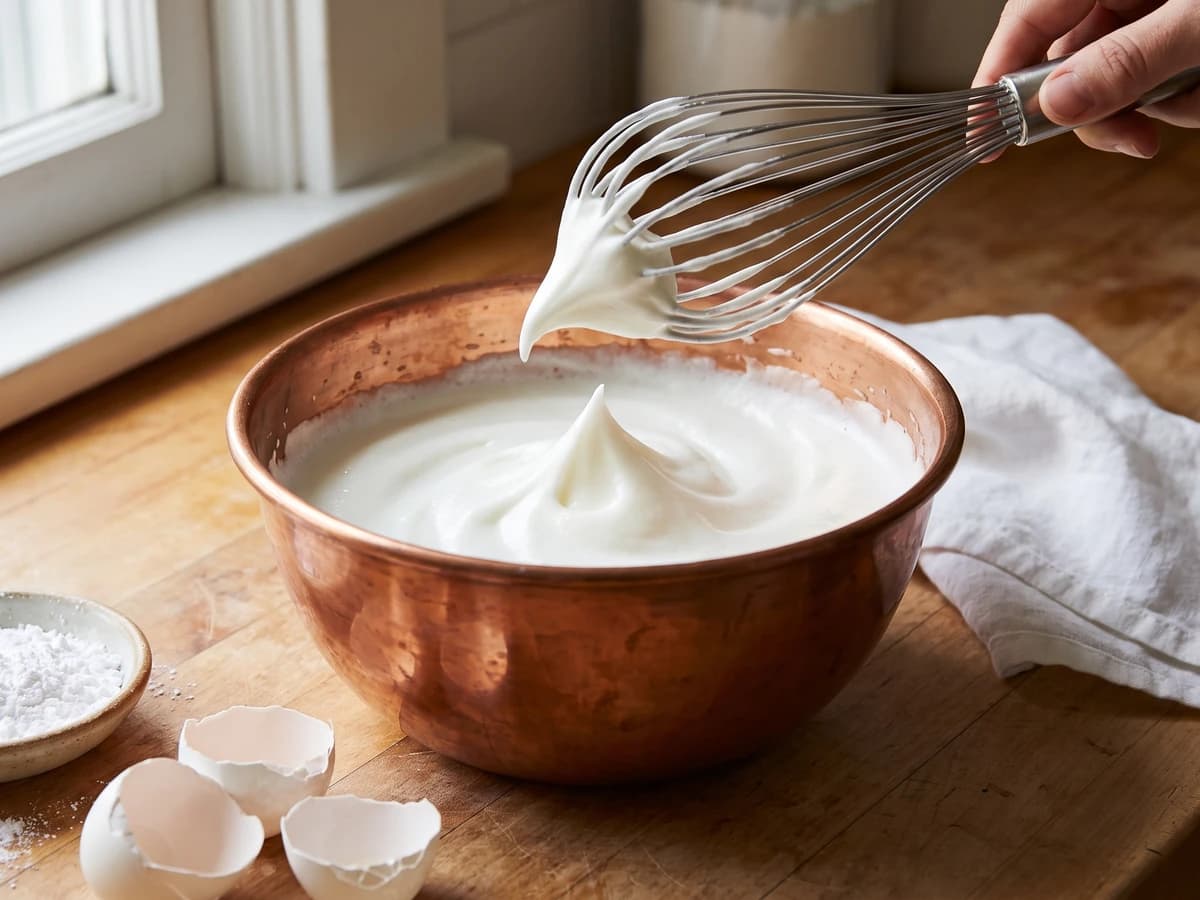
Four whites, one spotless bowl, and a patient change of speed: whisk gently until loosened, then briskly to glossy stiffness, with powdered sugar waiting if the foam begins to granulate.