
Chef Juliette
Various Almond Preparations
Five almond preparations, one discipline: remove the skins cleanly, dry every kernel through, then cut, toast, or cloak it in pale caramel without letting its fragrant oils escape.
A cooking platform built around craft, culture, and the stories behind what we eat.

Created by Chef Juliette
Based on No. 2627, Blanc-manges “Rubannés”, from Le Guide Culinaire (1907) by Auguste Escoffier
Six precise bands of almond, coffee, and chocolate blanc-mange, held with only enough gelatine to set and enriched with fresh cream, bring the grand entremet comfortably to a home table.
Blanc-manges “Rubannés” (ribboned almond creams) teach the discipline of layering: each band must be set enough to carry the next, while the mixture you pour remains cool and fluid. When that balance is right, six clean ribbons appear beneath a satin surface, almond ivory, coffee tan, and cocoa brown, all tender enough to yield immediately beneath the spoon.
The book's kitchen assumed a confectionery station, several hands to watch the setting bowls, and cold space arranged around a large service. Here, a food processor replaces the almond mortar, one level refrigerator shelf replaces the cold room, and a deep serving dish removes the peril of unmoulding. The quantity is cut to six generous portions. One cook, one stove, one evening.
Carême's instruction is preserved exactly in proportion: 180 ml fresh cream for 720 ml prepared base, one part cream to four parts blanc-mange. The mould, the turn-out, and the extra gelatine needed to survive it were brigade scaffolding and can go; the fresh almond extraction, quarter-volume cream, and even alternate bands are the dish and must stay. The step that decides everything is the pause between layers, so give each band its full chill before the next one touches it.
The ribboned blanc-mange belongs to the Parisian confectionery repertoire, where an older almond-based white dish became a formal entremet arranged through colour, flavour, and precise setting. Its assembly passes through Bavarois Rubanné (No. 2621), whose alternating preparations were deliberately left open to the cook, while the almond foundation kept this variation a blanc-mange rather than a bavarois. Carême's counsel to add fresh cream at one quarter the base volume, together with the book's permission to serve from china or a deep dish, reveals the real priority: tenderness mattered more than the spectacle of unmoulding.
Quantity
1¼ cups (300 ml / 170 g)
Quantity
2¾ cups (660 ml / 660 g)
for the almond infusion
Quantity
3 tablespoons (45 ml / 45 g)
for blooming the gelatine
Quantity
Up to ¼ cup (60 ml / 60 g)
as needed to adjust the base
Quantity
¾ cup (180 ml / 150 g)
Quantity
2¼ teaspoons (11 ml / 7 g)
Quantity
⅛ teaspoon (0.6 ml / 0.8 g)
Quantity
¾ cup (180 ml / 175 g)
chilled
Quantity
1 teaspoon (5 ml / 5 g)
Quantity
2 teaspoons (10 ml / 4 g)
Quantity
1½ tablespoons (22 ml / 8 g)
Quantity
1 complete alternate-layer assembly (No. 2621)
retained as the finished pattern for this dish
| Ingredient | Quantity |
|---|---|
| blanched whole almonds | 1¼ cups (300 ml / 170 g) |
| filtered waterfor the almond infusion | 2¾ cups (660 ml / 660 g) |
| cold filtered waterfor blooming the gelatine | 3 tablespoons (45 ml / 45 g) |
| additional cold filtered water (optional)as needed to adjust the base | Up to ¼ cup (60 ml / 60 g) |
| granulated sugar | ¾ cup (180 ml / 150 g) |
| standard powdered gelatine | 2¼ teaspoons (11 ml / 7 g) |
| fine sea salt | ⅛ teaspoon (0.6 ml / 0.8 g) |
| very fresh heavy creamchilled | ¾ cup (180 ml / 175 g) |
| orange flower water | 1 teaspoon (5 ml / 5 g) |
| instant espresso powder | 2 teaspoons (10 ml / 4 g) |
| unsweetened Dutch-process cocoa powder | 1½ tablespoons (22 ml / 8 g) |
| Bavarois Rubannéretained as the finished pattern for this dish | 1 complete alternate-layer assembly (No. 2621) |
Set a straight-sided 1.2 litre deep serving dish on a perfectly level refrigerator shelf. The assembly follows Bavarois Rubanné (No. 2621) as its finished pattern: differently flavoured and coloured preparations laid in alternate, even bands. Here the mould and turn-out are omitted because the source itself permits service from a deep dish; that is professional scaffolding removed, not technique lost.
Pulse the blanched almonds in a food processor until they resemble fine, damp sand, stopping before they become oily paste. Heat the 660 ml filtered water just to a simmer, pour it over the almonds, and leave them covered for 20 minutes. Strain through damp muslin or a nut-milk bag, then squeeze firmly until the pulp feels nearly dry. The liquid should be smooth and richly almond-scented; if fine grit remains, strain it once more, because no amount of chilling will hide a coarse blanc-mange.
Sprinkle the gelatine evenly over the 45 ml cold water and leave it for 5 minutes, until every grain is swollen. Combine the almond milk, sugar, and salt in a saucepan and warm gently, stirring only until the sugar disappears. Remove the pan from the heat, add the bloomed gelatine, and stir until completely dissolved without boiling. If threads or grains of gelatine remain, return the pan to the lowest heat for a few seconds and strain the mixture; ça se rattrape. Pour it into a measuring jug, add only enough additional cold water to reach exactly 720 ml, and reserve any spoonful beyond that volume for tasting.
Let the 720 ml almond base cool until it feels neither warm nor cold against a fingertip, about 22 to 24°C. Stir in the 180 ml chilled cream without whipping air into it. This is the source's quarter-volume addition, one part fresh cream to four parts prepared base, and it gives tenderness without obscuring the almond. Divide the finished blanc-mange equally among three jugs, 300 ml in each.
For the ivory preparation, remove 1 teaspoon of mixture and replace it with the orange flower water. For the coffee preparation, warm 2 tablespoons of its mixture, dissolve the espresso powder in it, and stir it back into the jug. For the chocolate preparation, work the cocoa with 3 tablespoons of its mixture into a smooth paste, warm it briefly, then whisk it back into the final jug. If the cocoa shows specks, pass that preparation through a fine sieve. Let all three stand at cool room temperature until fluid but no warmer than the almond base.
Pour half the ivory preparation, about 150 ml, into the chilled dish and refrigerate for 20 to 25 minutes. It is ready when the surface no longer flows and a clean fingertip barely marks it. Pour half the coffee preparation over the back of a broad spoon held just above the surface, then chill again. Repeat with half the chocolate preparation. The spoon breaks the force of the pour, preserving the band beneath instead of gouging a channel through it.
Repeat the sequence with the remaining ivory, coffee, and chocolate preparations, chilling each band until just set before adding the next. If a waiting mixture begins to gel, lower its jug into a bain-marie (warm-water bath) and stir only until it flows again, then cool it back to room temperature before pouring. If the band in the dish ripples or transfers colour to your fingertip, stop and chill it longer. A fluid mixture can be restored; a melted ribbon cannot be made even again.
After the final chocolate band is laid, chill the blanc-mange uncovered for 30 minutes, then cover the dish without touching its surface and refrigerate for at least 4 hours, preferably overnight. Do not turn it out; the deliberately small measure of gelatine assumes the support of the serving dish. Carry it cold to the table and use a broad spoon to lift generous portions that reveal all six bands. À table!
1 serving (about 175g)
Culinary guides, cultural storytelling, and the editorial depth that makes cooking meaningful.
Discover Culinary ExplorerChef Juliette
Five almond preparations, one discipline: remove the skins cleanly, dry every kernel through, then cut, toast, or cloak it in pale caramel without letting its fragrant oils escape.

Chef Juliette
A pastry pantry lesson in one tray: filberts warmed only until their red skins release, rubbed clean, cooled, and chopped into a fragrant mise-en-place for cakes, creams, pralines, and petits fours.

Chef Juliette
The smallest pâtisserie discipline decides whether a cake leaves its mould intact: clarified butter in every corner, followed by the lightest veil of dry flour or fécule.
Chef Juliette
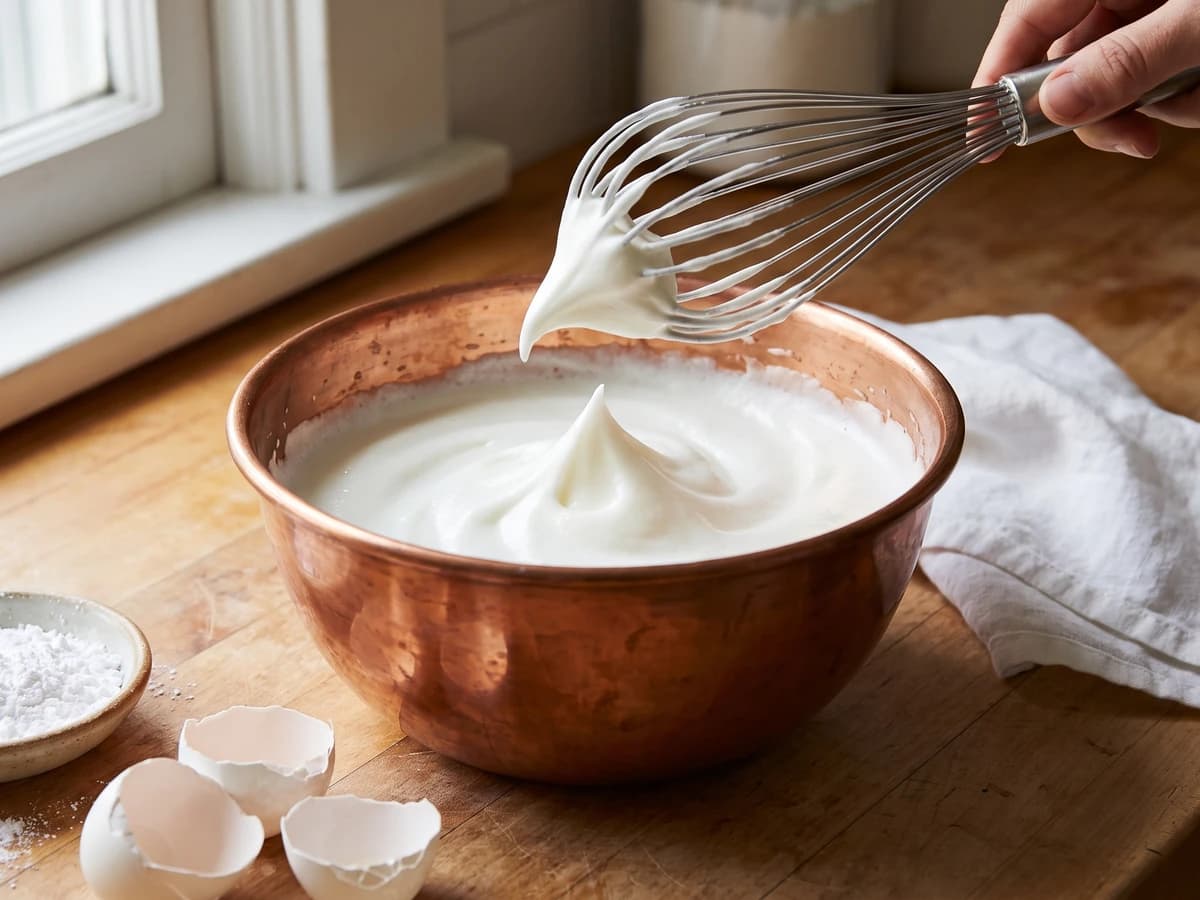
Four whites, one spotless bowl, and a patient change of speed: whisk gently until loosened, then briskly to glossy stiffness, with powdered sugar waiting if the foam begins to granulate.