
Chef Juliette
Various Almond Preparations
Five almond preparations, one discipline: remove the skins cleanly, dry every kernel through, then cut, toast, or cloak it in pale caramel without letting its fragrant oils escape.
A cooking platform built around craft, culture, and the stories behind what we eat.

Created by Chef Juliette
Based on No. 2625, French Blanc-mange, from Le Guide Culinaire (1907) by Auguste Escoffier
Snow-white almond milk, pounded and wrung through cloth, sets into a cool, silken blanc-manger: a dinner-party pudding whose elegance rests on one plain discipline, keeping every almond truly white.
Blanc-manger français (set almond-milk pudding) teaches that refinement begins before the pan. Its whiteness isn't decoration. Skin the almonds completely and soak them until they are white through the seams, because grey almonds make a grey blanc-manger, and neither sugar nor a handsome mold can hide it.
The original formula assumed a mortar, a strong towel, muslin, center-tubed molds packed in ice, and enough hands to prepare a pound of almonds. For six portions, the batch is halved without moving its ratios: a food processor replaces the mortar, a nut-milk bag replaces the towel, and six small molds in the refrigerator replace the tube mold and its bed of ice. The ice and center tube were brigade scaffolding and can go. Skinning, soaking, fine pounding, hard wringing, and the full measures of sugar and gelatine are the dish, so they stay. Loaf sugar becomes superfine sugar, while the bitter almonds become a measured drop of food-safe almond extract because the raw kernels are neither reliably available nor prudent in a home kitchen.
The finished blanc-manger should turn out cleanly, satin-white and cool, with enough body to hold its fluting and a texture that yields under the spoon rather than bouncing against it. Before you touch the pan, settle the step that matters most: whiten every almond properly. Everything afterward depends upon it.
Blanc-manger belongs to the French national canon and especially to the grand Parisian table, rather than to one province claiming it as regional property. Across generations, it traveled from a savory white preparation of pounded poultry, rice, and almonds into a sweet entremets shaped in ornamental molds. The starch-thickened milk blancmange familiar elsewhere is a cousin, but this classical French form draws its character from almond milk wrung through cloth and set with gelatine.
Quantity
1⅔ cups (400 ml / 227 g)
Quantity
4 cups (960 ml / 960 g), plus more as needed
for blanching, soaking, and refreshing
Quantity
1 cup (240 ml / 240 g)
for pounding the almonds
Quantity
1⅛ cups (270 ml / 227 g)
Quantity
4¼ teaspoons (21 ml / 13 g)
Quantity
⅛ teaspoon (0.6 ml / 0.6 g)
Quantity
½ teaspoon (2.5 ml / 2.3 g)
for the molds
| Ingredient | Quantity |
|---|---|
| raw sweet almonds | 1⅔ cups (400 ml / 227 g) |
| fresh waterfor blanching, soaking, and refreshing | 4 cups (960 ml / 960 g), plus more as needed |
| fresh cold waterfor pounding the almonds | 1 cup (240 ml / 240 g) |
| superfine sugar | 1⅛ cups (270 ml / 227 g) |
| unflavored powdered gelatine | 4¼ teaspoons (21 ml / 13 g) |
| food-safe pure almond extract | ⅛ teaspoon (0.6 ml / 0.6 g) |
| neutral oilfor the molds | ½ teaspoon (2.5 ml / 2.3 g) |
Cover the almonds with boiling water and leave them for 60 seconds, then drain. Pinch each almond from its loosened brown skin while it is still warm. Put the white kernels in a bowl, cover generously with fresh cold water, and refrigerate for 4 hours, changing the water at least once. Inspect the seams before proceeding and remove every clinging scrap of skin. The almonds should be clean ivory throughout; any grey or beige left now will remain visible in the finished blanc-manger.
Drain the almonds thoroughly and put them in a food processor. Process until finely chopped, then add the 1 cup of cold water one spoonful at a time, stopping frequently to scrape the bowl. Continue until the almonds form the finest wet paste the machine can manage. Spoon the paste into a dampened nut-milk bag or doubled tightly woven towel set over a bowl. Twist the cloth closed and wring with both hands until no more milk runs freely. Strain the milk once through a fine sieve. It should measure about 1½ cups (360 ml); if necessary, work a few spoonfuls of fresh water through the almond pulp and wring again to reach that measure. This hard extraction is the dish, not expendable labor.
Pour ¼ cup (60 ml) of the almond milk into a small bowl and sprinkle the gelatine evenly over its surface. Leave it for 5 minutes to bloom. Combine the remaining almond milk and sugar in a small saucepan, then warm gently while stirring until the sugar has dissolved and the liquid is clear. It should be hot but never boiling. Remove the pan from the heat, add the bloomed gelatine, and stir until every grain has disappeared. If gelatine clings to the spoon or pan, return it to the lowest heat and stir patiently; if a few specks remain, pass it through the sieve. Ça se rattrape. Strain the mixture through damp muslin into a jug, stir in the almond extract, and skim away any surface foam.
Rub the inside of six 3-ounce (90 ml) molds with the neutral oil, then wipe them almost dry with a clean cloth. The film should be barely perceptible, not greasy. Divide the almond mixture among the molds, tap each once against the counter to dislodge air bubbles, and cover without touching the surface. Refrigerate for at least 6 hours, preferably overnight, until the centers are completely firm. Small molds chill from every side, which is why the original center tube and packed ice are no longer needed.
Chill the serving plates. Dip the outside of each mold in warm water for 3 to 5 seconds, dry it, and gently loosen the upper edge with a wet fingertip. Invert the plate over the mold, turn both together, and give one short downward shake. If the blanc-manger stays put, repeat the warm-water dip for only 2 seconds; too much warmth melts the fluted surface. Serve plain and well chilled, while the shape is crisp and the almond perfume remains delicate. À table!
1 serving (about 220g)
Culinary guides, cultural storytelling, and the editorial depth that makes cooking meaningful.
Discover Culinary ExplorerChef Juliette
Five almond preparations, one discipline: remove the skins cleanly, dry every kernel through, then cut, toast, or cloak it in pale caramel without letting its fragrant oils escape.

Chef Juliette
A pastry pantry lesson in one tray: filberts warmed only until their red skins release, rubbed clean, cooled, and chopped into a fragrant mise-en-place for cakes, creams, pralines, and petits fours.

Chef Juliette
The smallest pâtisserie discipline decides whether a cake leaves its mould intact: clarified butter in every corner, followed by the lightest veil of dry flour or fécule.
Chef Juliette
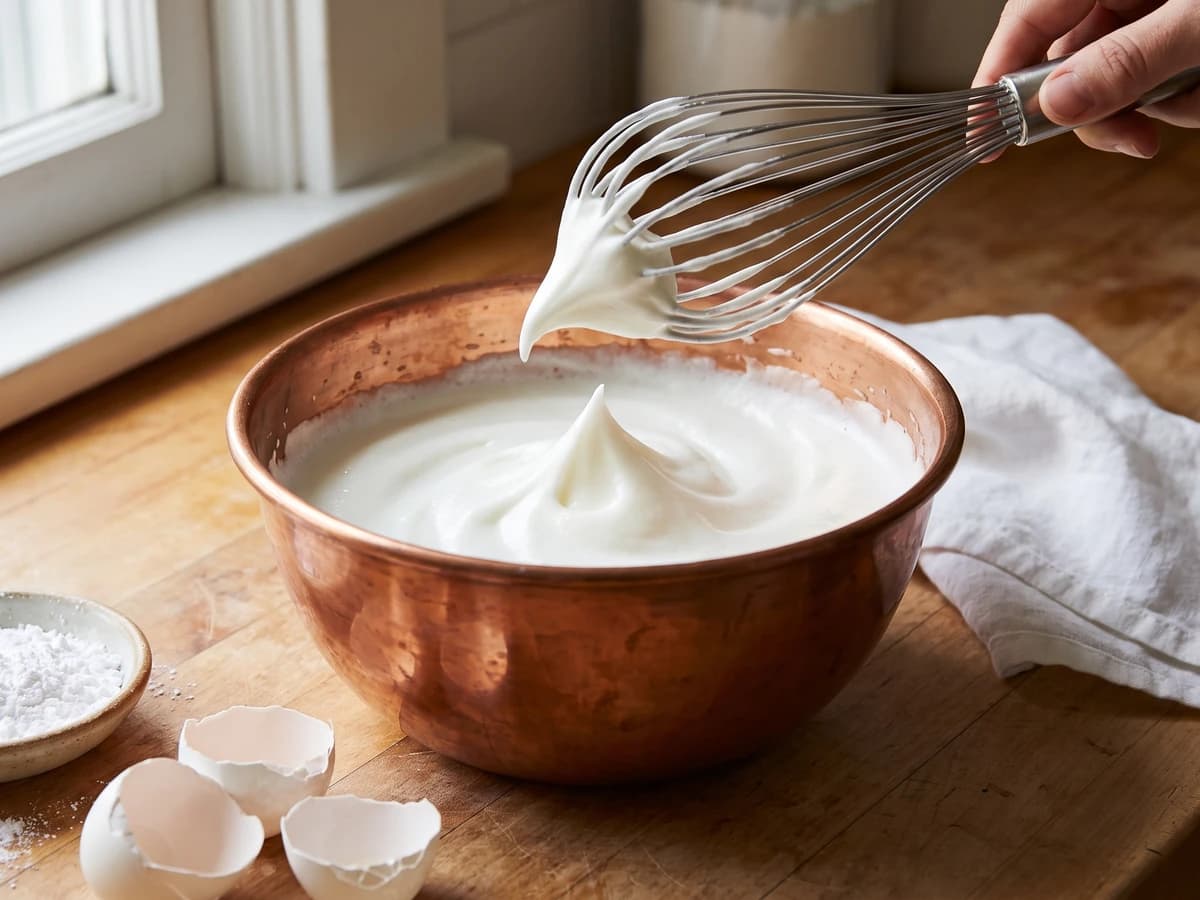
Four whites, one spotless bowl, and a patient change of speed: whisk gently until loosened, then briskly to glossy stiffness, with powdered sugar waiting if the foam begins to granulate.