
Chef Juliette
Various Almond Preparations
Five almond preparations, one discipline: remove the skins cleanly, dry every kernel through, then cut, toast, or cloak it in pale caramel without letting its fragrant oils escape.
A cooking platform built around craft, culture, and the stories behind what we eat.

Created by Chef Juliette
Based on No. 2614, Cream Bavarois, from Le Guide Culinaire (1907) by Auguste Escoffier
Bavarois à la crème turns one careful crème anglaise into the mother of cold moulded sweets, set just enough to tremble and folded with cream only when both mixtures share the same body.
Bavarois à la crème (moulded vanilla custard lightened with whipped cream) teaches one exact piece of pastry grammar: two mixtures should be folded only when they have the same body. The crème anglaise, a stirred vanilla custard, supplies richness; gelatine gives a tender set; whipped cream carries the air. Fold while the anglaise is warm and the cream melts. Wait until it has set firm and you'll chase lumps while knocking out every bubble.
The original formula assumed fourteen yolks, an enamelled basin, and a pastry cook free to stir the custard as it cooled. Here the quantities are reduced by two-sevenths to four yolks and a one-litre mould, while a bowl over ice replaces the long watch. Weighed powdered gelatine replaces variable-sized leaves and is bloomed before use. The brigade quantity and its attendant are scaffolding; the anglaise, the gelatine, and the timing of the fold are the dish. One cook, one stove, one evening.
The moment that matters comes when the cold anglaise first thickens around the edge and holds a fleeting trail from the spatula. Have the cream softly whipped by then. If the custard firms too far, don't force the cream through it. Ça se rattrape: warm the bowl gently until the custard loosens, then fold when both mixtures move alike.
Bavarois à la crème belongs to the Parisian entremets repertoire rather than to one French province. Its name points toward Bavaria, yet French pastry kitchens made the cold moulded form canonical, using crème anglaise, gelatine, and whipped cream as a foundation for vanilla, coffee, chocolate, and fruit variations. The surprise is that bavarois first named a drink associated with Bavarian visitors before the word settled onto the dessert.
Quantity
1 cup plus 1 teaspoon (245 ml / 252 g)
Quantity
1/3 bean
split lengthwise
Quantity
4
Quantity
2/3 cup (160 ml / 130 g)
Quantity
1 3/4 teaspoons (9 ml / 5.5 g)
Quantity
2 tablespoons (30 ml / 30 g)
Quantity
1 cup plus 1 teaspoon (245 ml / 245 g)
Quantity
3 tablespoons (45 ml / 24 g)
sifted
Quantity
1 1/3 teaspoons (6.5 ml / 5.5 g)
| Ingredient | Quantity |
|---|---|
| whole milk | 1 cup plus 1 teaspoon (245 ml / 252 g) |
| vanilla beansplit lengthwise | 1/3 bean |
| large egg yolks | 4 |
| caster sugar | 2/3 cup (160 ml / 130 g) |
| powdered gelatine, preferably 200 bloom | 1 3/4 teaspoons (9 ml / 5.5 g) |
| cold water | 2 tablespoons (30 ml / 30 g) |
| cold heavy cream, at least 35% fat | 1 cup plus 1 teaspoon (245 ml / 245 g) |
| powdered sugarsifted | 3 tablespoons (45 ml / 24 g) |
| vanilla sugar | 1 1/3 teaspoons (6.5 ml / 5.5 g) |
Rinse a 1 litre bavarois or charlotte mould with cold water, shake out the excess without drying it, and place it in the cold. Sprinkle the powdered gelatine evenly over the cold water in a small bowl and leave it for 5 to 10 minutes, until every granule has swollen and no dry patches remain. Pouring gelatine straight into hot liquid makes stubborn little pellets; blooming lets it dissolve evenly.
Put the milk in a small heavy saucepan. Scrape in the vanilla seeds, add the pod, and bring the milk just to the first rise over medium-low heat. Cover, remove from the heat, and infuse for 10 minutes. Remove the pod, add the bloomed gelatine, and stir until completely dissolved; warm the milk gently if necessary, but don't boil it.
Whisk the yolks and caster sugar in a heatproof bowl until the mixture turns pale, thick, and falls from the whisk in a slow ribbon. Pour in the hot vanilla milk a little at a time while whisking steadily, especially at the beginning, so the yolks warm gradually instead of setting at the edges. Return everything to the saucepan.
Cook over the gentlest heat, stirring continuously with a flexible spatula and scraping the bottom and corners. The anglaise is ready at 82 to 84°C (180 to 183°F), when it nappes the back of a spoon and a finger drawn through the coating leaves a clean path. Never let it boil. If you catch a few fine grains at the first sign of curdling, remove the pan immediately, blend for several seconds, and strain; ça se rattrape. A custard boiled into firm curds cannot be returned to silk.
Strain the anglaise through a fine sieve into a stainless-steel bowl, then set the bowl over ice water. Stir slowly and regularly so the gelatine doesn't set first against the cold metal. Remove the bowl from the ice when the custard is cold, beginning to thicken at the edge, and a spatula drawn through it leaves a trail that closes slowly. If it becomes lumpy or nearly set, don't beat cream into it. Ça se rattrape: place the bowl over barely warm water and stir just until it becomes smooth and thickly fluid again.
While the anglaise cools, whip the cold heavy cream until it forms very soft peaks that bend immediately from the whisk. Sift over the powdered sugar and vanilla sugar, then whisk only until the cream holds a soft fold. Stiff cream won't blend cleanly and gives the bavarois a coarse, bubbly cut face; supple cream is what you want.
Stir one-third of the whipped cream into the just-thickening anglaise to loosen it. Fold in the remainder with broad strokes from the bottom of the bowl, turning the bowl as you work, until no white streaks remain. This matching of textures is the principle that decides the dish: the custard must be thick enough to hold the cream, but fluid enough to accept it. Pour immediately into the chilled mould and tap it once, lightly, to settle large air pockets.
Cover the mould and chill for at least 6 hours, preferably overnight, until the centre is fully set but still trembles when the mould is nudged. To serve, dip only the outside of the mould in warm water for 5 seconds, dry it, place a cold platter on top, and invert decisively. If it doesn't release, repeat the dip for 2 or 3 seconds; patience, not prolonged heat, preserves the clean fluted surface. Serve cold. À table!
1 serving (about 105g)
Culinary guides, cultural storytelling, and the editorial depth that makes cooking meaningful.
Discover Culinary ExplorerChef Juliette
Five almond preparations, one discipline: remove the skins cleanly, dry every kernel through, then cut, toast, or cloak it in pale caramel without letting its fragrant oils escape.

Chef Juliette
A pastry pantry lesson in one tray: filberts warmed only until their red skins release, rubbed clean, cooled, and chopped into a fragrant mise-en-place for cakes, creams, pralines, and petits fours.

Chef Juliette
The smallest pâtisserie discipline decides whether a cake leaves its mould intact: clarified butter in every corner, followed by the lightest veil of dry flour or fécule.
Chef Juliette
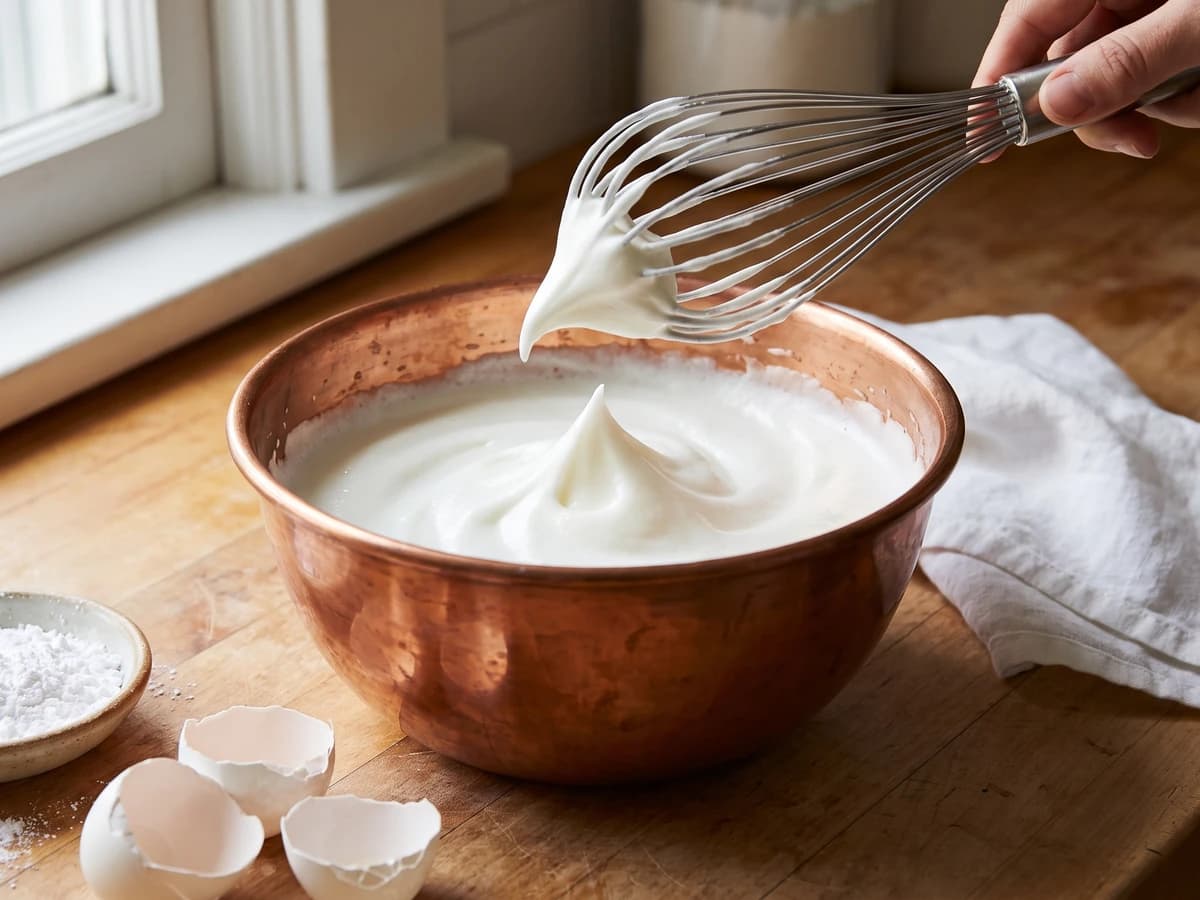
Four whites, one spotless bowl, and a patient change of speed: whisk gently until loosened, then briskly to glossy stiffness, with powdered sugar waiting if the foam begins to granulate.