
Chef Juliette
Various Almond Preparations
Five almond preparations, one discipline: remove the skins cleanly, dry every kernel through, then cut, toast, or cloak it in pale caramel without letting its fragrant oils escape.
A cooking platform built around craft, culture, and the stories behind what we eat.

Created by Chef Juliette
Based on No. 2597, Pommes Meringuées, from Le Guide Culinaire (1907) by Auguste Escoffier
Vanilla-poached apples, a firm bed of stewed apple, and a domed meringue shell browned to biscuit gold: a grand entremets reduced to one dish, four plates, and an ordinary home oven.
Pommes meringuées (vanilla-poached apples beneath a baked meringue dome) teaches that structure comes before spectacle. The one true thing to know before touching a pan is this: everything beneath the meringue must be cool, firm, and well drained. Warm syrup or loose apple mince makes the white cap slide and weep; a dry foundation lets it stand proud.
The book assumes a pâtisserie station with vanilla-poached apples, a Charlotte-style apple mince or rice for croquettes, Ordinary Meringue (No. 2382), and a salamander ready to color the dome. This four-serving version chooses the book's stiff apple alternative, cooks it from two extra apples in the same vanilla syrup, and uses a mild home oven with a brief broiler finish only if needed. The large service piece and separate brigade batches are scaffolding and can go. The poaching, firm base, smooth masking, decoration with the same meringue, and gentle browning are the dish.
Bring it out with the ridges biscuit-gold and the meringue still generous over the hidden fruit. Cooking well is not cooking fancy. Cool and drain the apples completely before you mask them; that is the step that decides the dome.
Pommes meringuées belongs to the classical French entremets table centered in Parisian hotel and grand-house kitchens, where poached fruit was mounted on a prepared base, masked with meringue, decorated, and browned for service. Its architecture joins vanilla-poached apples with the apple mince or rice foundation used to give molded sweets height, then carries the same practice into the bourgeois home oven. The base is not filler: it is the support that holds the quarters in place and keeps the meringue dome from sinking into syrup.
Quantity
4 medium (about 1 1/2 pounds / 680 g)
peeled, cored, and quartered
Quantity
2 medium (about 3/4 pound / 340 g)
peeled, cored, and cut into 1/2-inch (1.25 cm) dice
Quantity
2 cups (475 ml / 475 g)
Quantity
1 cup (240 ml / 200 g)
Quantity
1
split lengthwise and scraped
Quantity
2 tablespoons (30 ml / 15 g)
| Ingredient | Quantity |
|---|---|
| firm apples for poachingpeeled, cored, and quartered | 4 medium (about 1 1/2 pounds / 680 g) |
| firm apples for the basepeeled, cored, and cut into 1/2-inch (1.25 cm) dice | 2 medium (about 3/4 pound / 340 g) |
| water | 2 cups (475 ml / 475 g) |
| granulated sugar | 1 cup (240 ml / 200 g) |
| vanilla beansplit lengthwise and scraped | 1 |
| Ordinary Meringuefreshly made | about 4 cups (950 ml / 260 g) Ordinary Meringue (No. 2382) |
| icing sugar | 2 tablespoons (30 ml / 15 g) |
Combine the water and granulated sugar in a wide saucepan. Add the vanilla seeds and pod, then bring the mixture slowly to a simmer, stirring only until the sugar dissolves. Simmer for 3 minutes without coloring it. This is a poaching syrup, not caramel; it should remain clear and smell distinctly of vanilla.
Lower the quartered apples into the syrup in one snug layer, working in two batches if necessary. Cover them with a round of baking parchment and hold the syrup at the gentlest tremble for 8 to 12 minutes, turning the quarters once, until a knife enters with slight resistance and their edges remain sharp. Lift them carefully onto a wire rack set over a tray. If a quarter begins to fray, remove it at once and reserve it for the apple base; the sound pieces belong on top, and nothing is lost.
Remove the vanilla pod and measure 1/2 cup (120 ml / 120 g) of the poaching syrup into a clean saucepan. Add the diced apples and cook uncovered over medium heat for 15 to 20 minutes, stirring and crushing them into a coarse mince, until the spoon leaves a trench that stays open for several seconds and no syrup beads around the edges. The base must be stiff enough to support the quarters. If it catches, lower the heat and add one spoonful of syrup; if it remains loose, keep cooking. Ça se rattrape.
Spread the stiff apple mince about 3/4 inch (2 cm) deep in a shallow 1 1/2-quart (1.4 L) ovenproof dish. Let it cool completely. Blot the poached quarters wherever syrup still shines, then arrange them tightly over the base in overlapping rings, building a low, even mound. Chill the assembled fruit for 15 minutes while the oven heats to 325°F (165°C), with a rack in the lower-middle position.
Reserve about 3/4 cup (180 ml / 50 g) of the Ordinary Meringue (No. 2382) for decoration. Spread a thin sealing coat of the remaining meringue over the cold apples, filling the gaps first, then add the rest and smooth it into a complete dome with no fruit showing. Work lightly so the meringue keeps its volume. If the covering skids, the fruit is still wet or warm: lift away the slipping portion, blot the exposed apples, chill them for 10 minutes, and mask again.
Transfer the reserved Ordinary Meringue (No. 2382) to a piping bag fitted with a 1/2-inch (1.25 cm) star tip. Pipe a ring of scallops around the base and broad ribs or rosettes over the smooth dome, keeping the decoration generous enough to brown without drying out. Sprinkle the entire surface evenly with the icing sugar.
Bake for 22 to 28 minutes, rotating the dish once, until the meringue is set, the piped ridges are pale biscuit-gold, and the thickest part reaches 160°F (71°C). If the dome is set but still pale, place it under a preheated broiler for 20 to 40 seconds, watching without looking away. If one point colors too quickly, shield that spot with a small loose piece of foil and continue at 300°F (150°C).
Let the pommes meringuées rest for 10 minutes so the meringue settles around the fruit without losing its delicate crust. Serve warm with a broad spoon, reaching through the golden shell for poached apple and the firm apple base beneath. Each helping should carry all three layers. À table!
1 serving (about 310g)
Culinary guides, cultural storytelling, and the editorial depth that makes cooking meaningful.
Discover Culinary ExplorerChef Juliette
Five almond preparations, one discipline: remove the skins cleanly, dry every kernel through, then cut, toast, or cloak it in pale caramel without letting its fragrant oils escape.

Chef Juliette
A pastry pantry lesson in one tray: filberts warmed only until their red skins release, rubbed clean, cooled, and chopped into a fragrant mise-en-place for cakes, creams, pralines, and petits fours.

Chef Juliette
The smallest pâtisserie discipline decides whether a cake leaves its mould intact: clarified butter in every corner, followed by the lightest veil of dry flour or fécule.
Chef Juliette
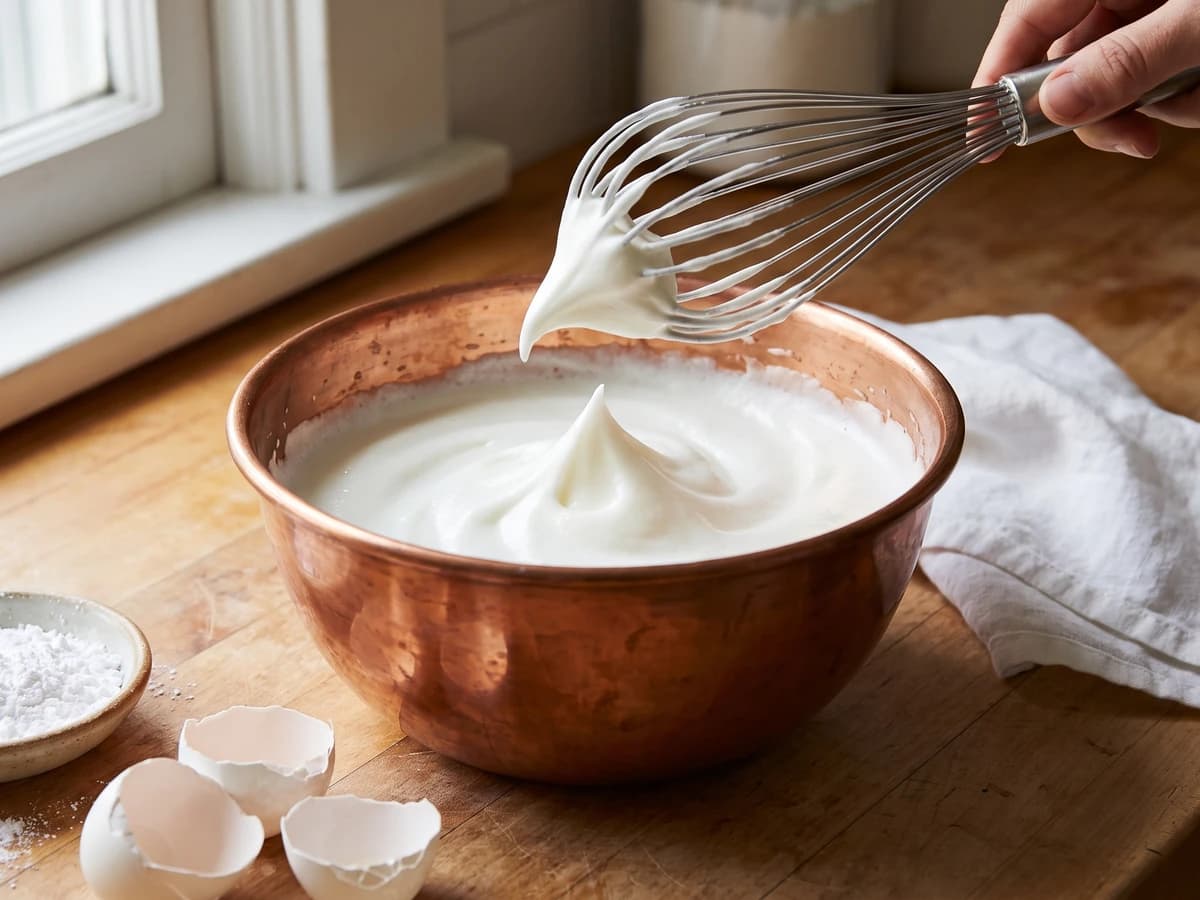
Four whites, one spotless bowl, and a patient change of speed: whisk gently until loosened, then briskly to glossy stiffness, with powdered sugar waiting if the foam begins to granulate.