
Chef Juliette
Various Almond Preparations
Five almond preparations, one discipline: remove the skins cleanly, dry every kernel through, then cut, toast, or cloak it in pale caramel without letting its fragrant oils escape.
A cooking platform built around craft, culture, and the stories behind what we eat.

Created by Chef Juliette
Based on No. 2592, Pommes en Charlotte, from Le Guide Culinaire (1907) by Auguste Escoffier
Pommes en Charlotte is Apple Charlotte (No. 2436) under its French title: stiff russet-apple purée enclosed by buttered bread, baked bronze, and unmoulded warm so the case holds its proud dome.
Pommes en Charlotte (apples baked in a buttered bread case) teaches containment: the bread can only hold what the apples have already become. The one true thing is that the purée must be stiff before it enters the mould. If it slumps in the pan, it will soak the bread instead of supporting it.
The old entry assumed a cook who recognized a quart Charlotte mould, cut decorative croûtons without measuring twice, and understood a “good moderate oven” by feel. It assumed no saucier, perpetual stockpot, or salamander, and neither do you. A metal mould of the same capacity and a conventional oven at 375°F (190°C) are the honest home equivalents. The quart quantity already serves six, so it needs no false brigade reduction. One cook, one stove, one evening.
This source entry points directly to Apple Charlotte (No. 2436), whose ingredients and method remain whole in their own formula. The heart-shaped base croûtons are presentation scaffolding and may become neat overlapping wedges, but the butter-soaked bread, tightly covered sides, reduced apples, and domed filling are the dish itself. Before the mould enters the oven, make certain the purée can stand in a mound. That is the step that decides the Charlotte.
Pommes en Charlotte is the classical French title used for Apple Charlotte (No. 2436), a buttered-bread apple pudding that French kitchens adopted from the British table and refined through exact mould work. In Parisian culinary practice, decorative croûtons and a stiff fruit purée turned a household pudding into a cleanly unmoulded dessert without abandoning its frugal foundation of bread, apples, and butter. Pommes here means apples, not potatoes, and the cross-reference is deliberate: the two titles name the same preparation.
Quantity
1 Apple Charlotte (No. 2436), from a 1-quart (950 ml) mould
prepared according to its own entry and kept in the mould for unmoulding
| Ingredient | Quantity |
|---|---|
| Apple Charlotteprepared according to its own entry and kept in the mould for unmoulding | 1 Apple Charlotte (No. 2436), from a 1-quart (950 ml) mould |
Set the completed Apple Charlotte (No. 2436), still in its mould, on a wire rack for 10 minutes. The source calls for that finished preparation as a whole, so its formula remains in its own entry rather than being repeated here. This short rest lets the domed apple filling settle and gives the buttered bread case enough firmness to leave the mould cleanly.
Run a thin flexible knife only around the upper edge, keeping the blade close to the metal so you don't cut through the bread case. Place a flat serving platter upside down over the mould, hold both firmly, and invert them in one decisive movement. Wait 20 seconds before lifting the mould. If the Charlotte clings, set the mould down again, loosen the stubborn spot, and repeat. If one bread panel remains behind, lift it free and press it back onto the warm purée, browned side outward. The filling will hold it in place.
Let the unmoulded Charlotte stand for 5 minutes, just long enough for the filling to settle without surrendering the crisp edge of the bread. Cut generous wedges with a thin sharp knife, supporting each one with a broad dessert server. Serve it warm and unadorned, with the butter-bronzed case and apple-apricot centre doing all the work. À table!
1 serving (about 165g)
Culinary guides, cultural storytelling, and the editorial depth that makes cooking meaningful.
Discover Culinary ExplorerChef Juliette
Five almond preparations, one discipline: remove the skins cleanly, dry every kernel through, then cut, toast, or cloak it in pale caramel without letting its fragrant oils escape.

Chef Juliette
A pastry pantry lesson in one tray: filberts warmed only until their red skins release, rubbed clean, cooled, and chopped into a fragrant mise-en-place for cakes, creams, pralines, and petits fours.

Chef Juliette
The smallest pâtisserie discipline decides whether a cake leaves its mould intact: clarified butter in every corner, followed by the lightest veil of dry flour or fécule.
Chef Juliette
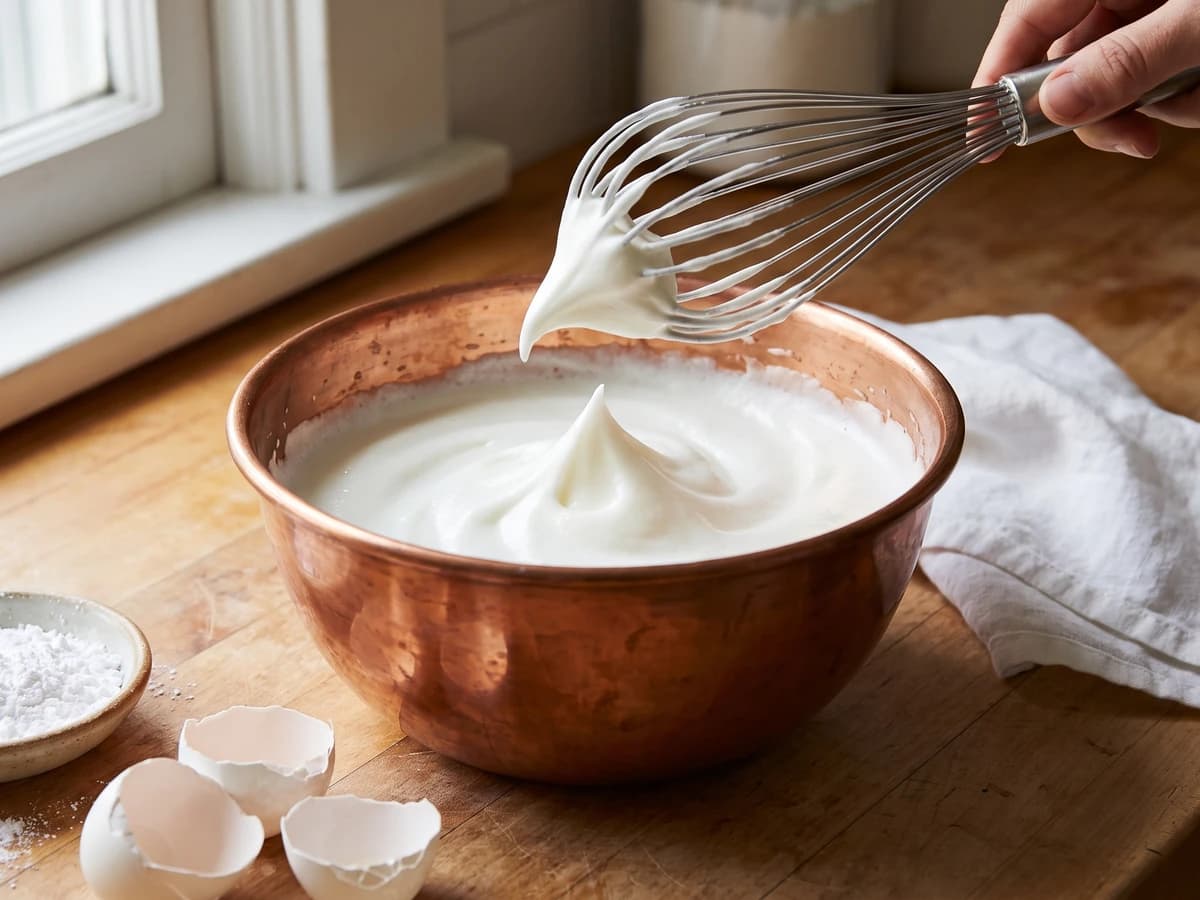
Four whites, one spotless bowl, and a patient change of speed: whisk gently until loosened, then briskly to glossy stiffness, with powdered sugar waiting if the foam begins to granulate.