
Chef Juliette
Flan aux Carottes
A pale short-paste shell holds silken, lightly sweet carrot purée beneath neat glazed half-discs, their butter syrup catching the light: a classical tart poised between vegetable course and sweet.
A cooking platform built around craft, culture, and the stories behind what we eat.
Created by Chef Juliette
Based on No. 2588, Apple Fritters, from Le Guide Culinaire (1907) by Auguste Escoffier
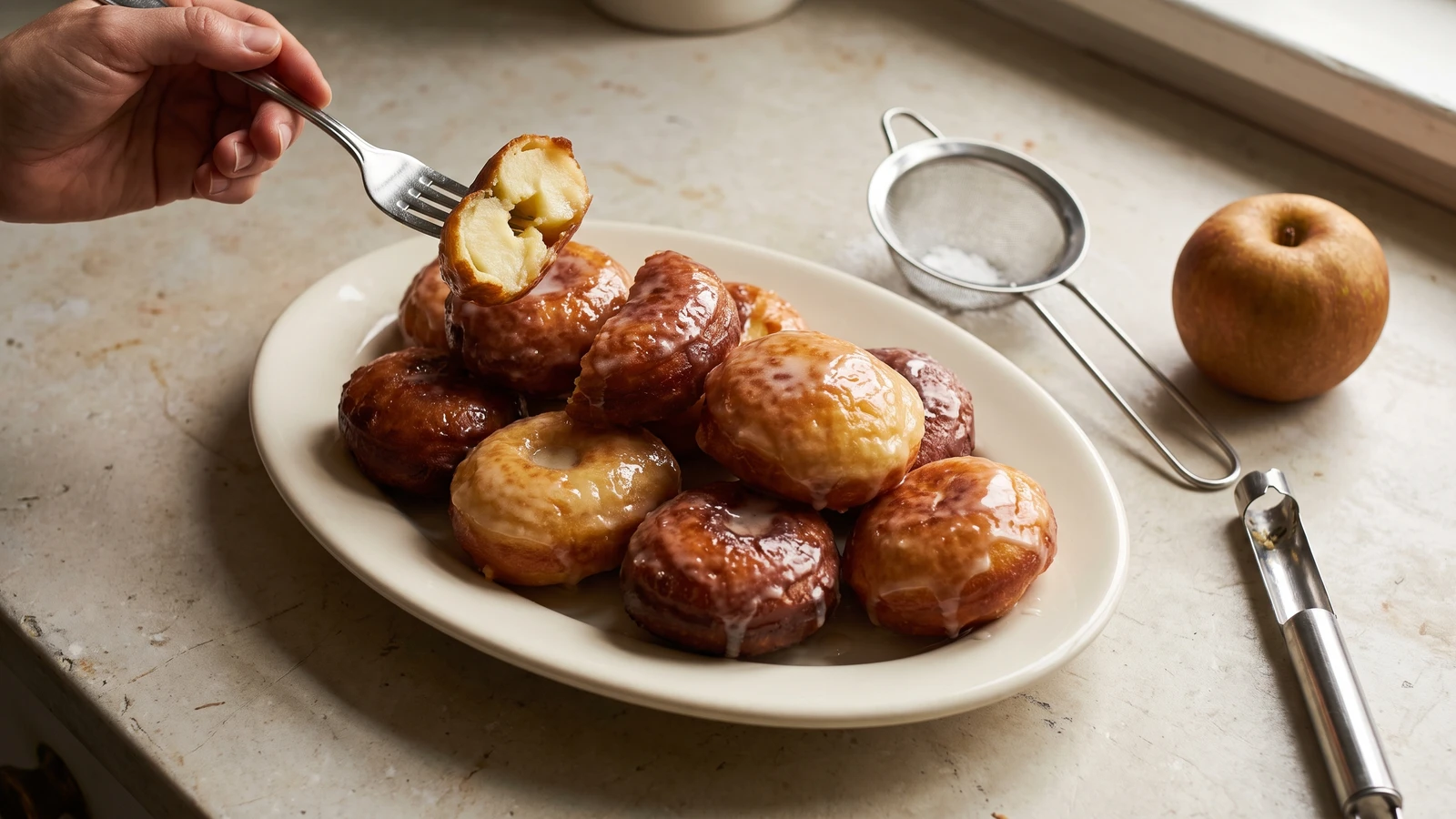
Beignets de pommes turn one careful gesture into the whole dessert: dry the rum-macerated apple rings before battering, then fry them gold and glaze the sugar until each hot roundel gleams.
Beignets de pommes teach adhesion. Batter clings only to a surface dry enough to receive it, so the apples are first macerated in sugar and rum, then carefully blotted before they meet the thin pâte à frire (frying batter). Skip the drying and the coat slides away into the fat. Keep it, and each roundel emerges wrapped in a fine golden shell.
The classical entry assumed a fry station kept ready, hands to drain and tray the fritters, and a salamander fierce enough to glaze icing sugar in moments. Your equivalents are a heavy saucepan, a thermometer, a wire rack, and the broiler already hot. Because the entry gives method rather than household quantities, I set it at four apples for four people and make only enough batter to coat them. Neutral oil replaces the unspecified kitchen frying fat because it remains clean at the required heat, while the display napkin disappears because it traps grease. That napkin was brigade scaffolding. The twenty-minute rum maceration, thin batter, abundant hot fat, and quick sugar glaze are the dish itself.
Done properly, the beignets arrive deep gold, faintly glossy from the glaze, with tender apple held inside a crisp coat. One cook, one stove, one evening. Before you touch the fat, remember the step that decides everything: dry the apple roundels thoroughly.
Beignets de pommes belong to France's cuisine bourgeoise, with an especially natural home in Normandy's orchard country even though the formula traveled throughout the national canon. Classical pastry kitchens regularized the household fritter into evenly cored roundels, a brief spirit maceration, a thin pâte à frire, and a quick sugared glaze under fierce top heat; the central hole helps the fruit and batter cook together. Rum or brandy, rather than Norman apple brandy alone, marks this particular preparation as a national classical formula rather than an exclusively regional one.
Quantity
4 (about 1½ pounds / 680 g)
Quantity
¼ cup (60 ml / 30 g)
for macerating
Quantity
3 tablespoons (45 ml / 43 g)
Quantity
¾ cup, plus up to 2 tablespoons (180 to 210 ml / 95 to 110 g)
divided
Quantity
¼ teaspoon (1.25 ml / 1.5 g)
Quantity
1
Quantity
½ cup, plus up to 2 tablespoons (120 to 150 ml / 120 to 150 g)
divided
Quantity
1 tablespoon (15 ml / 14 g)
melted and cooled
Quantity
4 cups (950 ml / about 875 g)
Quantity
⅓ cup (80 ml / 40 g)
for glazing
| Ingredient | Quantity |
|---|---|
| medium russet apples | 4 (about 1½ pounds / 680 g) |
| powdered sugarfor macerating | ¼ cup (60 ml / 30 g) |
| dark rum or brandy | 3 tablespoons (45 ml / 43 g) |
| all-purpose flourdivided | ¾ cup, plus up to 2 tablespoons (180 to 210 ml / 95 to 110 g) |
| fine salt | ¼ teaspoon (1.25 ml / 1.5 g) |
| large egg | 1 |
| cool waterdivided | ½ cup, plus up to 2 tablespoons (120 to 150 ml / 120 to 150 g) |
| unsalted buttermelted and cooled | 1 tablespoon (15 ml / 14 g) |
| neutral frying oil | 4 cups (950 ml / about 875 g) |
| icing sugarfor glazing | ⅓ cup (80 ml / 40 g) |
Put ¾ cup of the flour and the salt in a bowl, making a well in the centre. Whisk the egg with ½ cup of the cool water and the melted butter, then pour this gradually into the well while whisking outward until smooth. The pâte à frire should run from the whisk in a narrow ribbon and leave a fine coat on a spoon, not sit like pancake batter. Let it rest for twenty minutes while you prepare the apples; the rest hydrates the flour and lets the batter settle.
Push a ¾-inch (2 cm) apple corer or metal tube straight through each apple to remove the core and pips. Peel the apples, then cut them crosswise into roundels about ⅓ inch (8 mm) thick. Lay the rings in a shallow dish, sift the powdered sugar over them, and spoon over the rum or brandy. Turn gently to coat and macerate for twenty minutes, turning once halfway through. Longer is not better here; too much time draws out enough juice to soften the fruit and loosen the batter.
Pour the oil into a heavy 3-quart saucepan, making certain the pan is no more than one-third full, and heat it to 350°F to 355°F (175°C to 180°C). Set a wire rack over a rimmed tray and preheat the broiler with an oven rack about 6 inches (15 cm) below the element. Lift the apple rings from their syrup, let them drain briefly, then blot both faces and the cored centres with a clean towel. They should feel tacky but show no beads of liquid. Dip one test ring into the batter. If the coat retreats in bare streaks, wipe it off, blot the apple again, and re-dip. Ça se rattrape. If a thoroughly dry ring still sheds the batter, whisk in the reserved flour one teaspoon at a time; if the coat sits too heavily, loosen it with reserved water the same way.
Dip two or three apple rings in the pâte à frire, lift them one at a time, and let the excess fall away for a moment. Lower each ring carefully into the fat, away from your hand. Fry without crowding until the underside is deep gold, about two minutes, then turn and cook the second side for another one to two minutes. A thin knife should enter the apple without resistance. Keep the oil between 345°F and 355°F (174°C and 180°C). If a fritter comes out pale and oily, pause and let the fat recover before continuing; if it darkens before the apple softens, lower the heat slightly. Drain every batch on the wire rack, clearing stray batter from the oil before it burns.
Transfer the drained fritters to a clean, unlined metal tray in a single layer. Sift the icing sugar generously over their tops, then slide them under the fully heated broiler. Watch without looking away. In fifteen to thirty seconds the sugar should dampen, bubble, and melt into a thin glassy glaze. Pull the tray as soon as that glaze forms. If a few patches remain white, return the tray for five seconds at a time; once sugar scorches it turns bitter, so this is quick work, not waiting.
Pile the beignets loosely on a warm platter so their crisp edges are not pressed flat. Serve them within ten minutes, while the batter still gives under the teeth and the apple remains tender inside. They need no sauce, spice, or decoration; the rum-scented fruit and glazed sugar are complete. À table!
1 serving (about 230g)
Culinary guides, cultural storytelling, and the editorial depth that makes cooking meaningful.
Discover Culinary ExplorerChef Juliette
A pale short-paste shell holds silken, lightly sweet carrot purée beneath neat glazed half-discs, their butter syrup catching the light: a classical tart poised between vegetable course and sweet.
Chef Juliette
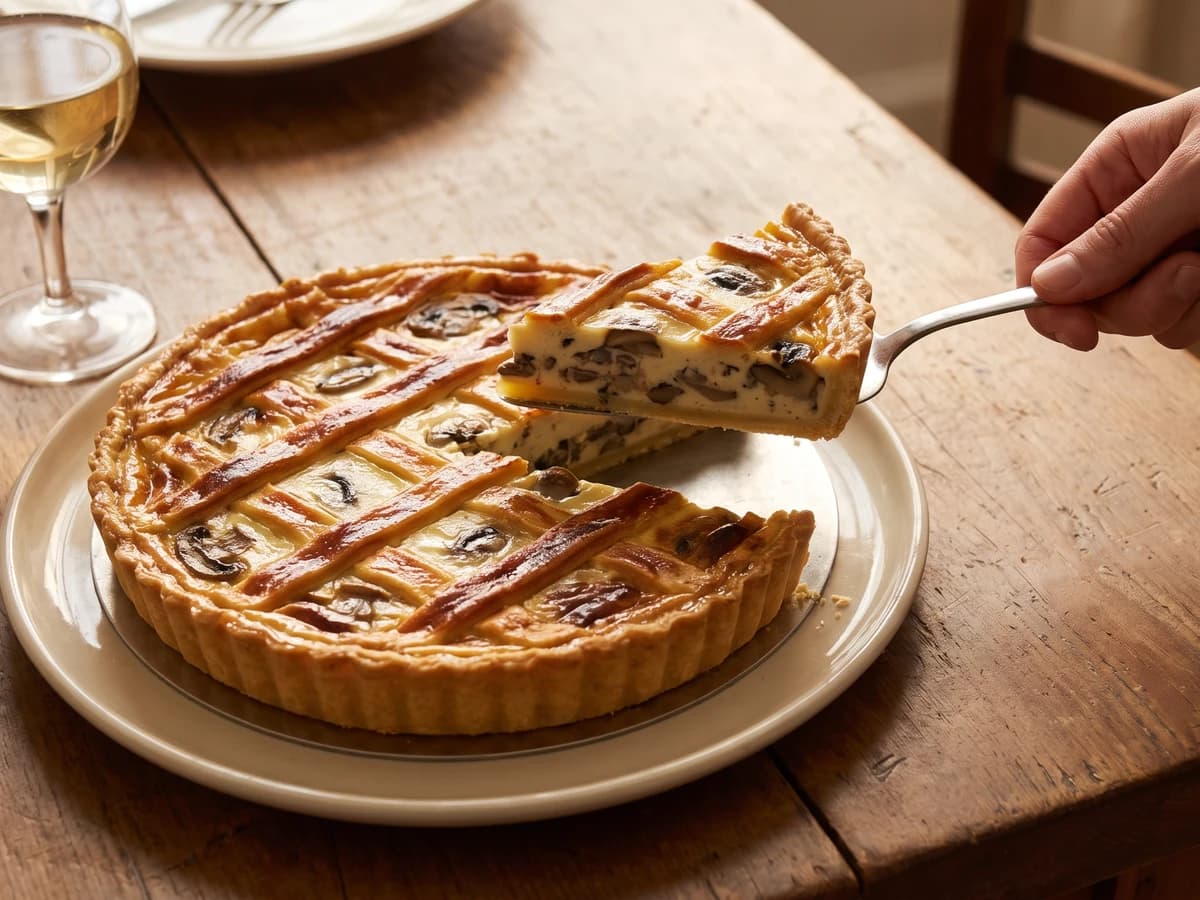
A hot mushroom flan under a butter-gold lattice, with cream reduced close around barely opened caps and a crisp short-paste base protected by one discipline: cool the filling completely.
Chef Juliette
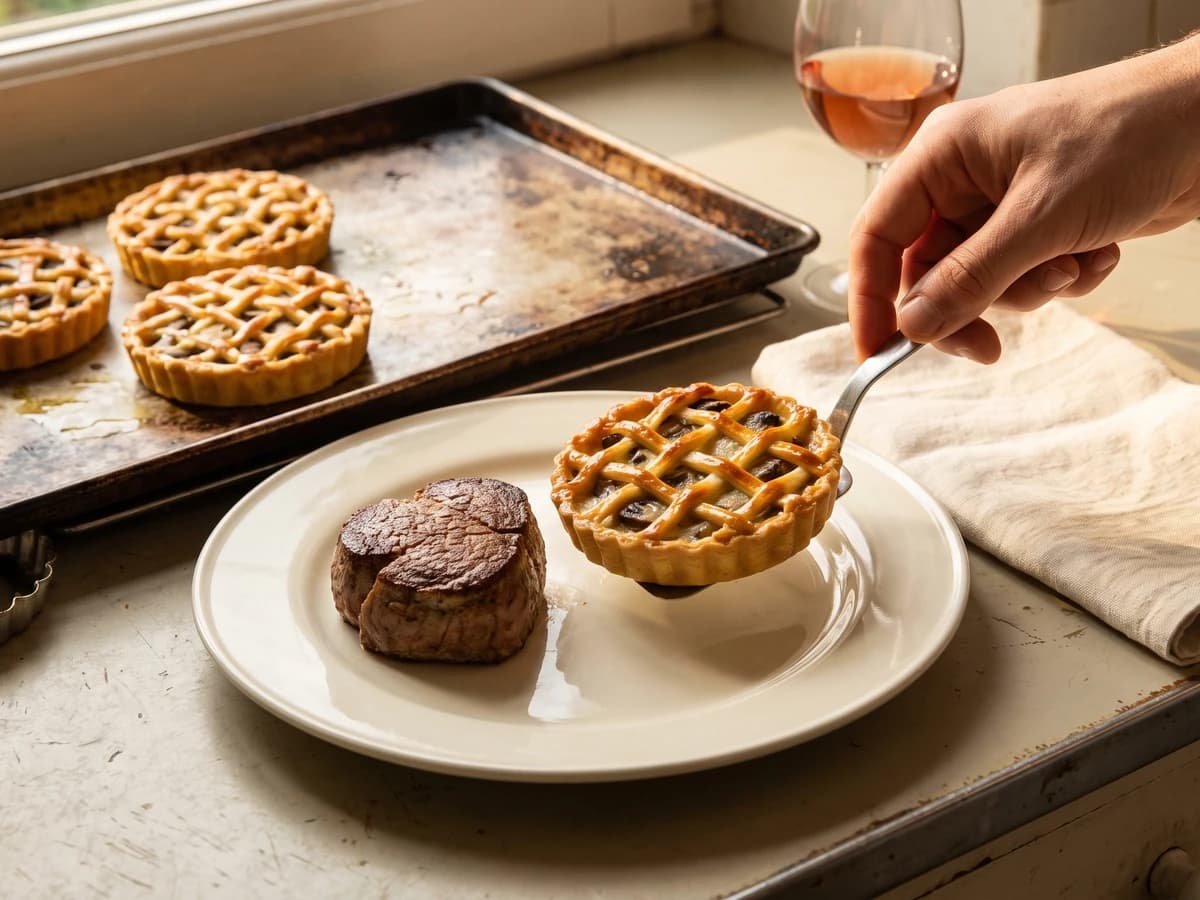
Four little mushroom flans, latticed and gilded, baked hard and fast until butter-gold: a classical garnish scaled to the meat it accompanies and served before its crispness has time to fade.

Chef Juliette
Morels surrender their liquor, then take it back as a glossy cream-and-butter sauce inside burnished puff pastry. The lesson is simple and absolute: reduce with patience, then heat gently and never boil.