
Chef Juliette
Various Almond Preparations
Five almond preparations, one discipline: remove the skins cleanly, dry every kernel through, then cut, toast, or cloak it in pale caramel without letting its fragrant oils escape.
A cooking platform built around craft, culture, and the stories behind what we eat.

Created by Chef Juliette
Based on No. 2576, Pêches Flambées, from Le Guide Culinaire (1907) by Auguste Escoffier
Pêches Flambées teaches the quiet discipline behind a dramatic finish: poach the fruit gently, glaze it lightly, warm the kirsch properly, then let one brief blue flame perfume the table.
Pêches Flambées (flamed peaches) teaches restraint before spectacle. The flame lasts only moments; the dish is won by controlling temperature, first in a syrup that barely trembles, then in kirsch warmed enough to catch cleanly. The peach remains the point, whole, fragrant, and tender without collapsing.
The original entry assumed a pâtissier with poaching syrup ready, a row of individual timbales, and a dining-room hand free to warm and ignite each portion at the last second. At home, four peaches, one saucepan, four small ramekins, and a rimmed metal tray do the same work. The brigade's holding pans and passing hands were scaffolding, so they can go. The whole-fruit poach, the choice between lightly arrowroot-bound syrup and raw strawberry purée, and the last-moment flambage remain because they are the dish. One cook, one stove, one evening.
The syrup version is glossy and composed; the strawberry version is brighter, with raw fruit cutting through the sweetness of the poached peach. Both end the same way. The step that matters most comes last: warm the kirsch separately until fragrant but never simmering, remove it from the heat, and extinguish the burner before you light it. Cold kirsch may refuse the flame; boiling kirsch throws away its perfume.
Pêches flambées belong to the French classical entremets repertoire, particularly the formal dining rooms of Paris, rather than to one regional household tradition. The dish joins two established practices: whole fruit poached by the pastry kitchen and flambage completed at service, with kirsch supplying a dry cherry perfume instead of a heavy sweet sauce. Its two canonical presentations, under a lightly arrowroot-bound syrup or on raw strawberry purée, show that the flame is the finish, not the foundation.
Quantity
4 medium
peeled and left whole with stones intact
Quantity
4 cups (960 ml / 960 g)
Quantity
2 cups (480 ml / 400 g)
Quantity
2 tablespoons (30 ml / 28 g)
Quantity
1/4 cup (60 ml / 56 g)
divided among four portions
Quantity
2 teaspoons (10 ml / 6 g)
Quantity
1 tablespoon (15 ml / 15 g)
Quantity
2 cups (480 ml / 300 g)
hulled
| Ingredient | Quantity |
|---|---|
| ripe but firm peachespeeled and left whole with stones intact | 4 medium |
| water | 4 cups (960 ml / 960 g) |
| granulated sugar | 2 cups (480 ml / 400 g) |
| kirsch for the poaching syrup | 2 tablespoons (30 ml / 28 g) |
| kirsch for flambéingdivided among four portions | 1/4 cup (60 ml / 56 g) |
| arrowroot (optional) | 2 teaspoons (10 ml / 6 g) |
| cold water for the arrowroot slurry (optional) | 1 tablespoon (15 ml / 15 g) |
| ripe strawberries (optional)hulled | 2 cups (480 ml / 300 g) |
Peel the peaches thinly, preserving their round shape and leaving the stones inside. If the skins cling, lower the peaches into plain boiling water for 20 seconds, cool them under running water, and slip off the skins; empty the pan and use it for the syrup. Keep the fruit whole. A ripe peach bruises under impatient fingers, so cradle it rather than squeezing it.
Combine the water and sugar in a wide 3-quart saucepan. Bring them slowly to a boil, stirring only until the sugar dissolves, then reduce the heat and add the kirsch reserved for the syrup. You want a light, clear poaching syrup, not caramel; wash any stray sugar crystals from the sides of the pan with a wet pastry brush if they appear.
Lower the peaches into the syrup and adjust the heat until the surface barely trembles. Poach for 8 to 15 minutes, turning the fruit gently if it is not fully submerged, until a thin skewer enters the flesh with slight resistance near the stone. Do not boil. If one peach begins to split, lift it out immediately and place it split-side down for serving; ça se rattrape. Lower the heat before continuing with the others. Transfer the peaches to a plate with a slotted spoon and let them stand until warm.
For the timbale version, measure 1 cup (240 ml / 240 g) of poaching syrup into a clean small saucepan. Stir the arrowroot and cold water into a perfectly smooth slurry, then whisk it into the hot syrup. Cook gently for 30 to 60 seconds, just until the syrup turns glossy and lightly naps the back of a spoon. A hard or prolonged boil can weaken arrowroot. If the glaze forms lumps, strain it; if it tightens too far, whisk in a little unthickened syrup. Ça se rattrape.
For the strawberry version, blend the hulled strawberries until completely smooth, then press the purée through a fine sieve to remove the seeds. Keep it raw and unsweetened. Its fresh acidity is the contrast to the poached fruit, and cooking it would turn this into a different sauce. If the berries are unusually watery, let the purée drain through the sieve for five minutes.
For the first presentation, set one warm peach in each small timbale or ramekin and spoon the lightly thickened syrup over it, allowing the glaze to pool around the base. For the second, divide the raw strawberry purée among four shallow heatproof dessert dishes and set one peach in the centre of each. Place all four portions on a rimmed metal tray at a cleared table, away from a range hood, curtains, bottles, and guests' sleeves.
Measure the flambéing kirsch into a clean small saucepan, never directly from the bottle over the dessert. Warm it over low heat to about 120 to 130°F (50 to 55°C); it should smell fragrant but must not simmer. Remove the saucepan from the heat, turn off the burner, and carry only the measured kirsch to the cleared table. Pour 1 tablespoon (15 ml) over each peach and ignite the edge of each portion with a long match or lighter. The blue flame can be difficult to see, so never touch or carry a dish until it is fully extinguished. If the kirsch does not catch, do not add more alcohol or lean over the dish. Cover it to ensure no invisible flame remains, then serve it unlit; ça se rattrape, and the kirsch perfume is still there. Let every flame die naturally before passing the dishes. À table!
1 serving (about 525g)
Culinary guides, cultural storytelling, and the editorial depth that makes cooking meaningful.
Discover Culinary ExplorerChef Juliette
Five almond preparations, one discipline: remove the skins cleanly, dry every kernel through, then cut, toast, or cloak it in pale caramel without letting its fragrant oils escape.

Chef Juliette
A pastry pantry lesson in one tray: filberts warmed only until their red skins release, rubbed clean, cooled, and chopped into a fragrant mise-en-place for cakes, creams, pralines, and petits fours.

Chef Juliette
The smallest pâtisserie discipline decides whether a cake leaves its mould intact: clarified butter in every corner, followed by the lightest veil of dry flour or fécule.
Chef Juliette
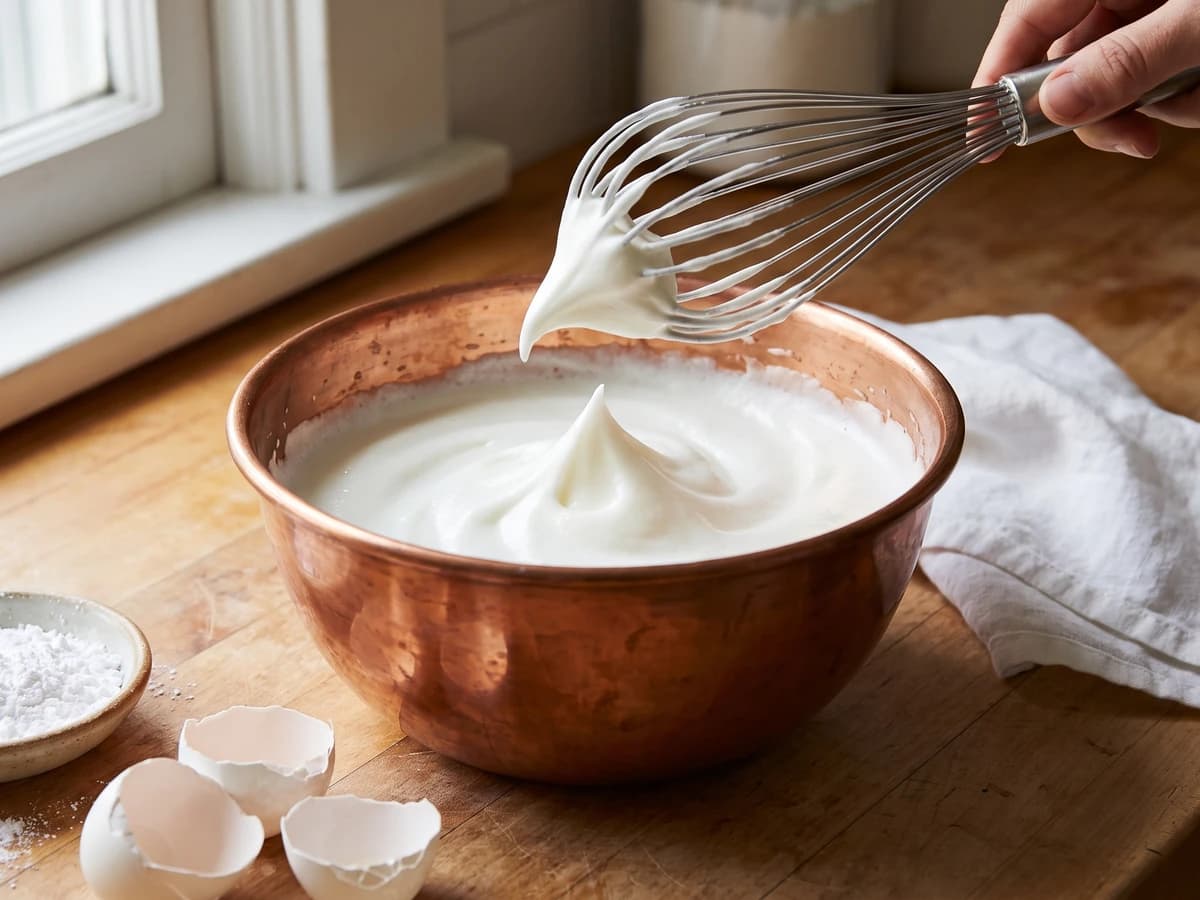
Four whites, one spotless bowl, and a patient change of speed: whisk gently until loosened, then briskly to glossy stiffness, with powdered sugar waiting if the foam begins to granulate.